On the Strength of “Weakness”

While there is much in Michael J. Gerhardt’s new book, “The Forgotten Presidents: Their Untold Constitutional Legacy,” with which this author disagrees, he ably shows that Coolidge was anything but a pushover or “weak” president. Devoting chapter twelve of his book to the thirtieth president, Gerhardt demonstrates that Coolidge had unique strength when it came to his constitutional role and the exercise of presidential powers. Coolidge, perhaps more than any of his immediate contemporaries in the office, understood both the limits and the authority vested in the Presidency. His display of leadership was unprecedented in a number of ways.

As the previous administration’s scandals went public, it was Coolidge who took the incredible step of ensuring honorable and qualified investigators (not party hacks) took the helm after which he never intervened in the process to determine the facts. The investigation was allowed to find the guilty and acquit suspicion of the innocent. As a result of both their thorough competence and Coolidge setting a tone of full cooperation from the beginning, public trust in the law was preserved.

In the use of the pardon and the veto, Coolidge distinguishes himself as anything but a timid President. Of his twenty-nine predecessors, and his immediate successor, he ranks second only to Wilson in the number of pardons granted during his time. Of his 1,545, his most noteworthy were made at the beginning of his administration, on behalf of several who had been imprisoned for their public criticism of Wilson’s involvement in the War. Even more extraordinary was the fact that he issued these pardons not only over his Attorney General’s opposition but also before request for release had been made. His fifty vetoes stand also set Coolidge apart from his contemporaries. Only Teddy Roosevelt would issue more of them in the first thirty years of the twentieth century. Not until Teddy’s cousin would the record be broken. Standing in the company of Roosevelts, Coolidge can hardly be classified a passive President. Like Grover Cleveland before him, Coolidge would use the “pocket veto” with great effect as well. By allowing a bill to die after ten days unsigned during Congressional recess, Coolidge would leave a lasting impact on the potency of the veto. His firm dissent from McNary-Haugen — twice — ensured that the President’s role in preventing bad legislation remains intact.

Coolidge’s political courage is even lesser known but just as dominant in his protection of the constitutional power to appoint officers of the Executive Branch. The earliest tussles with Congress demonstrated Coolidge could retain his nerves, remain unmoved by “mob” demands for this or that resignation and eventually prevail despite intense political heat. His resolve was not merely stubbornness but rather an abiding sense of duty and integrity. He would not join the crowd in a political lynching, however badly they wanted it. He was fair even to those who proved unfit for responsibility. He would not give in to appearances nor would he condone wrongdoing. As pointed out by others, it actually takes more strength to refrain from acting until the right moment — especially in the heat of the moment — than it is to be seen doing something now to appease onlookers with appearances. It was Coolidge who exemplified the strength of character required for decisive action only when the fullness of time warranted it. Not before. His strength, considered “weakness” by many even today, is a necessary component of wise leadership. To discount this quality is to misunderstand and fail to appreciate what makes good leaders.
On Wealth and Profits

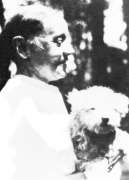
Against the attempts to demonize “wealth” and “profits” eighty years ago, President Coolidge, in characteristic fashion, raised some fundamental question: if people do not make profits, from where do wages come? Who pays for the costs of production? By what means are people’s lives made better if not by the service of profitable businesses and wealth accumulation? He addresses each of these questions in his daily articles. It is his article from March 25th, 1931 that directly attacks the illogical hostility to “wealth.” Introducing the gift of one such wealthy individual upon her death of an estate just under $75 million (which would be about $1.1 today) to charity, he calls on the reader to remember what benefits result from such accumulation. It is, he would write, “one of the foundations of our progress. Distributed per capita, it would be ineffective; in accumulation, it supports our industries, raises the standard of living and endows educational, religious and charitable institutions. Almost all the time we find it genuinely employed in the service of the people.” Coolidge was hardly naive about those who abused great wealth, “chiefly to their own harm,” but neither did he ignore the multitude of exemplary men and women, like Ella Wendel in this article, who endowed libraries, museums, schools, foundations and numerous institutions dedicated to the betterment of people everywhere. The successful individuals who bequeathed them to us may be gone but their example and stewardship deserve our respect and emulation.

Image Ella Wendel with her dog, Toby

Image

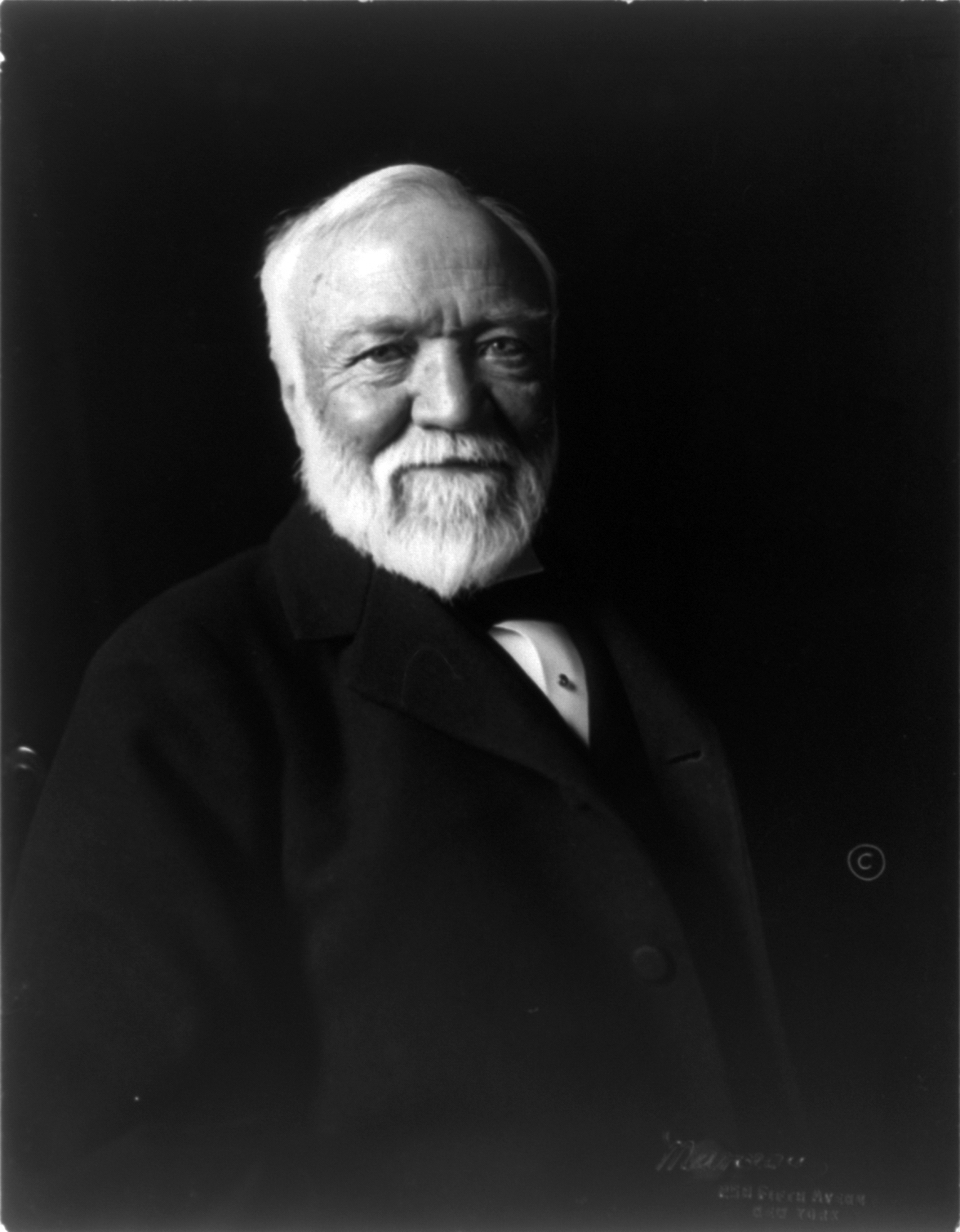
Andrew Carnegie, whose endowments made possible over 2,500 libraries around the country and overseas.

Image

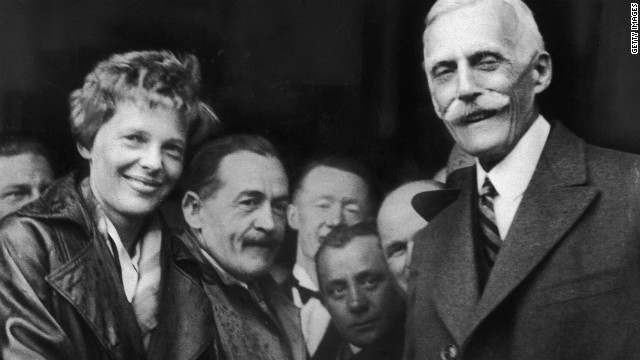
Andrew Mellon, pictured here with Amelia Earhart, gave the country the National Gallery of Art with his own collection forming its nucleus. Mellon also gave much to help numerous individuals during his lifetime and to fund several scientific innovations and private institutions long after he was gone.

None of these successful people could have given so much to so many without the accumulation of wealth derived from work.

On Profit and Property

President Coolidge confronted the same impulse in his time to remove ownership and eradicate profit in the name of “equality” that is prevalent today. The egalitarianism of the French and Russian Revolutions, still lauded by those who were new to America, failed to produce the results of the earlier Revolution of 1776 not because of incompetence or inferior people. It was because the American Revolution was rooted in more ancient principles and timeless truths of work, law, ownership and reward. The experiment in discarding property and profit had been tried in America, in its earliest settlement by William Bradford and the brave souls who disembarked at Plymouth Rock in 1620. As Bradford records in his Journals, they nearly starved to death under that “communal” experiment. This trial-run in socialism was found incapable of producing the moral or material results which a system that protects ownership of property and profit for work done accomplishes whenever and wherever observed (“Of Plymouth Plantation” pp.115-6).

President Coolidge, well-aware of that experience among the pilgrims, knew of its value in whatever age one lives. In an address right before the 1924 election, he explains the wisdom of ownership and profit, “When service is performed, the individual performing it is entitled to the compensation for it. His creation becomes a part of himself. It is his property. To attempt to deal with persons or with property in a communistic or socialistic way is to deny what seems to me to be this plain fact. Liberty and equality require that equal compensation shall be paid for equal service to the individual who performs it. Socialism and communism cannot be reconciled with the principles which our institutions represent. They are entirely foreign, entirely un-American. We stand wholly committed to the policy that what the individual produces belongs entirely to him to be used by him for the benefit of himself, to provide for his own family and to enable him to serve his fellow men.” The notion that an individual has an entitlement to own the reward of his own effort, not the work of another is increasingly a foreign concept. It is no less valid a truth.

As Coolidge understood what seems lost to our day, the compensation of profit and ownership goes to the one who earns it. It is not the entitlement of the state to claim ownership of an individual’s property, redistributing to the idle in the name of “equality.” Such is an insult to the hard-working. The principle of service obligates a person to love his neighbor, providing from what he owns to help others. It is not the role of government to dispense favors with the property of individuals. As Coolidge would say again on other occasions, “There is just one condition on which men can secure employment and a living, nourishing, profitable wage, for whatever they contribute to the enterprise, be it labor or capital, and that condition is that someone make a profit by it…When you deny the right to profit, you deny the right of a reward to thrift and industry.”