On Humility

A quality well-known to those who knew him was Mr. Coolidge’s humility. He knew, as he wrote to his father, being “the most powerful man in the world,” meant high responsibilities not lofty privileges. It was not an opportunity to “live large,” clothing himself in the trappings of his glory. During his lifetime, he had seen certain men become President only to equate the majesty of the Office with the excellence of the person. He knew the dangers of arrogance. He was never fooled to think that it was proper, even for a President, to govern by the force of his personality. He had seen President Wilson try and disastrously fail on that score. Mr. Coolidge raised the dignity of the office during his time, that is for sure, but he distinguished between the greatness of the Presidency from the absence of greatness in him. He was simply chosen from the sovereign people to serve for a short time and then “be one of them again.”

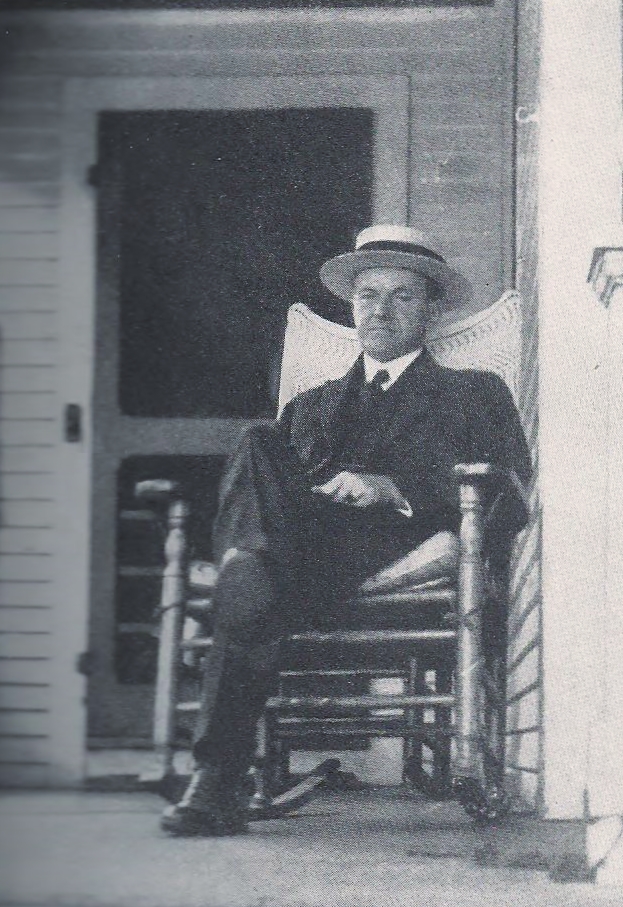
His desire to be a private citizen again was unfortunately never entirely restored. It cannot be easy to rediscover “normalcy” for anyone who has once been a President. But he earnestly tried. Prompted to speak in retirement, he accepted only under the most compelling pressure because he refused to accept it was his place to assume the mantle again as a kind of unofficial public authority or “Deputy President.” His humility was such that he could no longer do many of the things he loved to do, such as sit on his front porch. He disdained the ostentatious displays of attention showered on him because of the Presidency. He would tolerate it for the sake of the Office while he held it, but he refused to suffer it after the White House.

He disapproved of Presidential pensions and would not take a cent of public support. He would work for himself. It was writing that primarily occupied his time and even that weighed on his mind with the obligations of producing a product worth publishing, meeting deadlines, and not taking advantage of the credentials he could have claimed to accept more than a piece was worth.

His long-time law partner, Mr. Hemenway, recalled three occasions of Mr. Coolidge’s many expressions of simple unaffectedness, the first one in the midst of being President, that underscored his persistent humility. Mr. Hemenway, writing for Good Housekeeping in April 1935, recounts:

     “While he was President, I had a note in longhand from him one day, as follows:

                                                                                                Sept. 13, 1928

     ‘My Dear Mr. Hemenway:–

            ‘You have at Hampton safety deposit 2 Lib Bonds $50 each. See if any are due Sept 15

      current and if so have Tr. Co. collect them and credit my acct.

                                                                                          ‘Yours

                                                                                       ‘Calvin Coolidge’

     “That note shows his far-reaching recollection of detail. Here you witness the President of the United States, the problems of a nation on his desk, with an income of $75,000 a year and $25,000 more for traveling expenses and entertainment, plucking out of his innumerable mental pigeonholes the relatively insignificant matter of two $50 Liberty bonds on which the interest of $2.12 was due!

     “To show his kind-heartedness and his liberality I recall one occasion when I was in need of funds owing to the closing of a local bank. I was seated at my desk deeply buried in thoughts that were not particularly cheerful when he came through the connecting doorway from his office, walked over to me, and placed a slip of paper on my blotter. As he turned away and went back to his room, he said quietly,

     ‘And as much more as you want.’

     “It was a check for $5,000.”

The final memory shared by Mr. Hemenway humorously highlights the former President’s unchanged outlook after life in the White House.

     “The splendor and pomp of Washington and the Presidency never changed his early valuations of life. He was simple and unaffected to the last degree. He liked foot comfort. In the old days he would slip off his shoes and put both stockinged feet in his wastebasket where they wouldn’t be seen. Once, however, he was taken off his guard. A woman client came into his office while he feet were planted in the wastebasket. He got a good laugh out of it afterward–although he certainly did not enjoy the surprise at the moment.”
                         Image

“We draw our Presidents from the people. It is a wholesome thing for them to return to the people. I came from them. I wish to be one of them again…They have only the same title to nobility that belongs to all our citizens, which is the one based on achievement and character, so they need not assume superiority. It is becoming for them to engage in some dignified employment where they can be of service as others are” — Calvin Coolidge, The Autobiography, 1929, pp.242-3.

On Thoughtfulness

One of the best insights into a person comes from the honest assessments of those with whom one works. President Coolidge had many such witnesses. Not everyone accurately understood him nor did they all respect what they did not “get” about him. Still, there remain many whose firsthand experience with the man emphatically contradict the popular image of Coolidge as a cold, unfeeling and callous individual. On the contrary, Ira Smith, the director of the White House mailroom for fifty-one years (including the entire Coolidge era), has one of many such examples of Coolidge’s spontaneously given kindness. His thoughtfulness was not unexpected because it was rare but because it manifested a degree of attention and regard the recipient never thought a President would deign to feel let alone show. Underestimated all his life, Mr. Coolidge enjoyed doing the unexpected. More than this, though, he was a kind man. He noticed the small things and took care to express concern, be it little Anne Morrow’s hurt finger, “old man” Mellon’s morale in the midst of the tax cut fights or a complete stranger as in the case recounted here:


     “He had a temper that could make itself felt in high places, but he always felt a strong sympathy for the ordinary citizen and frequently went out of his way to perform some little act of thoughtfulness for a stranger. One Sunday morning when I was at the office trying to catch up with a heavy flood of mail he came over from the White House and stood beside my desk while I opened a large pile of letters. One of them was a special delivery letter from a woman who wanted to know what church the President would attend that day and at what time he would be there. She explained that she was in Washington only for a few days and that she wanted her small son to get a glimpse of the President while he was in the capital because it would be something he would remember always and could tell his friends about. She asked whether it would be possible to telephone her at her hotel and tell her which church Mr. Coolidge would attend. I handed him the letter and he read it carefully. Without saying anything, he picked up a pencil and wrote: ‘Phone 10:30 A.M. Monday.’ He handed the notation to me and went abruptly away. Such notes were typical of Mr. Coolidge, and I understood that he meant for me to telephone the woman and tell her to bring her son to the White House on Monday at 10:30 A.M. for a visit with the President. This I did, and the delighted mother and son were received by Mr. Coolidge.”


Some may cynically dismiss this as mere political calculation but to those who knew and understood him well, he was simply thinking of others. Conscious of his limitations as President, he exercised the power he held as a moral example that should inspire with humble service, not arrogant disdain for people. When he declined to use the powers he could have wielded as President, he did so with respect for his Constitutional oath and the rightful exercise of state and local governance. To blame Coolidge for the silence toward Charles D. Levy, a Jew facing boycott and expired leases in Ohio from the Klan, overlooks that the President was acting — to both preserve local self-government from federal good intentions and to set the moral example of presiding. The President presides, he does not take all powers into his hands to intervene on behalf of select citizens. To do so, would have undermined the freedoms of others and compromised the purpose of the Office. It would have been unjust, a variation of “picking winners and losers.” It would only help legitimize the Klan for a President to treat them seriously with a public statement. Ignored as insignificant, the lack of attention would defeat them. It had nothing to do with a lack of compassion and everything to do with an overriding concern for what was fair to all and respectful of liberty. He knew the disaster of good intentions and so the situation Mr. Levy faced was referred to the Bureau of Investigation, under the Justice Department led by Attorney General Stone. This was the Coolidge way: to take care of issues if they are his to handle; If not, to delegate to the proper person what is their responsibility. To explain to Mr. Levy, or anyone else what he was doing, would have undermined his actions and undone the effectiveness of addressing the problem versus discussing what one intends to do about it. In this way, Mr. Coolidge imparts even greater thoughtfulness for Mr. Levy (safeguarding his lawful liberties and the freedoms of all concerned) than his sharpest critics understand or will admit.