On Judges

The announcement by the Court’s majority yesterday in United States v. Windsor broadcasts a fundamental departure from the proper role of judges. As Justice Scalia forecasts in his dissent, this is a judicial majority which is willfully abandoning the limited authority granted in Article III of the Constitution. It is an attempt to grasp the power of deciding abstract issues, instead of cases, with nothing but the policy preferences of five individuals. It is only a matter of time before their casual reference to federalism disappears and the Court “drops the other shoe,” building on this precedent to dictate to all situations what “democratically adopted” laws meet with the Court’s approval. This is not mere judicial review of Congressional acts, like in the past. This is exercising an authority to determine outcomes based on nothing more than whether they accord with the political views and social sympathies of community activists wearing robes. The language of law merely covers this assumption of control.

The Court’s majority is so lost when it comes to what judges are supposed to be doing that those who do not agree with their predetermined conclusion are branded as hate-filled homophobes with a “bare…desire to harm,” “disparage,” “injure,” “demean,” “impose inequality” and a “stigma,” denying “equal dignity,” branding same-sex couples as “unworthy,” and to “humiliate” their children. Such absurd accusations have no place being uttered by the highest Court in the land. As Justice Scalia observes, it is the Court’s majority behaving in so prejudicial and demeaning a fashion with this kind of rhetorical venom masquerading as legal authority. So much for a judge’s duty to impartially and “blindly” apply the appropriate law to the facts of each case that comes before it.

The Court is exercising a power greater than mere legislators when the future of law depends upon what a majority feels like allowing Congress, the states, individuals and other “enemies of the human race” to pass in future. It is precisely why the Founders wisely separated the judiciary from the executive and legislative powers. Now the Court’s majority seeks to return to a time when absolute sovereigns determined what law is and when it applied…to subjects. To some, this decision is a victory for “equality,” but when results are chosen after removing Justice’s blindfold by judges who do not accept their role as impartial triers of facts, no one’s liberties are secure any longer. It is the basis for equality, an equality under law, that has lost.

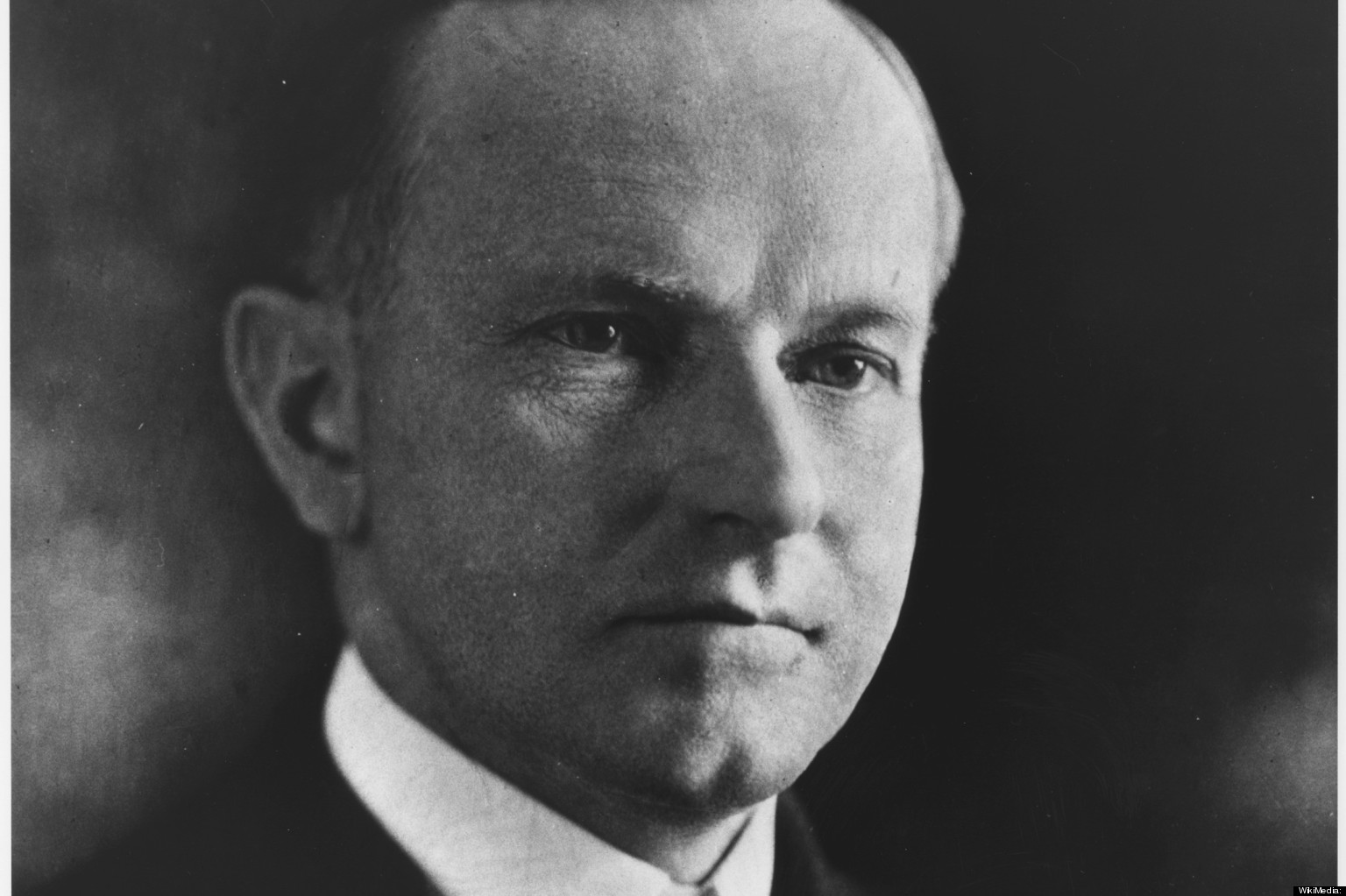
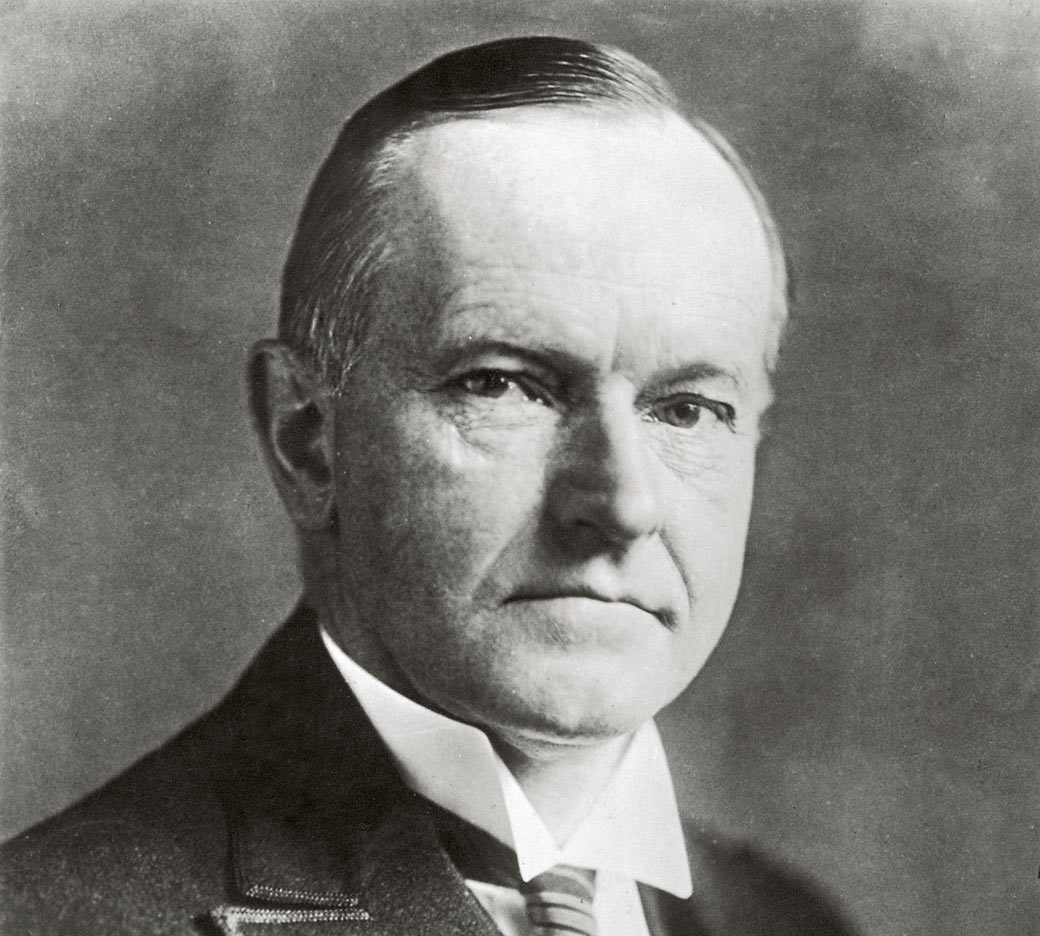
It is significant that a growing public opposition to the courts and a disrespect for the rule of law, not unlike now, was unfolding when Calvin Coolidge spoke these words in Boston, January 7, 1914, “Men do not make laws. They do but discover them. Laws must be justified by something more than the will of the majority. They rest on the eternal foundation of righteousness…Courts are established, not to determine the popularity of a cause, but to adjudicate and enforce rights. No litigant should be required to submit his case to the hazard and expense of a political campaign. No judge should be required to seek or receive political rewards…The electorate and judiciary cannot combine. A hearing means a hearing. When the trial of causes goes outside the court-room…constitutional government ends.”

Ten years later, he was observing the danger of using legal language to justify the assumption of power at the expense of liberty, “The Constitution of the United States has for its almost sole purpose the protection of the freedom of the people. We must combat every attempt to break down or to make it easy, under the pretended guise of legal procedure, to throw open the way to reaction or revolution. To adopt any other course is to put in jeopardy the sacred right to life, liberty, property, and the pursuit of happiness.”

He would reiterate the Constitution’s soundness into modern time, providing for stability as well as amendment. The course to amend, though deliberately long (to ensure the people consent to its changes), is ever open to those who seek improvements. It is not the place of the courts to amend it by judicial rule. “Our Constitution has raised certain barriers against too hasty change. I believe such provision is wise. I doubt if there has been any change that has ever really been desired by the people which they have not been able to secure. Stability of government is a very important asset. If amendment be made easy, both revolution and reaction, as well as orderly progress, also become easy. The nation has lost little, but has gained much, through the necessity of due deliberation. The pressing need of the present day is not to change our constitutional rights, but to observe our constitutional rights.

“A deliberate and determined effort is being made to break down the guarantees of our fundamental law…In this contest there is but one place for a real American to stand. That is on the side of ordered liberty under constitutional government…The time for Americans to range themselves firmly, squarely, and uncompromisingly behind American ideals is now…Those who want to continue to enjoy the high estate of American citizenship will resist all attempts to encroach upon their liberties by encroaching upon the power of the courts.”
Image

On Scandals

As the details became known of what had transpired when government officials used patronage on friends in favored businesses, President Coolidge would set the tone, in February 1924. Coolidge would explain how he and those under his authority would act to restore integrity, punish the guilty and represent all, not merely a preferred few, Americans,

“Character is the only secure foundation of the state. We know well that all plans for improving the machinery of government and all measures for social betterment miserably fail, and the hopes of progress wither, when corruption touches administration. At the revelation of greed making its subtle approaches to public officers, of the prostitution of high place to private profit, we are filled with scorn and indignation. We have a deep sense of humiliation at such gross betrayal of trust, and we lament the undermining of public confidence in official integrity. But we cannot rest with righteous wrath; still less can we permit ourselves to give way to cynicism. The heart of the American people is sound…For us, we propose to follow the clear, open path of justice. There will be immediate, adequate, unshrinking prosecution, criminal and civil, to punish the guilty and to protect every national interest. In this effort there will be no politics, no partisanship. It will be speedy, it will be just. I am a Republican but I cannot on that account shield any one because he is a Republican. I am a Republican, but I cannot on that account prosecute any one because he is a Democrat…Distressing as this situation has been, it has its reassuring side. The high moral standards of the people were revealed by their instant reaction against wrongdoing.”

The same high standards are maintained when we, the sovereign people, hold our officials to account for mismanagement and dereliction of their sworn duties. Coolidge did more than outline what needed to be done, he did it by appointing a special counsel team to investigate and prosecute both civil and criminal wrongs, by issuing executive orders commanding entire departments be turned upside down to provide all the information investigators requested, by firing his Attorney General for refusing to comply, and welcoming the start of litigation well before the elections of 1924, even when it could have destroyed his chances for election. His clarity in both word and deed demonstrated the right way to handle government abuse of authority, even when it concerned inherited circumstances. Contrary to Hillary Clinton, it still makes a difference at this point.

Image

On Investigations

Image

   Special Counsel, Owen Roberts (left) and Atlee Pomerene (right) on the case, February 1924.

 “[They] left no stone unturned to win their case. No avenue of evidence was left unexplored, and no pains or expense were spared in preparing for trial. The government’s side could not have been in more able hands. The skill with which the evidence was amassed and arranged, and the ability with which it was presented to the jury, left no possible room for adverse criticism. Messrs. Roberts and Pomerene adhered to the finest traditions of American jurisprudence throughout the preparatory and trial stages of this celebrated case; and no one who followed the case could doubt that if a verdict of guilty had been forthcoming it would have been due to the extraordinary efforts and ability of the government’s counsel”The Washington Post, December 17, 1926, p.29

In the memories of some, special prosecutors hearken back to the days of Archibald Cox and the “Saturday Night Massacre” in 1973. Many more recall the investigation that culminated in 1999 of the Clintons by independent counsel, Kenneth Starr. As a result of that historic sequence of events the statute authorizing the office of an independent counsel, selected by the District of Columbia Court of Appeals, was allowed to expire. Consequently, it is widely regarded as an inherently dangerous and abusive office. In both occasions, the political hype and overall disruption to the country increased through the way wrongdoing in high public office was handled. The punishment for breaking the law should fall on those who commit the crime. Oftentimes, this does not happen. It tends to magnify into a frenzy of posturing, false accusations, collateral damage, denials, obstruction and a pursuit of scapegoats in the effort to avoid blame. Such is destructive to the trust the people place in their government to be responsible, fair and lawful.

It is not to say the fault belongs with the investigators, who generally are conscientious public servants exercising their legal responsibilities to find the facts. Such was the case with the Mr. Starr. It is usually the conduct of elected officials, as well as the press, when they attempt to capitalize on either the sensationalism or help destroy an opponent’s reputation and agenda. Such attitudes were present in 1973 and again in 1999. All of these conditions were possible in 1924, yet the way the investigation of each case was conducted protected the peace of the country by upholding the fair and orderly process of law. The fact that the scandals of the Harding administration did not engulf the country anew in lasting doubt and fear is a testament to the abiding worth of integrity, sound judgment and active administration of justice. It was thanks to Coolidge that each of these qualities held firm at so early (for him) and crucial a time to keep the country at peace under the authority of law binding all, from the President to the smallest citizen.

The Senate, tipped off by constituents to possible abuses of officials in Harding’s administration, opened an official inquiry. Democrats and Progressives were swift to crow about “corruption” of big business, before any of the facts were known. The young wife of Franklin D. Roosevelt even mounted a large tea pot onto her automobile as the campaign of 1924 would begin to ramp up: the hopes of Democrats everywhere that this was the opportunity to discredit the Republican Party. As the network of connections to those suspected unfolded, however, it became obvious that both Democrats, even as illustrious as former Treasury Secretary McAdoo, and Republicans, including the popular Albert B. Fall (former Senator of New Mexico and current Secretary of the Interior) were involved. Implicating those of both parties, as Coolidge had asserted it would, the Senate quietly closed down their inquiry, deferring to the course of action mapped out by the President.

Preempting the Senate, President Coolidge acted quickly to curb both the demands for Cabinet resignations and an open-ended search for guilt that tended to characterize Congressional inquiries. He worked to restore the primacy of the law to the process, appointing a special counsel to investigate the evidence for prosecution and then direct the litigation that followed.

Some important observations emerge from how Coolidge handled the situation that would help restore the respect for law and fairness, especially in our current situation.

First, the special counsel was kept outside of the Justice Department entirely. As the accusations went public, the man who had been Harding’s closest friend was also the Attorney General of the United States. Attorney General Daugherty seemed too close to the suspects at every turn of the inquiry that he was not regarded as trustworthy with pursuing an honest investigation. Coolidge recognized that credible third parties were necessary to achieve a just result. Appointment by the President and confirmation by the Senate of the special counsel protected this credibility from the outset of the investigation. As leadership of the Justice Department transitioned to trustworthy hands first under Stone and then Sargent, greater collaboration between the special counsel and the Attorney General developed, only after this initial step to establish its credibility was demonstrated. The Attorney General was still not in charge of the case.

Second, the special counsel consisted of two men from both political parties. Owen Roberts was a Republican. Atlee Pomerene was a Democrat. Coolidge’s first duo was withdrawn when discovered they had connections to the oil companies involved. A team, as opposed to only one person, gave greater weight to the integrity and objectivity of their findings. It is already noted that Coolidge, to the ire of some, reminded antagonists that this was an apolitical issue. It was a problem that required not partisan arrogance but cooperation from everyone to suspend judgment until the facts were known. This is why the President firmly resisted all demands for the resignation of Cabinet members. He would not give in to a “lynch mob” presumption of guilt. Without evidence, short of due process, he would not be forced to give weight to the mere “seriousness of the charge” above that of actual proof. Navy Secretary Denby would resign on his own (guilty of nothing more than stupidity). Attorney General Daugherty would only be requested to resign by Coolidge when he failed to comply with a request for documents by the special counsel.

Third, the special counsel comprised two men of competent, conscientious ability. Neither man were nationally renowned lawyers nor were they specialists in public land law, but Coolidge chose them for more important reasons: they were meticulous men of character. They took their task seriously and in the end, they proved more than up to the responsibility.

Fourth, the special counsel was responsible for specific charges against the accused. The case against the accused did not proceed along an unending search for criminal activity. Malfeasance, in the form of accepting a bribe that defrauded the government, was the heart of the their work. Evidence was collected from the Senate inquiry, the Department of Justice, the Navy Department and extensive testimony of witnesses. Within a month of beginning their efforts, the evidence confirmed bribes had been accepted by the Secretary of the Interior. Indictments were issued and over the next six years the courts proceeded to hear two civil and six criminal cases involving those charged with the crime. One, Albert B. Fall, would be found guilty and sent to prison in October 1929. Another would be found in contempt of court for hiring detectives to follow the members of the jury. Still others would be acquitted by jury but the special counsel, in each case, did its job responsibly.

Fifth, the special counsel retained the cooperation of both the President and the Congress. Instead of playing political games with each new item to come to light, the special counsel team was chosen, confirmed and annual appropriations disbursed by the President from Congress. President Coolidge, from the very start, set the tone of cooperation with these outside fact finders, ensuring all was disclosed. He made clear his door remained open to any and all assistance they would require and then he got out of their way. He never intruded upon their duties, obstructed their endeavors or imposed upon the process. He made sure they had the funds designated for them to do the job, which was all he needed to do.

These observations are not locked in an outmoded time and place. They recall that political favoritism is not new. It is when government officials use their authority to reward those they prefer, be they in business or likewise in government, that the trust placed in them by the people is destroyed. Coolidge rejected this notion of rewarding certain industries or businesses with political advantages. His belief in constructive economy served for the good of everyone across the country, not just those who supported him.

These observations also recall that the special counsel can be properly deployed against crimes at the highest levels of government. A wise statesman once cleared this path and it would serve us well to reflect on its successes, not merely its failures. America will be better served when a renewed respect for law is exemplified by its leaders.

                         Image