White House to finally display Armenian Orphan Rug given to President Coolidge

White House to finally display Armenian Orphan Rug given to President Coolidge

At long last, after much effort on the part of some determined Americans, the White House is going to display the rug woven by Armenian orphans in gratitude for the United States and her leading role in the rescue, relief and friendship for those who survived the genocide perpetrated against Armenians in 1915. It was to President Coolidge that the intricate rug was given in 1925, an honor he cherished the rest of his life, ensuring its preservation through his son, John. The rug, displayed by President Reagan in 1984 and President Clinton in 1995, was subsequently put away and, despite countless requests, has not been allowed a showing…until now. A sincere thanks goes to everyone who refused to take “no” for an answer. It reminds us all of the devotion Americans still hold, as Calvin Coolidge did, for helping the innocent, standing by those in pursuit of freedom, defending the sanctity of an individual’s life, and supplying that spirit of good will and generosity that unite, not divide, us. It is also a reminder that when Americans rally together behind a just and noble purpose, nothing can stand against them. Coolidge would be proud.

“Instead of putting all the emphasis on the great amount of wealth our country has accumulated, some thought should be given to the amount it is continually giving away. These are our permanent investments on which the returns are most satisfactory” (Calvin Coolidge, May 4, 1931).
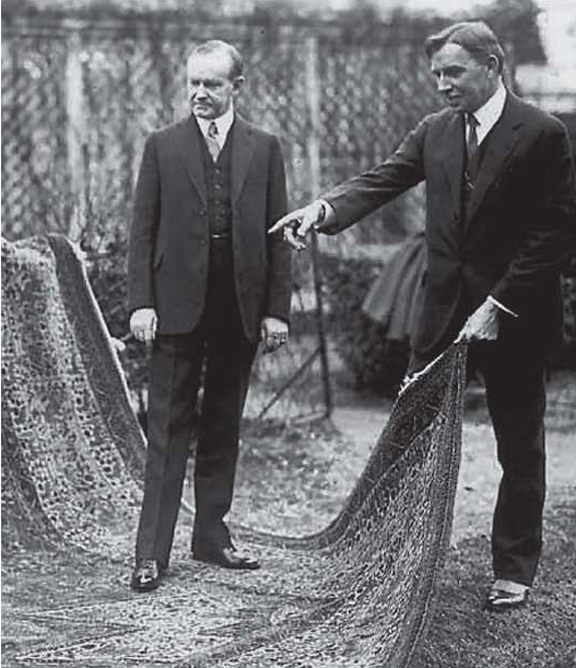
Coolidge_Armenian_Orphan_Rug

Keep posted at the Armenian Weekly

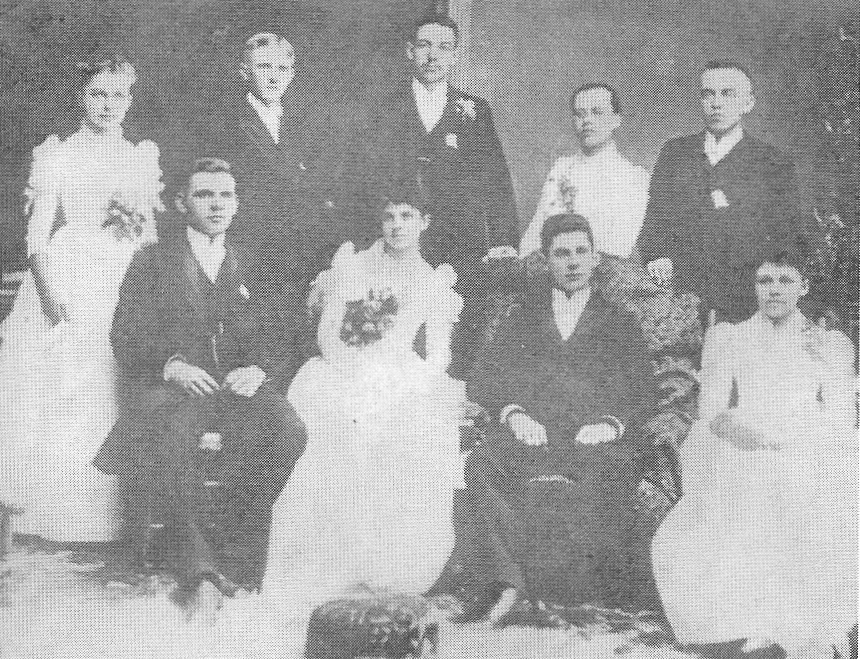
Black River Academy Graduating Class Photo, May 1, 1890

BRA Group Photo May 1 1890 001

Coolidge attended B.R.A. from 1886 to 1890, where he would officially graduate on May 23rd of the latter year. As secretary of the class, he would deliver the first of many carefully written speeches during his long life in public service, this one aptly surveying the power of “Oratory in History.” Standing from L to R: Avvie L. King, Plymouth; Coolidge, Plymouth; Henry M. Hicks, Perkinsville; Clara S. Pollard, Ludlow and Amos K. Pollard, Ludlow. Sitting from R to L: Ellen M. Adams, Ludlow; Albert A. Sargent, Ludlow; Jessie Arminton, Ludlow and Rufus N. Hemenway, Ludlow.

It was on the occasion of his survey of oratory’s power on events that he observed, “In the history of our own country, the triumphs of oratory have been hardly less marked than those of the Old World. In the night of tyranny, the eloquence of the country first blazed up, like the lighted signal fires of a distracted border to startle and enlighten a community. Everywhere as the news of some fresh invasion of our liberties and rights was bourne on the wings of the wind, men ran together and called upon some earnest citizen to address them…” When James Otis rose in 1761 to denounce the British Writs of Assistance, “every man of the vast audience went away resolved to take up arms against the injustice.” Patrick Henry’s “Liberty or Death” speech “gave an impulse which probably decided the fate of America.” Young Calvin ended his oration in not too unfamiliar a fashion when he said, “The effects of sacred oratory on the history of the world would fill volumes…It would hardly be too much to say, that since the dawn of civlization, the triumphs of the tongue have rivaled, if not surpassed, those of the sword. Although some of the most fiery themes of eloquence may have passed away with the occasions of tyranny, outrage, and oppression that created them…yet so long as wickedness and misery, injustice and wretchedness prevail on the earth, so long as the millennium is still distant and Utopia a dream, the voice of the orator will still be needed to warn, to denounce, to terrify, and to overwhelm.”

For Coolidge, the education of the mind and soul never stopped. There were no graduates when it came to real education — the finishing of character and the constant preparation of not merely the intellect but the spirit of the individual. As he would write, looking back on his life at fifty-seven years of age, in The Autobiography, “My education began with a set of blocks which had on them the Roman numerals and the letters of the alphabet. It is not yet finished.”

Phi Gamma Delta Conference, 1926

Phi Gamma Delta Conference, 1926

Leaders of the Phi Gamma Delta fraternity visit fellow member, President Calvin Coolidge (Amherst 1895), at the White House, January 23, 1926. L to R: W.T. Pangmon (Syracuse 1902), Donald Davis (Kansas 1918), Cecil Wilkinson (Ohio Wesleyan 1917), Harry White (Alabama 1916), Carleton Potter (Dartmouth 1918), Charles Anderson (Columbia 1925), Charles Eastman (Illinois 1906), Penfield Mower (Dartmouth 1904), Horace Brightman (Columbia 1902), Edwin Clattenburg (Roanoke 1902), President Coolidge, J. Earle Dunford (Richmond 1915), Luther Brewer (Gettysburg 1883), Ralph Cake (Oregon 1913), George Snyder (Pennsylvania 1900), Donald Canfield (WPI 1919), Clarence Williams (Reserve 1914), Frank Lee (California 1918), Danner Mahood (Davidson 1922, Virginia 1923), and Harry Swanson (Chicago 1917).