On Respect for the Office

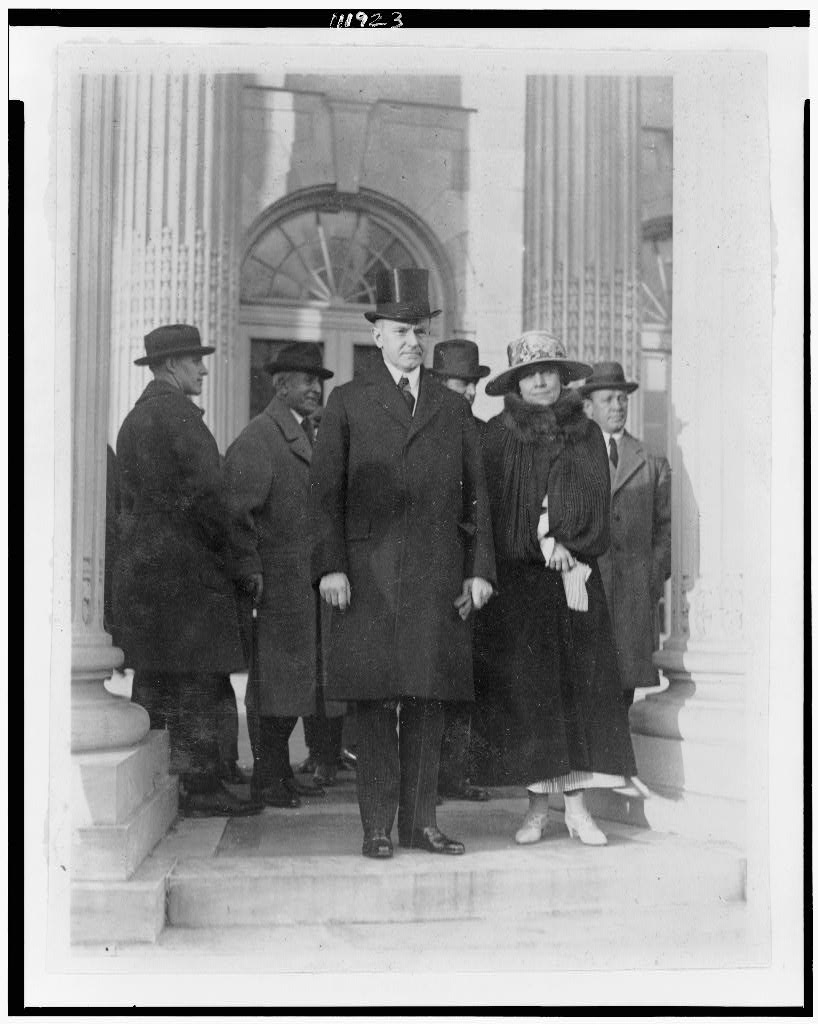
Image“Personally, I do not like all this attention, but it is for the President of the United States, and I have great respect for the office” — Calvin Coolidge to his Aunt Mrs. Pollard, after boarding the Mayflower to formal salutes, the National Anthem and the ceremonious presentation of his sailing cap (Paul Boller, Presidential Diversions. Orlando: Harcourt, 2007, p.217).

“Everything that the President does potentially at least is of such great importance that he must be constantly on guard. This applies not only to himself, but to everybody about him. Not only in all his official actions, but in all his social intercourse, and even in his recreation and repose, he is constantly watched by a multitude of eyes to determine if there is anything unusual, extraordinary, or irregular, which can be set down in praise or in blame…While such events finally sink into their proper place in history as too small for consideration, if they occur frequently they create an atmosphere of distraction that might seriously interfere with the conduct of public business which is really important” — Calvin Coolidge, The Autobiography, pp.216-7.

“When the President speaks it ought to be an event” — Calvin Coolidge, The Autobiography, p.219, when discussing the refusal to give speeches from the rear platforms of trains. To Coolidge, it was beneath the dignity due the Office. He had great esteem for the Presidency.

“This was I and yet not I, this was the wife of the President of the United States and she took precedence over me; my personal likes and dislikes must be subordinated to the consideration of those things which were required of her” — First Lady Grace Coolidge

“Even after passing through the presidential office, it still remains a great mystery. Why one person is selected for it and many others are rejected cannot be told. Why people respond as they do to its influence seems to be beyond inquiry. Any man who has been placed in the White House can not feel that it is the result of his own exertions or his own merit. Some power outside and beyond him becomes manifest through him. As he contemplates the workings of his office, he comes to realize with an increasing sense of humility that he is but an instrument in the hands of God” —  Calvin Coolidge, The Autobiography, pp.234-5.

“Young man, you are having dinner tonight with the President of the United States. You will dress properly. Go to your room and change” — President Calvin Coolidge to his son, John, after the boy had come back to the White House in casual clothes and wanted to know why, since no guests were expected outside the family, he had to dress formally and appear punctually for 7PM dinner (Robert Gilbert, The Tormented President, p.51).

Father Coolidge was not thinking of how it reflected upon him personally, he was regarding the respect due to the Presidency, an obligation equally as binding on him as upon his family. For Coolidge, the President was more than the man who occupied it at the time, it was the great and dignified responsibility of the Office. It would not be cheapened or sacrificed through any action on the part of himself or his family. This remained true all of his life, whatever office he held.

The secretary who worked in his law office, Ernestine Perry, once recounted the occasion that Lieutenant Governor Coolidge called from the train station. He was quite “disgruntled,” she remembered. It seems he had become separated from his hat and coat, arriving before them on a separate train to Northampton. As Mrs. Perry recounted, Coolidge “had only to walk the length of the platform and cross the street to his office, but he would not attempt it hatless.” To confuse this response with vanity is greatly mistaken, Coolidge held each office with the highest honor. He would not detract from it for the sake of his own convenience, sending the message that an informal appearance conveyed: flippant disregard for one’s duties. As Mrs. Perry observed, “He felt keenly that public officials should maintain the dignity of office. To him it represented the public trust. His dignity was not a pose. He was always orderly. I never saw him in need of a shave, and I never saw his hair untidy. I never saw his shoes in need of a shine” (Good Housekeeping, March 1935, p.214). It was not the appearances themselves but what the outward neglect said about the substance of the person that mattered to Coolidge.

Even his readiness to wear the gifts presented to him, despite how it made him personally appear, conformed to his high regard for the Presidential Office. Coolidge wore them not to denigrate official dignity for were he to refuse the headdress, the ten-gallon hat and chaps given to the President, it would have hurt the bond of mutual respect that must necessarily continue between the Office and the People. He could not injure so delicate a sentiment because it would impair the strength of that very legitimate connection the people rightly have to those they choose to serve as their leaders.

“It was my desire to maintain about the White House as far as possible an attitude of simplicity and not engage in anything that had an air of pretentious display. That was my conception of the great office. It carries sufficient power within itself, so that it does not require any of the outward trappings of pomp and splendor for the purpose of creating an impression. It has a dignity of its own which makes it self-sufficient. Of course, there should be proper formality, and personal relations should be conducted at all times with decorum and dignity, and in accordance with the best traditions of polite society. But there is no need of theatricals. But, however much he may deplore it, the President ceases to be an ordinary citizen” — Calvin Coolidge, The Autobiography, p.217.

Image

The Coolidges in Georgia, Winter 1928-29

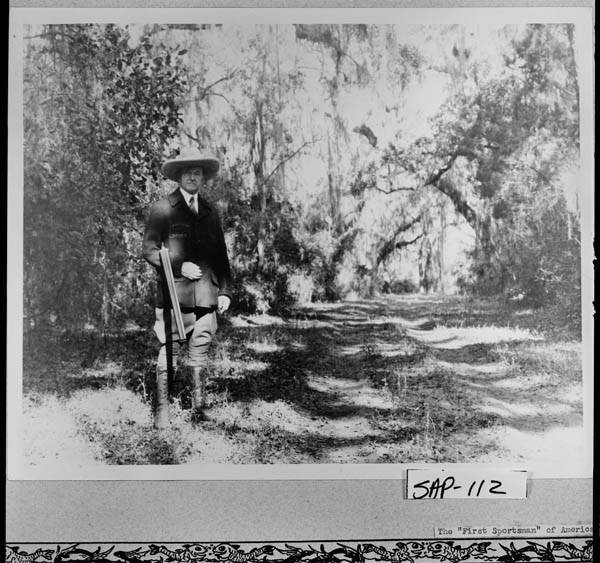
ImagePresident Coolidge, dubbed here “The ‘First Sportsman’ of America,” pausing before his quail hunt in the scrub of Sapelo Island, Georgia.

President and Mrs. Coolidge arrive at the train station in Brunswick, Georgia, before heading out to Sapelo Island.

President and Mrs. Coolidge arrive at the train station in Brunswick, Georgia, before heading out to Sapelo Island. Courtesy of the Georgia Archives.

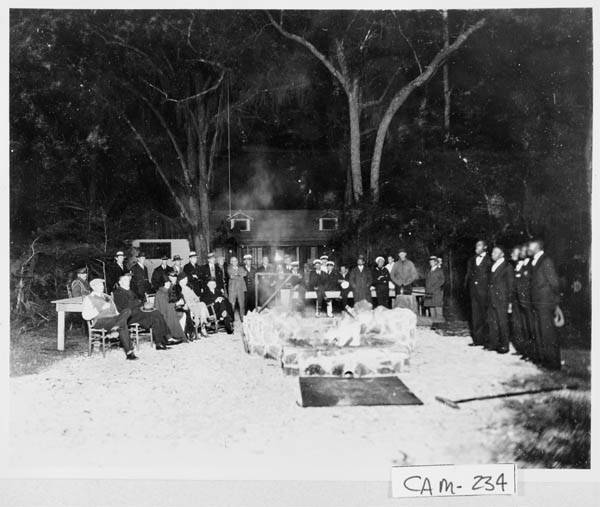
The Coolidges at Cabin Bluff enjoying an old-fashioned oyster roast around the fire. The President and Mrs. Coolidge are seated in the front row on the left (Grace is third from left, Calvin sits on the far right end).

The Coolidges at Cabin Bluff enjoying an old-fashioned oyster roast around the fire. The President and Mrs. Coolidge are seated in the front row on the left (Grace is third from left, Calvin sits on the far right end). Courtesy of the Georgia Archives.

President Coolidge at Cabin Bluff with the "spiritual" singers of Georgia Industrial College.

President Coolidge at Cabin Bluff with the “spiritual” singers of Georgia Industrial College. Courtesy of the Georgia Archives.

The Coolidges visit the Sugar House ruins belonging to John H. McIntosh. Notice the tabby oyster shells used commonly along the Virginia, Carolina, Georgia and Florida coasts as a building material. These were thought to be the old Spanish mission of Santa Maria, St Marys, Georgia.

The Coolidges visit the Sugar House ruins, St Marys, belonging to John H. McIntosh. Notice the tabby oyster shells used commonly along the Virginia, Carolina, Georgia and Florida coasts as a building material. These were thought to be the ruins of the old Spanish mission of Santa Maria. Courtesy of the Georgia Archives.

Crowds gathered to see the First Lady at a reception in her honor, St Marys dock.

Crowds gathered to see the First Lady at a reception in her honor, St Marys dock. Courtesy of the Georgia Archives.

President and Mrs. Coolidge welcomed by their hosts, Mr. and Mrs. Howard E. Coffin, at the Sea Island Yacht Club.

President and Mrs. Coolidge welcomed by their hosts, Mr. and Mrs. Howard E. Coffin, at the Sea Island Yacht Club. Courtesy of the Georgia Archives.

At Sea Island, December 1928, Coolidge planted "The Constitution Oak" on the grounds of The Cloister, the hotel established by the Coffins (pictured here beside the Coolidges).

At Sea Island, December 1928, Coolidge planted “The Constitution Oak” on the grounds of newly constructed Spanish Revival style hotel, The Cloister, designed by Addison Mizner and owned by Howard E. Coffin and his wife (pictured here beside Grace Coolidge). Courtesy of the Georgia Archives.

The Coolidges visiting the Monument to the Battle of Bloody Marsh, July 7, 1742, when the Spanish attacked Georgia held by the British, under General James Oglethorpe, whose Scottish Highlanders soundly defeated the Spaniards in what proved to be the first decisive engagement in the Western Hemisphere. General Oglethorpe redeemed his reputation after the defeat at St. Augustine two years before. It would set America further down the road on her course to independence.

The Coolidges visiting the Monument to the Battle of Bloody Marsh, July 7, 1742, when the Spanish attacked Georgia held by the British, under General James Oglethorpe, whose Scottish Highlanders soundly defeated the Spaniards in what proved to be the first decisive engagement in the Western Hemisphere. General Oglethorpe redeemed his reputation after the defeat at St. Augustine two years before. It would set America further down the road on her course to independence. Courtesy of the Georgia Archives.

President Coolidge watches the steer riding along the beaches of Sapelo Island, December 1928.

President Coolidge watches the steer riding along the beaches of Sapelo Island, December 1928. Courtesy of the Georgia Archives.

Coolidge and Mr. Coffin happen upon some sea turtles on the beach, Sapelo Island.

Coolidge and Mr. Coffin happen upon some sea turtles on the beach, Sapelo Island. Courtesy of the Georgia Archives.

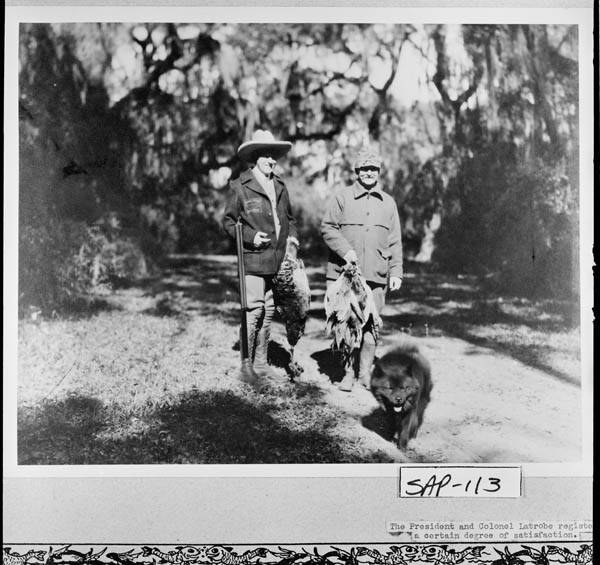
President Coolidge and Colonel Latrobe, unsuccessful at quail, do shoot a few pheasants during the hunt, Sapelo Island.

President Coolidge, unsuccessful at quail, and military aide Colonel Latrobe, proudly display the pheasants shot during their hunt, Sapelo Island. Courtesy of the Georgia Archives.

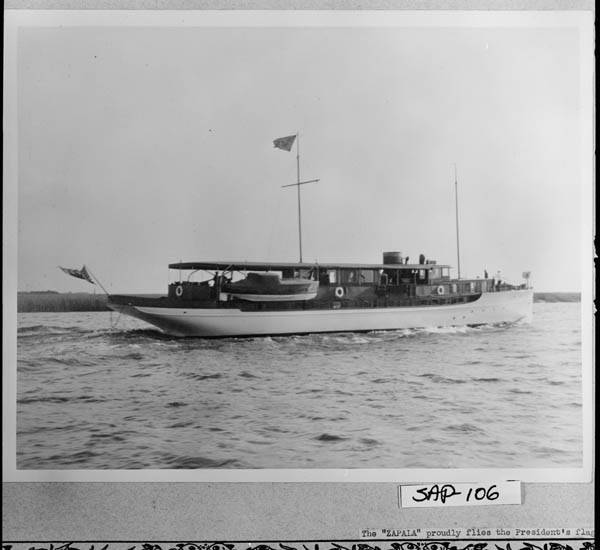
The motor yacht Zapala sails with the Presidential party aboard. Note the President's flag is raised.

The motor yacht Zapala sails with the Presidential party aboard. Note the President’s flag is raised. Courtesy of the Georgia Archives.

President Coolidge and another man, perhaps Secret Service, standing on the afterdeck of the Zapala.

President Coolidge and another man, perhaps Secret Service, standing on the afterdeck of the Zapala. Courtesy of Mystic Seaport and Connecticut History Online.

The Coolidges on the afterdeck of the Zapala, designed by A. E. Luders and built in Stamford, CT, in 1927.

The Coolidges on the afterdeck of the Zapala, the yacht designed by A. E. Luders and built in Stamford, CT, in 1927. Courtesy of Mystic Seaport and Connecticut History Online.

The Presidential hunting party disembarks from the Zapala, which would consider Georgia its home base for fourteen years, 1927-1941.

The Presidential hunting party disembarks from the Zapala, which would consider Georgia its home base for fourteen years, 1927-1941. Courtesy of the Georgia Archives.

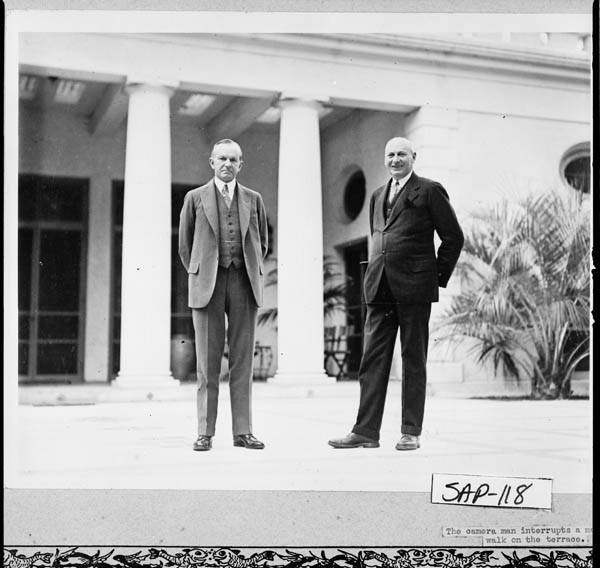
Calvin Coolidge and his friend and host, entrepreneur Howard E. Coffin, as they walk the terrace of "The Big House" built by Thomas Spalding, 1810, Sapelo Island.

Calvin Coolidge and his friend and host, entrepreneur Howard E. Coffin, as they walk the terrace of “The Big House” built by Thomas Spalding, 1810, Sapelo Island. Courtesy of the Georgia Archives.

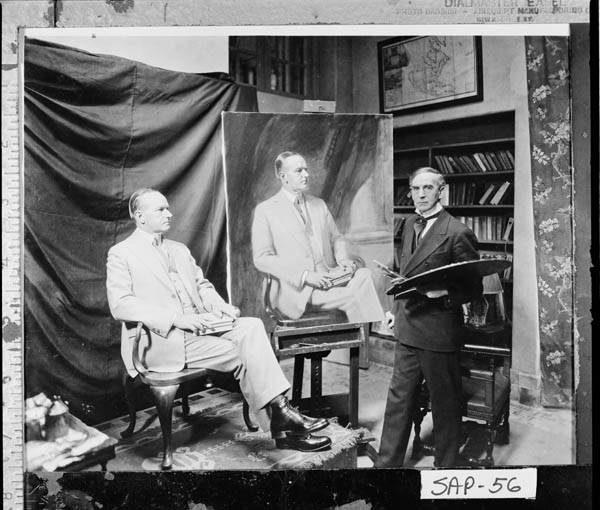
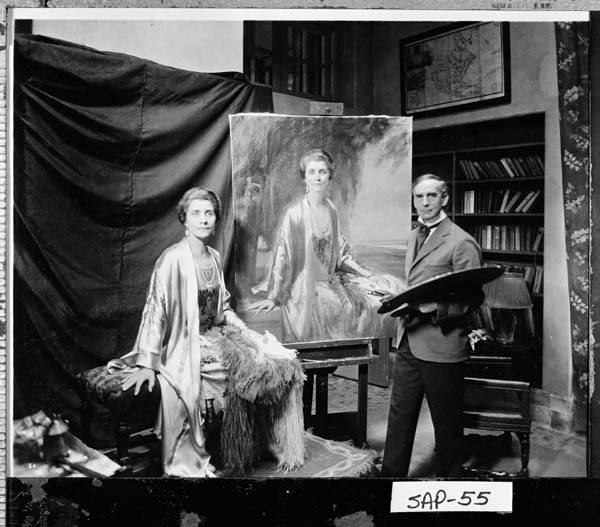
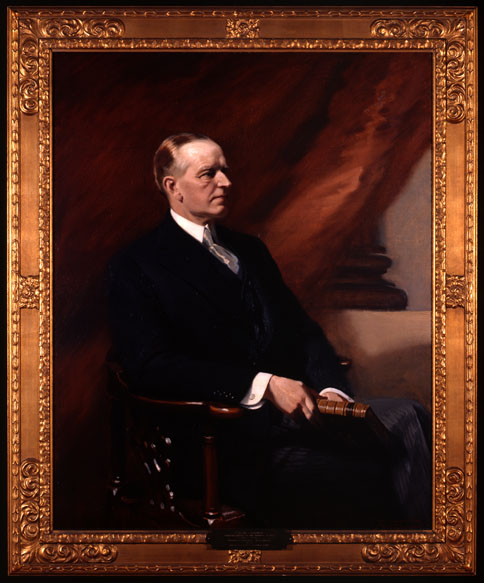
cc-with-painter-salisbury-and-portrait-on-sapelomrs-coolidge-with-painter-salisbury-and-portraitIt was also during their stay, as we have mentioned before, that the Coolidges both sat for British painter Frank O. Salisbury at “The Big House” on Sapelo Island. Salisbury would be commissioned again in 1934, following Mr. Coolidge’s death, to produce another portrait for the American Antiquarian Society. Mr. Salisbury, at that time, painted Coolidge in a dark suit with strikingly similar pose to the original work seen above six years earlier.

Calvin Coolidge, posthumous portrait by Frank O. Salisbury, 1934.

Calvin Coolidge, posthumous portrait by Frank O. Salisbury, 1934.

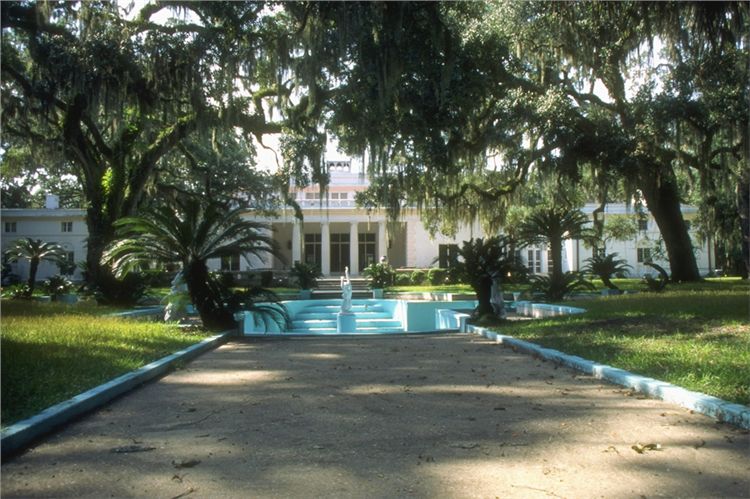
View to the front Terrace of "The Big House" (what is now called The Reynolds Mansion), where Coolidge and Coffin stood.

View to the front Terrace of “The Big House” (what is now called The Reynolds Mansion), where the Coolidges stayed eighty-five years ago.

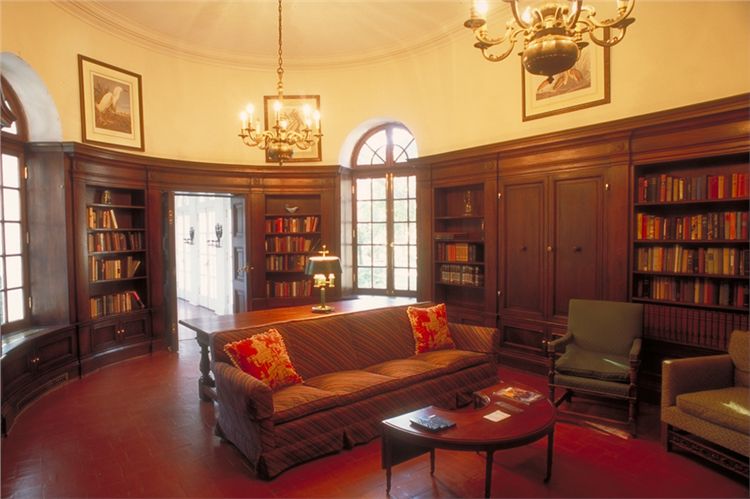
The library where President and Mrs. Coolidge had their portraits painted. The background for the First Lady's portrait is the picturesque Spanish moss and green lawns of this, as with so many, Southern mansions.

This is the library where President and Mrs. Coolidge had their portraits painted. The background for the First Lady’s portrait is the picturesque Spanish moss and green lawns of this, as with so many, Southern mansions.

On Opening Presents Early

“Christmas was a sacrament observed with the exchange of gifts, when the stockings were hung, and the spruce tree was lighted in the symbol of Christian faith and love. While there was plenty of hard work, there was no lack of pleasurable diversion” (Calvin Coolidge, The Autobiography, p.30).

It was on this day eighty-eight years ago that the President’s eagerness for Christmas overcame his usual self-restraint. Though the Chief of Mails, Ira Smith, would not have said anything, it seems someone did — and told the newspapers. The next day, the story recounted that Coolidge not only ignored the “Don’t Open Until Christmas” injunction but, as was his custom, returned from his morning walk to visit the mail room for any “mails” that had come in for him. The story recounts that upon looking over the packages due to be sent to the White House, he saw two items with handwriting he recognized. Breaking into them, he was contented to see what each contained and could then go about the day’s work.

Biographers have noted Coolidge’s proclivity for sweets and snacks, the President regularly appearing in the White House kitchen or the Mail Room in order to investigate firsthand what was there: be it fruits and nuts, jams and pastries, anything from which he could munch. As he said in The Autobiography, “Almost everything than can be eaten comes. We always know what to do with that” (p.222).

It was as President Coolidge prepared to leave Washington for Christmas in 1928, exemplifying an exceptionally jovial spirit, that he informed the press he would be leaving on “Christmas Day, December 24.” When the room broke out in laughter, he followed with, “When is Christmas?” One of the journalists, completely unacquainted with his subject’s dry wit, answered seriously that the 24th was Christmas Eve. Coolidge, without skipping a beat, responded with a smile: “Well, I always tried to have Christmas on two days, the 24th and 25th, when I was a boy.”

Image