On Calvin Coolidge

CC photo

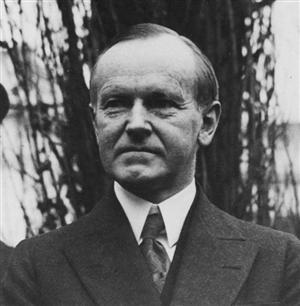
Though no eulogies were uttered for Calvin Coolidge officially, a massive outpouring of voluntary tributes spread across the country in the months following his death, funeral and burial. Just as Americans had spontaneously raised him to a Vice Presidential candidacy, so now they held services, wrote editorials and considered anew the substance of Coolidge’s leadership and legacy. Three such tributes are especially worth noting not only because these three were on the opposite side of Mr. Coolidge politically, but, having studied the culture for so long, were not speaking as novices but veterans of great influence around the nation.
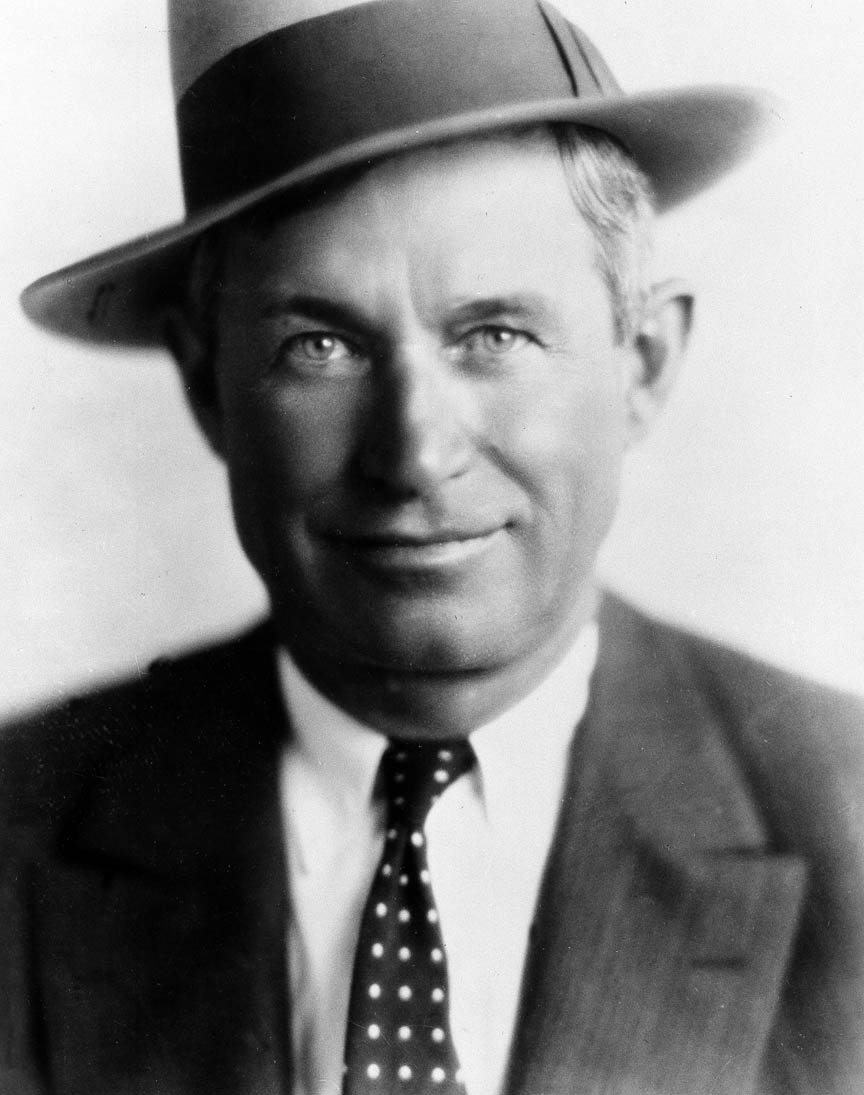
Comedian Will Rogers

Comedian Will Rogers

The first was comedian and columnist Will Rogers, who wrote on January 5,

“Mr. Coolidge, you didn’t have to die for me to throw flowers on your grave. I have told a million jokes about you but every one was based on some of your splendid qualities. You had a hold on the American people regardless of politics. They knew you were honest, economical and had a native common sense. History generally records a place for a man that is ahead of his time. But we that lived with you will always remember you because you was ‘with’ your times. By golly, you little red-headed New Englander, I liked you. You put horse sense into statesmanship and Mrs. Coolidge’s admiration for you is an American trait” (The Autobiography of Will Rogers, p.307).
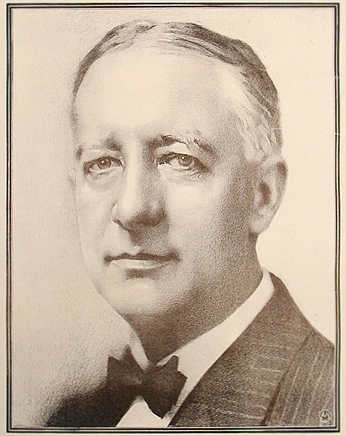
1928 Presidential candidate and Governor of New York, Al Smith

1928 Presidential candidate and Governor of New York, Al Smith

The second had been a presidential candidate, in fact, Al Smith had been nominated in 1928 to run against Coolidge’s successor, President Hoover. The “Happy Warrior,” Al Smith, had served with Coolidge on more than occasion in their retirement from public service. Mr. Smith offered one of the fairest assessments of Coolidge, all the more commendable given the fact that he was a loyal and life-long Democrat. He shatters the mistaken perception of Coolidge with something far more than another cliched attempt to speak kindly of the dead. Smith was offering a sincere and honest judgment,

“I had a great liking and respect for him. Beneath a chilly, reserved, and dignified exterior, he was keen, kindly and entirely free from conceit, pompousness, and political hokum. We are often told politics in a republic produced only demagogues. Calvin Coolidge was a most successful and popular politician, but he had nothing of the demagogue in him.”

Coolidge rightly belonged “in a class of presidents who were distinguished for character more than for heroic achievements. His great task was to restore the dignity and prestige of the presidency when it had reached the lowest ebb in our history, and to afford in a time of extravagance and waste, a shining public example of the simple and honest virtues which came down to him from his New England ancestors. These are no small achievements, and history will not forget them.

“Calvin Coolidge was a salty, original character, an unmistakable home-grown, native, American product, and his was one of those typically American careers, which begin on the sidewalks, or on the farm, and prove to the youth of the nation that this is still the land of unbounded opportunity” (cited by Robert Sobel in Coolidge: An American Enigma, pp.418-9).
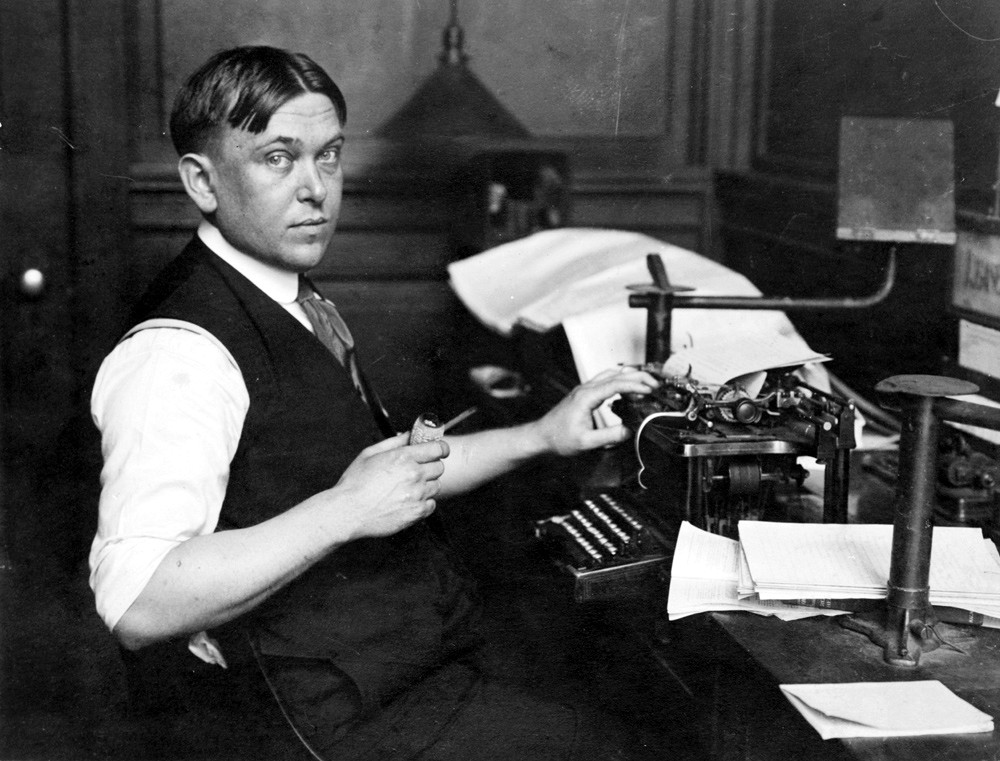
Journalist and critic Henry L. Mencken, the "Sage of Baltimore"

Journalist and critic Henry L. Mencken, the “Sage of Baltimore”

Finally, the third man was a critic and journalist, one who had cynically followed politics for years and who was not one to give praise to anybody, especially to the dead. Yet, of Coolidge’s legacy H. L. Mencken finally wrote, all the more timely given that F. D. R. was already a month into his New Deal program of legislation,

“We suffer most when the White House busts with ideas. With a World Saver preceding him (I count out Harding as a mere hallucination) and a Wonder Boy following him, he begins to seem, in retrospect, an extremely comfortable and even praiseworthy citizen. His failings are forgotten; the country remembers only the grateful fact that he let it alone. Well, there are worse epitaphs for a statesman. If the day ever comes when Jefferson’s warnings are heeded are last, and we reduce government to its simplest terms, it may very well happen that Cal’s bones now resting inconspicuously in the Vermont granite will come to be revered as those of a man who really did the nation some service” (H. L. Mencken, A Carnival of Buncombe, p.136).

Indeed, it may and not a moment too soon.

On his Last Day, January 5, 1933

Massachusetts State House, flags lowered at half-mast in honor of the late former President Coolidge, January 1933

Massachusetts State House, flags lowered at half-mast in honor of the late former President Coolidge, January 1933

The morning of Thursday, January 5, 1933 dawned like any other weekday. The former President was up by 7AM, as was his custom. He dressed without shaving and went down the stairs of his home, The Beeches, to enjoy a breakfast with Mrs. Coolidge by 8AM. Coolidge went downtown to the old law office to check the mail, answer correspondence, read the newspapers, and take care of any other work that needed attention. However, by 10AM, Mr. Coolidge was no longer feeling well, remarked that he was turning into an old man and might even work out of his office at The Beeches from now on. Wishing to head back home. Coolidge was driven back by his chauffeur, John Bukoski, whom Coolidge affectionately nicknamed “Johnny jump-up,” for his enthusiastic and always helpful manner. Walking back in the door at the house, Coolidge found Grace preparing to go shopping downtown. “Don’t you want to take the car?” he asked. “No, it’s such a nice day I’d rather walk than ride.”

Mr. Coolidge went up to the library after his wife’s departure. There was one of his favorite recreations sitting on the table, a jigsaw puzzle, this one of George Washington. It was his habit never to start a puzzle but to place a few pieces as he went about his day. Mr. Coolidge worked on it a short time and then talked with Harry Ross, the former President’s private secretary, about the homestead in Plymouth. Ross began to notice that Coolidge was not well and even appeared to be uncharacteristically restless. Mr. Coolidge had certainly lost weight and energy throughout much of the winter of 1932, but he seemed to be fighting through it.

Coolidge went back downstairs to get a glass of water in the kitchen. He went to the basement and spoke briefly with the hired man as he shoveled some coal into the furnace. It seems the house was starting to feel colder as mid-day approached. Then, Mr. Coolidge remembered he had not shaved and he better do so before Grace returned for lunch. He ascended the stairs once more and, as was his practice, rolled his sleeves and prepared the old-fashioned straight razor, brush, and mug he used. Having prepared the soap and water, he looked into the mirror and it was there that death quietly took him.

While she had been out, Mrs. Coolidge realized she did not have a black dress in her wardrobe. Something persuaded her that it would be a wise investment. She returned home around 12:45PM, more than twenty minutes after her husband had gone upstairs, and she then set her things down. She discovered Mr. Coolidge on his back laying as if asleep on the floor upstairs. Harry Ross was the next to learn what happened, as Grace called down to him, “My husband is dead.”

The doctor, E. W. Brown, was called and he determined the time of death to be 12:25PM, the cause a coronary thrombosis due to chronic heart failure. Doctor Brown concluded that the President had not been dead more than fifteen minutes by the time Grace found him. Secretary Ross next called John and Florence in Connecticut and word quickly spread from there across the nation. President Hoover established thirty days of mourning for the former President. Coolidge’s body was embalmed and respectfully placed in his own bed during the night of January 5th.

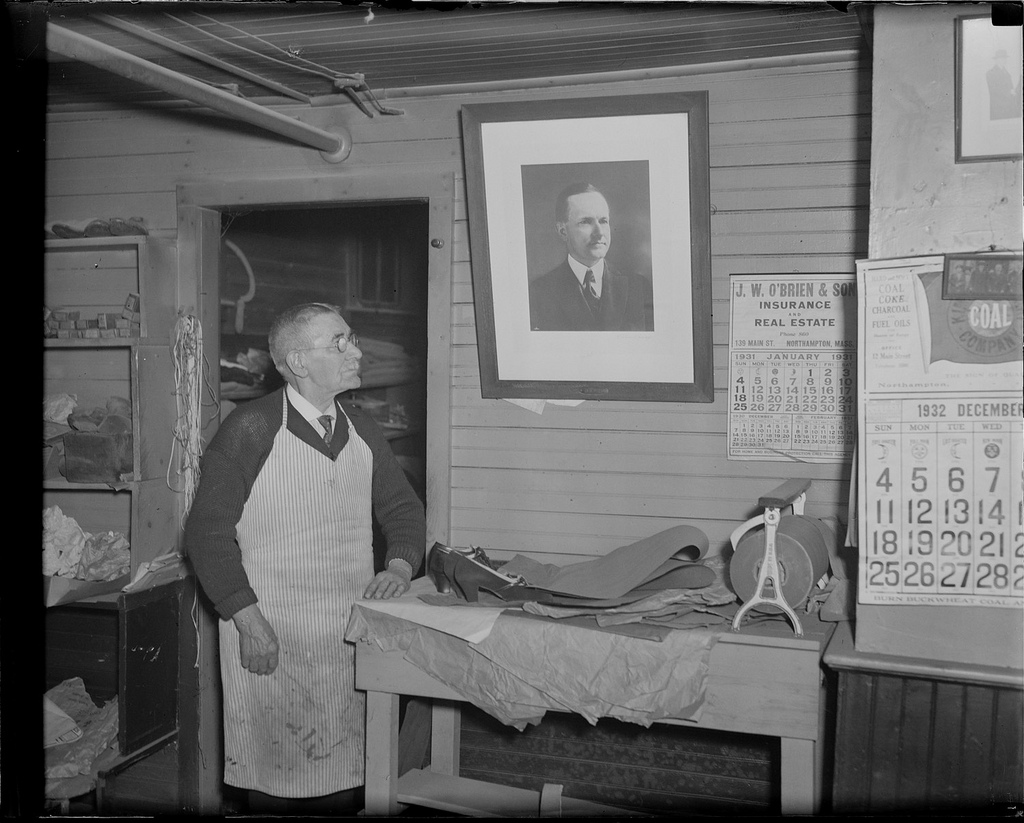
Coolidge’s old friend, James Lucey, upon hearing of the younger man’s death, broke down, “I’m sorry. I’m sorry. He was the best friend I ever had. I’ve known him ever since November of the first year he went to Amherst College. My sympathy goes out to Mrs. Coolidge and their son, John.”

Shoemaker James Lucey in his Northampton shop, January 7, 1933

Shoemaker James Lucey in his Northampton shop, January 7, 1933

That evening via a National Broadcasting Company radio hookup, long-time family friend and respected journalist Bruce Barton spoke,

“It happens that I wrote the first magazine article ever published about Calvin Coolidge. It was in Collier’s. Dwight Morrow suggested it. ‘Don’t you think we ought to begin to get some publicity for our fellow Amherst man who is Governor up in Massachusetts?’ he asked me.

“So I went up to Boston, and Frank Stearns telephoned to the State House, and I had one of the great surprises of my life. This man Coolidge, whom I had heard described as cold and repressed and taciturn, proved that he could be very gracious. He talked intelligently. He had humor. He was very easy to interview. I remember that he pulled out of his desk an old yellow pamphlet. It was the record of a law passed by the Selectmen of Belchertown, Mass., after the Revolutionary War, fixing the prices which the farmers would be allowed to charge for their produce in the Belchertown market.

“Mr. Coolidge said, ‘Isn’t it strange how, in every period of economic disturbance, people have the idea that you can pass a law and fix everything?’ I thought to myself: Here is something new. Here is a politician who has read some history. He knows that some things have been tried and won’t work. A few minutes later I said: ‘Governor, how it is that you have been able to stay in public life all these years and hold office when you have no money?’ His answer was in just two words: ‘I’m solvent.’

“He took care to keep solvent. He never lost his head. He never let anything change him. As Lieutenant Governor he had been living in one room in the old Adams House, for which he paid a dollar a day. When he was elected Governor, Frank Stearns said to him: ‘Now you must rent a house and bring Mrs. Coolidge down from Northampton. The Governor must not live in a room in an hotel. He must have a home where he can entertain.’

“Mr. Coolidge said nothing, but when he was inaugurated as Governor he stopped living in one room in the Adams House at a dollar day; he took two rooms in the Adams at two dollars a day.

“When I came back to New York after that first interview Mr. Morrow sent for me and, taking me into his private office, he shut the door, and said: ‘Now, Bruce, tell me. How big a man is he anyway? I have known him for nearly thirty years, and I can’t make up my mind.’ He added, almost wistfully: ‘You know, I have seen them all now. And none of them look very big to me any more.’

“From that day until the hour of his death Dwight Morrow’s opinion of Calvin Coolidge mounted steadily. He saw him rise to one situation after another. He had a steadily higher estimate of his judgment, his courage and his solid common sense. Coolidge did not wear his heart on his sleeve, but Morrow’s death hurt him more deeply than anything that had happened since the death of his boy. It left a permanent scar. The two men, so different in personality and experience, were very close in spirit. When Mr. Morrow passed Mr. Coolidge mourned. Perhaps he knew even then that the sentence of Fate had been passed upon him. Certainly the loss of Mr. Morrow must have helped to hasten his own end.

“You have heard many people say many different things about this man who now lies dead in his Northampton home. I shall say something about him that I doubt you have ever heard any man say. I loved him. Morrow loved him. There was a very lovable side to Calvin Coolidge. He was unique. God broke the pattern when he was formed. There never has been any one like him in the White House. There never can be. The nation will remember his personality and his dry humor long after it has forgotten most of the events of his administration. And to some of us those memories will bring a pang of loneliness.”

Coolidges in Cambridge

Book Discussion on “Coolidge: An American Enigma,” August 11, 1998

http://c-spanvideo.org/program/Enig

A superb presentation by the late, but great, Mr. Robert Sobel on Calvin Coolidge. While not a recent work, it is a fresh contribution to respect and appreciate the thirtieth president even now. It was my first read on Mr. Coolidge. Scholar Sobel presents him as he was, without apology, without pretense, without facade.

Though Mr. Coolidge may finally be gaining a semblance of regard for who he was and the principles he embodied, this interview, not that long ago in the grand scheme of events, reminds us that an unwarranted prejudice and close-minded suspicion has prevailed so long about Coolidge and his kind of leadership. The host’s almost awkward incredulity illustrates this engrained, yet mistaken, impression of who Coolidge was and is supposed to remain.

Sobel’s work demands that we open our minds to the profound value of Coolidge’s legacy, rejecting the utterly false perception of his weakness and ineffectiveness assumed as fact by an intellectually narrow and politically biased academia. Sobel expects us to reckon with this intricate, and even potent leader, instead of keeping our eyes closed for fear of seeing something that contradicts what we are now supposed to believe as irrefutable, politically, culturally and economically. He has much to teach us about leadership in general and the Presidency in particular. Don’t merely read the book and shelve it, take the time to study it in order to better grasp what makes Coolidge important now.

Sobel book