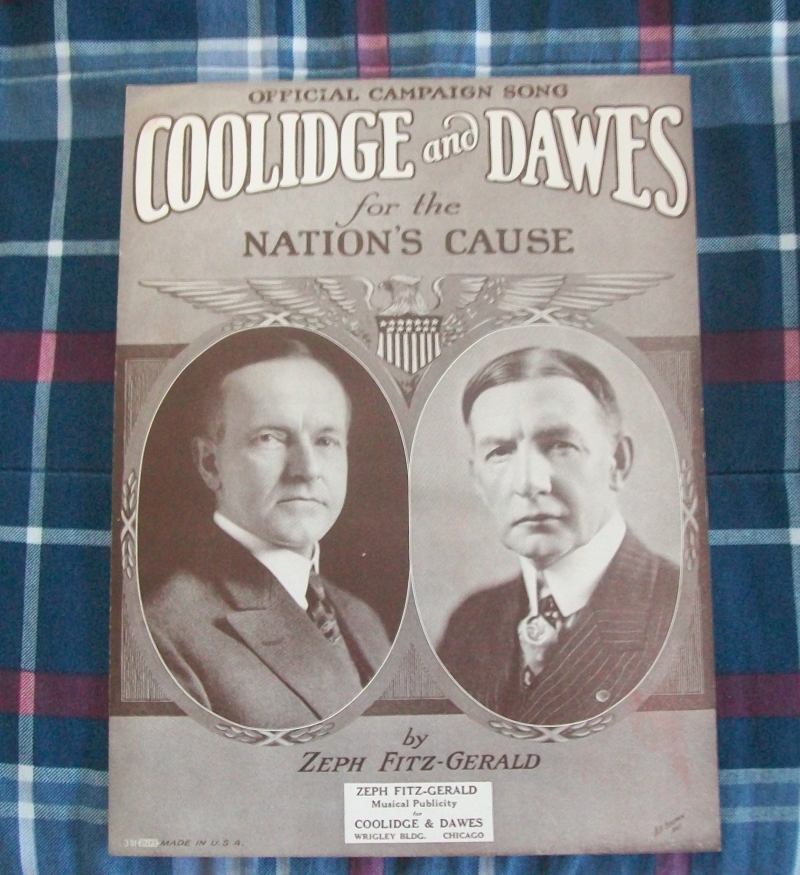
The campaign song, “Keep Cool with Coolidge,” underscored the steady leadership and calm reliability of the 1924 Republican team and its Party platform.
As the train wrecks converge of “Obamacare” and the Federal Government’s refusal to account for its criminally reckless spending habits — except by the “band-aid” of Continuing Resolutions and debt limit increases, Americans are more and more proving to be the last constituency with any political representation in Washington. This is a grave disservice, especially to those who backed the party platforms for “tough budgetary decisions across the board” (for Democrats) and passing a Balanced Budget Amendment to the Constitution that would make it so “future Congresses cannot balance the budget by raising taxes” (for Republicans).
Realizing, as the Supreme Court confirmed last summer, “Obamacare” is an overt tax, at least for everyone who does not reside in the District of Columbia. The costs about to fall upon everyone across the Country, especially the poorest among us, are still multiplying as the contents of its regulations begin implementation in less than two weeks.
This is why political parties, as expressions of the sovereign people’s will, serve an imperative purpose in our Republic. Ours is not a mere democracy of simple majorities deciding every political question for us. Ours is a representative Republic, setting two fundamentally opposing agendas before the people who express their support or disapproval through the ballot box. These agendas are implemented by political parties and outlined in platform promises every four years.
Calvin Coolidge recognized the obligation of that party system to carry out the pledges and policies for which each Party stands, declaring, “…[I]t is necessary under our form of government to have political parties. Unless some one is a partisan, no one can be an independent. The Congress is organized entirely in accordance with party policy. The parties appeal to the voters in behalf of their platforms. The people make their choice on those issues. Unless those who are elected on the same party platform associate themselves together to carry out its provisions, the election becomes a mockery. The independent voter who has joined with others in placing a party nominee in office finds his efforts were all in vain, if the person he helps elect refuses or neglects to keep the platform pledges of his party…”
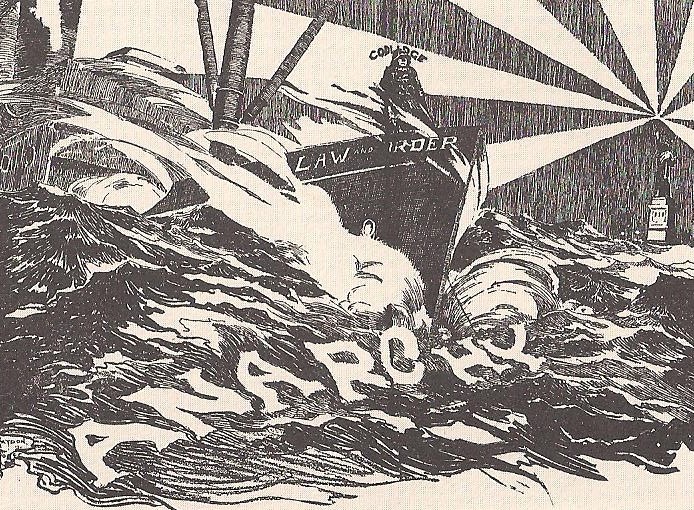
It is the reason why he did not immediately overturn the Cabinet or alter the policy direction started under Harding until the people voted again in 1924. Even then, he conscientiously upheld the Party platform, despite some in his own Party abandoning him for political convenience. For Coolidge, Party platforms were serious contracts between the voter and the candidate. The candidate is not empowered to break his promises when he gets to Washington. Facing unforeseen circumstances, the principles of the Party define the fixed channels and hazardous shoals wise leaders must navigate to accomplish the goals of one’s Party. The principles are not to be jettisoned when storms hit, they are the compass to reach harbor.
The House vote to defund “Obamacare” and the efforts by Senator Cruz in the Senate are simply attempts to keep the Republican Party honest about its own platform, carrying out the political promises made to those who supported the issues of repeal and balanced budgets last year. Republicans who want to help implement the Democrat Party’s platform are in the wrong business. It is no different in any other area of life: If everyone agrees, something is seriously missing. Ours is not a one-party system for that reason.
Real legislators, contrary to the wishes of David Brooks, are those who furnish principled opposition to the other Party’s agenda in order that the expressed will of the other side has a voice in the direction the Country is to take. Our system is not a pure democracy of mere majorities settling every political question, be it Democrat or Republican.
Senators like Cruz are doing what much of the GOP is too timid to do — uphold Party principles. Republicans were not supported last year to rubber stamp the other Party’s agenda, they were sent to be Republicans, a Party in opposition to the agenda of Obama and his small majority in the Senate. Republicans, like Cruz, are expected to represent those who chose them to obstruct and defeat the Democrat Party’s persistent commitment to spending, avoid actual budgeting and expedite the outright conquest of one-sixth of America’s economy by government control of our health care.
This means Republicans are obligated and expected to act in unison, especially on so fundamental an issue as now stands before the Senate — the defunding of “Obamacare” linked with the long overdue halt on government spending. Coolidge affirmed this as a principle for any party which intends to remain effective for long,
[i]f there is to be responsible party government, the party label must be something more than a mere device for securing office. Unless those who are elected under the same party designation are willing to assume sufficient responsibility and exhibit sufficient loyalty and coherence, so that they can cooperate with each other in the support of the broad general principles of the party platform, the election is merely a mockery, no decision is made at the polls, and there is no representation of the popular will. Common honesty and good faith with the people who support a party at the polls require that party, when it enters office, to assume the control of that portion of the Government to which it has been elected. Any other course is bad faith and a violation of the party pledges.

By “Ding” Darling November 14, 1924
The Democrat Party, conveniently ignoring the “tough budget decisions” it promised last year are not winning issues, they are silencing any effective opposition through fear and intimidation, counting on our ignorance to blame Republicans for others’ actions. Instead of joining Democrats in this evasion of who they are and what they really believe, Republicans need to be boldly and unashamedly Republican. Instead, the “experts” are urging Republicans to just stop being Republicans and conform to a one-party system so that the White House can achieve Utopia for us all.
Coolidge knew better. He knew that, “[s]ince its very outset, it has been found necessary to conduct our Government by means of political parties. That system would not have survived from generation to generation if it had not been fundamentally sound and provided the best instrumentalities for the most complete expression of the popular will.” Neither party perfectly represents, nor can it, the popular will in everything. Opposing parties serve as an indispensable check upon political power (whichever Party is in office), continually reminding both sides that principles (not holding government powers) matter most and no majority however strong can defy the people’s will indefinitely.
It serves a continual reminder that parties are not empty vessels to be shattered and remade on the whim of politicians for the expediency of the moment but rather they are the instruments through which the people speak, enacting the principles we expect of our government. They are to stand for very specific and irreconcilable directions. To silence, deny and dispense with that difference is a betrayal of every last one of us, every time we vote and every choice we make, Republican, Democrat, or otherwise.
 The Importance of the Obvious