Remembering a President’s Inaugural

             Image

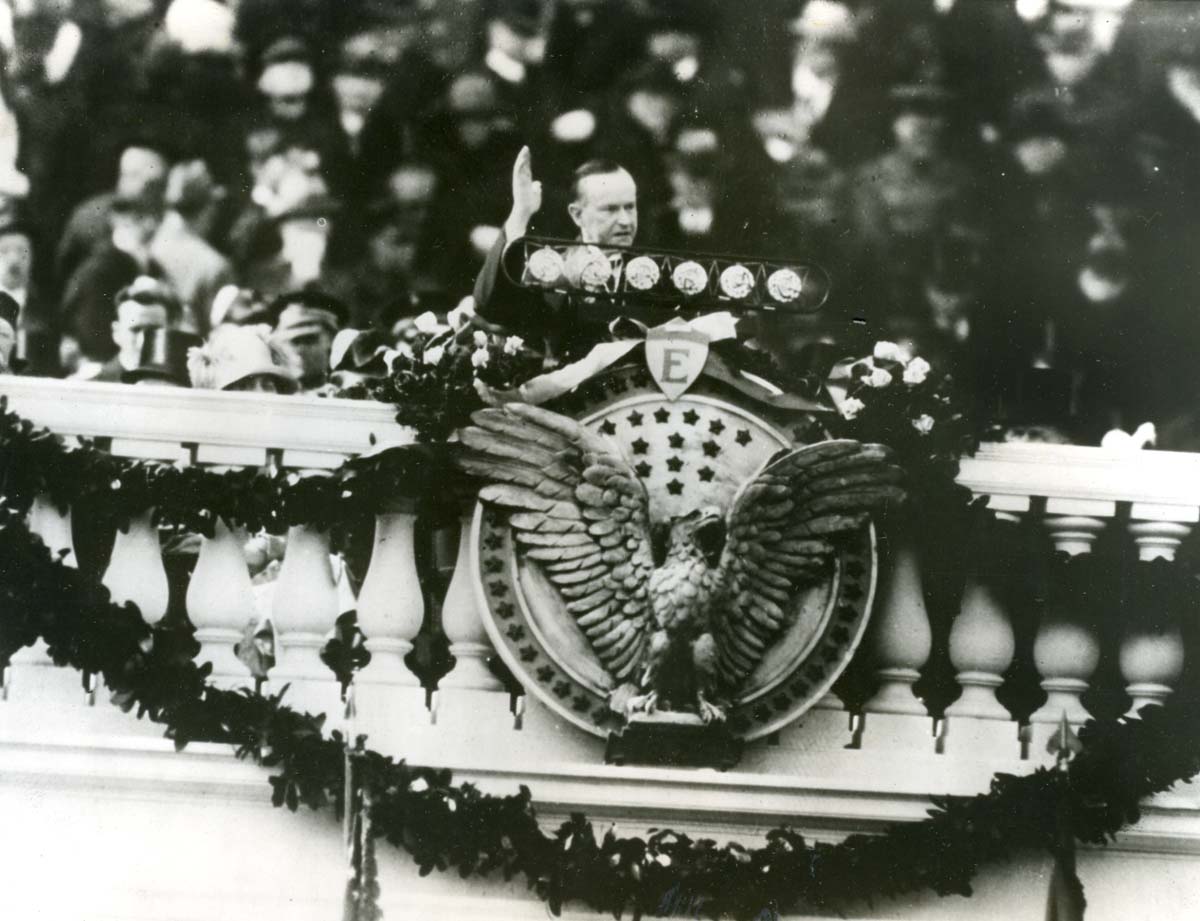
This morning while waiting in line, a news network reminded its viewers of the March 4, 1933 inaugural address of Franklin D. Roosevelt. To hear the reverence in the voices of those on the air, one would think any history worth remembering began with that infamously famous Presider over Depression, New Deal and World War. The thirty-six March 4th inaugurations before that time — 144 years of history — simply aren’t worth mentioning. One of those neglected thirty-six deserves mention here. In fact, it deserves our attention and study. It was March 4, 1925, the occasion of President Coolidge’s first formal inauguration after a resounding electoral victory in his own right the previous November. It is on this day, eighty-eight years ago, that he declared,

          If extravagance were not reflected in taxation, and through taxation both directly and indirectly injuriously affecting the people, it would not be of so much consequence. The wisest and soundest method of solving our tax problem is through economy. Fortunately, of all the great nations this country is best in a position to adopt that simple remedy. We do not any longer need war-time revenues. The collection of any taxes which are not absolutely required, which do not beyond reasonable doubt contribute to the public welfare, is only a species of legalized larceny. Under this Republic the rewards of industry belong to those who earn them. The only constitutional tax is the tax which ministers to public necessity. The property of the country belongs to the people of the country. Their title is absolute. They do not support any privileged class; they do not need to maintain great military forces; they ought not to be burdened with a great array of public employees. They are not required to make any contribution to Government expenditures except that which they voluntarily assess upon themselves through the action of their representatives. Whenever taxes become burdensome a remedy can be applied by the people; but if they do not act for themselves, no one can be very successful in acting for them.

Those are words worth remembering today. When self-government is responsibly exercised in this way, we have no reason to fear for the continuance of liberty under law.

On the Presidency

“Any man who has been placed in the White House can not feel that it is the result of his own exertions or his own merit. Some power outside and beyond him becomes manifest through him. As he contemplates the workings of his office, he comes to realize with an increasing sense of humility that he is but an instrument in the hands of God” — Calvin Coolidge, ‘The Autobiography’ (1929)

On History

“We review the past not in order that we may return to it but that we may find in what direction, straight and clear, it points into the future” — CC, “The Green Mountains” on the occasion of the one hundred and fiftieth anniversary of the settlement of Burlington, Vermont, June 12, 1923. The entire address can be found in “The Price of Freedom” (Amsterdam: Fredonia Books, 2001, a reprint of the 1924 edition), p.357.

The past year of political campaigning presented plenty of straw man arguments. One of the most frequently repeated is the claim that some still stand in the way of progress as a nation because they are stuck in the past. They wish to return the country to a time of failed policies, economic inequality and corruption, it is claimed. The twenties are a favorite “proof” of that false premise. But when historical facts are actually consulted, the results show a stunning and genuine success:

The national debt had skyrocketed from $5 billion in July 1917 to $14 the following year and over $27 the summer after that as a result of the First World War. Unemployment stood at 11.7 % by 1921. Consumer price inflation had jumped to well above 20%. Real suffering was experienced not only by returning veterans unable to find employment but also entire sectors of economic activity. Then came the most decisive turn-around policy in recent history: Spending, which stood at $18.5 billion, was actually hacked to $6.4 within one year. By 1923 spending had been chopped down to $3.3 billion. The top tax rate, which had been a stifling 77% under Democrat Woodrow Wilson, was forced down with across-the-board cuts to 25% during the Coolidge years. Unemployment fell to 3.2%. The national debt was paid down to $16.9 billion by the end of Coolidge’s term. This means debt reduction and tax cuts can be accomplished simultaneously. Inflation plummeted and revenues soared to unprecedented levels: the top income earners were paying over $700 billion by the end of the decade. But weren’t “the rich” getting richer off the backs of the poor? Hardly! By 1928, the top income earners carried 61% of the tax burden while the poorest paid 1% or none at all. Gross National Product grew annually at a robust 4.7% every year of the Coolidge Presidency. 1.9% is neither recovery nor growth. Incomes all across the spectrum went up as wages increased with the ability to keep more of one’s earnings. The tax rolls were hardly static: those earning over $100,000 (the top tier in the twenties) experienced an average income increase of 15%, while the group grew nearly four times its size at the start of the decade. The number of those in the “middle class” (earning between $10-100,000) rose 84% while those at the bottom shrank. Upward mobility and sound economics were the hallmarks of the Coolidge years. Success was no less real than it was for us during the Bush years. The subsequent recession which deepened into more than a decade of Depression did not come from these policies. That is where modern candidates try to make hay out of historical ignorance. Herbert Hoover ushered in a decisive sea change in economics when he came to office in March 1929. The market continued to roar for the next seven months in spite of it. By then, it was Hoover who forgot what made the widespread success of the decade possible. Spending went back up 47%, taxes increased 63% and the Hoover’s interventionist style followed by the massive legislative obstructions under FDR prevented as swift a recovery as was accomplished in 1922. So, next time President Obama or any other uninformed “expert” on history asks if we want to emulate the “failures” of the Twenties…let’s take them up on that offer.