On Executive Power

Image

Surveying the years of public service that prepared Coolidge for the Presidency, Robert A. Woods, in his instructive book on the thirtieth president, reminds us how extensively trained Coolidge was in statecraft. Very few chief executives can lay claim to as broad a span of experience in local, state and national governance as Calvin Coolidge. Yet, through it all he retained an enduring sense of perspective toward himself and the specific duties of each particular office. As Coolidge transitioned from a state legislator to executive leadership in the Massachusetts Senate and from there to Lieutenant Governor, Governor, Vice President and President, he continued to adjust to the constitutional limits of the role. It was all grounded in his respect for and grasp of the office he held. The powers of government were separated for an incontrovertible reason. The powers of making law and enforcing them were not safe in the hands of one man, even if he was that man. The people’s liberties were safeguarded by limiting the reach of each branch and assigning powers not easy to consolidate by any single group or individual.

In the State House, Coolidge became the best-informed legislator by listening and carefully studying each issue himself. When the time came to act, he was decisive and thorough, gaining a reputation as a master of legislative procedure and vote getting. He not only knew the content of the legislation under consideration but had weighed its consequences on those to whom it would apply. It is a measure of scrutiny all but missing in legislators today.

When the time came to direct the Senate, he did so with complete command not through coercive tactics, for that was not his way. He led by understanding his task fully, applying what he had learned with political acumen and exemplifying service. When others paraded their abilities to influence men, Coolidge demonstrated what he expected and let the actions do the talking.

As he moved upward in executive responsibilities, Coolidge continued to observe and learn. He saw firsthand the effects of excessive legislation. He began to speak up on the detriments of passing laws without giving enforcement time to catch up. It also became increasingly clear that executive power carries even greater limits than legislative authority. It was not up to the President or Governor to drum up votes for his own array of proposals and add to the excess of laws pressing down on the people. It was part of the Framer’s deliberate design that wisely diffused power into co-equal, yet distinct, branches of government.

The President was not to fill in with his own preferences what was lacking in the laws either. He was bound by oath to enforce even the laws with which he did not agree, from prohibition in the Volstead Act to the Japanese exclusion in the Johnson-Reed Act. The Congress could not always see the impact of what was being passed nor could it execute legislation without the President’s authority. Both had to work toward laws that would protect what was good for all citizens, not a few preferred above others. This principle took immense self-discipline to an extent that no Roosevelt or Wilson would have easily held to it. It was too tempting for Presidents to be legislator-executives. Coolidge restored the Framer’s balance and showed it can work when tried.

As Coolidge continued to be prepared in proper administration, he came to see ahead of Congress, as his Vice President, Charles Dawes, would point out. He would recognize the appropriate powers of Congress to craft laws but he was equally as determined to protect the powers of the President, as his victories over the removal of Cabinet officials, full exercise of the veto, and foreign affairs bear out.

Mr. Woods, summarizing the Coolidge way, writes,

The impression made by him upon the country is not merely that of the capable executive. His whole front toward life appeals to those who are bearing the responsibilities of existence and know that they must continually reckon with them. He instinctively and conscientiously represents the kind of progress, the advancing moral standards, which the people can agree to, and the Government can embody…He holds that ‘leadership should not be by force, but by service.’

      But we are told that he has fallen short because Congress has so little followed his lead…One sort of man might have sought to utilize on a large scale the leverage of government patronage; another might have thrown the gauntlet to Congress as a whole, and to recalcitrant Republicans, whether radical or conservative. Neither of these methods goes with Mr. Coolidge’s type of leadership; and no one can say that either would have been more productive of results…In the conflict with Congress, he acted throughout on the basis of the principle which was well-established in his mind by experience, that in a disagreement between the legislature and the executive, the latter is always at a great advantage with the public… (pp.268ff).

Coolidge would not see the legislature assume the powers of his Office any more than he would take on the role of a lawmaker, venturing into the jurisdiction of Congress. Woods continues,

     But it is not difficult to see in Mr. Coolidge, amid all the administrative complexities of his office and all the pressure of material demands upon him, his strong characteristic tendency toward what will advance the higher well-being of the Nation.

Coolidge understood that executive power, used sparingly and with respect for its limits, ensured the full weight of its authority was not dispensed at every press conference or public appearance. Such would only undermine and dilute the potency of Presidential authority. If every utterance was heralded as a monumental event or an historic agenda-setting occasion, it would only impair executive power and cheapen its moral credibility. To Coolidge, the enforcement of the “moral relationship of things” was paramount to the President’s role. Any personal sense of importance or superiority was immaterial. It was not his greatness involved here but it was the sacred trust laid upon the Office that was to honor, protect and maintain the moral precepts of the people from whom he was chosen, merely first among equals (Johnson, “Why Coolidge Matters,” chapter 5). He was not at liberty to supplant those principles with his own notions of “morality.” To do so would squander that inheritance making one unfit for the Office and a threat to the health of a republic.
On Humility

A quality well-known to those who knew him was Mr. Coolidge’s humility. He knew, as he wrote to his father, being “the most powerful man in the world,” meant high responsibilities not lofty privileges. It was not an opportunity to “live large,” clothing himself in the trappings of his glory. During his lifetime, he had seen certain men become President only to equate the majesty of the Office with the excellence of the person. He knew the dangers of arrogance. He was never fooled to think that it was proper, even for a President, to govern by the force of his personality. He had seen President Wilson try and disastrously fail on that score. Mr. Coolidge raised the dignity of the office during his time, that is for sure, but he distinguished between the greatness of the Presidency from the absence of greatness in him. He was simply chosen from the sovereign people to serve for a short time and then “be one of them again.”

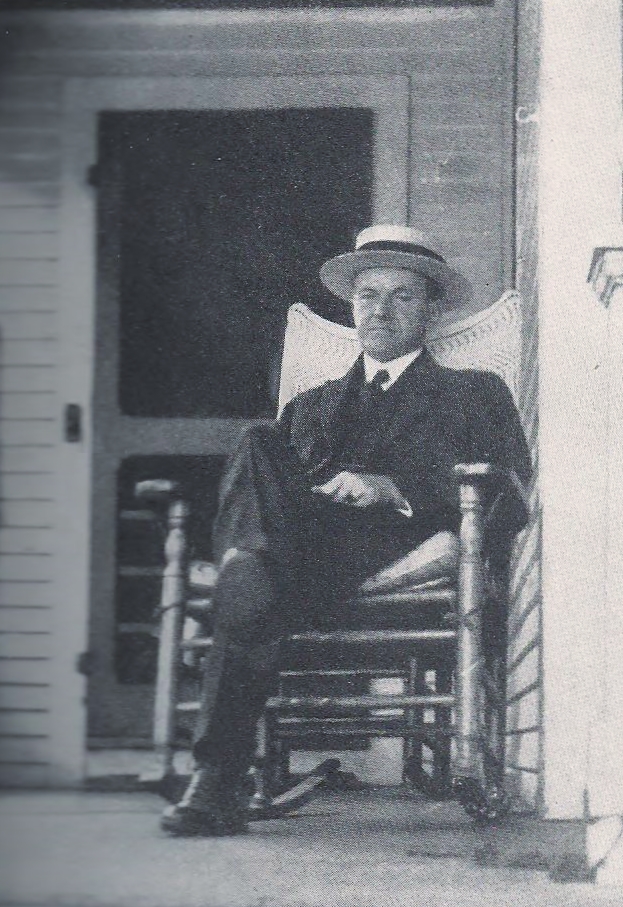
His desire to be a private citizen again was unfortunately never entirely restored. It cannot be easy to rediscover “normalcy” for anyone who has once been a President. But he earnestly tried. Prompted to speak in retirement, he accepted only under the most compelling pressure because he refused to accept it was his place to assume the mantle again as a kind of unofficial public authority or “Deputy President.” His humility was such that he could no longer do many of the things he loved to do, such as sit on his front porch. He disdained the ostentatious displays of attention showered on him because of the Presidency. He would tolerate it for the sake of the Office while he held it, but he refused to suffer it after the White House.

He disapproved of Presidential pensions and would not take a cent of public support. He would work for himself. It was writing that primarily occupied his time and even that weighed on his mind with the obligations of producing a product worth publishing, meeting deadlines, and not taking advantage of the credentials he could have claimed to accept more than a piece was worth.

His long-time law partner, Mr. Hemenway, recalled three occasions of Mr. Coolidge’s many expressions of simple unaffectedness, the first one in the midst of being President, that underscored his persistent humility. Mr. Hemenway, writing for Good Housekeeping in April 1935, recounts:

     “While he was President, I had a note in longhand from him one day, as follows:

                                                                                                Sept. 13, 1928

     ‘My Dear Mr. Hemenway:–

            ‘You have at Hampton safety deposit 2 Lib Bonds $50 each. See if any are due Sept 15

      current and if so have Tr. Co. collect them and credit my acct.

                                                                                          ‘Yours

                                                                                       ‘Calvin Coolidge’

     “That note shows his far-reaching recollection of detail. Here you witness the President of the United States, the problems of a nation on his desk, with an income of $75,000 a year and $25,000 more for traveling expenses and entertainment, plucking out of his innumerable mental pigeonholes the relatively insignificant matter of two $50 Liberty bonds on which the interest of $2.12 was due!

     “To show his kind-heartedness and his liberality I recall one occasion when I was in need of funds owing to the closing of a local bank. I was seated at my desk deeply buried in thoughts that were not particularly cheerful when he came through the connecting doorway from his office, walked over to me, and placed a slip of paper on my blotter. As he turned away and went back to his room, he said quietly,

     ‘And as much more as you want.’

     “It was a check for $5,000.”

The final memory shared by Mr. Hemenway humorously highlights the former President’s unchanged outlook after life in the White House.

     “The splendor and pomp of Washington and the Presidency never changed his early valuations of life. He was simple and unaffected to the last degree. He liked foot comfort. In the old days he would slip off his shoes and put both stockinged feet in his wastebasket where they wouldn’t be seen. Once, however, he was taken off his guard. A woman client came into his office while he feet were planted in the wastebasket. He got a good laugh out of it afterward–although he certainly did not enjoy the surprise at the moment.”

                         Image

“We draw our Presidents from the people. It is a wholesome thing for them to return to the people. I came from them. I wish to be one of them again…They have only the same title to nobility that belongs to all our citizens, which is the one based on achievement and character, so they need not assume superiority. It is becoming for them to engage in some dignified employment where they can be of service as others are” — Calvin Coolidge, The Autobiography, 1929, pp.242-3.

On Coolidge and the West

                                Image

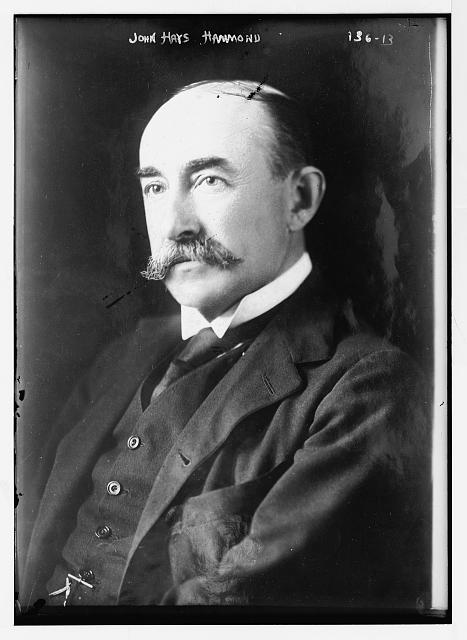
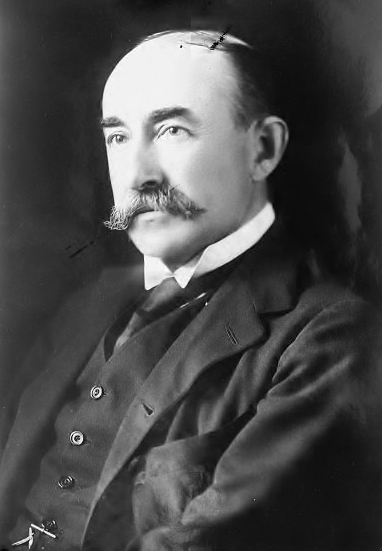
John Hays Hammond Sr. served as Chairman of the Coal Commission, as a coal strike threatened to be the first real domestic test of President Harding’s successor, Calvin Coolidge. Without coal, people were going to be hard-pressed to heat their homes and survive the cold winter. In what President Coolidge would call “our coup,” he collaborated with Commissioner Hammond to work out a way to resolve the conflict while shrewdly using the Governor of Pennsylvania, Gifford Pinchot (who was positioning himself as the heir of TR in order to take the GOP presidential nomination in the following year by championing his own progressive “handling” of the strike), as the implementer of their report. It worked only by removing imposed government solutions and turning to the folks directly concerned to make it succeed, all to the chagrin of Governor Pinchot.

Looking back on those days, Mr. Hammond offers this appraisal of President Coolidge and his impact on voters, especially those in the West. Most striking is that it runs contrary to the partisan and even vindictive appraisals of those who were denied special favor (like “Ike” Hoover, the usher) or had an agenda to implement (like “Art” Schlesinger). Hammond writes,

     “It was most fortunate for the country that a man of Calvin Coolidge’s type succeeded to the presidency. He had an estimable record for probity and executive ability during both his Massachusetts governorship and the vice-presidency. Sitting in at Cabinet meetings during the Harding administration had given him special knowledge of national problems.

     “His slightly rigid personality manifested caution and sanity. His eccentricities were safe ones. There was no derision in the anecdotes that were told of him, and the laughter of the people at hundreds of Coolidgisms only served to increase their belief in him as a wise and forceful leader. After the miasma of suspicion created by the scandals of the Harding administration, the country soon showed implicit confidence in Coolidge…”

     Commissioner Hammond, a renowned mining engineer and native of California, assessed the affect of Coolidge on the West, “To me, as a Westerner who had grown to pride himself on his knowledge of the psychology of that part of the country, one of the most amazing things about Calvin Coolidge was that he came to supersede even Theodore Roosevelt in the popular affections of the West. Everything about Roosevelt had been the antithesis of Coolidge: his strenuous activities, his love of exciting adventures, his physical daring, his aggressiveness, and his ebullient manner. It has always seemed phenomenal to me that Coolidge, without any effort on his part, could have won the West. It may perhaps be explained by the fact that West admired Roosevelt as an individual and Coolidge as a president.”

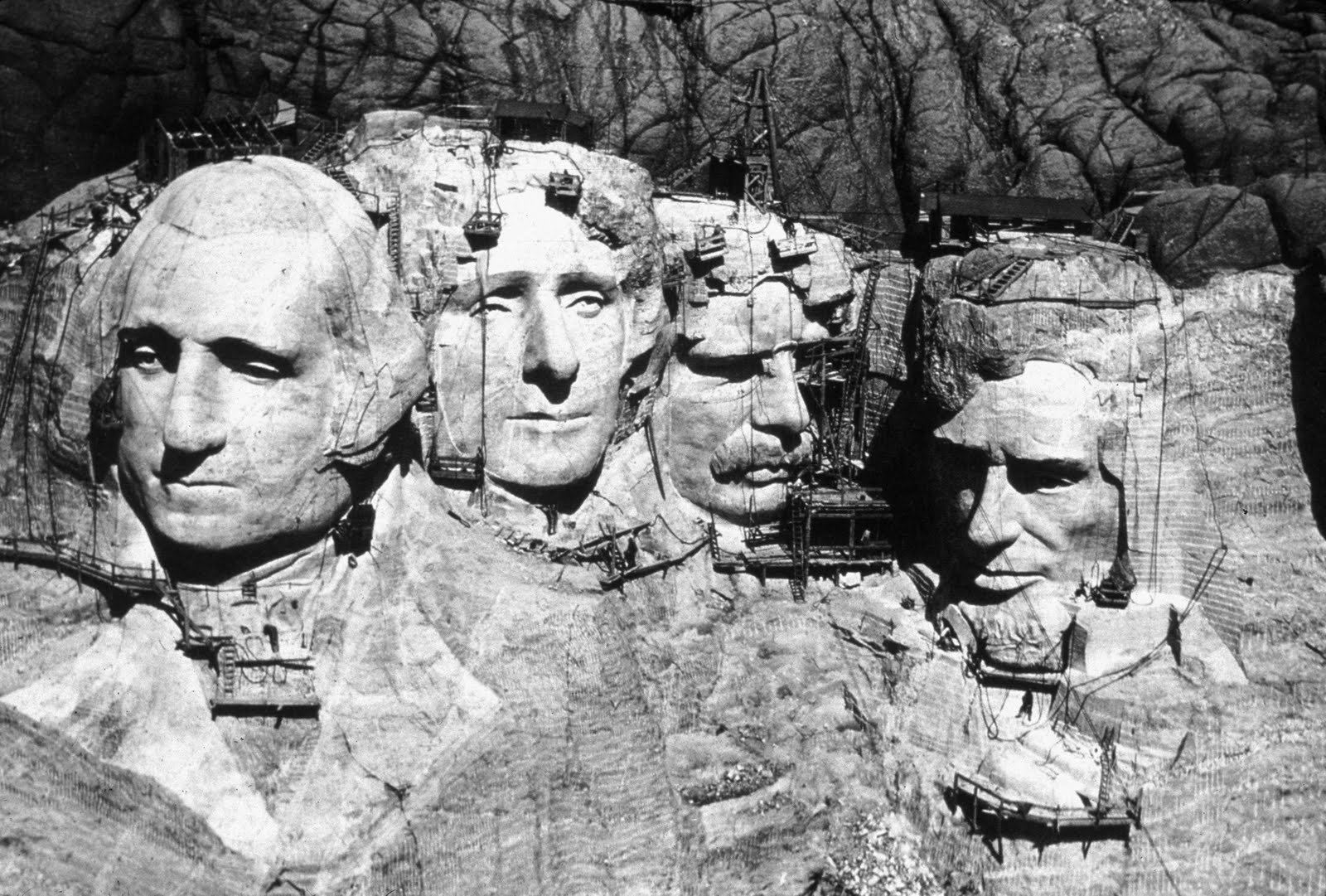
     It is noteworthy that the only life-size statue of the thirtieth president stands in downtown Rapid City, South Dakota. It seems that Gutzon Borglum’s second mistake (after misusing President Coolidge’s written contributions to the Rushmore project) was in placing the wrong president to Lincoln’s right.

                                           Image

                      Image