When it became known that President Coolidge would be spending three weeks in the Black Hills of South Dakota during the summer of 1927, a plot was “hatched” by Governor Bulow and Cal’s future hosts to devise a means of diversion and entertainment for the President away from the hustle and pressures of the Office. It had to be something capitalizing on the natural grandeur and beauty of the outdoors. It would carry the additional advantage of attracting sportsmen to the state if President Coolidge could really enjoy his stay. How could they ensure such results?
The hatcheries of Spearfish provided some 2,000 answers. Fat, unsuspecting trout, farm-raised on liver and horsemeat, would soon find themselves being driven the 80 miles south from the Northern hills to Squaw Creek, running conveniently right beside the State Game Lodge, the very place the Coolidges were to stay. Not released all at once, stealth deliveries would rumble down the old bootlegging trails along the creek putting in unwitting replacements every fourth night, Rex Smith records (The Carving of Mount Rushmore p.145-147). This would go on not for a mere three weeks, but a stay that turned into three months as the Coolidges came to thoroughly love South Dakota and her people and they the President and his wife.

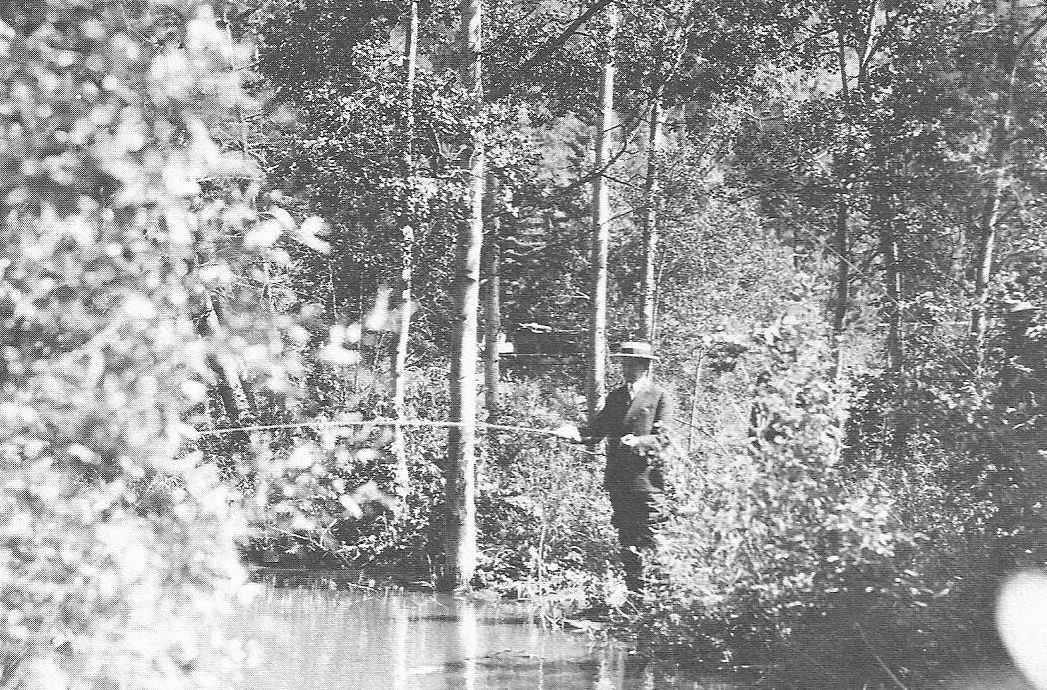
President Coolidge fishing on Squaw Creek, June 16, 1927
Having loaded the stream with more trout than ever naturally inhabited those waters, it guaranteed that Coolidge would catch something! Nature seemed ready to thwart their plans, though, when a hard rain fell that first week, washing mud into the stream. No fish with any sense of prolonging its life would venture out to feed when it could not see what was above the water. These pampered fish, however, were too hungry to let so little a thing as impossible visibility get in the way of one easy meal after another being cast in their midst. Coolidge, having been persuaded to give fishing a try on his second day, geared up and with rod, bait and basket cast a line out. In a matter of minutes, he had hauled in five keepers!
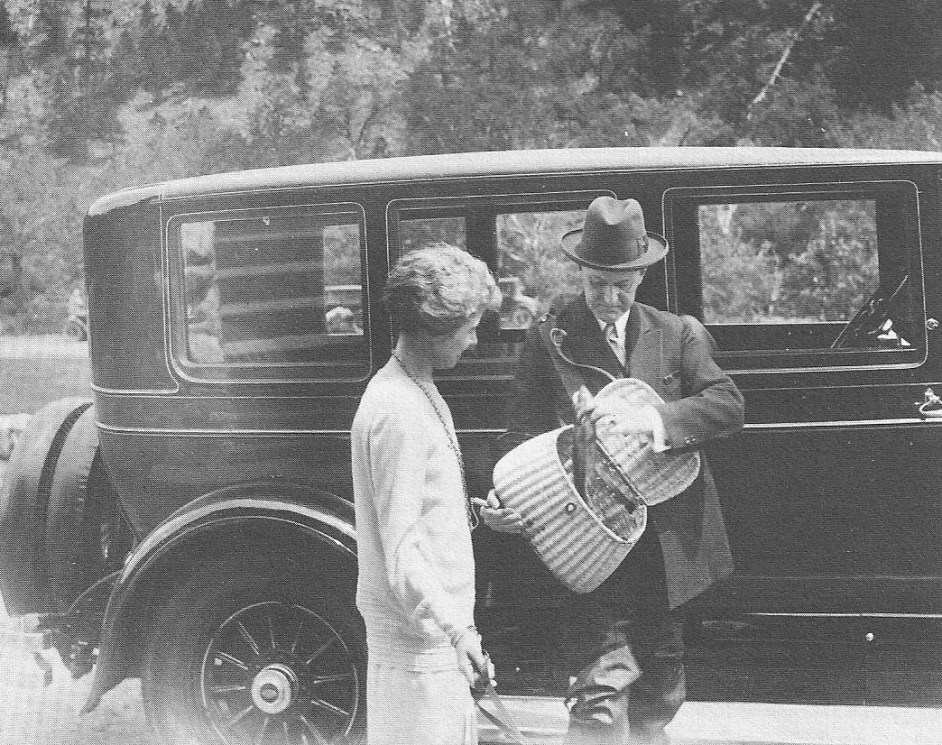
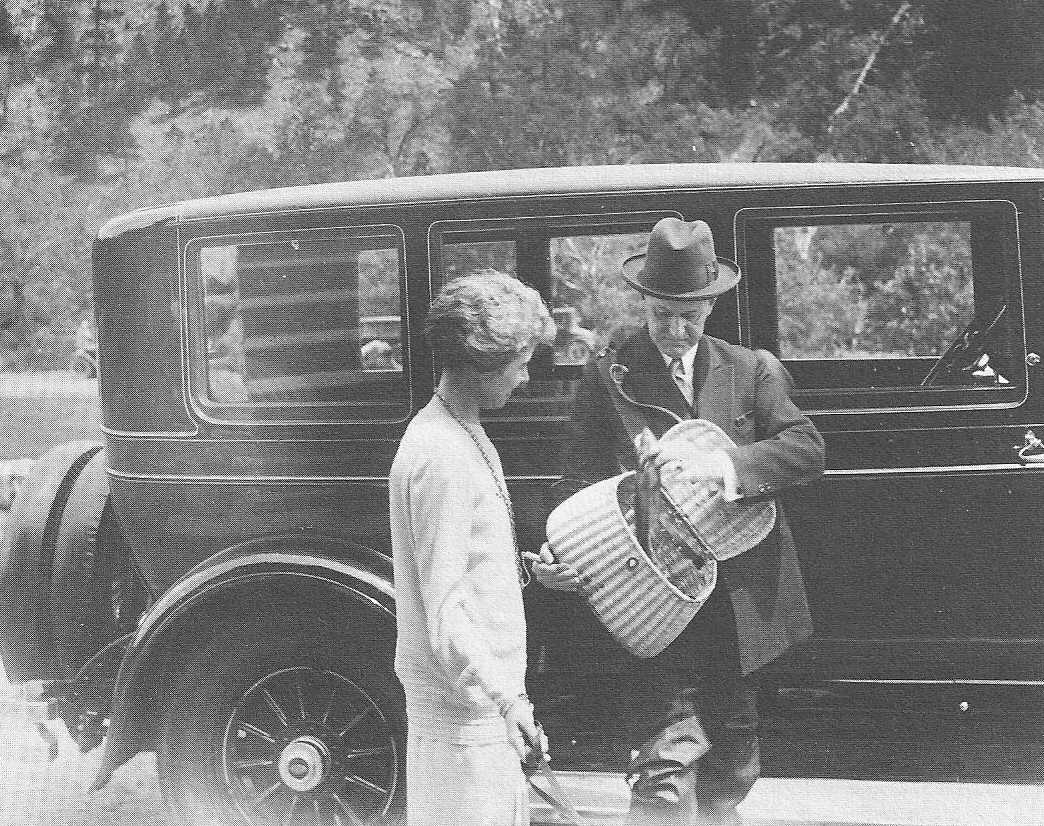
Mr. Coolidge showing what he caught to Grace as the collies watch eagerly out of the shot.
Fascinated, but still skeptical, he brought his cache back to the Lodge and showed them to Grace. Encouraged to continue, he went back that evening and snagged still more huge trout. He came back “pleased,” as Mrs. Coolidge reported, “as a boy with his first pair of red-topped boots,” proudly displaying to “Mammy” these latest fruits of but their first week in South Dakota. He was “hooked” from then onward. He would develop into a fly fisherman of ability on the Brule River in Wisconsin the following summer. Yet, it all began with this small scheme to lure the fisherman out of Mr. Coolidge that hectic, historic June of 1927. After leaving the White House, he would continue developing his new fascination along the rivers and lakes of Connecticut and near the Homestead in Vermont. He would even plan a cross-country fishing trip with his old friend, Colonel Starling. Though the trip never happened, he would usually fall back on the old rod and worm that first worked so well at Squaw Creek.

The President fishing at the game refuge of his friend, Senator George P. McLean, Simsbury, Connecticut. Thanks go out to reader Mr. Kevin Gallagher for providing the corrected background info on this snapshot.
Enthused by so successful a catch, he had the trout served at dinner the next evening. At the head of his party would be none other than Governor Bulow, who, unbeknownst to his Presidential guest, had helped make this bounty possible. The Governor, not relishing the pervasive taste of liver awaiting him in that meat, looked down at the fish on his plate that night and whispered, “Seems to me I’ve seen you before.” The President hearing something, asked, “What did you say, Governor?”

South Dakota Governor William J. Bulow, the President’s chagrined guest on the first night they served those trout Coolidge caught.
“I said, Mr. President, that I’ve not seen trout like these before.”
To which Coolidge replied, “Came from right here at the Game Lodge. Caught ’em myself!”
Did the President ever figure it out? Whether he did or not, he has the last laugh.


 The Importance of the Obvious