On Profit and Property

President Coolidge confronted the same impulse in his time to remove ownership and eradicate profit in the name of “equality” that is prevalent today. The egalitarianism of the French and Russian Revolutions, still lauded by those who were new to America, failed to produce the results of the earlier Revolution of 1776 not because of incompetence or inferior people. It was because the American Revolution was rooted in more ancient principles and timeless truths of work, law, ownership and reward. The experiment in discarding property and profit had been tried in America, in its earliest settlement by William Bradford and the brave souls who disembarked at Plymouth Rock in 1620. As Bradford records in his Journals, they nearly starved to death under that “communal” experiment. This trial-run in socialism was found incapable of producing the moral or material results which a system that protects ownership of property and profit for work done accomplishes whenever and wherever observed (“Of Plymouth Plantation” pp.115-6).

President Coolidge, well-aware of that experience among the pilgrims, knew of its value in whatever age one lives. In an address right before the 1924 election, he explains the wisdom of ownership and profit, “When service is performed, the individual performing it is entitled to the compensation for it. His creation becomes a part of himself. It is his property. To attempt to deal with persons or with property in a communistic or socialistic way is to deny what seems to me to be this plain fact. Liberty and equality require that equal compensation shall be paid for equal service to the individual who performs it. Socialism and communism cannot be reconciled with the principles which our institutions represent. They are entirely foreign, entirely un-American. We stand wholly committed to the policy that what the individual produces belongs entirely to him to be used by him for the benefit of himself, to provide for his own family and to enable him to serve his fellow men.” The notion that an individual has an entitlement to own the reward of his own effort, not the work of another is increasingly a foreign concept. It is no less valid a truth.

As Coolidge understood what seems lost to our day, the compensation of profit and ownership goes to the one who earns it. It is not the entitlement of the state to claim ownership of an individual’s property, redistributing to the idle in the name of “equality.” Such is an insult to the hard-working. The principle of service obligates a person to love his neighbor, providing from what he owns to help others. It is not the role of government to dispense favors with the property of individuals. As Coolidge would say again on other occasions, “There is just one condition on which men can secure employment and a living, nourishing, profitable wage, for whatever they contribute to the enterprise, be it labor or capital, and that condition is that someone make a profit by it…When you deny the right to profit, you deny the right of a reward to thrift and industry.”
On the Distribution of Wealth

Speaking at the Associated Industries Dinner in Boston on December 15, 1916, Calvin Coolidge, Lieutenant Governor of Massachusetts at the time, said, “It is our endeavor to extend equal blessings to all. It can be done approximately if we establish the correct standards. We are coming to see that we are dependent upon commercial and industrial prosperity, not only for the creation of wealth, but for the solving of the great problem of the distribution of wealth. There is just one condition on which men can secure employment and a living, nourishing, profitable wage, for whatever they contribute to the enterprise, be it labor or capital, and that condition is that some one make a profit by it. That is the sound basis for the distribution of wealth and the only one. It cannot be done by law, it cannot be done by public ownership, it cannot be done by socialism. When you deny the right to a profit you deny the right of a reward to thrift and industry.”
On Entrepreneurs

Randall Stross, in his book “The Wizard of Menlo Park,” recounts a story widely circulated at the time about the drive of Edison, Ford, Firestone and Coolidge to the local factory during their visit in 1924 to Plymouth Notch:

      Something went wrong with the car and they stopped near a farmhouse. The farmer came over to the party and offered his help and at the same time started to lift the hood when Mr. Ford stopped him and said: ‘There’s nothing the matter with that engine: I’m Henry Ford and I know all about engines.’ The farmer then suggested the trouble might be in the battery and Mr. Edison spoke up and said: ‘No, I’m Thomas A. Edison and I know all about batteries. That one is all right.’ The farmer began to look incredulous but tried again by suggesting the tires needed air and offered to pump them up, but Mr. Firestone put in with, ‘No, I’m Harvey Firestone and I made those tires; they’re just right.’ The farmer exploded at this with, ‘Well, Ford, Edison, and Firestone, eh? I reckon that little runt in the back seat’s Calvin Coolidge?’ (pp.256-7).

While hardly flattering of Coolidge, who was taller than Ford and the same height as Edison, it does carry a humorous element of truth. It prompts the question regarding these inventive entrepreneurs, “where would we be today without these men?” Edison alone would produce 1,093 patentable inventions during his lifetime, twenty-one of which were completed during the Coolidge years alone. These included not only batteries and phonograph cabinets but also the development of his unique process for extracting rubber from plants. These men were not politicians. They had not the temperament for careers on the government payroll, holding secure office jobs with ample benefits packages. It was the freedom to create, experiment and innovate — to fail and to succeed — that made their contributions possible. They worked endless hours, invested their own money and demanded excellence in their results. They owed nothing to government grants or federal patronage for who they were or what they accomplished. They remained free men, inspirations of the rewards of hard work, perseverance and ingenuity. As Coolidge would reflect on them in May 1931, just five months before Edison’s death, “The experience, skill and wisdom necessary to guide business cannot be elected or appointed. It has to grow up naturally from the people. The process is long and fraught with human sacrifice, but it is the only one that can work. Edison and Ford are not government creations.” A higher compliment to an individual’s creativity and self-reliance could not be offered.

ImageImageImage

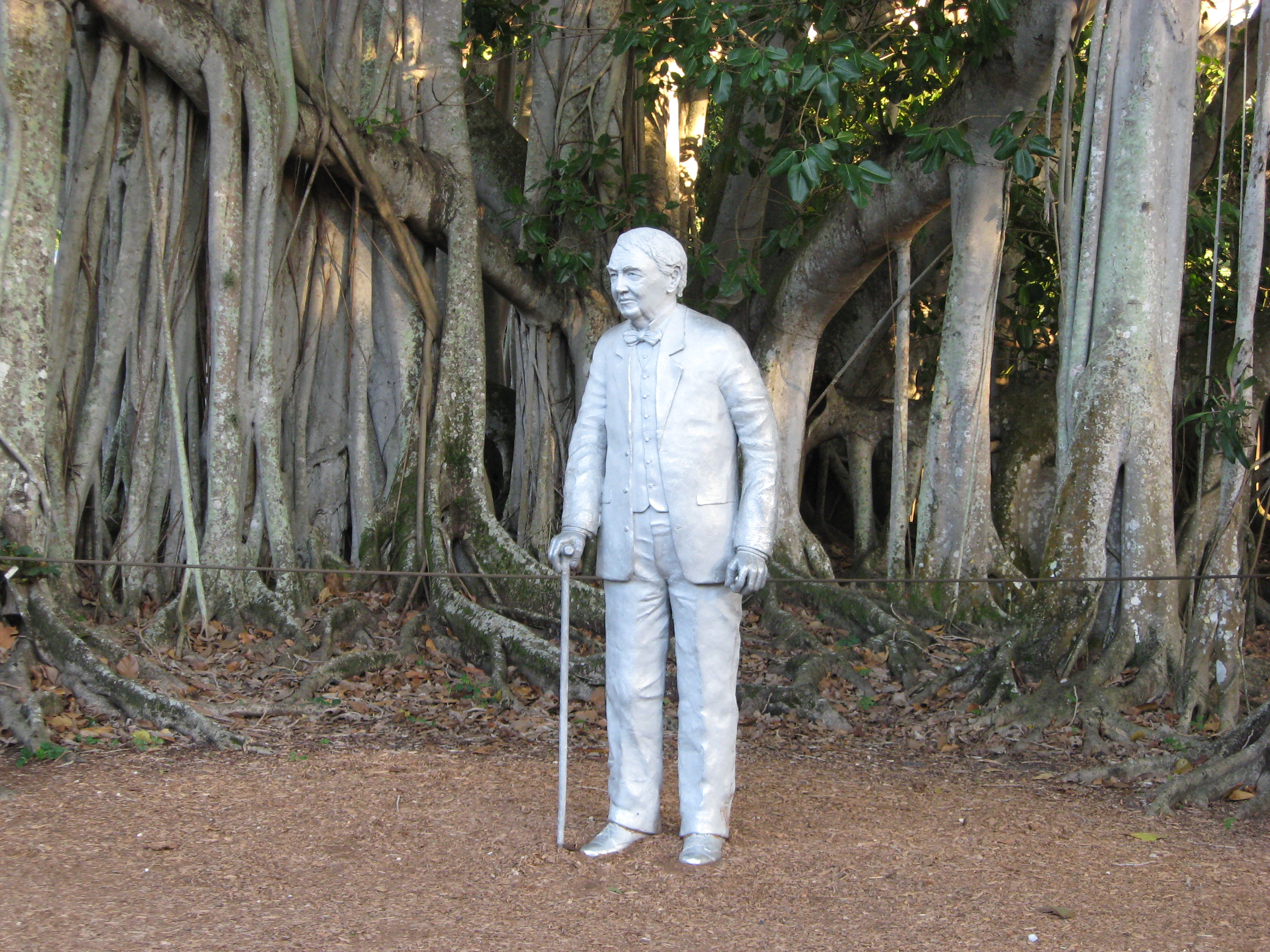
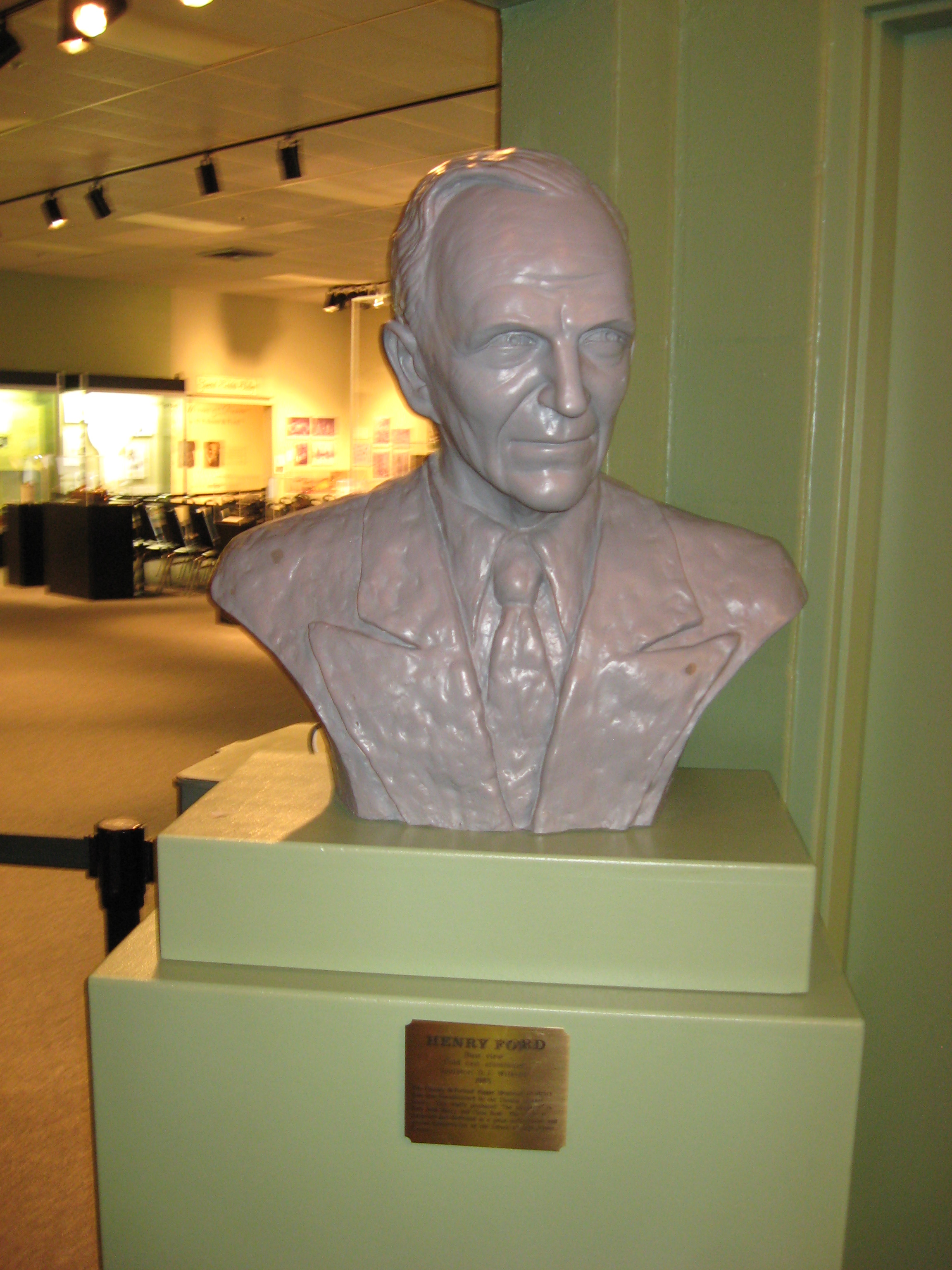
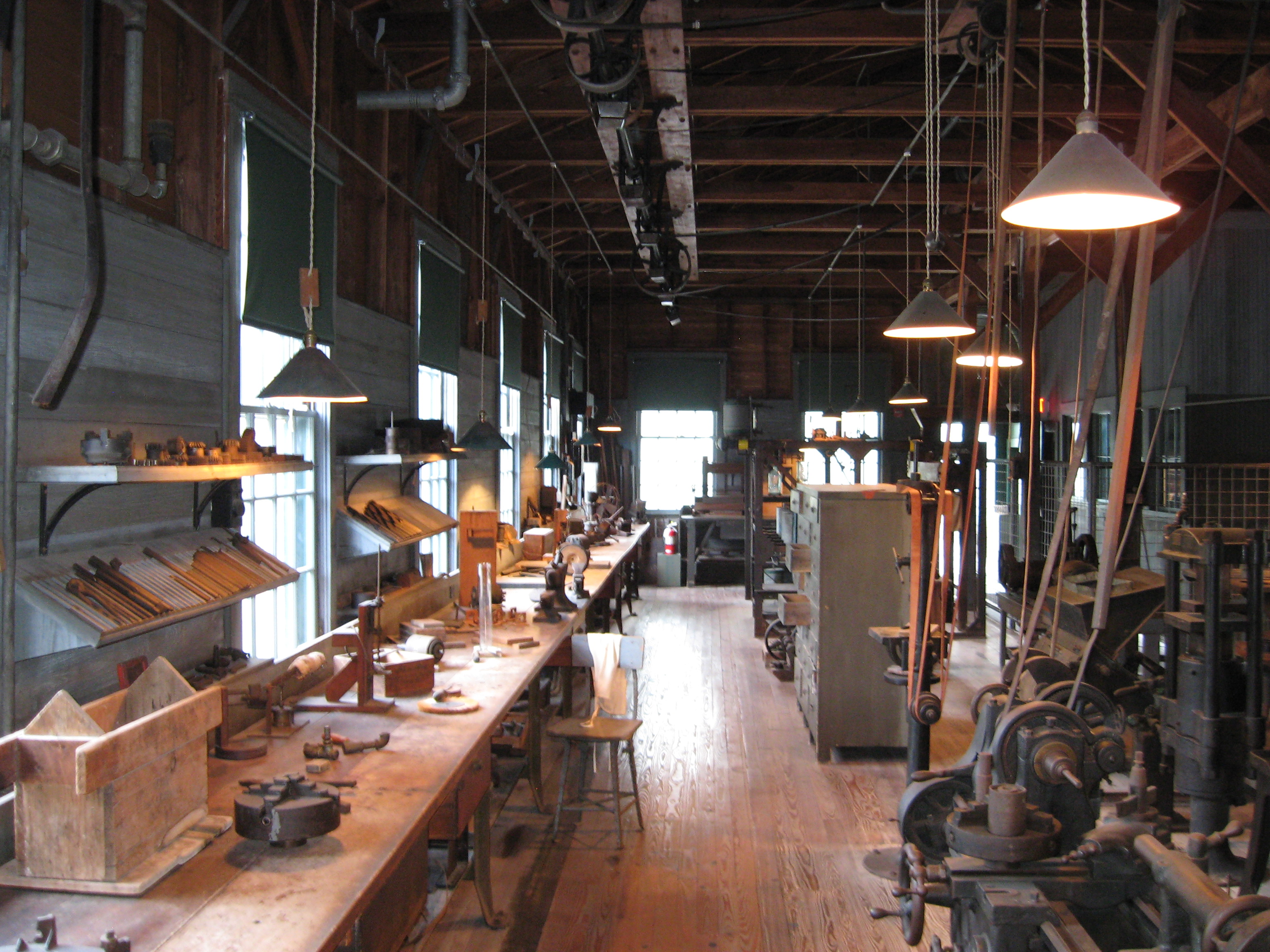
Edison in front of his banyan trees, across the way from his winter home; Ford bust in the Edison-Ford Estates Museum and Edison’s awesome laboratory, all in Fort Myers, Florida.