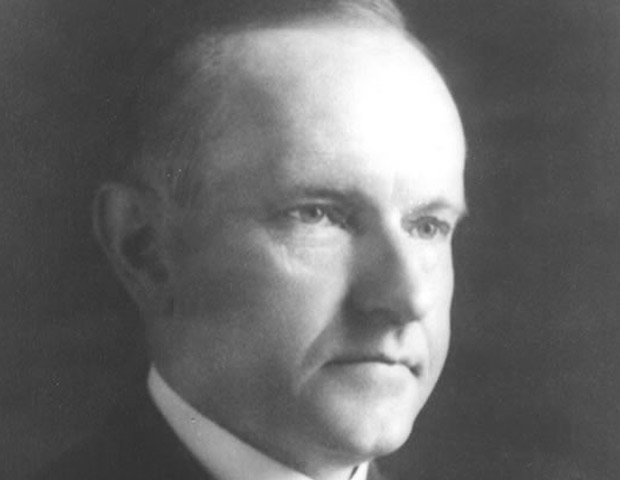
Few individuals had as remote a likelihood of reaching the highest position of leadership in America as Calvin Coolidge. He enjoyed none of the privileged connections of Franklin D. Roosevelt. He had little of the physical charm of a John F. Kennedy or Ronald Reagan. He never led armies to battle like Washington or Eisenhower did. Yet he understood that leadership is more than these. Leadership is not held by birthright. Leadership is not being served, but serving, as Christ made clear. Coolidge looked back over his public life and recognized that it was not his own greatness on display, for “[a]ny man who has been placed in the White House can not feel that it is the result of his own exertions or his own merit. Some power outside and beyond him becomes manifest through him. As he contemplates the workings of his office, he comes to realize with an increasing sense of humility that he is but an instrument in the hands of God” (The Autobiography, p.235).
To acknowledge such a truth is not the indication of weakness. Weakness is the hubris of far too many of our sitting politicians who have come back to their states and districts with something more dangerous than deluded self-importance. Passionately voicing our will, be it in phone calls, emails, or now in town halls is a personal affront to their superior ability and judgment. Senator McCain’s recent town hall comments about “not needing to be lectured to” (be it by the very people he is supposed to represent) reiterates the arrogance of the Washington culture. What is missing in nearly every area of culture is reverence. It is mocked and assaulted, but it anchors us to the solid foundation of our first principles.
Coolidge’s abiding sense of humble perspective is more than a cynical political calculation, it was a genuine attitude of reverence for the source of our nation’s power, success and future — none other than God Himself. Speaking to the Holy Name Society gathered in Washington eighty-nine years ago this September, a grateful President recognized something greater than he or the almighty establishment was there. He said, “The foundation of our independence and our Government rests upon our basic religious convictions. Back of the authority of our laws is the authority of the Supreme Judge of the world, to whom we still appeal for their final justification…It seems to me perfectly plain that the authority of law, the right to equality, liberty and property, under American institutions, have for their foundation reverence for God. If we could imagine that to be swept away, these institutions of our American government could not long survive. But that reverence will not fail. It will abide…The institutions of our country stand justified both in reason and in experience. I am aware that they will continue to be assailed. But I know they will continue to stand. We may perish, but they will endure. They are founded on the Rock of Ages.”

 The Importance of the Obvious