On Instant Gratification, Perpetual Adolescence and Self-Discipline

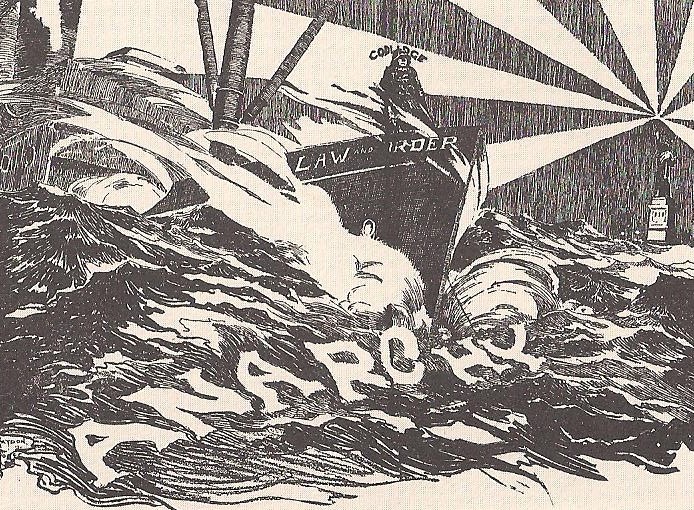
“He who gives license to his tongue only discloses the contents of his own mind. By the excess of his words he proclaims his lack of discipline. By his very violence he shows his weakness. The youth or man who by disregarding this principle thinks he is displaying his determination and resolution and emphasizing his statements is in reality only revealing an intellectual poverty, a deficiency in self-control and self-respect, a want of accurate thinking and of spiritual insight, which cannot come save for a reverence for the truth…

     “We live in an impatient age. We demand results, and demand them at once. We find a long and laborious process very irksome, and are constantly seeking for a short cut. But there is no easy method of securing discipline. It is axiomatic that there is no royal road to learning. The effort for discipline must be intensive, and to a considerable degree it must be lifelong. But it is absolutely necessary, if there is to be any self-direction or any self-control. The worst evil that could be inflicted upon the youth of the land would be to leave them without restraint and completely at the mercy of their own uncontrolled inclinations. Under such conditions education would be impossible, and all orderly development intellectually or morally would be hopeless. I do not need to picture the result., We know too well what weakness and depravity follow when the ordinary processes of discipline are neglected.

     “Yet the world has never thoroughly learned this lesson…One of the greatest needs of the present day is the establishment and recognition of standards, and holding ourselves up to their proper observance. This cannot be done without constant effort and it will meet constant opposition…

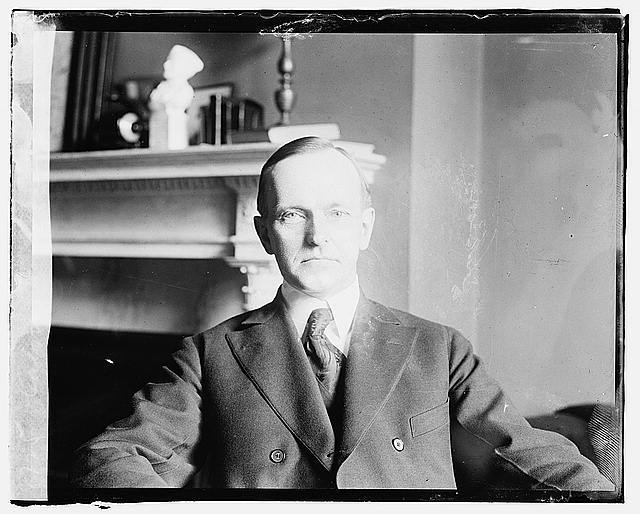
     “I believe such a position arises from a misconception of the meaning of life. They seem to think that authority means some kind of an attempt to force action upon them which is not for their own benefit, but for the benefit of others. To me they do not appear to understand the nature of law, and therefore refuse obedience. They misinterpret the meaning of individual liberty, and therefore fail to attain it. They do not recognize the right of property, and therefore do not come into its possession. They rebel at the idea of service, and therefore lack the fellowship and cooperation of others. Our conception of authority, of law and liberty, of property and service, ought not to be that they imply rules of action for the mere benefit of someone else, but that they are primarily for the benefit of ourselves” — Calvin Coolidge, September 21, 1924

Image

On Political Parties

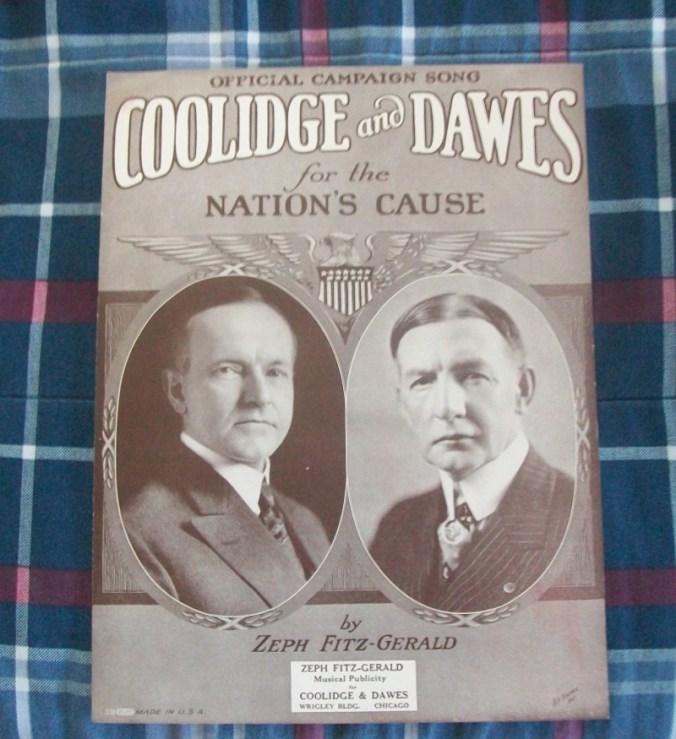
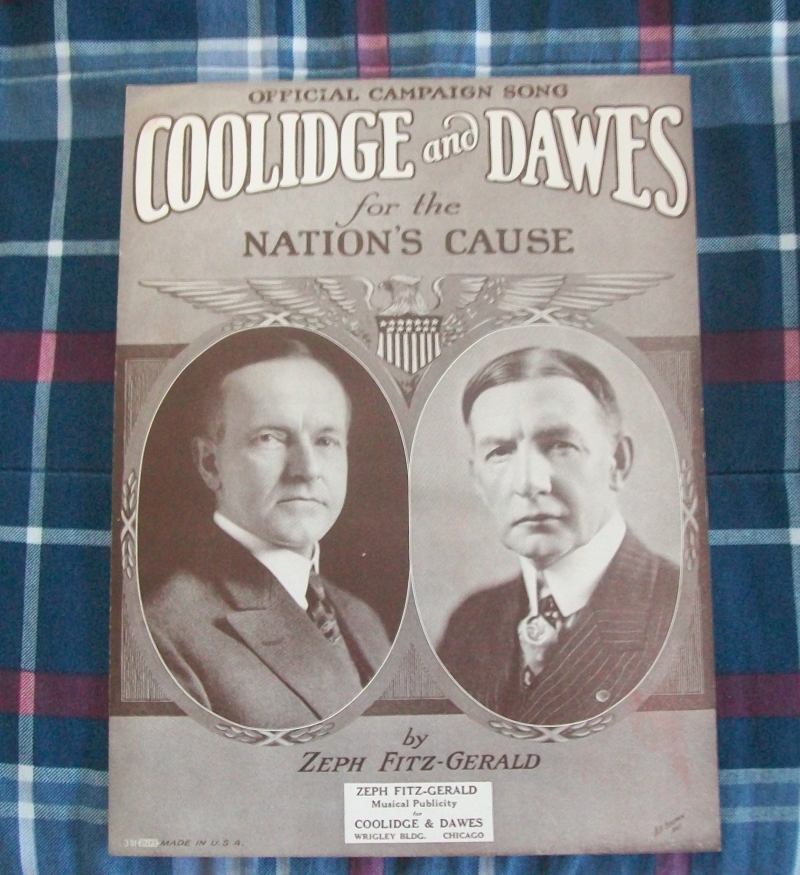
The campaign song, "Keep Cool with Coolidge" underscored the steady leadership and calm reliability of the 1924 Republican team and its Party platform.

The campaign song, “Keep Cool with Coolidge,” underscored the steady leadership and calm reliability of the 1924 Republican team and its Party platform.

As the train wrecks converge of “Obamacare” and the Federal Government’s refusal to account for its criminally reckless spending habits — except by the “band-aid” of Continuing Resolutions and debt limit increases, Americans are more and more proving to be the last constituency with any political representation in Washington. This is a grave disservice, especially to those who backed the party platforms for “tough budgetary decisions across the board” (for Democrats) and passing a Balanced Budget Amendment to the Constitution that would make it so “future Congresses cannot balance the budget by raising taxes” (for Republicans).

Realizing, as the Supreme Court confirmed last summer, “Obamacare” is an overt tax, at least for everyone who does not reside in the District of Columbia. The costs about to fall upon everyone across the Country, especially the poorest among us, are still multiplying as the contents of its regulations begin implementation in less than two weeks.

This is why political parties, as expressions of the sovereign people’s will, serve an imperative purpose in our Republic. Ours is not a mere democracy of simple majorities deciding every political question for us. Ours is a representative Republic, setting two fundamentally opposing agendas before the people who express their support or disapproval through the ballot box. These agendas are implemented by political parties and outlined in platform promises every four years.

Calvin Coolidge recognized the obligation of that party system to carry out the pledges and policies for which each Party stands, declaring, “…[I]t is necessary under our form of government to have political parties. Unless some one is a partisan, no one can be an independent. The Congress is organized entirely in accordance with party policy. The parties appeal to the voters in behalf of their platforms. The people make their choice on those issues. Unless those who are elected on the same party platform associate themselves together to carry out its provisions, the election becomes a mockery. The independent voter who has joined with others in placing a party nominee in office finds his efforts were all in vain, if the person he helps elect refuses or neglects to keep the platform pledges of his party…”

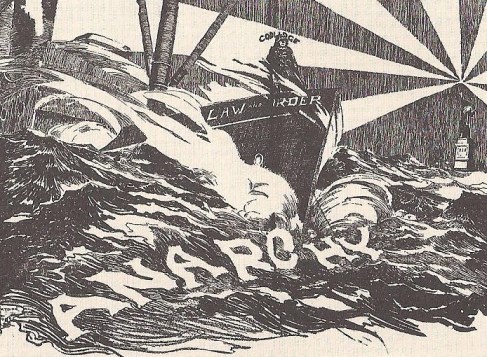
It is the reason why he did not immediately overturn the Cabinet or alter the policy direction started under Harding until the people voted again in 1924. Even then, he conscientiously upheld the Party platform, despite some in his own Party abandoning him for political convenience. For Coolidge, Party platforms were serious contracts between the voter and the candidate. The candidate is not empowered to break his promises when he gets to Washington. Facing unforeseen circumstances, the principles of the Party define the fixed channels and hazardous shoals wise leaders must navigate to accomplish the goals of one’s Party. The principles are not to be jettisoned when storms hit, they are the compass to reach harbor.
Image

The House vote to defund “Obamacare” and the efforts by Senator Cruz in the Senate are simply attempts to keep the Republican Party honest about its own platform, carrying out the political promises made to those who supported the issues of repeal and balanced budgets last year. Republicans who want to help implement the Democrat Party’s platform are in the wrong business. It is no different in any other area of life: If everyone agrees, something is seriously missing. Ours is not a one-party system for that reason.

Real legislators, contrary to the wishes of David Brooks, are those who furnish principled opposition to the other Party’s agenda in order that the expressed will of the other side has a voice in the direction the Country is to take. Our system is not a pure democracy of mere majorities settling every political question, be it Democrat or Republican.

Senators like Cruz are doing what much of the GOP is too timid to do — uphold Party principles.  Republicans were not supported last year to rubber stamp the other Party’s agenda, they were sent to be Republicans, a Party in opposition to the agenda of Obama and his small majority in the Senate. Republicans, like Cruz, are expected to represent those who chose them to obstruct and defeat the Democrat Party’s persistent commitment to spending, avoid actual budgeting and expedite the outright conquest of one-sixth of America’s economy by government control of our health care.

This means Republicans are obligated and expected to act in unison, especially on so fundamental an issue as now stands before the Senate — the defunding of “Obamacare” linked with the long overdue halt on government spending. Coolidge affirmed this as a principle for any party which intends to remain effective for long,

[i]f there is to be responsible party government, the party label must be something more than a mere device for securing office. Unless those who are elected under the same party designation are willing to assume sufficient responsibility and exhibit sufficient loyalty and coherence, so that they can cooperate with each other in the support of the broad general principles of the party platform, the election is merely a mockery, no decision is made at the polls, and there is no representation of the popular will. Common honesty and good faith with the people who support a party at the polls require that party, when it enters office, to assume the control of that portion of the Government to which it has been elected. Any other course is bad faith and a violation of the party pledges. 
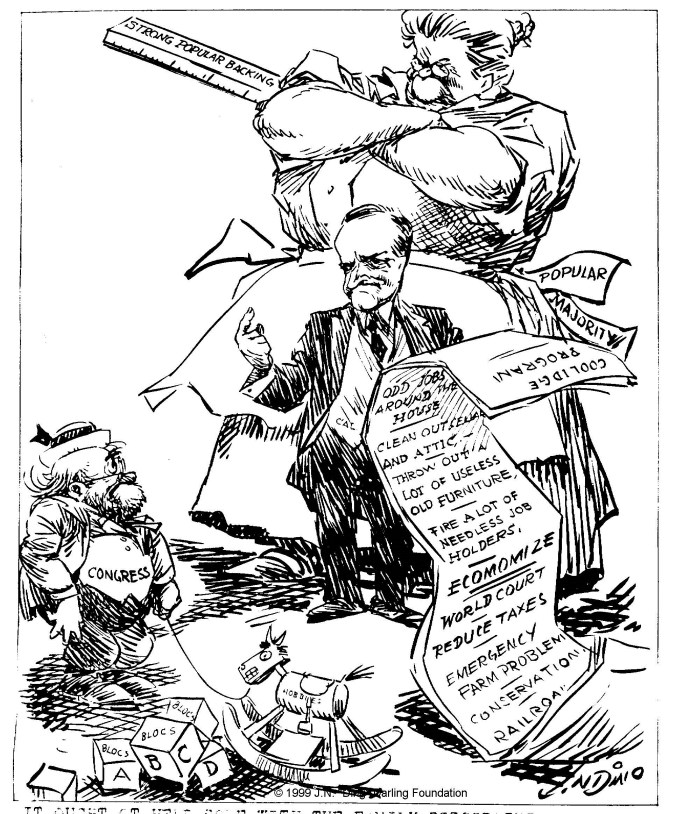
By "Ding" Darling November 14, 1924

By “Ding” Darling November 14, 1924

The Democrat Party, conveniently ignoring the “tough budget decisions” it promised last year are not winning issues, they are silencing any effective opposition through fear and intimidation, counting on our ignorance to blame Republicans for others’ actions. Instead of joining Democrats in this evasion of who they are and what they really believe, Republicans need to be boldly and unashamedly Republican. Instead, the “experts” are urging Republicans to just stop being Republicans and conform to a one-party system so that the White House can achieve Utopia for us all.

Coolidge knew better. He knew that, “[s]ince its very outset, it has been found necessary to conduct our Government by means of political parties. That system would not have survived from generation to generation if it had not been fundamentally sound and provided the best instrumentalities for the most complete expression of the popular will.” Neither party perfectly represents, nor can it, the popular will in everything. Opposing parties serve as an indispensable check upon political power (whichever Party is in office), continually reminding both sides that principles (not holding government powers) matter most and no majority however strong can defy the people’s will indefinitely.

It serves a continual reminder that parties are not empty vessels to be shattered and remade on the whim of politicians for the expediency of the moment but rather they are the instruments through which the people speak, enacting the principles we expect of our government. They are to stand for very specific and irreconcilable directions. To silence, deny and dispense with that difference is a betrayal of every last one of us, every time we vote and every choice we make, Republican, Democrat, or otherwise.

On the Limbaugh Theorem

Image

It is unimaginable that America would ever see, let alone re-elect, such a dearth of leadership as we now experience. It is a far fall from the Presidential strength of character demonstrated on either side of the aisle from Reagan and F.D.R. to Coolidge and  Cleveland. It tests the bounds of reality to try to understand why someone so hostile to America’s history and institutions could find such prevalent support.

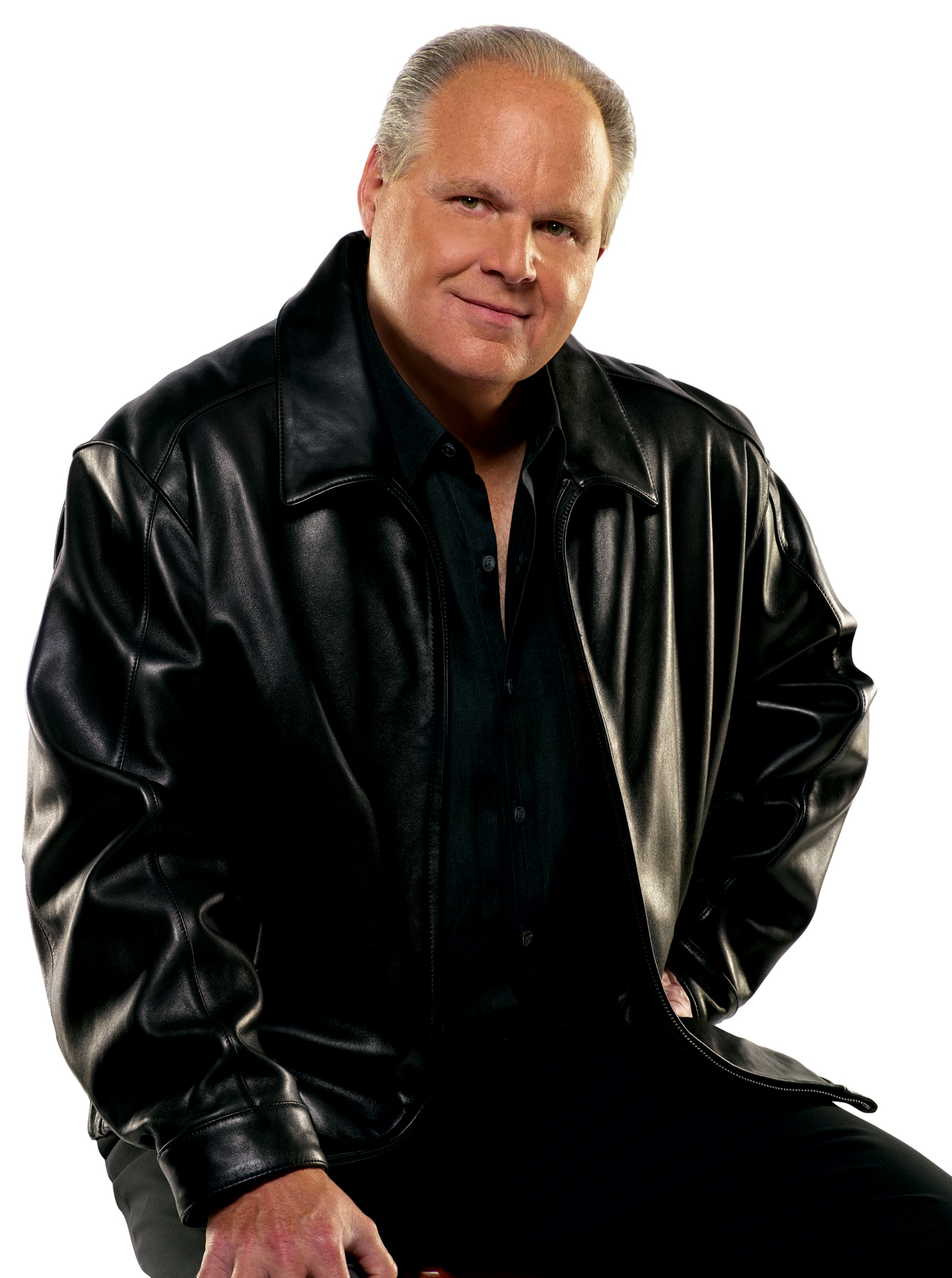
Rush Limbaugh has proffered an explanation for this utterly irrational disconnect between Obama and any accountability for his own policies with the “Limbaugh Theorem.”

Image

Instead of tracing effects directly to their causes, too many are willing defenders of policies that are indefensible. The not too distant past would indict this attitude. Coolidge appreciated that history was more than a dry series of dates and dead people. He said, “If we could better understand what they said and did to establish our free institutions, we should be less likely to be misled by the misrepresentations and distorted arguments of the hour, and be far better equipped to maintain them [our free institutions].”

Professing to finally espouse the colorblindness of an enlightened modernity, this current attitude claims to be free at last from what mired past generations in racism and ignorance. In reality, this politically correct culture has camped atop a mountain piled high with the soft bigotry of low expectations. Unable to see beyond the irrelevant color or race of the President to properly discern the destructiveness of this man’s political agenda — his own policies free of any opposition for the last five years — this culture seems ready and willing to declare one preeminent political axiom, “As the first black President, he can do no wrong.”

Should it ever be whispered that his actions were less than irreproachable, the fact that he has a certain skin color cancels out any criticism. This ultimate form of affirmative action should be insulting to anyone, regardless of color, race or political persuasion. It is an insult to reason.

Any disagreement is dismissed as racially-driven. He cannot be wrong or else we are instantly back to an unredeemed “Jim Crow” America, as opposed to the peace and unity in which we now live, this new day hailed to be the transformational age of Obama. The popular perception that all progress would be undone by pointing out the failures of one who happens to be a certain color is too much for this culture to allow. Obama cannot be blamed for anything he has done because…he inherited it, he is being obstructed by Republicans, he is not being understood, he was forced to work with a deck stacked against him by the Founders or any number of contorted explanations that try to justify him at all costs. This lone individual is too big to fail, even if it means America is to be sacrificed for his sake. 

The Limbaugh Theorem further explains that faith in America is what is being lost, instead of the credibility of absentee leadership. In time past, people were able to know failure when they saw it and reverse course at the ballot box. Hoover in 1932 and Carter in 1980 are prime examples. Now, as Coolidge himself struggled to understand, the artificial world of the political mind is becoming reality by perception.

Still, the perpetual campaign of this administration shows that even the President knows he has yet to fully convince a large cross-section of the electorate. The Office has known reprobates and autocrats before but it has never known anyone quite like this man. The combination of ambition for power with arrogance and animus toward the nation over which he has been elected makes him unlike anyone else who has occupied the White House. Yet, he is merely human. It is the pervasive force of political correctness maintained by those who carry his water (the First Lady is not the only one carrying water these days) that has kept him insulated from the consequences of his policies. Without the smoke and mirrors, the Wizard is no more immune from consequences than the rest of us in Oz are.

As Coolidge reflected upon his time in Washington, he observed there are two minds at work with which the President must deal. “One is the mind of the country,” he noted, “largely intent upon its own personal affairs, and, while not greatly interested in the government, yet desirous of seeing it conducted in an orderly and dignified manner for the advancement of the public welfare. Those who compose this mind wish to have the country prosperous and are opposed to unjust taxation and public extravagance…In general, they represent the public opinion of the land.”

“The immediate authority with which the President has to deal is vested in the political mind. In order to get things done he has to work through that agency…It is a strange mixture of vanity and timidity, of an obsequious attitude at one time and a delusion of grandeur at another time, of the most selfish preferment combined with the most sacrificing patriotism. The political mind,” Coolidge discerned, “is the product of men in public life who have been twice spoiled. They have been spoiled with praise and they have been spoiled with abuse. With them nothing is natural, everything is artificial.”

Then Coolidge draws a conclusion that forms the basis for the Limbaugh Theorem. The political mind, given to the artificial as it is, readily connects the Congress with all that is wrong with inside-the-Beltway thinking. Consequently, Coolidge identifies, “the President comes more and more to stand as the champion of the rights of the whole country.” This ability to equate the President with responsibilities outside, even transcendent of, the inner workings of Washington “is one of the reasons that presidential office has grown in popular estimation and favor, while the Congress has declined.” Moreover, the perception, however real or fake it may be, that “the President is willing to assume responsibility, while his party in the Congress is not,” makes the country feel that he is able to resolve the gridlock as the people’s “champion.”

Coolidge would be appalled at the extent of the destruction through lawless coercion this President has unleashed. Coolidge made clear that the President, whoever it may be, is rightly “held solely responsible for his acts.” Mr. Coolidge would never have condoned the repeated and flagrant disregard for the Office, the shirking of daily responsibilities owed to the country or the systematic protection this President continues to receive from any substantive criticism of his policies. Coolidge does help explain how the Limbaugh Theorem became possible. He does so by describing how the perception of the Presidency as “the champion of the people” easily translates into its corrupted form as the perpetual Washington outsider, able to fix the nation’s problems free of partisanship, free of the corruption of politics, and now free of both Constitutional limits and electoral consequences.