On Constitution Day 2018

LafayetteMemorial-Dedication-1924

President Coolidge’s words given here on the occasion of his dedication of the Lafayette Memorial in Baltimore, September 6, 1924. Photo credit: Library of Congress.

“Very little danger exists of an open and avowed assault upon the principle of individual freedom. It is more likely to be in peril indirectly from the avowed intention of protecting it or enlarging it. Out of a long experience with many tyrannies abroad and a weak and inefficient government at home, the Constitution of the United States was adopted and ratified. The people who largely contributed to the early settlement of America came to escape the impositions of despotic kings. Many of the early inhabitants were separatists from the established church. They fled under the threat of the English King, that he would make them conform or harry them out of the land. Their descendants fought the Revolutionary war in order that they might escape the impositions of a despotic parliament.

“This lesson was firmly in the minds of those who made the American Constitution. They proposed to adopt institutions under which the people should be supreme, and the government should derive its just powers as they from time to time should confer upon it by a written constitution. They did not propose to be under the tyranny of either the executive or the legislature.

“They knew, however, that self-government is still government, and that the authority of the Constitution and the law is still authority. They knew that a government without power is a contradiction in terms. In order that their President and their Congress might not surpass the bounds of the authority granted to them, by the Constitution which the people had made, and so infringe upon the liberties of the people, they established a third independent department of the government, with the power to interpret and declare the Constitution and the law, the inferior courts and the Supreme Court of the United States. No President, however powerful, and no majority of Congress however large, can take from an individual, no matter how humble, that freedom and those rights which are guaranteed to him by the Constitution”
— President Calvin Coolidge, Baltimore, Maryland, September 6, 1924.

On Flood Relief

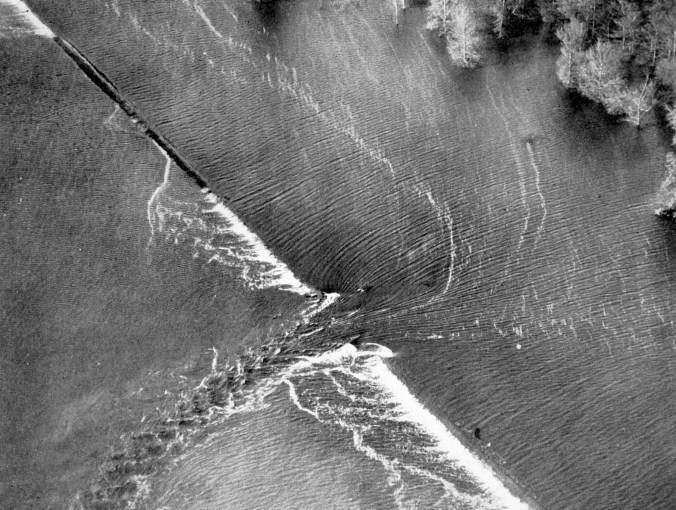
1927_Mississippi_Flood_Levee_Breach

In the summer of 1927, floods devastated communities up and down the Mississippi River Valley while storms in the Northeast produced flash floods in President Coolidge’s home state of Vermont. Over 200 people perished and half-a-million more lost homes and land to the water. There was intense pressure to construct an expansive federal oversight of relief and prevention efforts. This was all the more so because earlier legislation (from 1922) had prepared preventive measures along the Mississippi only to have the extent of the flooding surpass those attempts.

The President made the case repeatedly for approaching this problem – no less emotionally and politically-charged – with the same careful eye for economy that abhorred waste and defended those who would ultimately bear the heaviest burden for any federal aid programs: the people of the several states, both those impacted and those not impacted at all by the natural disasters. In the end, Coolidge ensured a much less expensive and far more focused piece of legislation than Congress would have instinctively, or if left to itself, crafted.

He would remark during one of his bi-weekly press conferences that summer (on May 10, 1927):

“The Country is making very good response to the appeal of the Red Cross to furnish money for the relief of those that are suffering on account of the flood, but the area of the flood keeps increasing so that the Red Cross will certainly need all the money that it can secure. I would like to emphasize the continuing need for relief and my appreciation of the response the Country is making.”

Coolidge fought for states assuming a not insignificant share of the costs being appropriated while encouraging private charity as the most meaningful remedy in times of distress. His outlook remains a wise one even as the great work of the Red Cross, Samaritan’s Purse, and many more charitable and religious groups take up the personal duty following Hurricane Florence of loving one’s neighbor.

On Sacrifice

Tomb of Unknown Soldier, Armistice Day, 1924 11-11-1924

Photo credit: Library of Congress

The concept of sacrifice has been in public discourse a great deal lately. It is welcome to hear discussion of what actually constitutes sacrifice in so open a way among our friends, neighbors, and fellow citizens. Though Calvin Coolidge never lived to see the attack on Pearl Harbor in 1941 let alone the attacks we remember unfolding on this unforgettable day seventeen years ago, he expressed his sentiments on the meaning of sacrifice many times.

Though written in the context of a veto against salary increases for state legislators, one of our favorite observations by Calvin Coolidge, especially on this day, remains:

“No person was ever honored for what he received. Honor has been the reward for what he gave.”

As more than one cogent American has noted today, such an honor goes to men like Tom Burnett, who with a group of the passengers aboard United Flight 93 resolved to “do something” rather than timidly submit to whatever their captors demanded. They refused to sit quietly and observe all the nice culturally-imposed rules of postmodern conflict resolution. As such, they saved many more in the path of evil plans. Devout and determined Americans like Tom Burnett gave everything they could give when life itself was at certain risk. Would they act anyway to save others they would never meet, souls who would never thank them, children, wives, and family they would never see again – at least on this side of eternity – and honors they would never see? Their actions define the very essence of sacrifice.

The Tom Burnett Foundation was formed in 2002 with the same giving spirit its namesake had for others, especially for the encouragement and development of good citizenship and faithful leadership in our young people. May no one ever have to experience what Mr. Burnett and others faced on this day in 2001 (having fully counted the cost of doing nothing). But if America is to endure it will only come through the same caliber of sacrifice and moral courage he gave in his final hour.

Tburnett