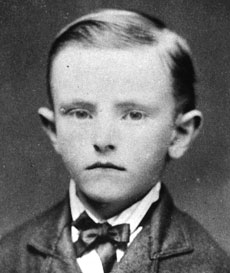
What was Christmas like for Calvin as a boy?
As the late Hendrik Booraem noted, Christmas had grown in importance with the passing of years after the War had ended in 1865. Those of Colonel Coolidge’s generation witnessed the holiday take full place alongside Thanksgiving, having not grown up as children of the 1840s and 50s with much that could be called the holiday we now know. Winter always being the most socially full season of the year for neighborhoods like Plymouth Notch, with the crops harvested, the cows dry, and large projects awaiting warmer temperatures, the calendar became quite full with dances, skating, indoor and outdoor parties, spelling bees, and singing practice for adults and children alike. Of course, many of the carols we sing today had yet to enter the repertoire.

Calvin’s younger sister Abbie, who was described by a cousin as “one of the sweetest girls I ever knew. Laughed as easily as anyone I ever saw, fat and jolly…she was wonderful company” (Booraem [1994], The Provincial, 222 n.14).
Young Calvin and his little sister Abbie took part in most of them, with Calvin abstaining when it came to dances. Recitations, readings from various poems or other texts, performed by students of all ages were a highlight of the season. Organized by the school teacher, this exhibition brought in neighbors from the Union and points even further away. This was largely enabled by heavy snowfall, that provided a kind of paved road for easier travel via horse-drawn sleigh. In 1885, Abbie read “The Three Wishes” while Calvin delivered “The Grey Cold Christmas.”
By the 1870s and 80s, a large tree usually found its way into the church building, amply decorated and adorned with gifts for just about everyone in the area. Often it was either Christmas Eve or the following night when the families of that country gathered to be together and share the occasion beside the tree inside the richly-carved room. There was always a generous place for pranks and other joke-gifts given and received – with most items personal and handmade. It was only well into the 1880s, after Calvin had begun studies at Black River Academy in Ludlow, that the arrival of a Sears, Roebuck catalogue in the mail at Cilley’s Store, began to herald the shopping season. Cal, accompanying his father across the street to the store to get the mail in the evenings, would sometimes see a lanky older boy there with his father, the boy most knew as “Gary,” the future Attorney General of the United States, John Garibaldi Sargent.
Families certainly decorated at home too, as Calvin describes, “Christmas was a sacrament observed with the exchange of gifts, when the stockings were hung, and the spruce tree was lighted in the symbol of Christian faith and love. While there was plenty of hard work, there was no lack of pleasurable diversion.”
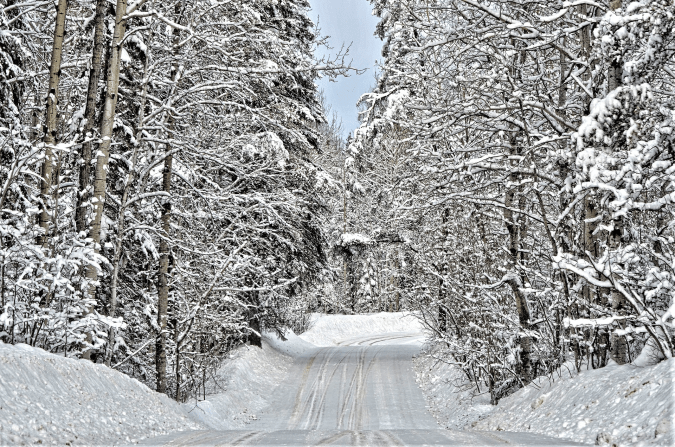
One of Calvin’s favorite diversions was “sliding” (or as we know it, sledding), both during recess and once the chores were done, with one of the best spots being Schoolhouse Hill, up the rise from, you guessed it, the stone block schoolhouse and the cheese factory below it. No different from the latter day beloved comic strip, young Calvin carried his sled up that hill and routes like it countless times, perfecting the technique well into his teens, braving the numerous hazards of snowy embankments, wooded obstacles, rocks, ice, and unpredictable depths between his father’s house and Cal’s second home, the farm of his grandparents. In 1885, when he was 13, Christmas came and went with lots of rain. The long-awaited snowfall, in requisite quantities, finally came in mid-January of 1886 and so Cal was off, crisscrossing the expanse, about to begin a new life chapter that would take him to Ludlow and beyond.
Being fortunate to visit Plymouth Notch this past summer, I walked those hills and roads he knew so well. Blanketed with snow now, they undoubtedly welcome the memories of many years ago when a young boy looked out his window to see a thrilling canvas of possibilities in which to carve adventure.


 The Importance of the Obvious