On “Washington’s Motto” by Veronique de Rugy

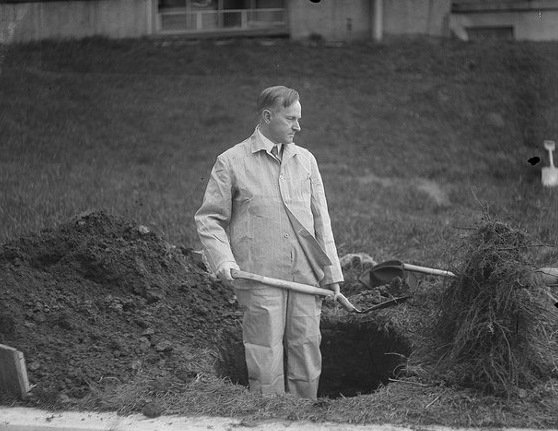
CC-digging-hole

One of the rarer times in which Coolidge dug a deeper hole than he was in…when it came to debt, he was constantly baling while the states were freely spending. Despite encouraging states to plan ahead, he saw them largely disregard the advice which left the country even more depleted when bad times did arrive.

Veronique de Rugy over at the American Enterprise Institute makes a very good case as to what Washington, D. C.’s motto, gleaned from even the briefest glance of its behavior, should be: “Spend During Good Times and Spend Even More During Bad Times.” When it comes to that motto, between Congress and the White House there is a distinction without a difference. We are about to witness, after the third coronavirus stimulus bill, a $3.8 trillion deficit in the budget for the coming fiscal year.

Author de Rugy observes,

The last time this country had a debt as a share of GDP higher than 100 percent was in 1945 and 1946. However, as soon as the war was over the debt fell quickly. I wouldn’t count on a dramatic reduction in debt as a share of GDP this time around.

Entitlement spending continues to climb higher than ever before and as she argues, it has carried a ratchet effect since that last time, three-quarters of a century ago. It never goes down. Like snow that withstands summer heat, the sun may shine but Washington never allows for long enough to get back to that first layer of indebtedness. How long before these levels of spending will enter the sacred chamber of nondiscretionary status? The crisis mentality of Congressional sessions alone testifies to the fact we have yet to come down from the emergency mindset of World War II, a 50+ week long duration that has become the norm since 1940, eighty years ago this past January.

While Coolidge is not mentioned in Ms. de Rugy’s piece, he certainly stands as proof that a time did once exist when spending actually went down following a violent and global conflagration (world war followed swiftly by pandemic and depression) in defiance of Robert Higgs’ otherwise correct and brilliantly argued thesis in Crisis and Leviathan. We are comfortable frogs in our gradually boiling pot that we console ourselves that those were simple and nostalgic days long gone. Putting up a strawman argument — that we can or should return to the Twenties – is intellectually lazy and downright stupid, expecting you to be stupid enough to buy the snake oil. No one is attempting, including Ms. de Rugy, to make the argument that we can or will somehow drop back into a 1920 world. But we are foolish in the extreme when we do not countenance a playbook that gives us principles (dare I say it, truths) that translate across time to reveal methods which, if tried and applied, reverse bad decisions and attempt to avert disastrous consequences. Are we to embrace forever the notion that the course on which we are heading cannot be corrected and really won’t be that bad if we hit the accelerator? Nor does it follow that what happened in 1929 is the inescapable conclusion of those principles when applied.

Before the closing years of the nineteenth century, most of America’s history did not live under the unspoken value system we have amassed these last eighty years. But, the Thirties and Forties were so unprecedented, so new (at least to America then), so unlike anything we had ever faced before that we chose a path that exchanged fewer guardrails on government for more guardrails than ever before upon ourselves. We have re-ratified that unwritten — yet constantly redrafting — constitution countless ways and many, many times since those years and any iteration that attempts to reintroduce the guardrails on Washington after our experimentation without them for so long will not come without a supreme determination of will. It likely will not come without a generation first being lost in the wilderness — do not our hearts pine for Egypt in our day? Then, and only then, will another come after it toughened by the experience to exercise the will and judgment that has been missing to restore what our colonial fathers and mothers knew was there for good reason. Put another way, we have so long accepted the same argument employed to prevent the enfranchisement of freed slaves that we would find the stiff breeze of freedom too cold and biting outside our security blanket…or boiling pot.

In April 1931, former President Coolidge wrote this:

The reported decision from Washington not to call an extra session of the Congress to relieve the farmer and redress unemployment will impress the country as sound. When the last Congress assembled, in the early spring of 1929, the farmer was in a fair condition and unemployment was not a pressing question. The longer the Congress was in session the worse the condition of the farmer became and the larger grew the list of the unemployed. While it is not possible to say that conditions were not improved by legislation, it is apparent they were not cured. A large prospective Treasury deficit has not prove a sovereign remedy. 

Business will also gain some courage from the report that by curbing expenses a further increase of taxes may be avoided. But what is especially cheering is the suggestion that politics is not to agitate the country…No extra Congress, no extra taxes and no extra politics make the wisest proposals for relief that have yet been announced. 

Art Laffer has actually called for a suspension of payroll taxes in our current situation. Is it too much to say that Coolidge would probably agree, based on his observations here. Coolidge actually believed that shorter sessions of Congress were a virtue not a liability for the country…because they furnished clarity, stability and peace: Americans could get back to work without wondering what else was set to change in the next hour, day or week of Congressional debate or Presidential pronouncement. Coolidge’s persistent pressure on legislative leaders to do more with less started early in his career. It also applied to more than money, it also applied to time. He exerted that subtle pressure in Massachusetts in the midst of the Progressive Era, satisfied to note that the daily sessions and the volume of legislation actually decreased on his watch as presiding officer of the state senate. “The Blue Book of Acts and Resolves” saw “a very wholesome reduction of more than thirty percent” between 1913 and 1915. It was not just final victory in a war over budgets, it was winning in the battles too. He took that same mentality to Washington and, while the personalities may have been bigger, it is interesting to note that Coolidge’s tenure marked the last time the longest Congressional sessions returned consistently below 30 weeks in duration. The last time we had a long session conclude that quickly was 1934. He, like FDR, knew how to expedite the legislative task when it needed more than merely an increase of laws, it needed to do the country a favor and adjourn. Of course, the latest crisis has postponed the next session too. Many will deeply resent it, no doubt, but perhaps we are being pulled back kicking and screaming to see what used to be the norm: a Congress that holds its longest session to less than 25 weeks.

Today, we like our 24/7 legislative formula too well to question its wisdom. If Washington isn’t meeting to spend somewhere (sometimes repeatedly on the same amount) how will the country still be standing in the morning? For Coolidge, this was patently absurd, the kind of stuff that con artists pawn on unsuspecting buyers, filling the former’s pockets while leaving the latter’s poorer but feeling good that the miracle cure works so well.

Coolidge revealed what restraining Washington can accomplish but it will not come without what Cal tapped into then: a determined public backing. With that, whole mountains can move and never in as much time as the policy wonks and “experts” cautiously advise. Dismissed as a cautious man, there was nothing cautious about Coolidge when it came to deftly wielding a tomahawk on Washington’s infatuation with spending in good times and spending more in the bad.
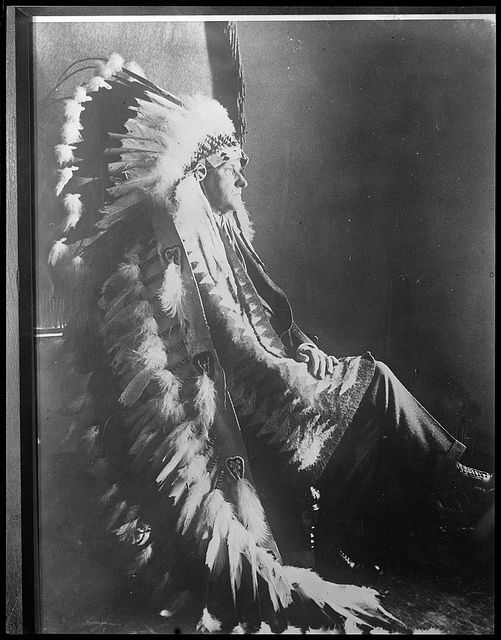
CC-headdress-seated

At the Annual Session of the American Medical Association, May 17, 1927

doctors-of-ama-honor-500-who-died-in-medicine-during-ww1

Medical professionals gathered in Washington for the 1927 AMA Session gather here to honor the 500 doctors who died while at their work during World War I, Arlington Amphitheater, May 17, 1927.

President Calvin Coolidge, in address the American Medical Association at its annual session in 1927 on May 17th of that year, spoke these words: 
Ladies and Gentlemen:
America has so many elements of greatness that it is difficult to decide which is the most important. It is probable that a careful consideration would reveal that the progress of civilization is so much a matter of interdependence that we could not dispense with any of them without great sacrifice. But those who have witnessed the general paralysis which prevails when even a moderate epidemic breaks out can not help but realize that one of the most important factors of our everyday existence is the public health, which has come to be dependent upon sanitation and the medical profession. We are constantly in receipt of the beneficial activities of these efforts in the disposition of waste, the water we drink, the food we eat, and even in the air we breathe. This great work is carried on partly through private initiative, partly through Government effort, partly by a combination of these two working in harmony with the science of chemistry, of engineering, and of applied medicine. In its main aspects it is preventive, but in a very large field it is remedial. Without this service our large centers of population would be overwhelmed and dissipated almost in a day and the modern organization of society would be altogether destroyed. The debt which we owe to the science of medicine is simply beyond computation or comprehension.
These benefits have almost all come to the world within a few generations. Pure science, as we understand the term, has a very recent origin. In fact, we do not go back but a short distance to find the first modern comprehension of the difference between sound thought and visionary speculation. Since that day we have come to what is known as the scientific age. Almost all over the world men are making observations, collecting accurate information, comparing ascertained facts, and working toward established conclusions. Although great progress has been made and certain fundamental rules have become well established, we can not yet estimate the development of scientific research as much more than begun. But great effort is being put out all around us and a constant advancement of knowledge is in progress. This has been especially true in the science of medicine. Many of the diseases which laid a heavy toll on life have been entirely eradicated and many others have been greatly circumscribed. The average length of life has been much increased. But there is still an enormous economic loss in sickness, and the list of maladies for which no remedy is known is still large. How far the mind has an effect on the body is not yet accurately known. What mental reactions may be set up to preserve health or combat disease can not yet be stated.
If there is any one thing which the progress of science has taught us, it is the necessity of an open mind. Without this attitude very little advance could be made. Truth must always be able to demonstrate itself. But when it has been demonstrated, in whatsoever direction it may lead, it ought to be followed. The remarkable ability of America to adopt this policy has been one of the leading factors in its rise to power. When a principle has been demonstrated, the American people have not hesitated to adopt it and put it into practice. Being free from the unwarranted impediments of custom and caste, we have been able to accept whole-heartedly the results of research and investigation and the benefits of discovery and invention.
This policy has been the practical working out of the applied theory of efficiency in life. We have opened our mines and assembled coal and iron with which we have wrought wonderful machinery, we have harnessed our water power, we have directed invention to agriculture, the result of which has been to put more power at the disposal of the individual, eliminating waste and increasing production. It has all been a coordination of effort, which has raised the whole standard of life.
In the development of this general policy the science of medicine has had its part to play. No tendencies in recent history have been more outstanding than those toward conservation and cooperation, both in public and in private activities. For years the value of conservation of our material resources – forests, mineral deposits, water power, animal life – has been generally recognized. Movements have been started to cut down waste and unnecessary destruction in business and industrial operations. We are practicing economy in our governmental affairs. But the conservation of human health and life is one of the greatest achievements in the advance of civilization, both socially and economically.
What an incalculable loss to the world may have been the premature blotting out of a single brilliant creative mind which might have been saved through modern healing or preventive measures. Efficiency experts translate into dollars and cents what disease and the resulting loss of manpower mean. Directly, disease costs heavily. Indirectly, its results are even more costly. In the days before medical men robbed them of their terrors, a single case of yellow fever or cholera reported in New York Harbor caused such panic as seriously to interfere with business. Now such sporadic cases would scarcely cause public comment. Industry now figures what disease and temporary disability of employees, from the highest to the lowest, means on the yearly balance sheet. It is not uncommon for a corporation to take out an insurance policy for its own benefit on the life of an executive. Thus it attempts to neutralize the monetary loss it presumably might suffer through being deprived of his service.
Factory buildings now are equipped with modern sanitary and hygienic devices. Large industrial establishments employ not only doctors but nurses to care for their employees. Industry has found all of this not only a social but a financial benefit. The cost of such improvements has been returned many times in the amount of productive labor saved. Life insurance companies have health clinics and distribute hygienic literature. Several have sanatoriums for the treatment of their policy-holders.
There is no finer page in the history of civilization than that which records the advance in medical science. The heroism of those who have worked with deadly germs and permitted themselves to be inoculated with disease, to the end that countless thousands might be saved, was less spectacular but no less far-reaching than that on the battle field or of an isolated rescue from a burning building or a sinking ship.
In the early part of the nineteenth century there were only three medical schools in the United States and two general hospitals. Since then progress has been marked. Writing in 1920, William Osler said the average working life of English-speaking men had been doubled within three centuries. Most of that gain has been made in the past half century. The development of preventive medicine has been one of the outstanding features of that period. Whereas in the old days the doctor healed, if he could, those who had become afflicted, the greatest stress to-day is laid upon keeping the body sound and efficient. Proper methods of living are taught and suitable diets are prescribed. Hygienic conditions for the home, the workshop, and the factory have been adopted. Periodic physical examinations are urged in order that disease may be turned back before it has become seriously developed.
In all this work our Governments – National, State, and local – have recognized that the preservation of health and the conservation of life are in part public functions. Health boards have been established, hospitals built and maintained, public nurses employed, and hygiene taught in the schools. The Public Health Service of the Federal Government has taken a leading part in combating diseases and in sanitary education. No more striking achievement was ever accomplished than by Doctor Gorgas, of the United States Army, in cleaning up the Panama Canal Zone. Under French control, the death rate in that area was 240 per thousand. In 1913 it had dropped to 8.35 per thousand. Without this work the construction and operation of the canal would have been impossible.
Universities and colleges, and even secondary schools, have their resident doctors and infirmaries. Not a few individuals, who can afford such health assurance, retain physicians to look after them the year around. Only recently the movement for prevention, or relief in the early stages, has been extended to mental diseases. Cities are establishing mental clinics, and many educational institutions have departments for studying and alleviating mental distress which so frequently leads to serious consequences for the student.
Cooperation and tolerance, which have been developed so widely in industry and social relations, are now found in a marked degree in the medical profession. The work being done by the American Medical Association is a striking illustration of this. In years gone by physicians were apt to be suspicious and intolerant of other schools and of other methods of treatment. There has been a great change. The modern broad-minded physician is willing to use or to recommend whatever methods seem best suited to the case in hand. Furthermore, he is the strongest advocate of prevention. He it is who is taking the lead in the development of everything which promises to promote health and to reduce sickness to the minimum, even though its tendencies are to diminish the practice upon which he relies for his income.
All of these accomplishments are distinctly in the line of conservation through social service. The society of this country has become so well organized, its charities have become so broad and inclusive, that the great body of our population is able to secure adequate medical attention. This is true to a remarkable degree of all our great centers of population, and it is only in remote quarters that such service can not be provided. Our larger cities support free dispensaries, our hospitals have provision for free service, and of all the professions, with the possible exception of the ministry, our physicians give most unsparingly of their time and their skill for the alleviation of human suffering. Our governmental agencies, our organized charities, and our private benefactors are all giving generous support to this most important purpose.
This is an enormous contribution that has been made to human welfare. It is one of the undeniable evidences of the soundness and success of American institutions. The fact that our attainments and our blessings have become common is no reason why they should be ignored. Constructive criticism is always proper and ought to be helpful. Mere fault finding has no value except to reveal the poverty of the intellect which constantly engages in it. Our country, our Government, our state of society, are a long way from being perfect, but the fact that our structure is not complete is no reason for refusing to assess at their proper value the usefulness and the beauty of those parts which are nearing completion, or withholding our approval from the general plan of construction and neglecting to join in the common effort to carry on the work.
The human race is by no means young. It has reached a state of maturity. It is the inheritor of a very wide experience. It has located a great many fixed stars in the firmament of truth. No doubt a multitude of others await the revelation of a more extended research. But because we realize that we have not yet located them all is no reason for doubting the existence of those already observed or disregarding the records which reveal their position. To engage in such a course would lead to nothing but disaster. One of the difficulties in the world is not that we are lacking in sufficient knowledge, but that we are unwilling to live in accordance with the knowledge which we have. Approbation of the Ten Commandments is almost universal. The principles they declare are sanctioned by the common consent of mankind. We do not lack in knowledge of them. We lack in ability to live by them.
Somewhere in human nature there is still a structural weakness. We do not do as well as we know. We make many constitutions, we enact many laws, laying out a course of action and providing a method of relationship one with another which are theoretically above criticism, but they do not come into full observance and effect. Society is still afflicted with crime, and among the nations there are still wars and rumors of wars. In spite of all our progress and all our success, no one doubts that much yet remains to be done.
What part the physician will play in the further advancement of the well-being of the world is an interesting speculation. It is a well-known proverb that “Cleanliness is next to godliness.” No one can doubt that if humanity could be brought to a state of physical well-being, many of our social problems would disappear. If we could effectively rid our systems of poison, not only would our bodily vigor be strengthened, but our vision would be clearer, our judgment more accurate, and our moral power increased. We should come to a more perfect appreciation of the truth. It is to your profession in its broadest sense, untrammeled by the contentions of different schools, that the world may look for large contributions toward its regeneration, physically, mentally, and spiritually, when not force but reason will hold universal sway. As human beings gain in individual perfection, so the world will gain in social perfection, and we may hope to come into an era of right living and right thinking, of good will, and of peace, in accordance with the teachings of the Great Physician.
Overruling his own doctor, President Coolidge ventures out in the rain to greet the thousands of doctors gathered at the White House the day after his speech to these professionals in Washington for the American Medical Association's Annual Session, May 18, 1927.

Overruling his own doctor, President Coolidge ventures out in the rain to greet the thousands of doctors gathered at the White House the day after his speech to these professionals in Washington for the American Medical Association’s Annual Session, May 18, 1927.

On the Future Soundness of Medicine

Seems like a good time to share this one from 2014 again…

For President Coolidge’s entire speech, click here.

gouverneurmorris's avatarThe Importance of the Obvious

“America has so many elements of greatness that it is difficult to decide which is the most important. It is probable that a careful consideration would reveal that the progress of civilization is so much a matter of interdependence that we could not dispense with any of them without great sacrifice…[O]ne of the most important factors of our everyday existence is the public health, which has come to be dependent upon sanitation and the medical profession…This great work is carried on partly through private initiative, partly through Government effort, partly by a combination of these two working in harmony with the science of chemistry, of engineering, and of applied medicine. In its main aspects it is preventive, but in a very large field it is remedial. Without this service our large centers of population would be overwhelmed and dissipated almost in a day and the modern organization of society would…

View original post 2,787 more words