On the Law of Service and “America First”

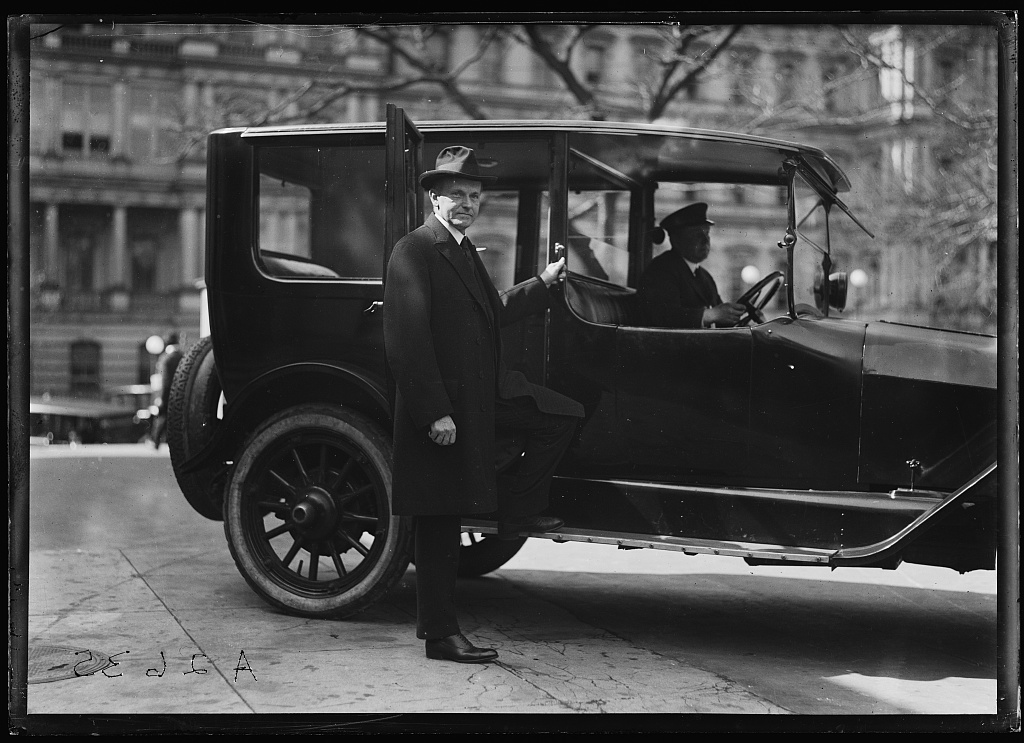
President Coolidge at the State, War and Navy Department offices, Washington. Courtesy of the Library of Congress.

President Coolidge at the State, War and Navy Department offices, Washington. Courtesy of the Library of Congress.

“No person was ever honored for what he received. Honor has been the reward for what he gave” — Governor Calvin Coolidge, upon vetoing a $500 salary increase by the Massachusetts House, 1919 (Have Faith in Massachusetts, p.173)

“All artificial privilege always has and always will destroy itself. The law of service is the law of action”Adequate Brevity p.99

“The principle of service is not to be confounded with a weak and impractical sentimentalism” — p.98

“Titles to nobility cannot be granted or seized. They can only be achieved. They come through service, as yours came, or they do not come at all” — p.99

“Society will remain a living organism sustaining hope and progress, content to extend its dominion not by conquest but by service” — p.100

“It is time in every activity in our land, for men in every relationship, to stop trying to get the better of each other and begin trying to serve each other” — p.99

“The service which America has rendered to others has been to a considerable degree one of example” — p.98

“If our country is to stand for anything in the world, if it is to represent any forward movement in human progress, these achievements will be measured in no small degree by what it is able to do for others” — p.99

“We have been, and propose to be, more and more American. We believe that we can best serve our own country and most successfully discharge our obligations to humanity by continuing to be openly and candidly, intensely and scrupulously, American” — Inaugural Address, March 4, 1925 (Foundations of the Republic pp.194-5).

“More and more men are seeking to live in obedience to the law of service under which those of larger possessions confer larger benefits upon their fellow men”Adequate Brevity p.99

“Public acclaim and the ceremonial recognition paid to returning heroes are not on account of their government pay but of the service and sacrifice they gave their country” — p.100

“America first is not selfishness; it is the righteous demand for strength to serve” — p.99

On “Experts” and Political Bias

District of Columbia Circuit Judge Josiah A. Van Orsdel, functioning as a polling judge, administers oath to this famous voter, Calvin Coolidge, 1924. The Coolidges would vote by absentee ballot that year since national responsibilities kept them out of their home precinct in Massachusetts. They still made a point of leading by example, however.

District of Columbia Circuit Judge Josiah A. Van Orsdel, functioning as a polling judge, administers an oath of qualification to this most famous voter, Calvin Coolidge, 1924. The Coolidges would vote by absentee ballot that year since national responsibilities kept them out of their home precinct in Massachusetts. Mr. Coolidge will fill out the ballot himself at this desk on the White House lawn. Grace would do the same. They still made a point of leading by example. Courtesy of the Library of Congress.

“The public press under an autocracy is necessarily a true agency of propaganda. Under a free government it must be the very reverse. Propaganda seeks to present a part of the facts, to distort their relations, and to force conclusions which could not be drawn from a complete and candid survey of all the facts. It has been observed that propaganda seeks to close the mind, while education seeks to open it. This has become one of the dangers of the present day.

“The great difficulty in combating unfair propaganda, or even in recognizing it, arises from the fact that at the present time we confront so many new and technical problems that it is an enormous task to keep ourselves accurately informed concerning them. In this respect, you gentlemen of the press face the same perplexities that are encountered by legislators and government administrators. Whoever deals with current public questions is compelled to rely greatly upon the information and judgments of experts and specialists. Unfortunately, not all experts are to be trusted as entirely disinterested. Not all specialists are completely without guile. In our increasing dependence on specialized authority, we tend to become easier victims for the propagandists, and need to cultivate sedulously the habit of the open mind. No doubt every generation feels that its problems are the most intricate and baffling that have ever been presented for solution. But with all recognition of the disposition to exaggerate in this respect, I think we can fairly say that our times in all their social and economic aspects are more complex than any past period. We need to keep our minds free from prejudice and bias. Of education, and of real information we cannot get too much. But of propaganda, which is tainted or perverted information, we cannot have too little” — President Calvin Coolidge, “The Press Under a Free Government,” before the American Society of Newspaper Editors, Washington, D. C., January 17, 1925 (Foundations of the Republic, pp.184-5).

On Lessons from Williams College for America

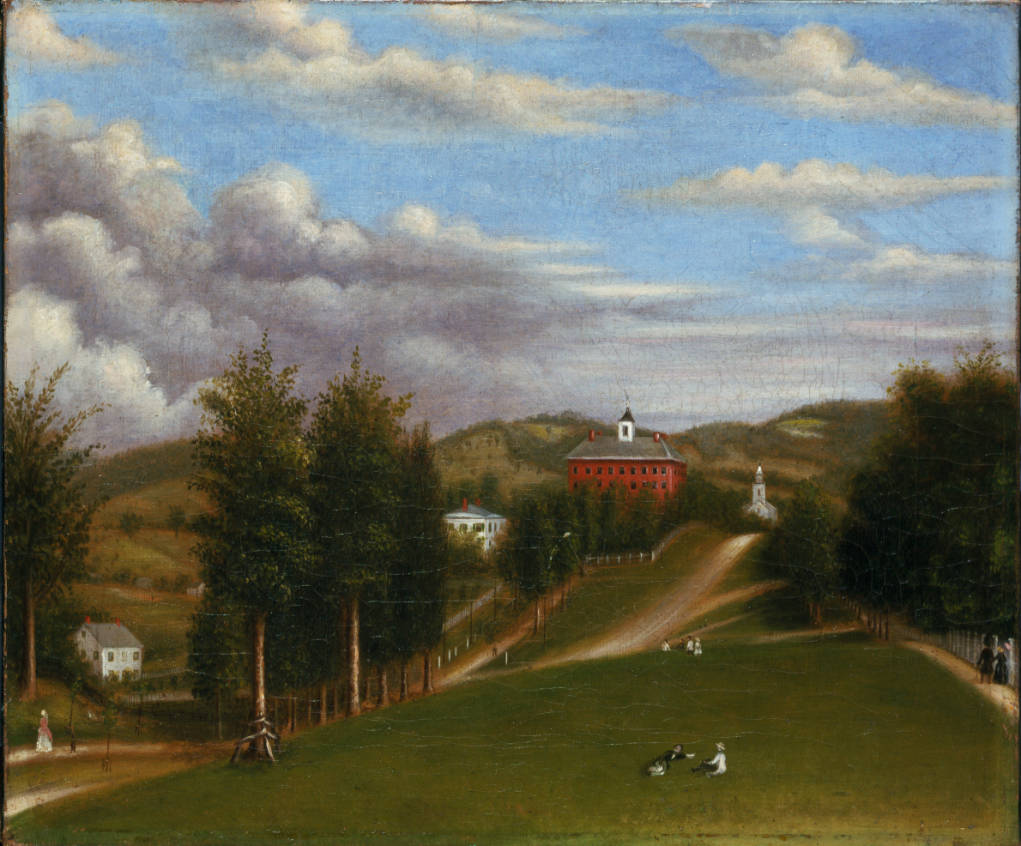
Colonel Williams' "Free School," established 1793 as Williams College

Colonel Williams’ “Free School,” established October 26, 1791 and chartered two years later as Williams College. Source: http://ephlib.wordpress.com/history-01/.

“Earth’s great lesson is written here. In it all men may read the interpretation of the founder of this college, of the meaning of America, of the motive high and true which has inspired her soldiers. Not unmindful of a desire for economic justice but scorning sordid gain, not seeking the spoils of war but a victory of righteousness, they came, subordinating the finite to the infinite, placing their trust in that which does not pass away. This precept heretofore observed must not be abandoned now. A desire for the earth and the fullness thereof must not be abandoned now. A desire for the earth and fullness thereof must not lure our people from their truer selves. Those who seek for a sign merely in a greatly increased material prosperity, however worthy that may be, disappointed through all the ages, will be disappointed now. Men find their true satisfaction in something higher, finer, nobler than all that. We sought no spoils from war; let us seek not spoil from peace. Let us remember Babylon and Carthage and that city which her people, flushed with purple pride, dared call Eternal.

“This college and her sons have turned their eyes resolutely toward the morning. Above the roar of reeking strife they hear the voice of the founder. Their actions have matched their vision. They have seen. They have heard. They have done. I thank you for receiving me into their company, so romantic, so glorious, and for enrolling me as a soldier in the legion of Colonel Ephraim Williams” — Calvin Coolidge, October 17, 1919

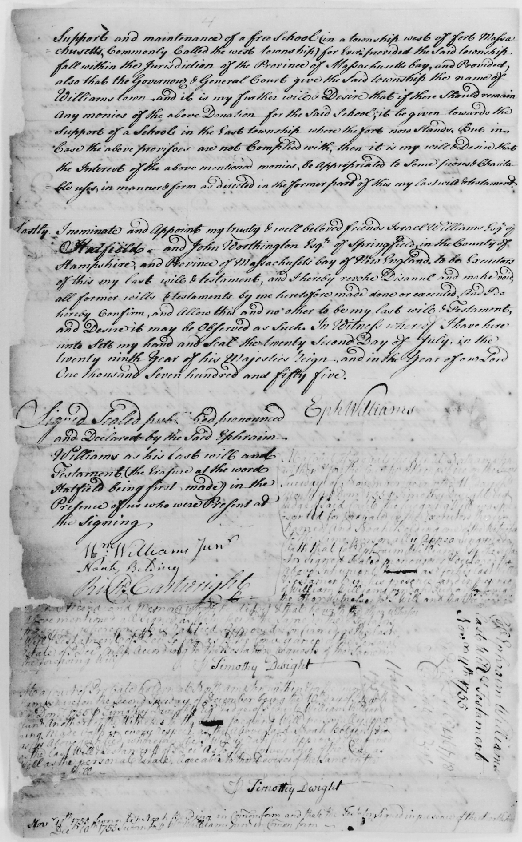
Final page of Ephraim Williams' last will and testament, it which he leaves the remainder of his estate to the "Support and maintenance of a free School for Ever, , provided the Said township fall with in the jurisdiction of the Province of Massachusetts bay, and provided, also that the Governour & General Court give the Said township the name of Williamstown..." Source: http://archives.williams.edu/founding/will4.php.

Final page of Ephraim Williams’ last will and testament, it which he leaves the remainder of his estate to the “Support and maintenance of a free School for Ever, provided the Said township fall with in the jurisdiction of the Province of Massachusetts bay, and provided, also that the Governour & General Court give the Said township the name of Williamstown…” Source: http://archives.williams.edu/founding/will4.php.