On Explaining Coolidge’s Success

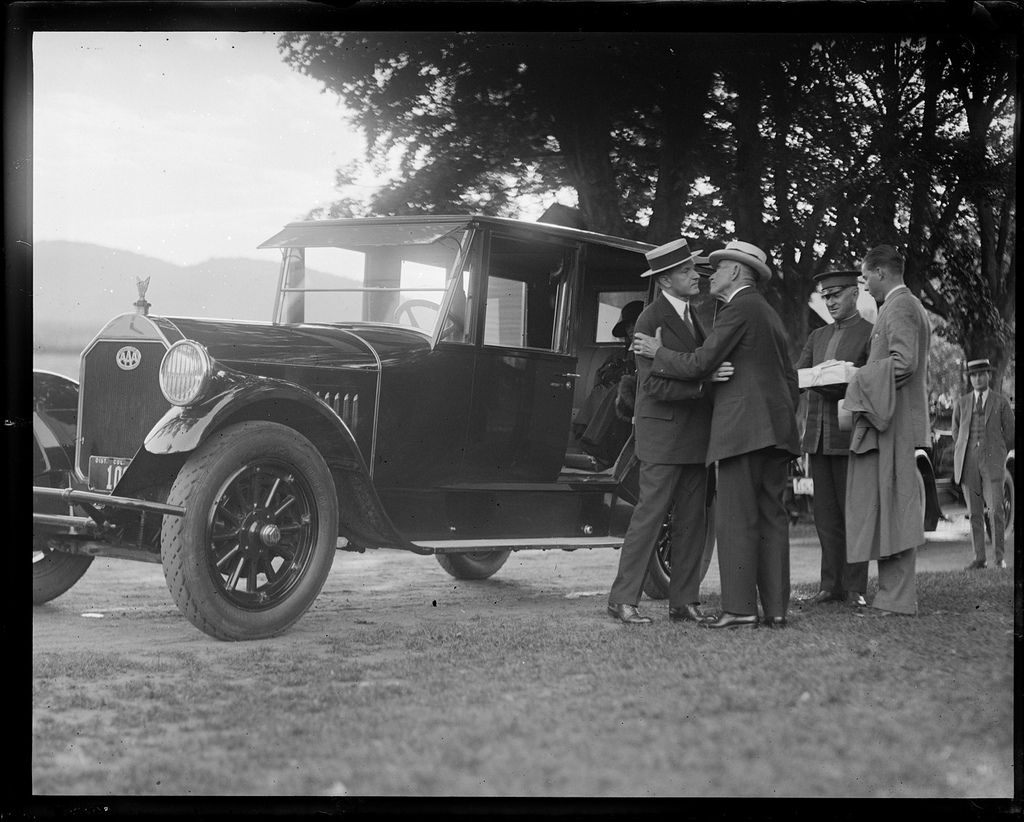
Since the beginning, humanity has not only been in search of success but also the keys that unlock it for others. Coolidge’s political success is all the more impressive when it is remembered that he had few of the traits that conventionally propel the office seeker forward. To the contrary, he seemed to shun these “essentials” and thereby redefined the ground-rules for public service. Coolidge illustrated that the typical terms of getting ahead are deficient by neglecting a very simple, unobtrusive fact:  It was actually his silence that became the key of his success. Rather than wasting time – as he saw it – promoting himself, he could unassumingly work and prove his worth through being discreet. It was turning what for many would be a severe handicap into a brilliant asset.

Bruce Barton, in one of his American Review of Reviews articles explaining “Silent Cal” to those unfamiliar with him, said it this way, “Office associates of Calvin Coolidge and acquaintances wondered how a young man so utterly lacking in self-advertisement could hope to succeed in the law. But there was no question about Coolidge’s knowledge, or his capacity for work; and gradually men conceived the notion that one who was so silent about his own affairs would probably exercise discretion in theirs. So his practice grew, and his neighbors began electing him to offices which nobody wanted especially, and continued to elect him to better offices, since he invariably made good…To do the job and to let the credit take care of itself, this was the rule of Coolidge. As more and more men began to understand it, the confidence of the common folk of Massachusetts grew; so that thousands who had never seen him began to feel a friendliness toward this unassuming man. His majorities were the envy of the professional politicians. He made few speeches, but those were extraordinary in substance and form…Elevated no powerful individuals, made no exaggerated claims or promises, kissed no babies, and spent no money. Every election found him more strongly entrenched.

‘Tell me the secret,’ a friend demanded. ‘You are always on the job at the Statehouse. How do you find time to keep in touch with your constituents? What do you do to assure your re-election?’

‘Well, I sort of let nature take her course,’ Coolidge drawled.

‘Oh, come now,’ his friend laughed, ‘that may do for popular consumption, but I know that nature doesn’t look after the re-election of politicians.’

Coolidge sat silent, puffing away on a stogie. ‘Maybe I have nudged nature now and then,’ he said.”

Cal’s rise serves as a reminder that it is the small things done well that line the road to success. Greatness lies in the little things in no less a proportion than large, loud personalities grappling with those same conditions. Above all, Coolidge succeeded by proving trustworthy, something that is nearly altogether discounted, marginalized and neglected in public affairs these days. He proved so not through devious calculation but through a sincere motive to serve those to whom he was accountable, the people who chose him for each office. It is no accident that success or failure goes hand-in-hand with earning and keeping that trust strong and unshaken.
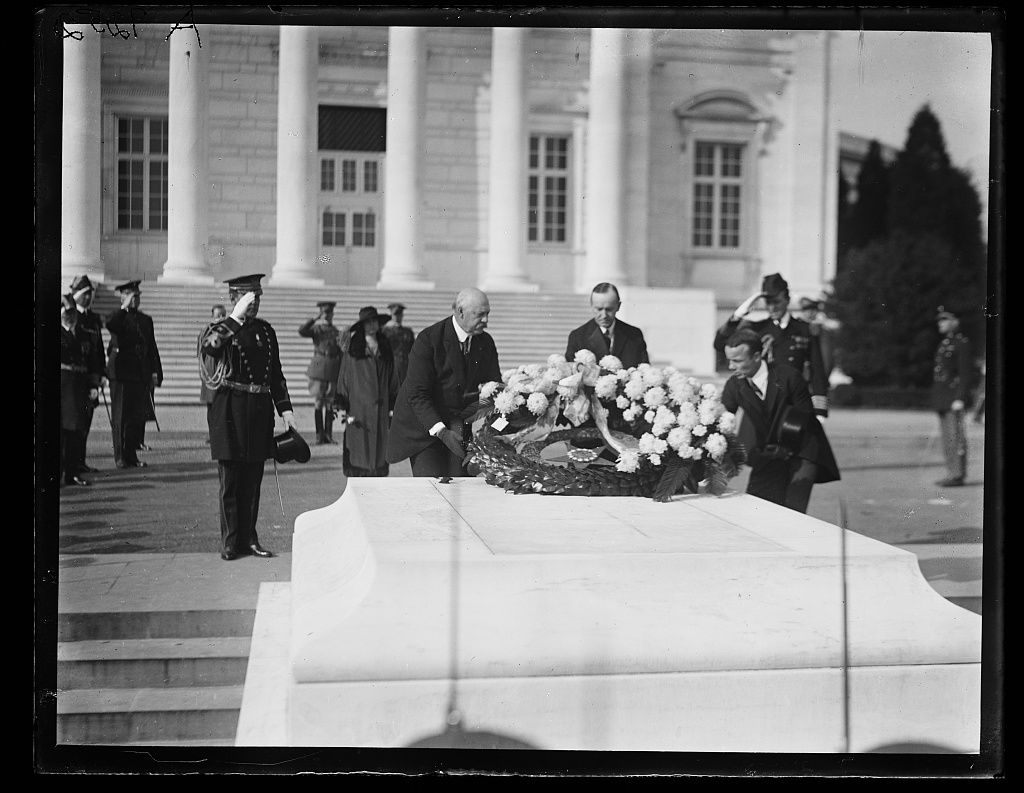
President Coolidge flanked by Secretary Weeks and Assistant Secretary Theodore Roosevelt, Jr., at the Tomb of the Unknown Soldier, 1923.

President Coolidge flanked by War Secretary Weeks and Navy Assistant Secretary Theodore Roosevelt, Jr., at the Tomb of the Unknown Soldier, 1923.
On Keeping Perspective

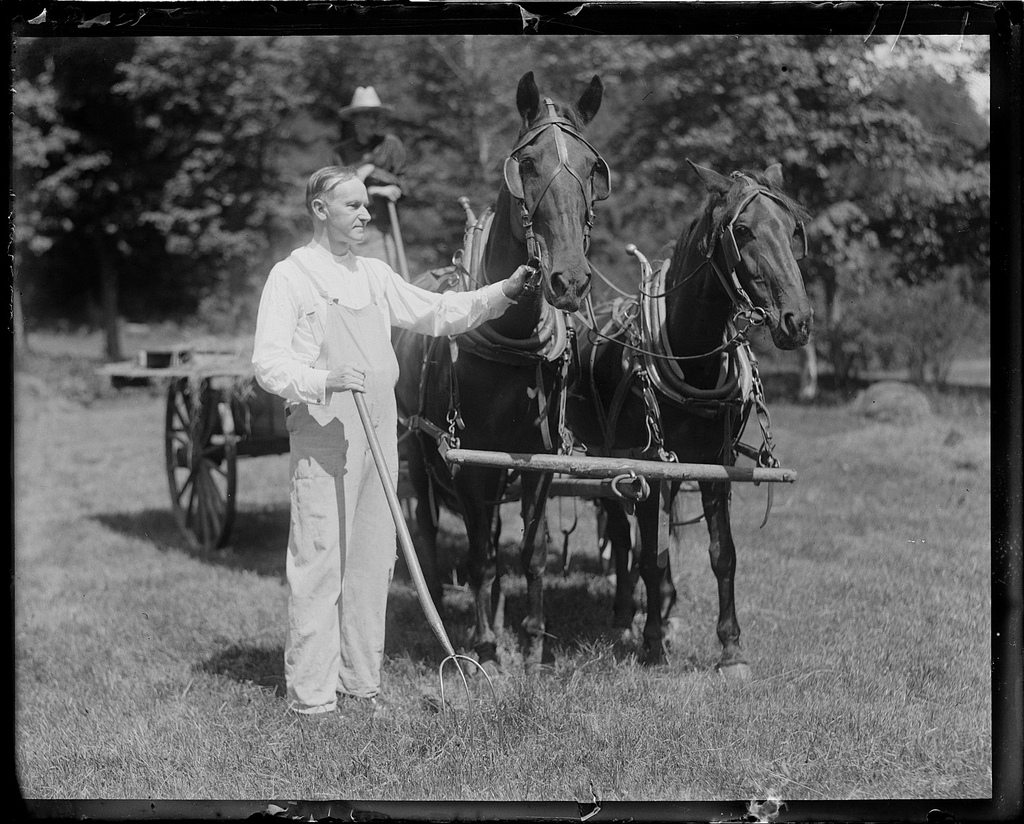
6193346898_78dbff35d4_b working in Plymouth

“I hope you all enjoyed your stay over in Vermont. I find it is helpful to me to go back once in a while to see that I am not forgetting how people earn their living, how they are required to live, and what happens when those who have harness breaks, or one of their shoes need some repairing, sit down and mend it. You can go out and do work on fences, do such odd jobs as are necessary to keep the house in repair, and in general do such things as are necessary for the ordinary American citizen to do. There is always a little danger that those who are entrusted with the great responsibilities of business and Government may come to forget about those things and disregard them and lose the point of view of the great bulk of citizens of the country who have to earn their living and are mainly responsible for keeping their houses, farms and shops in repair and maintaining them as a going concern. I find it very helpful to go back and revive my information about those things, lest I should be forgetful about it and get out of sympathy with those who have to carry on the work of the nation” — President Calvin Coolidge to the press, August 10, 1926 (The Talkative President, Eds. Quint and Ferrell, Amherst: University of Massachusetts Press, 1964, pp.46-7).

Happy Presidents Day!

6193348020_ca6a2a22b3_b Gov CC aint afraid of work on Arbor Day

On Missing his Father

President Coolidge saying goodbye to his father, John. Courtesy of the Leslie Jones Collection.

President Coolidge saying goodbye to his father, John. Courtesy of the Leslie Jones Collection.

Reflecting deeply on the man whom he sought to make proud all of his life, the man who was closest to him from the beginning, the “Colonel” who took him along as a young boy in the performance of the older man’s official responsibilities throughout Plymouth and the surrounding area, the President writes a very touching passage in his Autobiography. The man who trained, disciplined and loved him – Calvin’s father – summoned an especially poignant tribute from the President, whose eloquence pervades his memoirs. Coolidge writes, “At his advanced age he had overtaxed his strength receiving the thousands of visitors who went to my old home at Plymouth. It was all a great satisfaction to him and he would not have had it otherwise. When I was there and visitors were kept from the house for a short period, he would be really distressed in the thought that they could not see all they wished and he would go out where they were himself and mingle among them. I knew for some weeks that he was passing his last days. I sent to bring him to Washington, but he clung to his old home. It was a sore trial not to be able to be with him, but I had to leave him where he most wished to be. When his doctors advised me that he could survive only a short time I started to visit him, but he sank to rest while I was on my way. For my personal contact with him during his last months I had to resort to the poor substitute of the telephone. When I reached home he was gone. It costs a great deal to be President.”1

In Memory of Danny Laverne Wright (February 8, 1955-January 18, 2015)

10872811_10205963980197421_2176076675940385600_o

1 The Autobiography of Calvin Coolidge, New York: Cosmopolitan Book Corporation, 1929, pp.192,194.