On Race Relations and Presidential Power, Part 1

gouverneurmorris's avatarThe Importance of the Obvious

“Death and life are in the power of the tongue; and they that love it shall eat the fruit of it” — Proverbs 18:21

“A word fitly spoken is like apples of gold in fittings of silver” — Proverbs 25:11

Few, especially in public life, have respected the truth of these maxims than Calvin Coolidge. He understood the power of the spoken word. It carries the ability to inspire one to greater heights of goodness and nobility or to destroy with malice and hatred. It can build up the soul or crush the spirit. It carries a potency that cannot be entirely harnessed or contained once uttered and thus dare not be exercised flippantly or with casual disregard for the responsibilities which fall to the speaker, especially as the President of the United States of America.

Coolidge wielded this power effectively during his Presidency by deploying the spoken word sparingly…

View original post 1,399 more words
Coolidge in Samuel Walker’s “Presidents and Civil Liberties from Wilson to Obama”

gouverneurmorris's avatarThe Importance of the Obvious

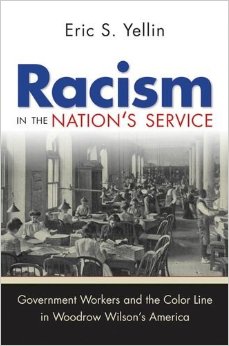
Presidents and Civil Liberties WalkerRacism in Nation_s Service YellinRepublican Party and Black America Sherman

While Mr. Walker delves into an area of study oft neglected these days, he, like Eric S. Yellin in his Racism in the Nation’s Service: Government Workers and the Color Line in Woodrow Wilson’s America, indulges in more than a fair share of unwarranted generalizations, especially when it comes to the Coolidge years.

Yellin acknowledges that Coolidge had a more “sympathetic” outlook for individual blacks than Wilson did, yet he assigns Cal into the realm of insufficient action on the race issue (p.185). For Yellin to conclude that Coolidge ultimately conceded to Wilson’s departmental segregation, he must avoid the removal of Colonel Sherrill over government property, for insisting on the old prejudicial policy, replacing him with Colonel Grant, who was known for fair and even-handed dealings on racial conflicts. The claim that the Coolidge administration targeted Perry Howard for his skin color rather than his repeated violations of ethics…

View original post 1,291 more words

The Harding-Coolidge Era: A Rare Example of Limited Government in Action

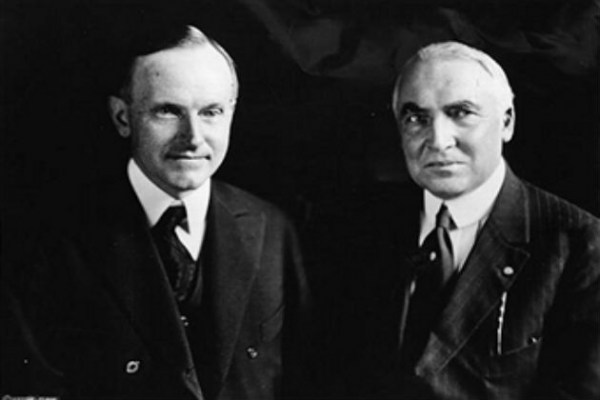
Harding-and-Coolidge1

Ivan Eland over at the Independent Institute writes, “Harding—and his successor Calvin Coolidge, who largely continued Harding’s peaceful polices abroad and fiscal conservatism at home—presided over one of the few times, since its origin in the 1850s, that the Republican Party has actually given the American people small government (the others being the one-term of Rutherford B. Hayes and perhaps the one term of Chester Arthur, both in the late 1800s).”