On Affirmative Action

gouverneurmorris's avatarThe Importance of the Obvious

Politics to some, not excepting presidents, is a kind of contest where the image carries greater weight than the reality, intentions mean more than results and the illusion of statesmanship. Victory is seen not in terms of who fulfills the obligations of office, serving faithfully, but who appears to be the most aesthetically marketable as the face of whichever agenda emerges from within the Beltway. Conveying the impression that one cares about fiscal discipline is more important than actually cutting a single dime of government expenditure. Appointing a color, gender or ethnicity to the latest vacancy is supposed to assuage the injustice of decades of disenfranchisement as opposed to the far more substantial determination to choose men and women as individuals, on the basis of merit. Expecting the image projected to compensate for the deficit of accomplishments, politics has once again become more about the “Show Window” than the “Office…

View original post 2,362 more words
On Race Relations and Presidential Power, Part 3

Also see Alvin Felzenberg’s 1988 essay, “Calvin Coolidge and Race: His Record in Dealing with the Racial Tensions of the 1920s,” and his book “The Leaders We Deserved (And a Few We Didn’t),” especially pages 304-310 on Coolidge. The chapter on race relations in the 1920s (chapter 15) in the Wiley Companion to Harding, Coolidge, and Hoover is embarrassingly derelict in assessing the issues it gropes to explain, focusing all its energies on Garvey and DuBois while never mentioning the roles played by Trotter, Mrs. Walker, Booker T. Washington, Robert R. Moton, Emmett Jay Scott, and the numerous others with whom Coolidge dealt, with whom he collaborated, and backed to accomplish important tasks throughout his administration. The Wiley writers proclaim no one group spoke for the black community but then proceed to recount events as if such were, in fact, false (leaving the gravely erroneous impression that the NAACP and Garvey’s movement were the only competing visions then or now). It illustrates how backward scholarship on Cal is even now that these large segments of the record are left out. It is as if the conclusion that Coolidge did nothing on this front must be the final word, all other evidence suppressed to the contrary.

gouverneurmorris's avatarThe Importance of the Obvious

The movie hit Boston theaters on April 10, 1915. Adapted from Thomas Dixon’s novel, The Klansman, D. W. Griffith’s “Birth of a Nation” met opposition immediately for its overtly racist slant of history, lionizing the Klan while vilifying the “undesired” elements in American society. It had already been shown and endorsed by President Wilson at the White House. Wilson had praised Griffith’s movie as “writing history with lightning. My only regret is that it’s true.” But it was not true. It was quickly becoming officially validated historical revisionism, neatly packaged pro-Klan propaganda. The fight was on to prevent so bigoted a film from gaining further cultural and official affirmation. William M. Trotter, editor of the Boston Guardian, zealously led much of the effort to petition Governor Walsh and the General Court to strengthen the law for its censorship. As the battle moved into the State House, something curious…

View original post 4,750 more words

On Race Relations and Presidential Power, Part 2

gouverneurmorris's avatarThe Importance of the Obvious

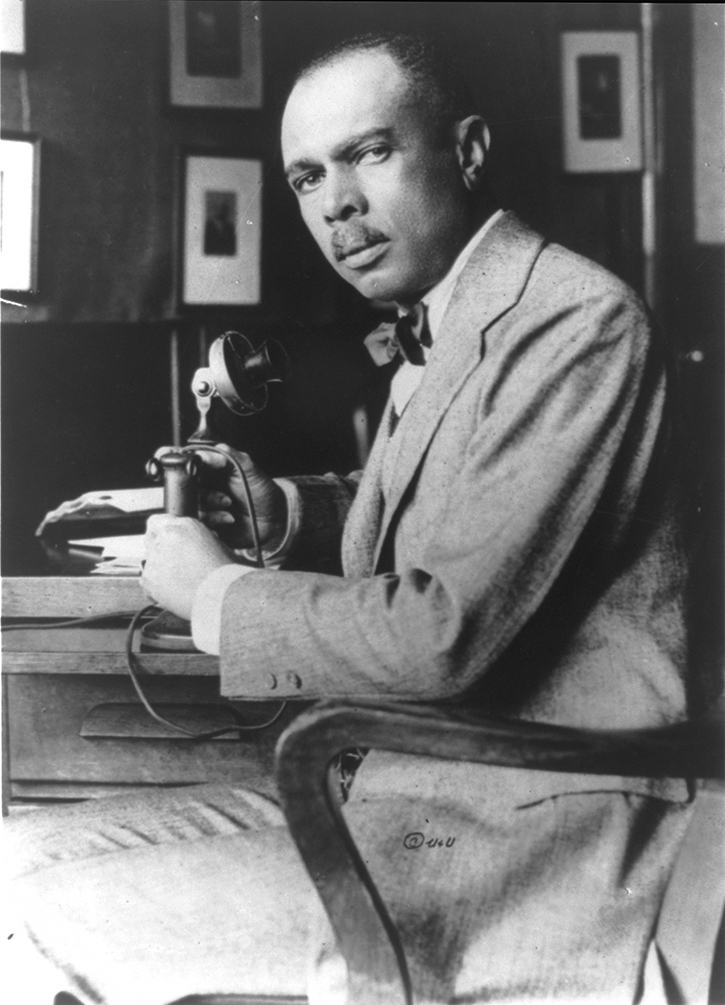
James Weldon Johnson, head of the National Association for the Advancement of Colored People. Photo taken around 1920. James Weldon Johnson, head of the National Association for the Advancement of Colored People. Photo taken around 1920.

When it was arranged for James Weldon Johnson, the first black leader of the National Association for the Advancement of Colored People, to visit the White House in the early months of the Coolidge Administration, Mr. Johnson was not only glad to leave but, unfortunately, left with a completely mistaken perception of the President. Even more unfortunate, Johnson let that first impression influence future interaction with the Vermonter. Johnson wrote years later of this meeting,

“He, it appeared, did not want to say anything or did not know just what to say, I was expecting that he would make, at least, any inquiry or two about the state of mind and condition of the twelve million Negro citizens of the United States. I judged that curiosity, if not interest, would make for…

View original post 1,634 more words