A Review of Donald McCoy’s “The Quiet President”

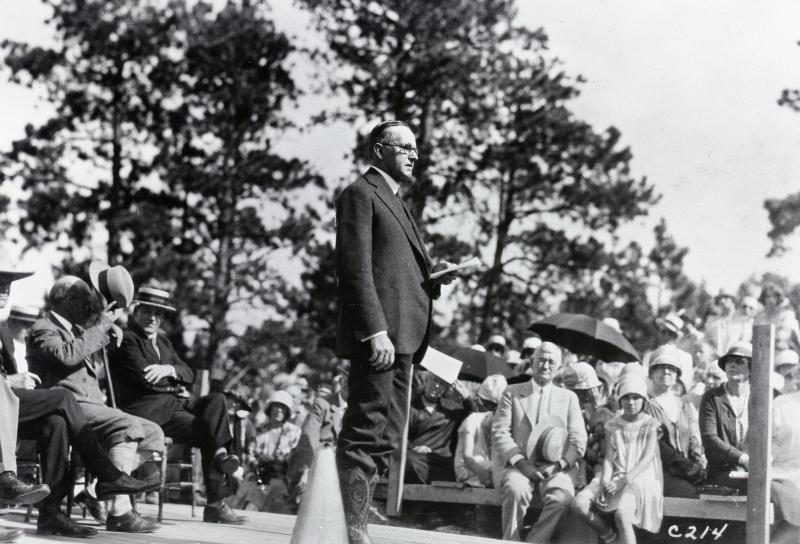
President Coolidge dedicating the Rushmore Monument, August 10, 1927.

President Coolidge dedicating the Rushmore Monument, August 10, 1927.

Published in the midst of the “Great Society” Era, McCoy’s interpretation of Calvin Coolidge strikes the reader as a calculated compromise with the times. McCoy cannot quite sympathize with Coolidge as Fuess did (eighteen years before) nor can he join White, Hoover, Schlesinger, and others in venomous indictment but he still has to find grounds for criticism. This is encountered from Cal’s handling of the Boston police strike to his failure to halt the speculation that led to the Stock Market Crash eight months after he left public life, at least according to McCoy. McCoy navigates a middle course overall, as our friend has noted, no less constrained by the temperament of his era than he attributes Coolidge to be in his own. While there is certainly less hostility in McCoy’s work than in the treatments of the preceding generation toward Cal, he still heaps unwarranted complaints against him for being reactionary in 1919 when the issues and attitudes were very much with then-Governor Coolidge, anything but out of touch. McCoy’s book, a product of its time, would finally receive due analysis in Thomas B. Silver’s excellent study, Coolidge and the Historians. Dr. Silver would not only expose the errors in the assumptions and preconceptions that had been thrown up against Cal for some forty years he would persuasively argue where McCoy and his forbears got it dead wrong when it came to #30.

Check out our friend’s review and please pick up a copy of Dr. Thomas Silver’s indispensable and timeless work, Coolidge and the Historians.

A Review of William Allen White’s “A Puritan in Babylon”

Coolidge, enjoying retirement from public life, with his dogs on the front porch of their first home, 21 Massasoit Street, Northampton, Massachusetts.

Coolidge, enjoying retirement from public life, with his dogs on the front porch of their first home, 21 Massasoit Street, Northampton, Massachusetts.

Our friend at Best Presidential Biographies has presented a review of the book that perhaps more than any other is responsible for the “Coolidge Stereotype”  that inspired later historians (using that term in the loosest possible sense) to officially declare Cal belongs to the lowest reaches of Presidential ranking games as a failure or, at best, a non-entity. Coolidge was neither, despite White’s best efforts to topple the reputation of a man who left the White House one of the most popular Presidents in history (no easy task!). Released in 1938 with the sweep of revisionism that displaced the admiration for the Coolidge Era with a systematic effort to shore up the FDR administration with equally popular support and historical legitimacy, White’s book inspired the Schlesingers and Francis Russell, among others, to take up the drum beat of literary hostility to Coolidge in academia. Despite Fuess‘ counter-punch, this narrative was left essentially unchallenged until the late 1970s when Marvin Stone at U.S. News and World Report, Thomas Silver at Claremont, and finally, Ronald Reagan, through his nationally syndicated radio program, rekindled a fascination for the wise Vermonter that inspired a renaissance in the 80s and 90s for the most “forgotten” of men, “Silent” Cal. Mistakenly relegated to the margins for too long, Coolidge is now experiencing a third wave of interest thanks to Robert Sobel, David Pietrusza, and Amity Shlaes, among many others.

Very few indeed can identify today the “Sage of Emporia,” as White was once known, but every day finds a growing multitude who not only know Calvin Coolidge but admire him deeply for very good reasons, respecting both what he represents and what he accomplished. In that way, White has failed, and deservedly so. White is long forgotten but Coolidge remains, speaking even now to an America that needs the importance of the obvious, a culture that needs what he said about the development of character, and a government that needs a return to his political principles.

On Being of Like Spirit As They

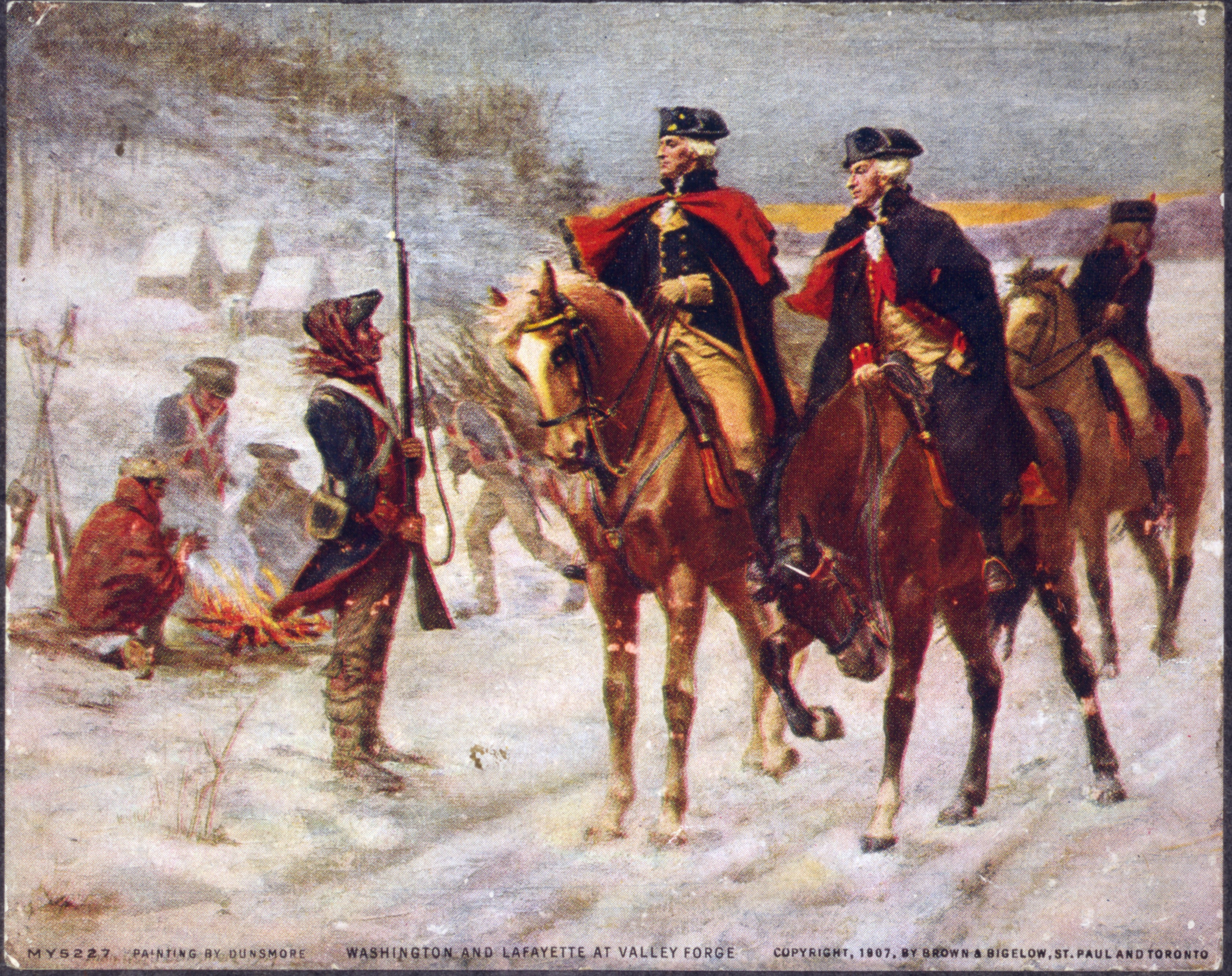
General Washington and Lafayette, where the American forces established camp at Valley Forge, Pennsylvania, 20 miles to the north and west of British-held Philadelpia, on this day, December 19, 1777.

General Washington and Lafayette, as the American forces established camp at Valley Forge, Pennsylvania, 20 miles to the north and west of British-held Philadelpia, on this day, December 19, 1777.

“But it must be remembered that these monuments of the past are only the form and not the substance of that which we would perpetuate. They are helps, they are reminders, but of themselves they will not suffice. It is necessary that there be in us a like spirit to that which was in the Virginians of the brave days which we seek to commemorate. There is but one way to demonstrate adherence to principles, that is by acting in accordance with them. It was not the Declaration which was proclaimed one hundred and forty-six years ago that gave America its independence. It was the action of the army in the field led by Washington and his generals. It was the support of that army by the people of the colonies. It was the sacrifice made by those who pledged their lives, their fortunes, and their sacred honor to this high purpose…

“…The world to-day is filled with a great impatience. Men are disdainful of the things that are and are credulously turning toward those who assert a change of institutions would somehow bring about an era of perfection. It is not a change that is needed in our Constitution and laws so much as there is need of living in accordance with them. The most fundamental precept of them all — the right to life, liberty, and the pursuit of happiness–has not yet been brought into universal application. It is not our institutions that have failed, it is our execution of them that has failed” — Calvin Coolidge, Fredericksburg, Virginia, July 6, 1922 (emphasis added).

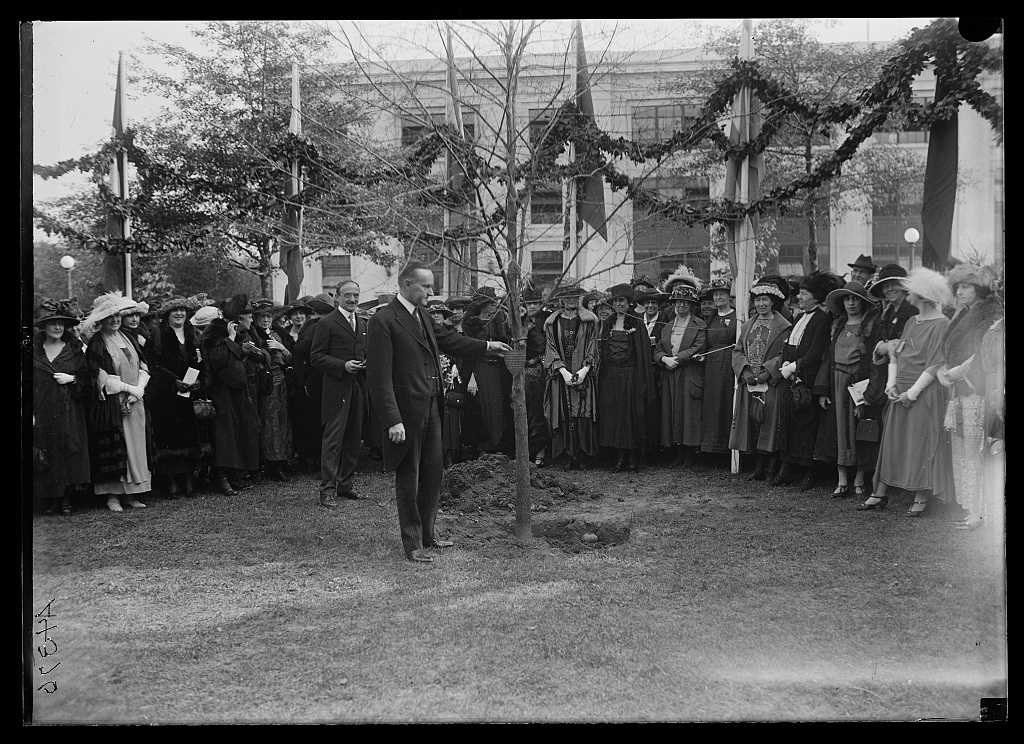
Calvin Coolidge planting commemorative tree, 1922. Courtesy of the Library of Congress.

Calvin Coolidge planting commemorative tree, 1922. Courtesy of the Library of Congress.