On Good Women

When Calvin Coolidge recalled his aunt, Sarah Pollard, his thoughts readily turned to the exemplification of love and devotion that she was to him, especially after losing his mother when he was twelve. As he considered the great ladies in his life, the grandmothers, his mother, his aunt, the wives of statesmen with whom he served, and most uniquely, the sparkling and exceptional woman he married, Grace Anna Goodhue, he seemed to tie their immeasurable worth together with one simple statement, “What men owe to the love and help of good women can never be told.”
nancyreagan

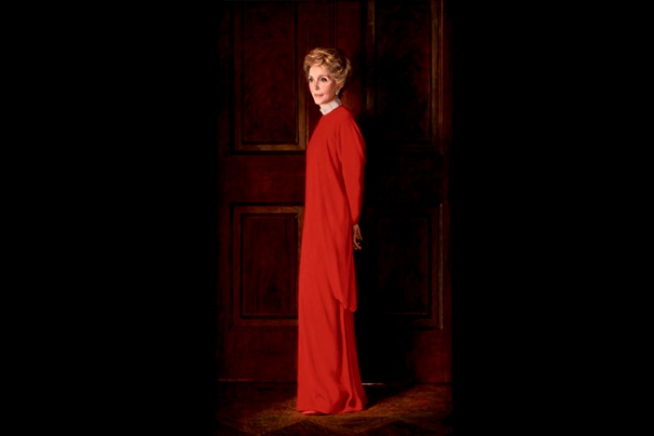
Such was Mrs. Nancy Reagan to her Ronnie. There is no quantifying the debt to this great lady.

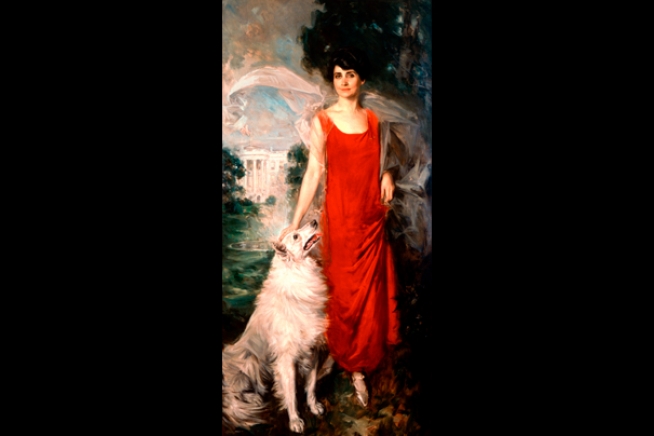
Marking their twenty-fifth year shared together, Coolidge would further reflect on Grace’s resilient strength, her unbounded energy, and the radiant light she was to him. They, very much like the Reagans, kept their marriage an intimate and personal universe. He would gratefully write of her, “For almost a quarter of a century she has borne with my infirmities, and I have rejoiced in her graces.” And as he wrote her in what would turn out to be his last long distance trip without her by his side, he said, “I have thought of you all the time since I left home.” This was, indeed, a profuse profession of his deep love.

Such was the love the Reagans knew in their own distinct way. It was theirs and none other has a right to approach it. At the same time, it was a love that abides between honorable husbands and good wives across all ages. No man can measure what is owed and no lady can ever begin to see return for the love and help they selflessly give. That is the beautiful example of great women behind every great man. We need that kind of lady again in public life.

Grace and Nancy, we profoundly miss you both.
GraceCoolidge_reddress


On the Debate of Great Questions

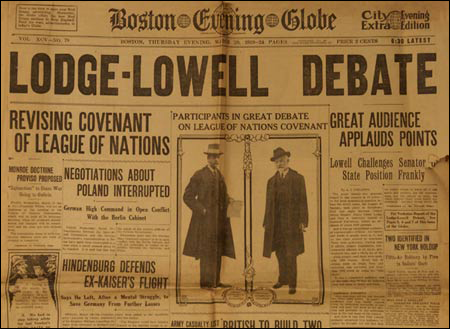
Lodge-Lowell Debate

Courtesy of Harvard University Archives

It was a March day almost ninety-seven years ago that Boston’s Symphony Hall filled with some 4,000 people (in what today usually accommodates only 3425 seats) to hear the debate between legendary Senator Henry Cabot Lodge and Harvard President A. Lawrence Lowell. The question under consideration was this: Should the United States join the League of Nations?

The audience sang hymns while they awaited the debate, which began shortly after 8p.m. on March 19, 1919. As the debaters took the stage and the moderator introduced the evening’s schedule, those gathered led the assemblage in singing “The Star-Spangled Banner.” The discussion would begin and end with the devotion they held to God and their shared love for America.

Moderating this illustrious event was none other than the Governor of Massachusetts at the time, and himself a skilled debater, Calvin Coolidge. Each side of the question agreed to an hour for Senator Lodge (answering in the negative), followed by an hour and a half for Dr. Lowell (answering in the affirmative), concluding with thirty minutes of rebuttal by the Senator. Both sides kept to the substance and exemplified respect even in disagreement.

The audience, it was noted at the time, was impressively diverse, with all kinds sitting together to hear the serious consideration of this important question. In the end, it was realized that the talents and grasp of the subject by both men challenged and stretched everyone present. There was little upon which to find fault and certainly none of the childish invective and contemptuous banter we witness in some of the candidates involved in the presidential debates of late.

Moderator Coolidge would summarize the result when reporters asked, responding, “Both men won.” Knowing that great questions deserve thorough and mature consideration, he could have also said, “The people won, too.” After all, when debate is more about content and substance than personality and appearance, the country is always the winner.