On Lessons Learned from a Father

6192827595_573be2c602_b

The Coolidges arrive at the Homestead in Plymouth Notch, following Calvin Jr’s death. Courtesy of the Leslie Jones Collection.

Our generation is no different from any other to perceive what it has known is not only fading away but perhaps doing so permanently. What is unique is the degree to which what were once indisputable essentials have now become the ground zero of cultural conflict. No one questioned the self-evident because they lacked modern sophistication or an open, inquisitive mind. They were not cowed by some dread of challenging the way things were as imposed on them by environment or authority. They simply knew better, they understood there were certain truths that are not defined by society but are eternal as the soul, whether they believed God had so ordered the world and humanity’s unique place in it or not. Their disbelief did not overturn so common sense a reality.

Generations have come and gone which mocked that reality and held it to be an illusion. Needless to say, they have not discovered anything truer or more enduring beyond the supposed smoke and veil of what others knew to be real all along. In fact, history is piled high with the bodies of those who espoused a naive faith in humanity to conceive its own realities or become its own source of transcendent standards. The highest flights of postmodernist fancy still plummet to the horrors of the guillotine or tragic tales of individual self-destruction by those who feel they can abandon oppressive reality without suffering real consequences.

There was a term for this kind of cavalier attitude about the consequences of one’s actions in Calvin Coolidge’s day. They were called “sports” and none of them ever saw old age. Cal saw this as correlating to their failure to live right, as he said, “Things are so ordered in the world that those who violate its law cannot escape the penalty. Nature is inexorable, if men do not follow the truth they cannot live.”

He was simply restating the biblical truth that a child lives longer when he or she honors one’s parents. Coolidge knew the way a person lived did not always catch up to him or her right away. He knew sometimes justice could be deferred but what was due was coming nonetheless. God’s judgment did not sleep forever.

6192830925_cab2acd2c6_b Coolidge with family during Boston Police Strike

Then Governor Coolidge with Grace and their boys: Calvin Jr (left) and John (right), the oldest, fall 1919. Courtesy of the Leslie Jones Collection.

Coolidge would likely not have imagined the degree a generation like ours would attempt to go to suspend reality. Yet, having enthusiastically courted it without any substantial skepticism, America’s brazen overconfidence in it is only exceeded by its rapid descent because of it. When Coolidge noted to a friend in the fall of 1932, that he felt he “no longer fit in with these times,” he was speaking of a public sentiment that gave what he believed lip service but no longer believed it and had, in fact, abandoned his principles for spending with impunity, prosperity as a right, and a pursuit of the shiny lure of autocratic, big government Republicanism. Before FDR, the policy forbears of the New Deal were not Democrats, they were the exuberant planners and power-awed courtiers of Hoover’s Grand Old Party.

These were not the ways Coolidge had learned from his father. They were not just environmental reflexes either but proven testaments of sound living. Cal did not have to experiment with alternatives to know their flaws and failings, he already knew because of what his father had taught in the daily, practical responsibilities of managing store, collecting local taxes, confronting bail jumpers, and upholding the responsibilities of farm, family, and faith. These were not warm and rosy constructions but sober and stern realities.
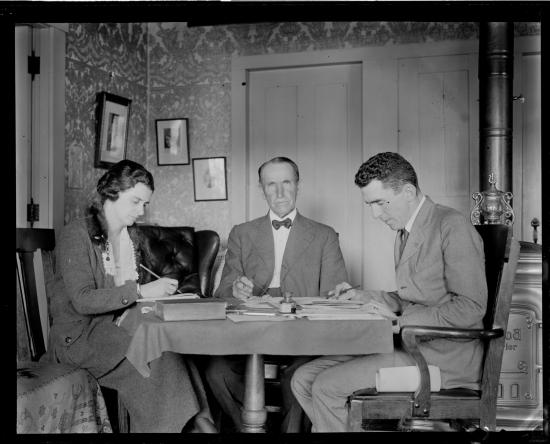
08_06_009770

The President’s father meeting with two Plymouth townspeople, as he continued to serve for the betterment of his neighbors in a range of menial and unassuming ways even with his son’s national notoriety. Courtesy of the Leslie Jones Collection.

When Coolidge reflected on some of the lessons learned from his father, he thought of his father’s competence at every task. There seemed to be nothing the diligent older man could not do with skill and lasting quality. Though the father was much more patient than the son, the older man abhorred waste and was firm in his resistance to it. The father was not indulgent but made clear to keep his son humble, a lesson Calvin learned well and perhaps inflicted it too harshly on his boys. One wishes he had not been quite so hard on his oldest son after young Calvin’s death. Young John needed his father’s tenderness and kindness not his distance or constraints. He did not understand how to handle anyone other than himself, including the son most like Grace and Grace herself. He knew Grace and loved her devotedly but his focus did not allow him to step out further as the kind of father each boy needed. The older Calvin retained well what he would call “the barnyard philosophy of his father” not as a derisive concept but as the wholesome dose of sense that people should not seek to light like chickens higher than they could roost. Instead, each should live with the fullest independence which meant living within one’s means, not upon borrowed time or borrowed resources.

6.21-Pres-Calvin-Coolidge-Program-Courtesy-of-Vermont-Division-for-Historic-Preservation-322x404

Coolidge also learned from his father the source of wealth is work. He put it this way,

My fundamental idea of both private and public business came first from my father…He was generous and charitable man, but he regarded waste as a moral wrong. Wealth comes from industry and from the hard experience of human toil. To dissipate it in waste and extravagance is disloyalty to humanity. This is by no means a doctrine of parsimony. Both men and nations should live in accordance with their means and devote their substance not only to productive industry, but to the creation of the various forms of beauty and the pursuit of culture which give adornments to the art of life.
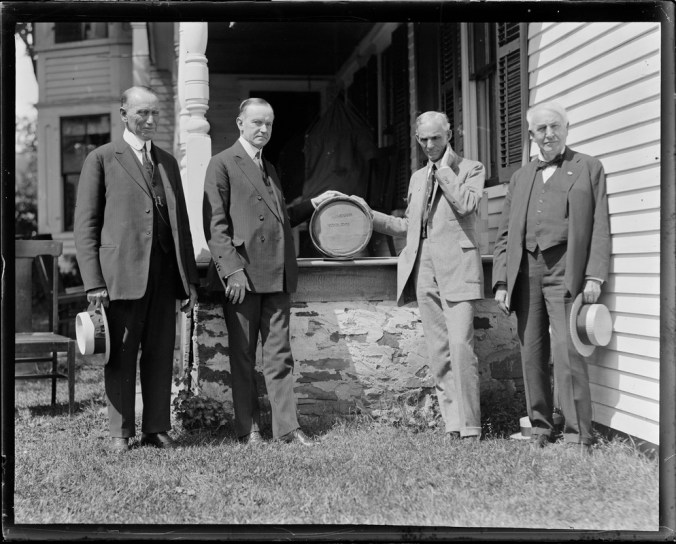
08_06_009680

Colonel Coolidge (far left) beside the President with Henry Ford and Thomas Edison with one of Cal’s signed maple sap buckets, August 1924. Courtesy of the Leslie Jones Collection.

Coolidge was not finished, as he explained how this practical lesson changed the course of millions of lives as a defining accomplishment of his administration years later. By possessing the will, not merely the rhetoric, to hold government to an exact standard, actually removing expenditures, dismantling the crushing regulatory tax burden and paying down debt obligations, Coolidge proved that the interests of the whole country (or any business in particular) needs the competent not the novice at the helm. Coolidge would have been the last person to ever take credit for the labor and discipline of those millions of people helped by his tenaciously kept program of constructive economy. He simply enabled them to do for themselves, keeping more of what they had earned. Government’s greatest aid is not in appropriating money but in restoring the powers of ownership and opportunity.

He understood that virtue was no more unique to businessmen than to any other field of service, including politics. One’s fitness for public trust was not found in the appearance of being on the outside, let alone one’s cultural name recognition, but the character of the person and the fidelity to the responsibilities one has already shown. It was human nature to seek power, access, and others’ money. It was the President’s challenge to protect the whole people from those who would try to take advantage along any of these routes. He understood that trustworthiness was at the heart of all service whether that was public office or private business. In this way, he knew business better than most do today. He learned this by first drawing upon the insights of his father.
$T2eC16N,!)QE9s3HD)e-BQ9JNoc(3g~~60_57

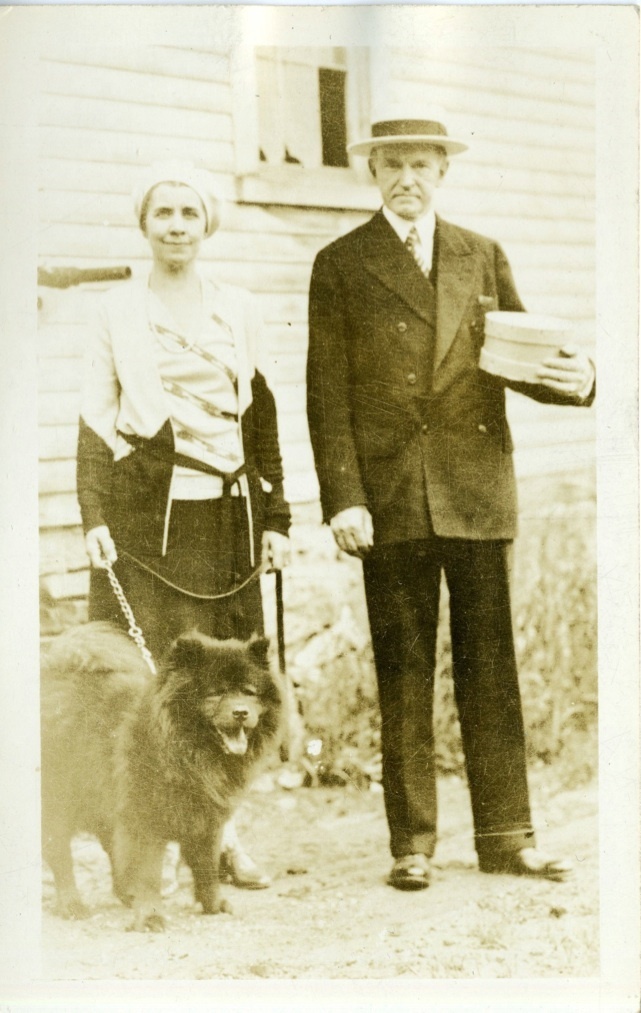
The father understood his charge as a patient teacher of human nature and a watchman of his children’s souls. It is likewise unfortunate that while Calvin mastered a superb ability to detect charlatans and schemers, he exasperated his children with a marked favoritism for the younger and an unnecessary measure of severity on the elder. If Coolidge is to be faulted, it must also be remembered this was because he first poured himself into the oath he had taken and the public duty he owed that, in the end, left him with less to give as a father or husband. He spent himself in doing his work so faithfully each day that his family suffered the most for it. He felt it most sharply when he remembered both his younger son’s death and then that of his father’s, writing on one occasion, “It costs a great deal to be President.” Both he and his father put their youngest children in the frozen ground of the family plot. It is regrettable that the President responded so differently from his father when it came to grief. Yet, death impressed itself early on the son’s life in ways we dare not nor can quantify. It still did not override or paralyze Calvin’s sense of obligation to finish what he started as President. Both Colonel and President Coolidge, in spite of their shortcomings, were exemplary leaders of men, though it is in the father we find to a greater degree that most essential of qualities: first managing one’s house well. It is almost a proverb that those who serve in public ways often find their own house neglected in some substantial fashion. For Calvin Coolidge, who understood this in perhaps a morbid way by modern terms, he paid a penalty for his pride through these deaths on either side of him. The lessons of his father were never far away.

While both men were kind and manifested a heartfelt love for people, the father was more adept at showing it while it remained an awkward skill in the hands of the son. While Calvin had to work harder to show it, he felt it no less acutely for all people. He especially manifested it when someone was treated unfairly, at times descending on the offender with a fervid indignation to correct the wrong done. The White House staff was on the receiving end of this withering fury more than once. He hated liars and abhorred those who would distort integrity and manipulate for personal advantage. He had already seen his predecessor undone by indulgent habits, Calvin would not abide it in his tenure. He detested those who vaunted themselves above others. He was the best prepared leader when the times most needed someone of his mettle and focus. His intensity for the public service was genuine and unmatched.
coolidge-silhouette1

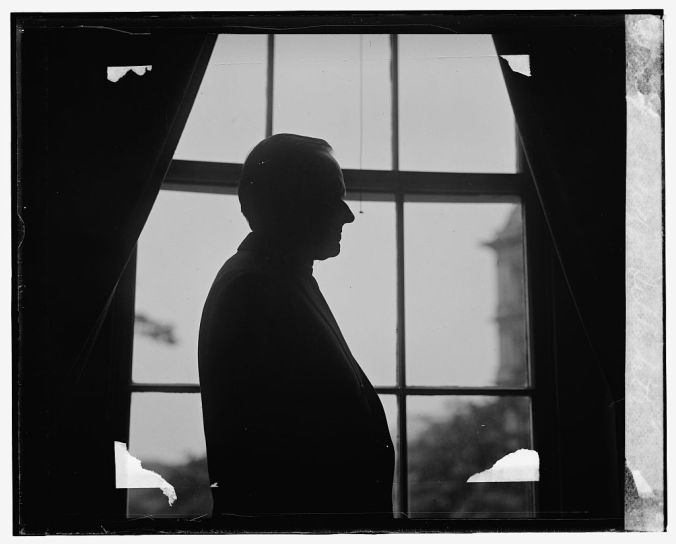
He spent himself so fully in the five and a half years of his administration that upon watching it be swept away in one large swath after another (inside of another four years), he would be gone. Yet, he exemplified some of his father’s most important lessons and he transmits them now to us long after his generation has passed. In a time when it seems politicians are just “warming up” to their roles after two terms, expecting lifelong careers ahead, Coolidge would already have completed his goals, laid down the office and returned as an equal to the people from which he came. Firmly adhering to the ideal of a servant-leader, he took care to uphold the original scope of the office, to mitigate the corrosive effect of power on – first of all – himself, to faithfully execute the laws and the Constitution, and to live worthy of his father’s lessons. He may not have been the best father himself but he and Grace still raised two of the finest boys ever known into exemplary men.

The faithful men and great women of the future will not spring from some other set of conditions outside every parents’ solemn task. It will not come by insulating our children for perpetual adolescence. It will still be incumbent on us to raise our boys to know they are to be men someday with sober responsibilities, foremost as husbands and fathers. It is no different from every generation that we are also to bring up our girls to prepare for equally important obligations, aspiring foremost to be as wives and mothers. It rests with us, especially us fathers, to face reality for what it is, to live up to the lessons good men have taught, and to leave what is worth preserving to those who will follow us.

Calvin Coolidge spoke in support of Herbert Hoover, at Madison Square Garden. On October 11, 1932, the former Republican Preside

Former President Coolidge’s last public appearance, Madison Square Garden, October 11, 1932. Courtesy of Everett Collection Historical/Alamy Stock Photo.

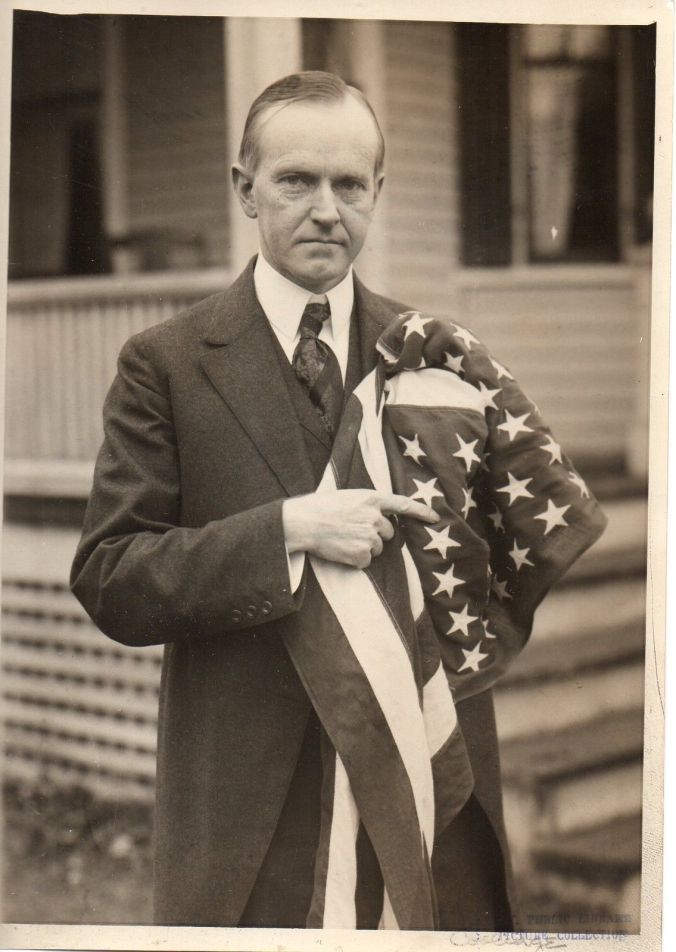
On the American Flag

Old_american_flag.jpg

“Works which endure come from the soul of the people. The mighty in their pride walk alone to destruction. The humble walk hand in hand with Providence to immortality. Their works survive. When the people of the Colonies were defending their liberties against the might of kings, they chose their banner from the design set in the firmament through all eternity. The flags of the great empires of that day are gone, but the Stars and Stripes remain. It pictures the vision of a people whose eyes were turned to the rising dawn. It represents the hope of a father for his posterity. It was never flaunted for the glory of royalty, but to be born under it is to be child of a king, and to establish a home under it is to be the founder of a royal house. Alone of all flags it expresses the sovereignty of the people which endures when all else passes away. Speaking with their voice it has the sanctity of revelation. He who lives under it and is loyal to it is loyal to truth and justice everywhere. He who lives under it and is disloyal to it is a traitor to the human race everywhere. What could be saved if the flag of the American Nation were to perish?

“In recognition of these truths and out of a desire born of a purpose to defend and perpetuate them, the Commonwealth of Massachusetts has by ordinance decreed that for one day of each year their importance should be dwelt upon and remembered. Therefore, in accordance with that authority, the anniversary of the adoption of the national flag, the 14th day of June next, is set apart as

           FLAG DAY

and it is earnestly recommended that it be observed by the people of the Commonwealth by the display of the flag of our country and in all ways that may testify to their loyalty and perpetuate its glory” — Governor Calvin Coolidge, Proclamation, May 26, 1919

While we do not quite agree with Mr. Coolidge that America’s voice speaks with the sanctity of revelation, especially this year, it is evident that he loved America. He knew the nation had its problems and the people were not infallible. He knew no nation was but America was still forged of something special and distinctive. The people would always pay for those mistakes they chose but at least they, not kings and bureaucrats, should retain the freedom of will and unfettered conscience to make them. America’s moral sense of herself, her goodness, her courage, and her principles furnished abundant reason all his life to be proud of her and faithful in the service of her ideals. We underestimate his importance and discount his perspicacity at our peril.

CC with flag at Massasoit home


Bringing Coolidge Back to the Campaign Trail

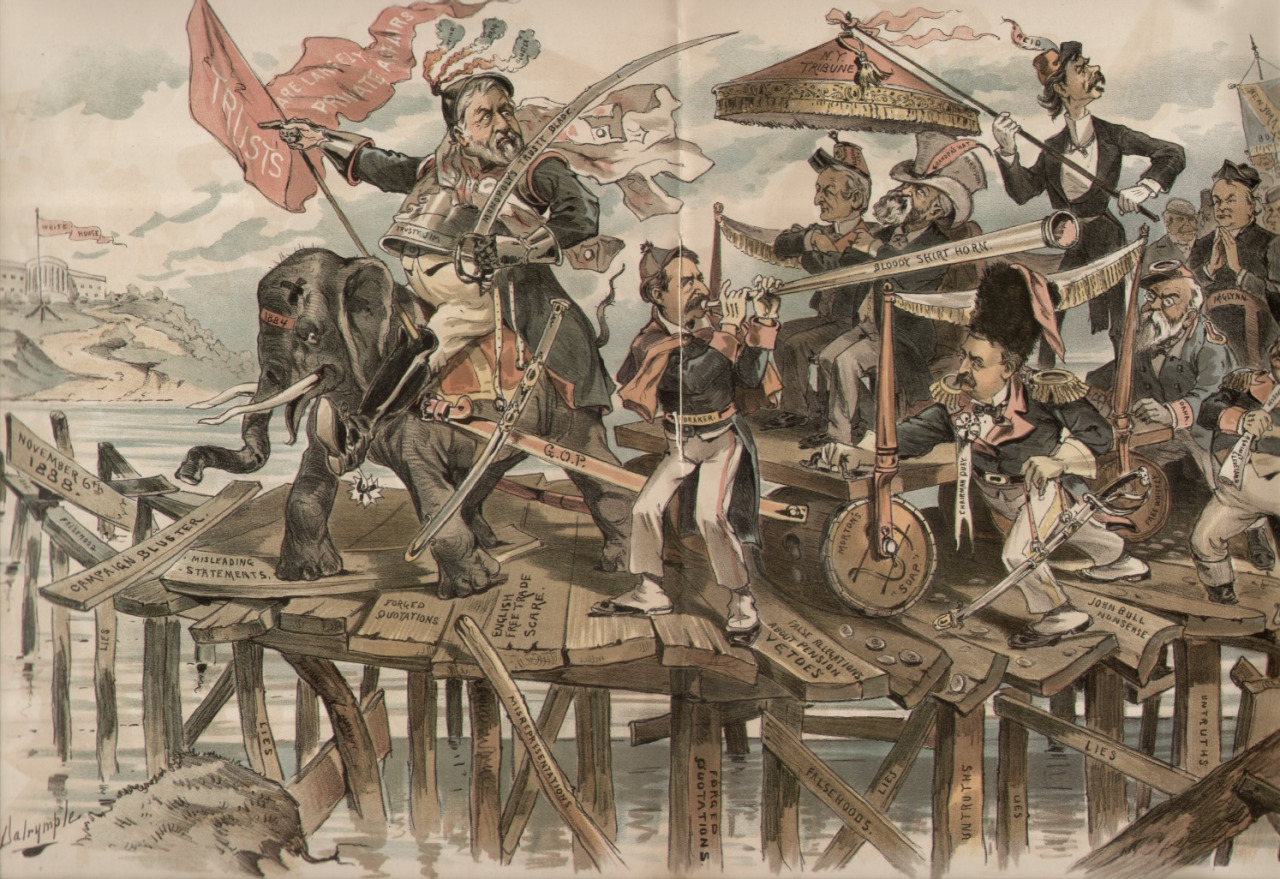
One of several "Puck" cartoons depicting the "waving of the bloody shirt," an appeal to the sacrifice of martyrs, heroes, and patriots as a distraction from a policy question or an otherwise weak political campaign. This is from 1884 but, unfortunately, there is no Grover Cleveland running this time.

One of several “Puck” cartoons depicting the “waving of the bloody shirt,” shown here as a cape around James G. Blaine’s neck (as he sits atop the wounded GOP elephant) an appeal to the sacrifice of martyrs, heroes, and patriots for the country as a distraction from a policy question or an otherwise weak political campaign. The metaphor in American politics originated out of the 1868 Republican campaign as a device to generate sympathy for GOP positions by further politicizing the sacrifice and service of Union (hear Republican) veterans in the long and bloody war won against those who stood accused of betraying and splitting the Union, the Democrat South. This is from 1884 but, unfortunately, there is no Grover Cleveland running this time.

The fact that this election year has been – and will be, as it is not over yet – one of the most unconventional in history is now a supreme understatement. Fear of what may happen on all levels is palpable. People process that fear in different ways. Some welcome it, wrapping themselves in the flag of their choice or waving the current equivalent of the symbolic “bloody shirt” to underscore the victimhood of “us” versus “them.” The tactic is only employed all the fiercer when anyone questions what rhetoric or behavior might be doing to further encourage a predisposition to violent revolution. Going into the gutter with the worst has not been tried to this extent before and likely for the reason that it only begets an even worse reaction. Perhaps taking a page from the Coolidge example is in order. Rather than fighting fire with fire, he understood dampening the situation with some refreshing cold water works far better. Yet, suggesting the level of response might be connected to the level of irresponsibility in a candidate is close to political blasphemy in our unhinged environment.

Having spent years running away from even the hint of the remotest offense on any of its long-standing platform principles, the Grand Old Party is largely embracing the very stereotype it supposedly dreads. It has become its own worst parody. Others brace for what is coming with clumsy obfuscation, feeding the appearance of internal trouble or at best leaking whispers of collusion for survival. Still others, are just plain exasperated at the rapid descent into cultural and political insanity that seems to have accelerated this year. All should be concerned that truth – whether we have the fortitude to face it or not – is the first and most important victim of this year’s storm.

None of this bodes well for what is ahead. The torrent that has been courted, enabled, and opposed is no less forceful than what hovered darkly before the 1860 convention. It is no more a creature to be welcomed for its galvanizing effect of nationalistic fervor than it is for those led to believe socialism (if finally dressed up and packaged attractively enough) will finally sweep away all that is unjust or unequal about society. It summons all of us to a higher citizenship, a more serious-minded preparation for the future, especially those conditions that we will bequeath to our children.

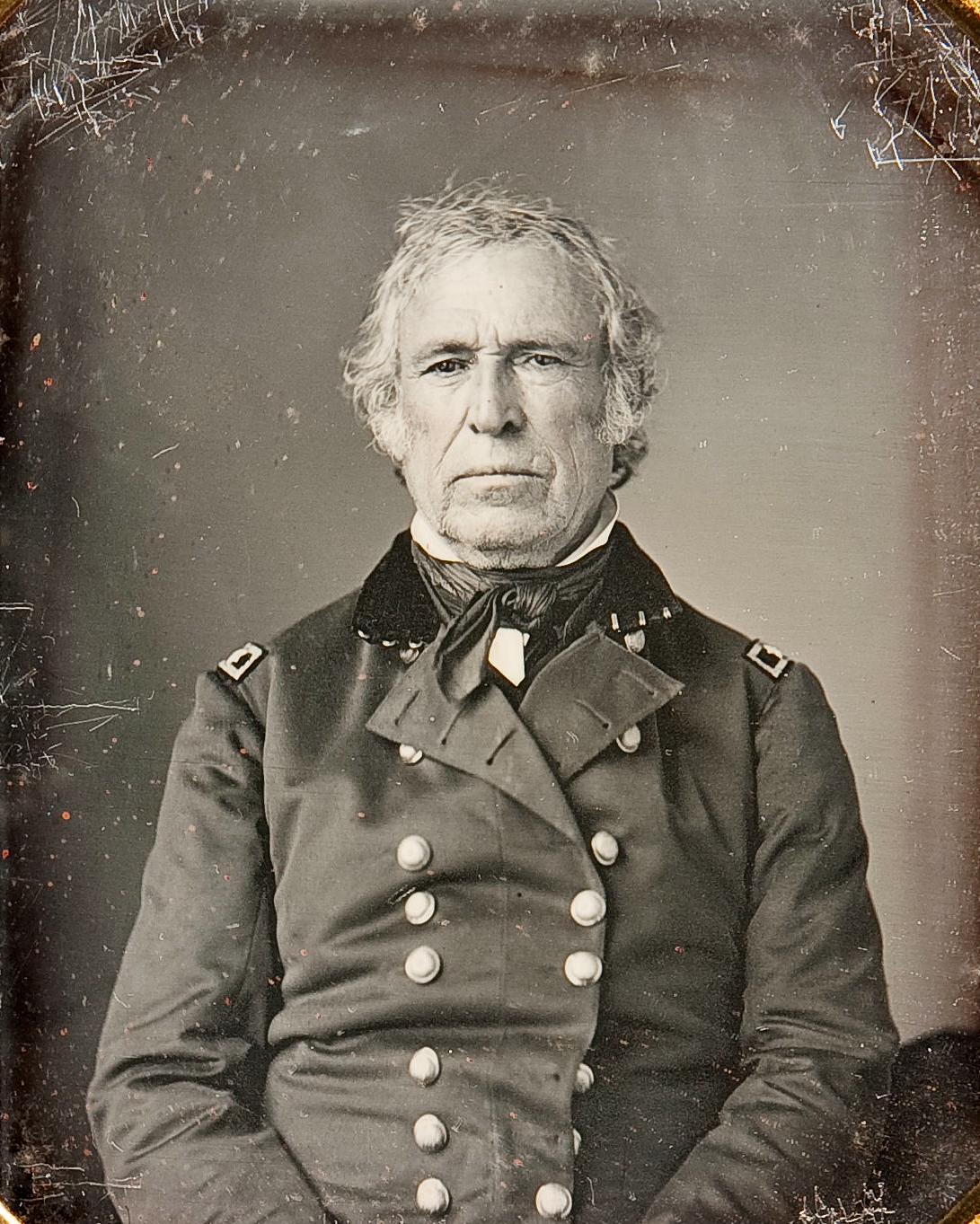
Zachary Taylor, the divided and reluctant Whigs' choice in 1848. Both Daniel Webster and Henry Clay declared this was the death of their party. It proved to be so within 8 years.

Zachary Taylor, the divided and reluctant Whigs’ choice in 1848. The Whigs were the political forbear of the Republican Party. Both Daniel Webster and Henry Clay declared this convention was the death of their party. It proved to be so within 8 years.

Nevertheless, the experiences of the past remind us that some circumstances have been encountered before, some roads have been traveled. The 1848 convention and the nomination of quintessential outsider Zachary Taylor affords plenty of instruction. The 1976 convention offers some enlightening guidance on contested conventions when Ford’s team (in the effort to block Reagan’s nomination) instituted the “Justice Resolution” that, for the first time, abandoned the GOP’s historic protection of individual conscience for the Democrat institution of unit rule voting. The unit rule being when a majority of a state delegation favors a particular candidate, the minority is overruled and all must vote according to that majority decision. Of course, the Reagan team did away with that in the 1980 convention rules but it has been creeping back in through state party requirements, state laws, and delegate approval ever since.

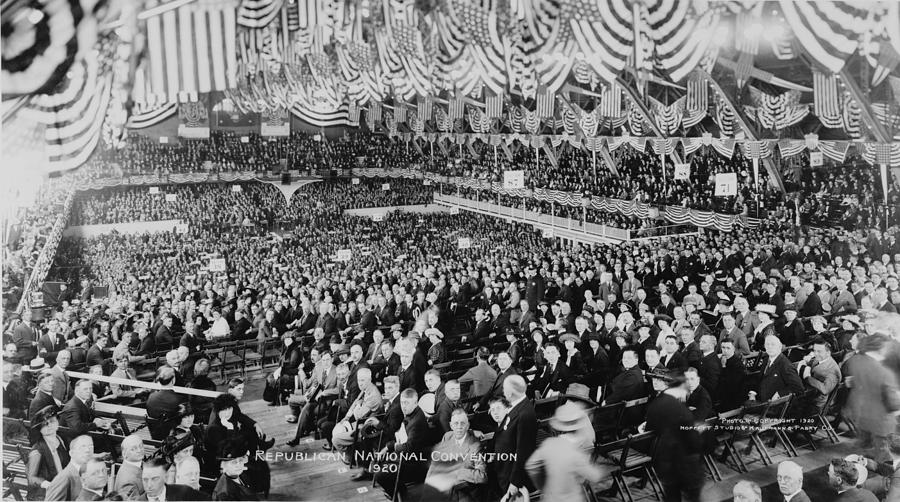
A snapshot from the 1920 Republican National Convention held in Chicago.

A snapshot from the 1920 Republican National Convention held in Chicago.

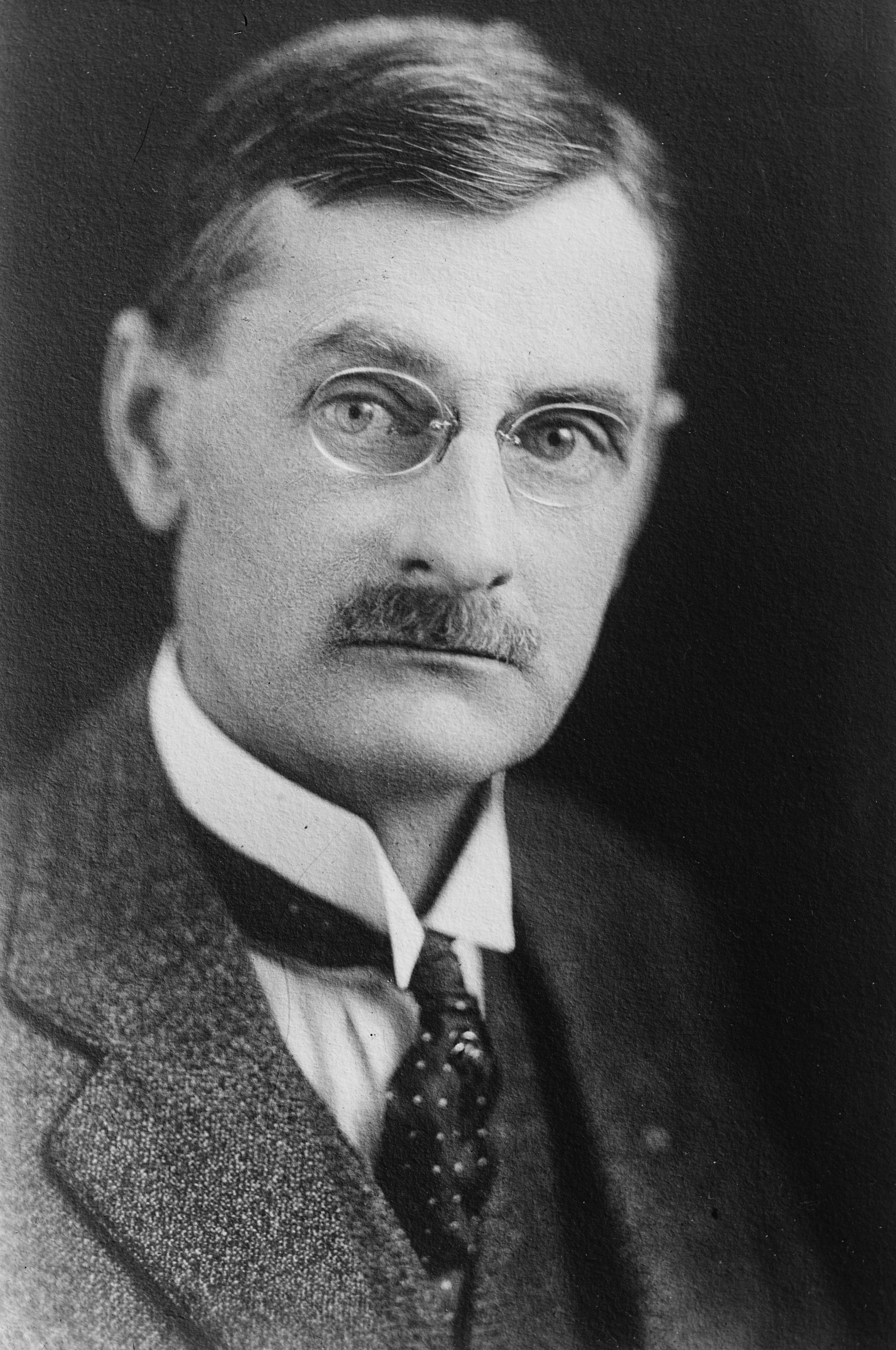
The 1920 convention is also informative. After ten ballots of Presidential nominations the nomination finally landed on Senator Warren Harding, who had been previously cleared by the party leadership. The delegates had enough of feeling led to prearranged outcomes. The Presidential nomination having been sewn up, the convention chairman, Henry Cabot Lodge of Massachusetts, turned the gavel over to his temporary replacement and left confident that the process to anoint a Vice Presidential nominee would be even smoother. One delegate, an Oregon judge named Wallace McCamant, stood to be recognized.  The temporary chairman (likewise assured he was about to receive the nomination of Wisconsin’s U.S. Senator Irvine Lenroot, the Establishment’s choice) gave Judge McCamant the floor.

Before McCamant had finished speaking, having naming instead Governor Calvin Coolidge, delegation after delegation began to cheer and second the move. Stampeding for their choice, a man many had preferred for the top of the ticket, 674 1/2 (back when delegates could split their votes) went resoundingly for Cal Coolidge. He had demonstrated to the nation presidential strength as Governor when he resisted the pressures to rehire the Boston police officers who walked off their jobs and left the city prostrate to lawlessness the previous fall. Before the next convention (which occurred in Cleveland, by the way) in the summer of 1924, he would already be President of the United States.

Oregon judge and Republican delegate, Wallace McCamant. Coolidge was humbled by this unsolicited effort that led to his nomination. Thankful, Coolidge would name him five years later to the Ninth Circuit Court of Appeals but the Senate would have none of that and shot it down.

Oregon judge and Republican delegate, Wallace McCamant. Coolidge was forever humbled by this unsolicited effort that led to his nomination and eventually made possible his rise to the White House. Thankful, Coolidge would appoint him five years later to the Ninth Circuit Court of Appeals during a recess of the Senate but the old grudges held by Senators of what happened in that 1920 convention would have none of that and shot down any attempts to confirm McCamant. The judge served out the rest of his appointed term and went back to a quiet life in Oregon until his death in 1944.

Called with the news, Calvin answered the phone at his temporary room at the Adams House in Boston upon returning from his daily walk. Hanging up the phone, he turned to Grace (his wife) and said, “I have been nominated for Vice President.” Incredulous at first, being very familiar with his frequent teasing, she playfully replied, “You are not going to accept it, are you?” “I suppose I shall have to,” he responded. And he did. But history was made by a brave delegate stepping forward when he could have just resigned himself to the way things seemed to be as the way things are.

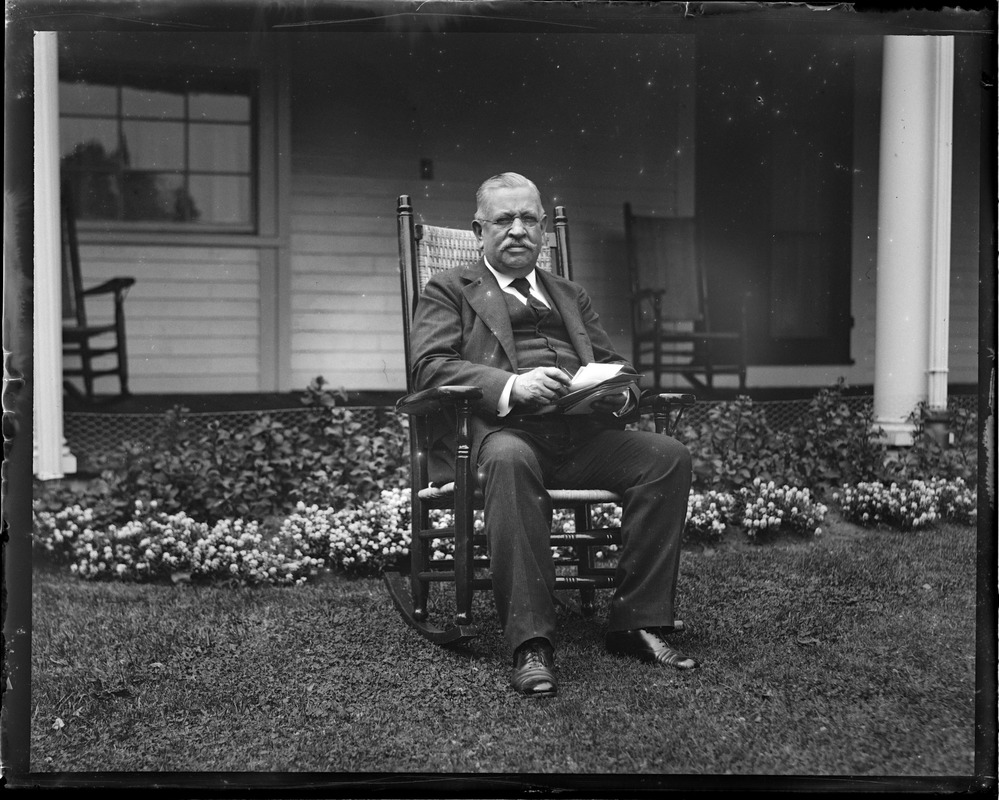
The selfless Frank Waterman Stearns, Coolidge's greatest champion at the 1920 and arguably 1924 conventions. Here he sits in a rocker at his home in Swampscott, Massachusetts.

The selfless Frank Waterman Stearns, Coolidge’s greatest champion at the 1920 convention. Here he sits in a rocker at his home in Swampscott, Massachusetts.

There was a bit more to this story. It was Frank W. Stearns, the virtually one-man Coolidge campaign team, who without a single instruction believed in Cal so much that he printed a collection of Coolidge’s speeches and engraved them with the names of each delegate to be present at the Convention. Stearns also sent out a volume (and in McCamant’s case, two) of “Have Faith in Massachusetts” (published the previous year), mailing them to various Republican leaders and delegates around the country. The smaller volume distributed at the Convention was perfectly marketed, fit nicely in a pocket and was intended for ready-reading in those Convention lulls when nothing seemed to be moving. Stearns succeeded beyond even his aspirations.

5427345e6d519

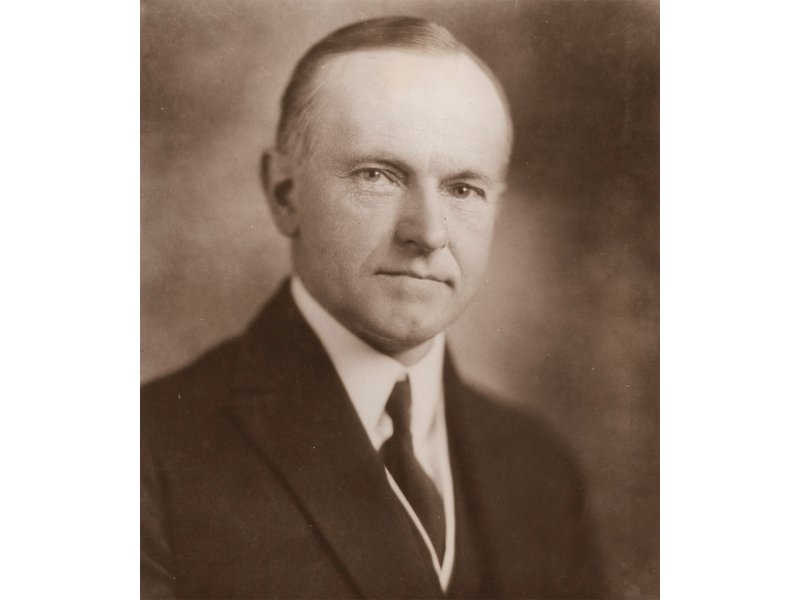
“Silent Cal” Coolidge, who said more in fewer words than it takes just about anyone nowadays to get out and even then what is said never approaches Cal’s substance or clarity.

This set the stage for the 1924 Convention – known as the most orderly and (to some) boring – gathering in years. Coolidge’s experience equipped him especially for diffusing potential political powder kegs with perspective and discretion. He was a kind of HAZMAT leader in politics, talented at keeping the focus on the principles of the GOP while downplaying and sometimes, outsmarting the personality politics that so often misled and divided, fractured and destroyed. When others tried to bait him, he saw through those attempts and thwarted them. He remains one of the most discerning judges of human nature and one of the most disciplined defenders of sound, constitutional government America ever had as President. His wisdom continues to serve and guide for those who prepare for the future with the insight of the past.

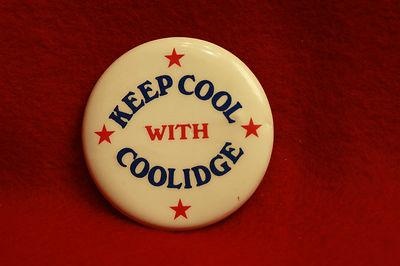
KeepCoolCoolidgePin

It is never more timely then, to equip ourselves with some of the most practical principles and sensible insights from a man who rose to the very pinnacle of power in our system and yet, retained his soul, kept his oath, resolved never to lose sight of essential truths, and held his party accountable to the promises they had made to the people and the duty they owed to the country as a whole.

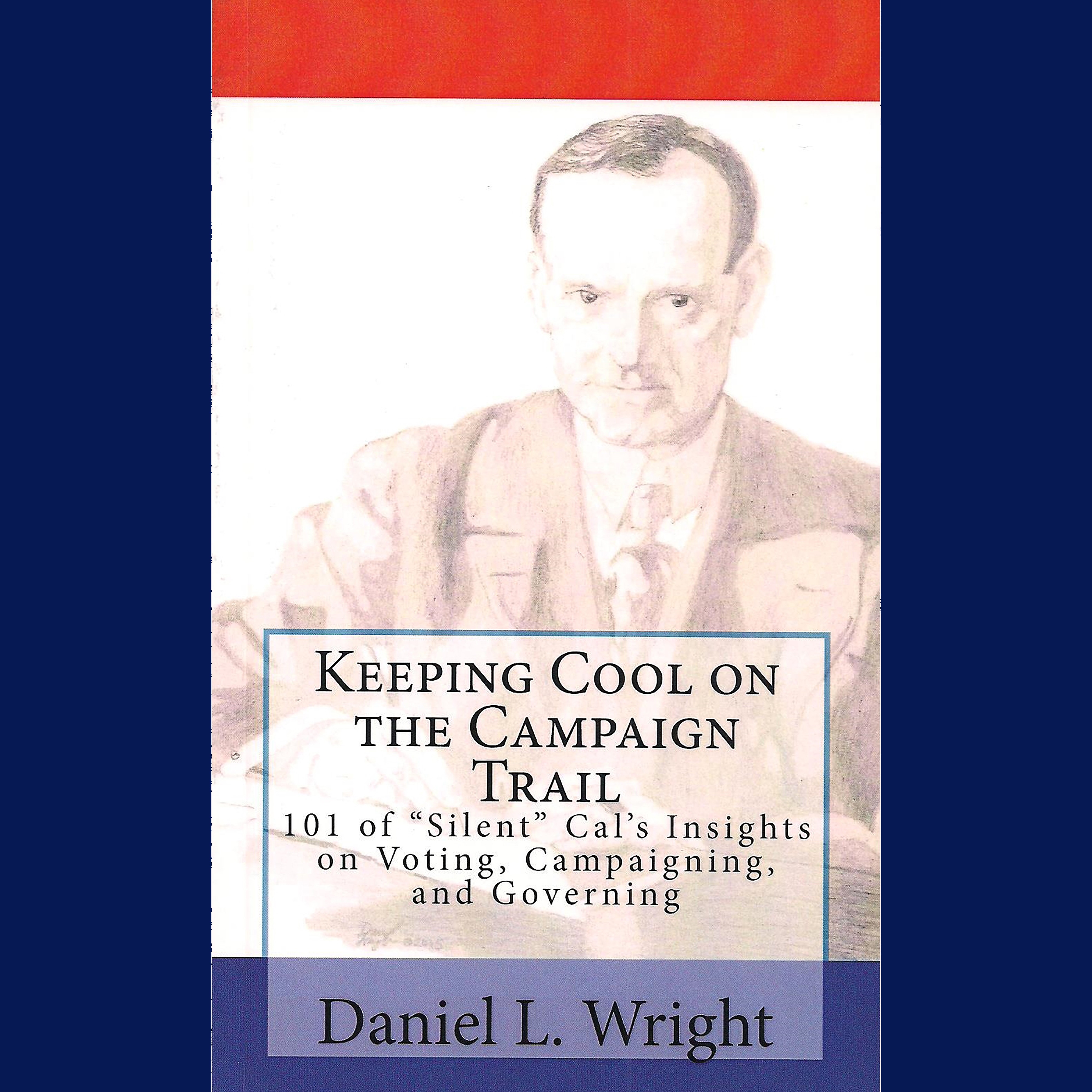
We need what Calvin Coolidge has to say now more than ever. Equip yourself by starting with this book, Keeping Cool on the Campaign Trail, available on Amazon or listen on the go with Audible and iTunes.

Keep Cool Cover 001