On Race Relations and Presidential Power, Part 1

“Death and life are in the power of the tongue; and they that love it shall eat the fruit of it” — Proverbs 18:21

“A word fitly spoken is like apples of gold in fittings of silver” — Proverbs 25:11

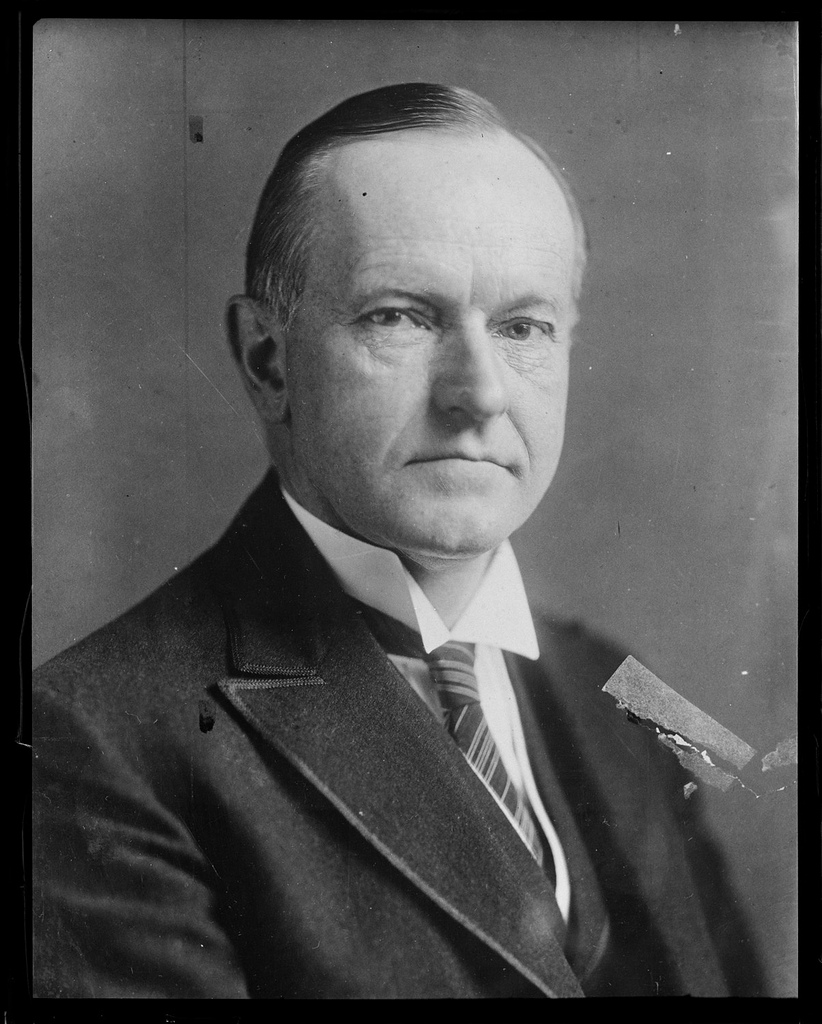
Few, especially in public life, have respected the truth of these maxims than Calvin Coolidge. He understood the power of the spoken word. It carries the ability to inspire one to greater heights of goodness and nobility or to destroy with malice and hatred. It can build up the soul or crush the spirit. It carries a potency that cannot be entirely harnessed or contained once uttered and thus dare not be exercised flippantly or with casual disregard for the responsibilities which fall to the speaker, especially as the President of the United States of America.

Coolidge wielded this power effectively during his Presidency by deploying the spoken word sparingly, giving what he would say maximum effect upon the listener. Coolidge knew the speaker can control the timing of what is said while the damage done to credibility by spiteful and vindictive rhetoric cannot be undone. If the President gave legitimacy to what is petty, hateful and divisive, however culturally or politically influential those forces may be, it would be no less an abdication of duty than the Boston police abandoning their posts to the lawless and violent. It would bring impugn not only the trust placed in our leaders but upon what America is and what it has done, as Coolidge noted in his Inaugural Address in 1925. This is why he so carefully withheld his words and refrained from being the first to intervene with “comment” upon every area of life. Experience taught him that more harm came when a President indulges the desire to be “quick to speak” and “slow to hear” without a fair hearing of all the facts thereby taking sides against the fairness and decency of Americans. This is why his silence and refrained involvement, so often mistaken for insensitivity, disinterest or rudeness, were actually measured with a sincere and heartfelt regard for the situation and what was in the best interest of everyone directly concerned. His respect for people gave him pause. After all, Coolidge understood what too many current politicians find to be an inconvenient, confining truth: Freedom is a zero-sum game. Every action taken by the President removes a commensurate ability from individuals to so act for oneself.
6193340720_d9b2b2299b_b

With a word, Presidents can exacerbate strife and division or heal and comfort. To have used the Presidential platform and denounced the Klan, as the Democrat candidate Mr. Davis urged in 1924, would have validated an utterly illegitimate organization with enough importance to warrant a sitting President’s attention. The Klan, despite how politically powerful they were, simply did not merit a moment of official recognition. Instead, he went to Howard University and spoke of the genuinely phenomenal advancement of black Americans since emancipation. To a Mr. Gardner, who wrote protesting the participation of black candidates that election year, Coolidge replied,

“Our Constitution guarantees equal rights to all our citizens, without discrimination on account of race or color. It is the source of your rights and my rights. I propose to regard it, and administer it, as the source of the rights of all the people, whatever their belief or race. A colored man is precisely as much entitled to submit his candidacy in a party primary, as is any other citizen. The decision must be made by the constituents to whom he offers himself, and by nobody else. You have suggested that in some fashion I should bring influence to bear to prevent the possibility of a colored man being nominated for Congress. In reply, I quote my great predecessor, Theodore Roosevelt: ‘I cannot consent to take the position that the door of hope–the door of opportunity–is to be shut upon any man, no matter how worthy, purely upon the grounds of race or color.’ ”

August 16, 1924 edition of The New York Age. What Coolidge did made headlines and further strengthened the trust and credibility Coolidge possessed.

August 16, 1924 edition of The New York Age. Coolidge’s emphatic endorsement of Harlem’s candidate, Dr. Roberts, further strengthened the credibility and trust  between Cal and black Americans. W. E. B. DuBois estimated that 1 million blacks voted for Coolidge that fall.

He went to the Holy Name Society and declared, “He who gives license to his tongue only discloses the contents of his own mind. By the excess of his words he proclaims his lack of discipline. By his very violence he shows his weakness.” He went to Omaha, two years after Klan-inspired riots shook the city, and Coolidge spoke before the American Legion on October 6, 1925, saying,

“If we are to have that harmony and tranquility, that union of spirit which is the foundation of real national genius and national progress, we must all realize that there are true Americans who did not happen to be born in our section of the country, who do not attend our place of religious worship, who are not of our racial stock, or who are not proficient in our language. If we are to create on this continent a free Republic and an enlightened civilization that will be capable of reflecting the true greatness and glory of mankind, it will be necessary to regard these differences as accidental and unessential. We shall have to look beyond the outward manifestations of race and creed. Divine Providence has not bestowed upon any race a monopoly of patriotism and character.”

He went to the Congress annually over the course of nearly six years to devote a portion of each Message to the circumstances of what then were 12 million “colored” Americans. Offering his set of proposals for Congress to act upon, he recognized that these difficulties are to a large extent local problems which must be worked out by the mutual forbearance and human kindness of each community. Such a method gives much more promise of a real remedy than outside interference.” He would confront discrimination firmly and bigotry honestly but he would not strip an individual of his or her freedom in order to pursue the impossible: perfect equality through government-directed vengeance.
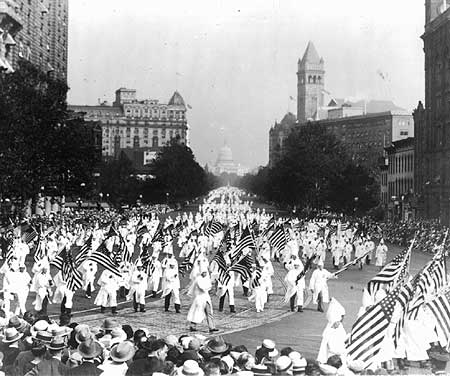
In what the coming years would reveal was the last desperate gasp of "respectable" Klan retrenchment, the KKK took advantage of Coolidge's absence from Washington to follow the debacle that was the 1924 Democrat Convention to march down Pennsylvania Avenue, August 8, 1925. Coolidge would help deliver the decline and demise of the Klan's membership and influence in the coming years.

In what the coming years would reveal was the last desperate gasp of “respectable” Klan retrenchment, the KKK took advantage of Coolidge’s absence from Washington to follow the debacle that was the 1924 Democrat Convention to march down Pennsylvania Avenue, August 8, 1925. Coolidge would help deliver the decline and demise of the Klan’s membership and influence in the years ahead. They would never again be the nationally regarded organization it had been under President Wilson.

He could have opined the injustice of it all, decried the unfairness of “the system” and demanded sweeping legislation to “fix” it. Because he did not hardly makes him a do-nothing enabler, he was appealing to higher ideals than perpetual victimhood. Ideals that constructively edify and encourage everyone to rise above the typical to strive for the exceptional, opportunities at self-betterment and self-sufficiency only possible when individual freedom is honored. It seems that bad laws simply do not exist in the eyes of this current regime. As with any authoritarian, any action is justified to meet the situation. The President behaves as it there is no virtue in refrained action, withholding the use of power to take stock of what collateral damage is being done. In actuality, the array of unintended and intended consequences meted out to political enemies in order to settle scores and correct “inequities” in America’s traditions and institutions is the exact opposite of wisdom or justice. Coolidge reminds us that there are situations when the best use of power is not to parade it, when the wisest means of diffusing conflict is not to advertise it and the surest solutions rest not in Executive word or deed but in the renewed commitment to the ideals on which America began. These ideals find expression not merely in great parchments and speeches but in the lives of a people free to govern themselves.

In the series that will follow on race and Presidential power, we are going to examine Coolidge’s record on race, reappraising what he did do when it came to differences between Americans, how he addressed discrimination and segregation, how he fought to end lynching, how he worked to build up not tear down with the power of the spoken word and acted, usually behind the scenes, to handle requests and calm tensions all without sweeping civil rights legislation or grandiose executive might. His record on race, as with most of Coolidge’s accomplishments, is underrated not because it was uneventful or he did nothing about it but because his record under-promised but over-delivered. In a very real way, Coolidge’s approach to race relations achieved more than the boldness of TR, the retrenchment of Wilson or the flashy promises and empty results of FDR and LBJ. We will explore how in the coming days.

“The words of the President have an enormous weight and ought not to be used indiscriminately. It would be exceedingly easy to set the country all by the ears and foment hatreds and jealousies, which, by destroying faith and confidence, would help nobody and harm everybody. The end would be the destruction of all progress” — Calvin Coolidge, The Autobiography, p.186.
On Unemployment Benefits

Back when unemployment insurance came with built-in incentives to get off the dole, compensation not to work was something to be overcome rather than expanded and extended indefinitely. Now in its fifth year of “temporary emergency benefits,” the administration is asking us yet again to equate economic growth with more money to those who are not working. Some who know better, like Senator Durbin and President Obama, expect us to believe that job creation does not lead to growth, prosperity and plenty for ourselves, our children and even the poorest among us. Instead, they want us to accept the notion that the engine of economic recovery resides in government redistributing money to whom it wishes. Equating unemployment benefits with economic growth is not only patently absurd but willfully ignorant, understanding neither how prosperity happens nor who works to earn it. It is not government who creates wealth but industrious people who make a profit through the work they do. The more profitable the enterprise, the greater the opportunity to employ more people and improve everyone’s lot. Calvin Coolidge identified the source of real benefits to all when he said, “It is the number at work, not the number out of work, that measures our business prosperity.”

To tell America that recovery occurs by enhancing the number of those not working is dishonest. It is a failure to inform people of the fundamental truths of economics. By obfuscation and distraction the Democrat leadership continues hurting the very people it claims to advocate. The truth could be easily understood but to explain it honestly would liberate those who rely on others, especially Washington, rather than themselves for better lives. “The problem of the wage earner,” as Coolidge explained it, “would be simplified by remembering he works not for money but for goods and services. Wages come out of production. The employer cannot get them permanently out of any other source. Wages are raised or lowered with production.” President Obama hopes we fail to see why taking from the wages of those who work to provide “benefits” to those who do not is never going to create jobs or increase opportunity.

Coolidge knew that a sound system of meeting unemployment is not so easily solved by the Democrat method of throwing money at the problem. “If unemployment insurance were like life and accident insurance the problem would be simple,” he observed. “Each would take what he wanted and pay for it. But it is generally proposed that the employer and the public treasury should pay part of the cost as in workmen’s compensation. If when unemployed he is to receive something he did not pay for, no one can say how that would affect the will of the wage earner to hold his place by doing his best. Evidently, the morale would be lowered.” Coolidge identified local institutions as the ones to assist the individual return to what he, on another occasion, called “normal,” the freedom of self-support. He rejected the falsehood that without National Government “help,” no help would be given to those in true need. “The duty,” at the local level, “to relieve unemployment is plain, but not even the unemployed have a right to what they do not earn. Charity is self-existent. Employer and employee are on a business, not a charitable relationship.” Remaining such enables greater opportunity for everyone, especially in depression.

Coolidge understood that what was ultimately being considered was not actually helping those who needed, it was about “government ownership,” exercising the power to make the decisions and direct the material means of life, death, prosperity and poverty as political considerations dictated. In contrast, the free enterprise makes opportunity for everyone with the industry and perseverance to improve one’s lot, bettering the lives of those around him or her. It is the means to feeding the hungry, clothing the naked, and raising life’s standards. “Healthy and normal employment consists of serving another for his personal satisfaction or profit. As the government is not personal, its proper business would be for those serving for its profit…If it is assumed that payment of wages will go on without work, that is not employment, but relief. Then no one should work. The government has never shown much aptitude for real business…The most free, progressive and satisfactory method ever devised for the equitable distribution of property is to permit the people to care for themselves by conducting their own business. They have more wisdom than any government.”

The eternal truth of that statement remains in force even now. The genuinely unprecedented success of the Coolidge Era was not something for which he ever took credit. He did not boast of contributing to the latest stellar job creation numbers because individual Americans accomplished them. Free individuals build prosperity. He simply “minded his own business,” removing the hindrances to the full and just reward for one’s labor neither resorting to the public treasury — the income of our neighbors — nor funding redistribution schemes rooted, then as now, in vague and destructive conceptions of equality.

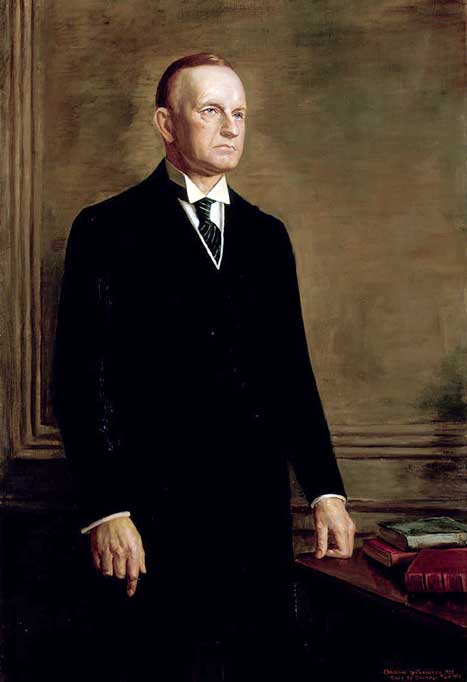
Joseph E. Burgess copy of Ercole Cartotto original

On Calvin Coolidge

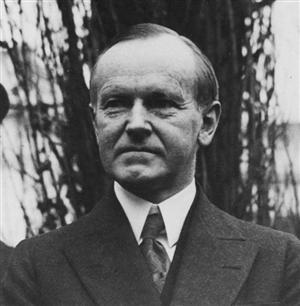
CC photo

Though no eulogies were uttered for Calvin Coolidge officially, a massive outpouring of voluntary tributes spread across the country in the months following his death, funeral and burial. Just as Americans had spontaneously raised him to a Vice Presidential candidacy, so now they held services, wrote editorials and considered anew the substance of Coolidge’s leadership and legacy. Three such tributes are especially worth noting not only because these three were on the opposite side of Mr. Coolidge politically, but, having studied the culture for so long, were not speaking as novices but veterans of great influence around the nation.

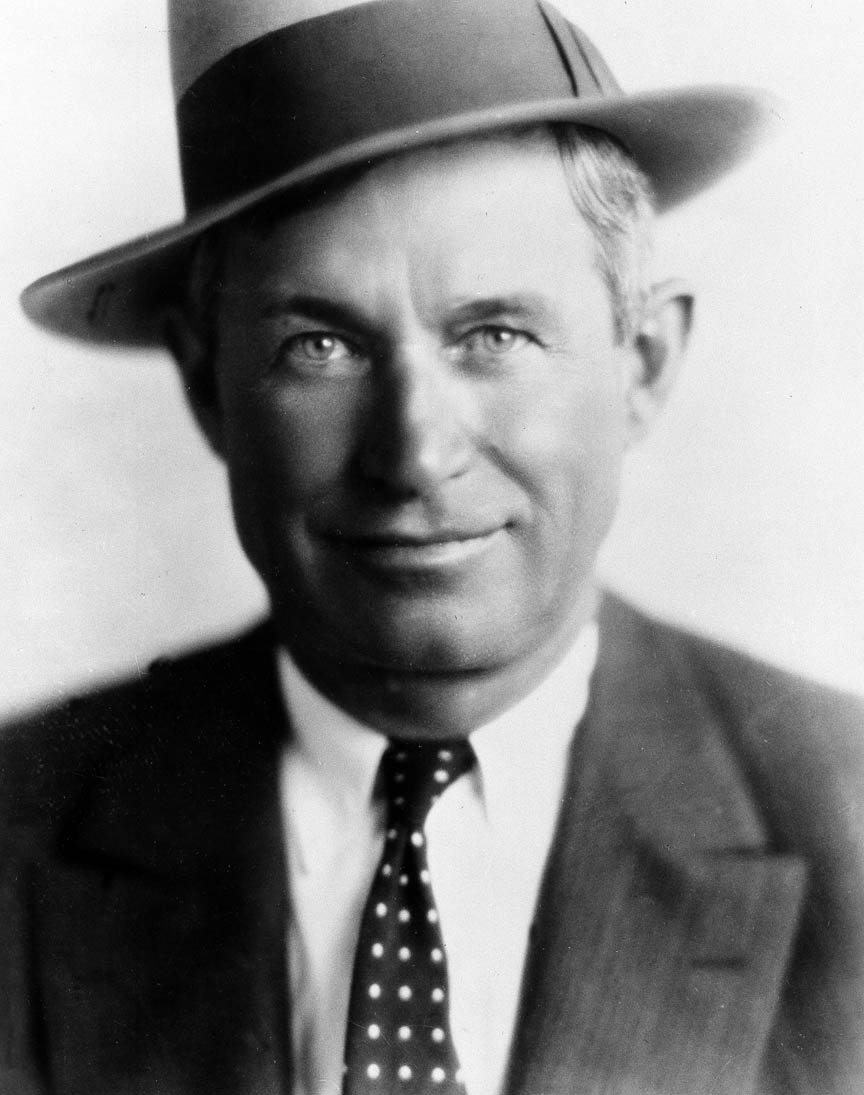
Comedian Will Rogers

Comedian Will Rogers

The first was comedian and columnist Will Rogers, who wrote on January 5,

“Mr. Coolidge, you didn’t have to die for me to throw flowers on your grave. I have told a million jokes about you but every one was based on some of your splendid qualities. You had a hold on the American people regardless of politics. They knew you were honest, economical and had a native common sense. History generally records a place for a man that is ahead of his time. But we that lived with you will always remember you because you was ‘with’ your times. By golly, you little red-headed New Englander, I liked you. You put horse sense into statesmanship and Mrs. Coolidge’s admiration for you is an American trait” (The Autobiography of Will Rogers, p.307).

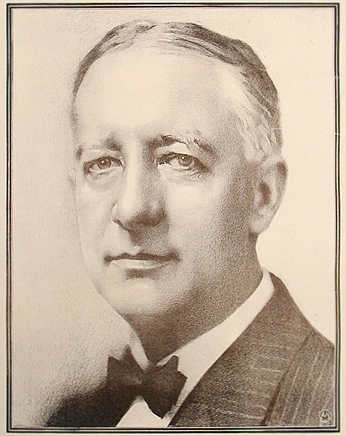
1928 Presidential candidate and Governor of New York, Al Smith

1928 Presidential candidate and Governor of New York, Al Smith

The second had been a presidential candidate, in fact, Al Smith had been nominated in 1928 to run against Coolidge’s successor, President Hoover. The “Happy Warrior,” Al Smith, had served with Coolidge on more than occasion in their retirement from public service. Mr. Smith offered one of the fairest assessments of Coolidge, all the more commendable given the fact that he was a loyal and life-long Democrat. He shatters the mistaken perception of Coolidge with something far more than another cliched attempt to speak kindly of the dead. Smith was offering a sincere and honest judgment,

“I had a great liking and respect for him. Beneath a chilly, reserved, and dignified exterior, he was keen, kindly and entirely free from conceit, pompousness, and political hokum. We are often told politics in a republic produced only demagogues. Calvin Coolidge was a most successful and popular politician, but he had nothing of the demagogue in him.”

Coolidge rightly belonged “in a class of presidents who were distinguished for character more than for heroic achievements. His great task was to restore the dignity and prestige of the presidency when it had reached the lowest ebb in our history, and to afford in a time of extravagance and waste, a shining public example of the simple and honest virtues which came down to him from his New England ancestors. These are no small achievements, and history will not forget them.

“Calvin Coolidge was a salty, original character, an unmistakable home-grown, native, American product, and his was one of those typically American careers, which begin on the sidewalks, or on the farm, and prove to the youth of the nation that this is still the land of unbounded opportunity” (cited by Robert Sobel in Coolidge: An American Enigma, pp.418-9).

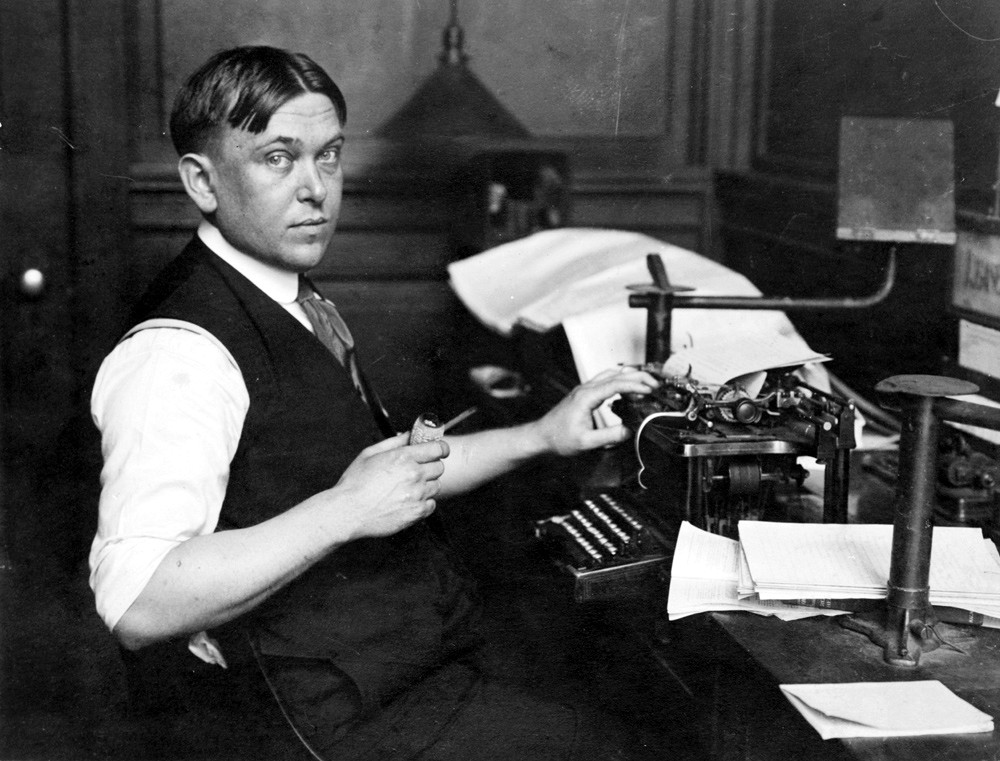
Journalist and critic Henry L. Mencken, the "Sage of Baltimore"

Journalist and critic Henry L. Mencken, the “Sage of Baltimore”

Finally, the third man was a critic and journalist, one who had cynically followed politics for years and who was not one to give praise to anybody, especially to the dead. Yet, of Coolidge’s legacy H. L. Mencken finally wrote, all the more timely given that F. D. R. was already a month into his New Deal program of legislation,

“We suffer most when the White House busts with ideas. With a World Saver preceding him (I count out Harding as a mere hallucination) and a Wonder Boy following him, he begins to seem, in retrospect, an extremely comfortable and even praiseworthy citizen. His failings are forgotten; the country remembers only the grateful fact that he let it alone. Well, there are worse epitaphs for a statesman. If the day ever comes when Jefferson’s warnings are heeded are last, and we reduce government to its simplest terms, it may very well happen that Cal’s bones now resting inconspicuously in the Vermont granite will come to be revered as those of a man who really did the nation some service” (H. L. Mencken, A Carnival of Buncombe, p.136).

Indeed, it may and not a moment too soon.