“Any man who has been placed in the White House can not feel that it is the result of his own exertions or his own merit. Some power outside and beyond him becomes manifest through him. As he contemplates the workings of his office, he comes to realize with an increasing sense of humility that he is but an instrument in the hands of God” — Calvin Coolidge, ‘The Autobiography’ (1929)
character
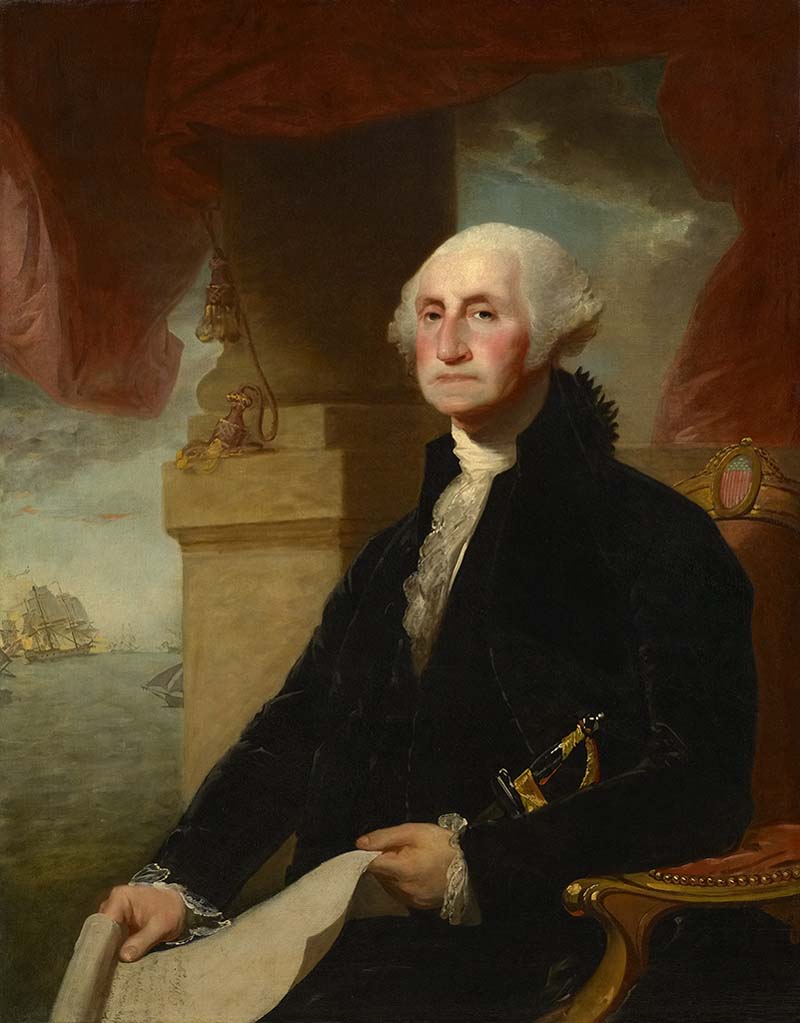
On George Washington
“February 22 marks the …birthday of George Washington. His stature has only increased with the years. His public life was characterized by complete unselfishness. Indifferent to his own fortunes, his only concern was for his country. He needed no pretense and no art. He was simply and naturally great.” He was, in short, “the personification of judgment and character” — Calvin Coolidge, February 20, 1931.
Tomorrow marks the two-hundred eighty-first anniversary of President Washington’s birthday. To Coolidge, the first President was not without his mistakes, as with any man, but he remains worthy of our esteem and emulation for not only his life of service but also his impeccable integrity. As the former President looked back on the example of Washington in the early months of 1931, he may have recalled the remarkable precedent his forbear set by laying down the power of his office after only two terms. Washington could have held the Presidency for life or passed it to his heirs and yet he laid it down with characteristic humility. Coolidge adhered to that same selfless demonstration in 1929. As he describes the attributes of Washington, however, he reminds the reader of not only what made the first President truly great but also of those qualities the thirtieth President prized and practiced in his own life. One instantly thinks of Coolidge when the absence of pretense is commended. There were no ostentatious displays with Coolidge. What you saw is who he was without conceit or facade. He had no patience for those who put on airs. He would even make the bejeweled “social queens” of Washington wait in the reception lines while he “took a break” from shaking hands. Humble simplicity defined him in public just as it did in private. Coolidge bequeaths a legacy not unlike Washington’s to those who sincerely honor character above politics and service above self-importance.
On Economy
Calvin Coolidge cherished the classics. He admired the wisdom of older thinkers and writers for what insights they discovered about human nature. He recognized that the old is not equivalent to the wise just as the younger and newer are not necessarily more enlightened or more modern. He distinguished between rediscovering and reapplying what is timeless from the blind emulation of the past. As Sheldon Stern has noted, he translated Cicero and Dante for relaxation. It was the practice of economy in public service that stood pronounced among the lessons he learned. As he knew, “economy” derived from the Greek compound oikonomos, which literally meant, “house law” (Bauer’s “A Greek-English Lexicon” p.559). To the Greeks, it referred to the management and direction of a household.
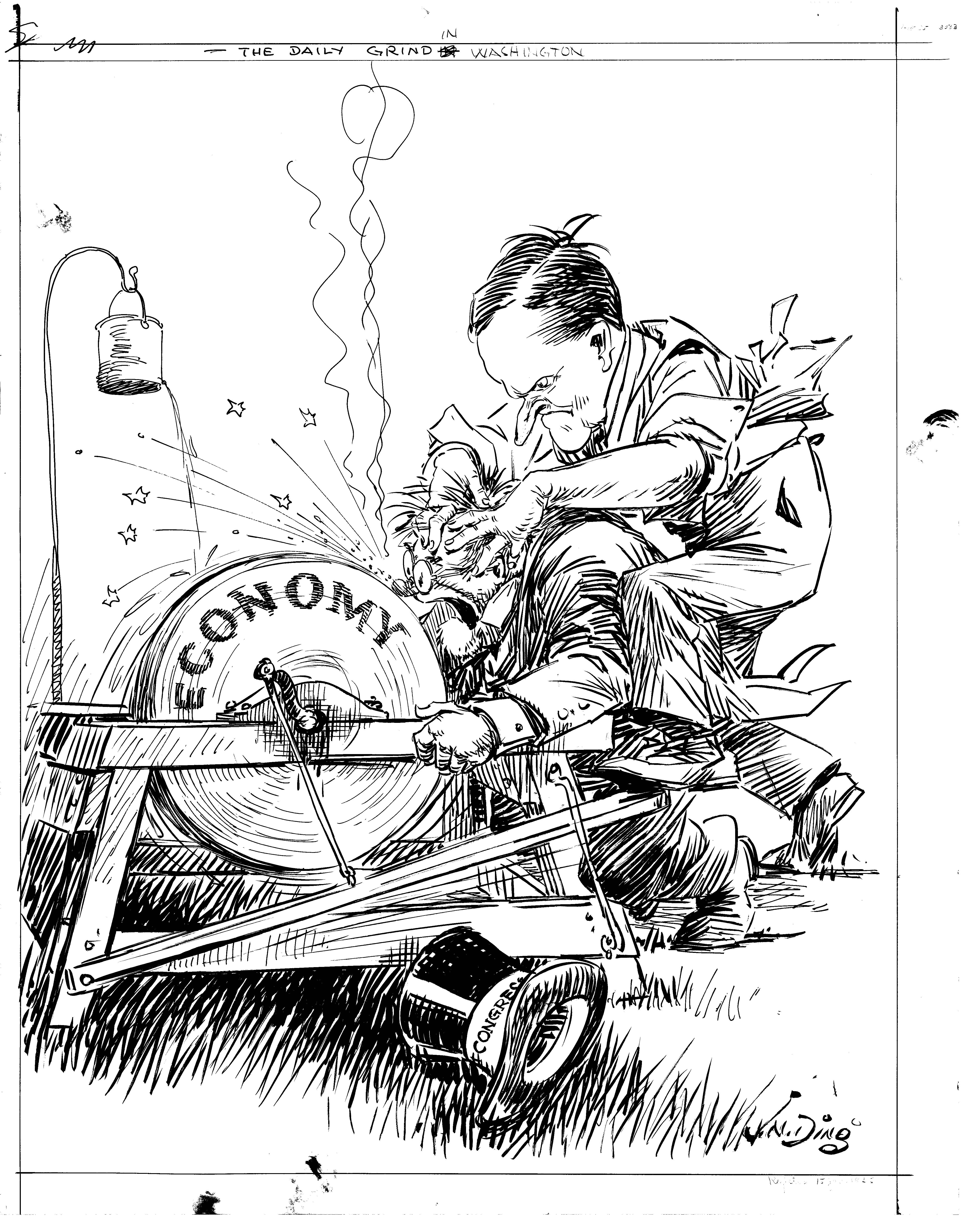
Together with Coolidge’s profound sense of service, it was a call to lead by example. If he was to preside as the most powerful man in the world, it meant serious responsibilities were upon him. This meant requiring of himself the standards he expected in others. If he was to convince the Congress that government should economize, cutting wasteful expenditures and unnecessary costs, it would forfeit any credibility were he an extravagant spender on the White House staff. It meant the President would have to demonstrate it in his own “house.” This is why he constantly scrutinized the spending of the White House housekeeper, Mrs. Jaffray. It was wasteful to insist on shopping at specialty establishments when the cheaper grocery stores would save money. Why purchase more hams than could be eaten for the occasion? This is why President Coolidge commended his second, and more conscientious, housekeeper, “Ella” Riley for a “very fine improvement” bringing expenses down $2,550.71 in one year, just short of a 22% decrease. This is why President Coolidge prioritized his meetings with Budget Director General Herbert Lord above those with his own Cabinet and Congress. Their exacting work made possible tax refunds of $150 million in 1926 from budget surpluses of $378 million that year and $599 million in 1927. This is why President Coolidge maintained his original $32 a month, two-family residence in Northampton. He was not going to “live large” at the people’s expense. This is why President Coolidge was personally involved when it came to trimming grocery lists, cutting down ostentatious furnishings, and unnecessary costs, though it meant overturning tradition at times. Not even the seemingly inconsequential ribbon and paper used in official correspondence was spared in order to save tens of thousands of dollars each year.
Coolidge, Lord and Mellon cut and then kept cutting wherever they could. Such was simply the demand of leading by example. The Congress, when faced with each year’s surplus (largely made possible by the trio’s thrift), would look for every possible device on which to spend it. Not so with Coolidge, as the manager of his “household.” The Presidency was not a chance to spend because it was there or waste because he could. That was not an example befitting the President. If he could not live within his “household” budget, he had no ground on which to demand such habits from Congress and thus no credibility as a responsible leader. If he abdicated this duty, the next expansion of government benefits would likely be assured but the cost would not be merely material. A deep moral debt would be created from which no tangible material could deliver. For Coolidge, the morality of saving people by saving money must start at “home.” Without example, words and intentions alone ring hollow.
 The Importance of the Obvious