On Luck

“There are people who complain that they do not have any luck. These are the opportunists who think that their destiny is all shaped outside themselves. They are always waiting for something to happen. Not only is nothing very good likely to happen to this class, but if some fortune seems to come it tends to turn out disastrously. They are usually ruined by success.

“Our real luck lies within ourselves. It is a question of character. It depends on whether we follow the inward light of conscience. Such men rise above the realm of temporary circumstance. They are great even in defeat.

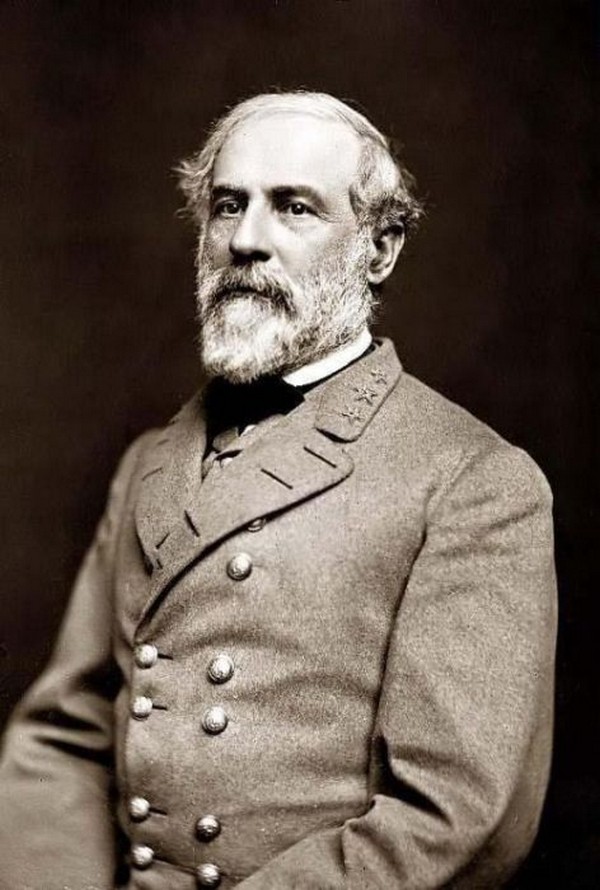
“Napoleon following his star, seeking luck outside himself, was great only in victory. But in Egypt, at Moscow, at Waterloo, his glory departed. General Lee, sacrificing himself for what he felt was his duty, was no less great after Appomattox. Poverty, obscurity, assassination, only revealed the greatness of Lincoln. The wrath of man praised him. if we cannot entirely control our environment, we can control ourselves and our destiny. The man who is right makes his own luck”
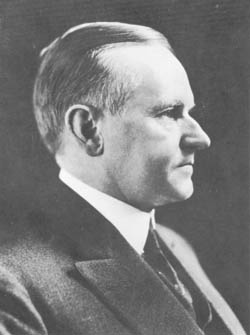
— former President Calvin Coolidge, August 29, 1930.

civil_06ingres_napoleon_on_his_imperial_throneimg_429394_9292903_1

On the Danger of Cynicism

It has always been easier to criticize and find fault than to contribute toward and respect the constructive ideal. Optimists, always the creators, have to work not only to realize what previously seemed impossible but they also have to overcome the destructive habits of the pessimists. Those pessimists are the first to surrender in the face of difficulty while they trumpet the message of hopelessness. “Nor is it worth trying,” these closet nihilists aver. Failure to measure up to certain expectations is enough for some to give up entirely on a project and declare defeat for the cause. America is no different. It has always had a healthy share of pessimists and other weak-willed “experts” who knew it would fail in this or that endeavor. The purpose of America, as Coolidge would reiterate, remains valid. It has raised for all the world to see a set of truths that preserve liberty with duty in a way that no set of principles has before, or can surpass. The failure to eradicate all the failings and frailties inherent in human nature is no more proof of failure than evidence of any grander success by empowering government now to accomplish it for us. For these “armchair” critics, it discredits the entire foundation and persuades them that progress means abandoning moral clarity, surrendering confidence in self-government entirely and trusting in our modernity to move past the “old” and “inadequate” concepts of an “ignorant” and “limited” eighteenth century existence. It would be one thing to adopt so foolhardy and naively defeatist outlook for oneself. These self-proclaimed skeptics are imparting this to the next generation, however, through “modern education.” To this issue of education, Coolidge turned in June of 1922, when he said,

“This is the civilization which intelligence has created and which sacrificed has redeemed. We did not make it. It is our duty to serve it. Education ought to assess it at its true worth. It ought not to despise it but reverence it. If there be in education a better estimation of true values, it must be on the side of a great optimism. Under its examination human relationship stands forth as justified and sanctified. There is no place for the cynic or the pessimist. Who is he that can take no part in business because he believes it is selfish? Who is he that can take no part in religion because he believes it is imperfect? These institutions are the instruments by which an eternal purpose is working out the salvation of the world. It is not for us to regard them with disdain; it is for us to work with them, to dedicate ourselves to them, to justify our faith in them…The great service which education must perform is to confirm our faith in the world, establish our settled convictions, and maintain an open mind.”

The annual American Educational Research Association meeting in April made evident that improved testing and eradicating poverty are but symptoms of an education missing its core. As schools all across the country let out for the summer, now is an ideal time to consider the service education is actually rendering for us and our children. Is it consigning our proven ideals to failure, proclaiming a gospel of hopelessness and permanent moral uncertainty? Is it rejecting the worth of Christian standards of behavior because America is forever trapped, they claim, in racism, hypocrisy, chauvinism, bigotry and oppression? Is it championing the control of a few who can finally achieve the perfection which is our right, if only we abandon this failed framework of eighteenth century slaveholders? Such goes the cynic’s mantra. What is not so readily apparent are the rocks waiting on the other side of those words. It has wrecked and will continue to wreck the lives of those who are taught to embrace pessimism, to rely on the force of government to compensate for all of America’s shortcomings. The cynic, ultimately, doubts liberty. America has never worked, he assumes, so why work at it as responsible and informed citizens? Just as Coolidge remarked, though, an open mind can co-exist with settled convictions. Forever holding out undecided on everything is the perfect soil for cynicism. Moral relativity, taught by too many schools in this country, is actually moral surrender in a more subtle form. On the contrary, knowing certain things are right and true broadens the mind to keep learning. It is the pessimist whose mind is closed, failing to accept that the people can be trusted with their liberty far more than government has or ever will. Education serves its purpose when it keeps that flame of optimism in our ideals alive. It is the more difficult task than the ease of cynicism but faith is vindicated in the end.

Image

Frost on Coolidge

                         Image

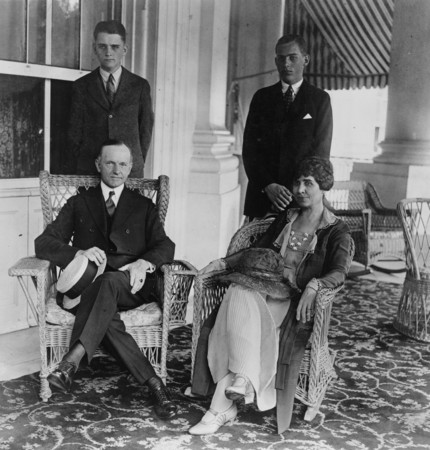
While some may think there was little to connect a Grover Cleveland Democrat with a life-long Republican, it would come as a surprise that Coolidge’s life was filled with such connections. He was not a man given to airs or sense of superiority, personally or politically. He would consider Democrats among his closest friends, even allies. He would count numerous Irish immigrants among his supporters. The Democrat presidential candidate of 1928, Al Smith, was a good friend. He married into a Democrat family. These relationships were not due to some lack of commitment to principle, for Coolidge’s consistency and conviction were widely known. It was due to a set of convictions that transcended political posturing. It was an agreement with what America was all about, whether you were Republican or Democrat. It was a respect for people stemming from a mutual reverence for America’s ideals. Character and perspective on both sides made it possible to have principled disagreement but still work toward common aims as Americans. Without integrity, civility has no pillars on which to stand. When the ideals of America are no longer shared and character is demonized, it is no wonder that both a sense of proportion and civility are missing as well.

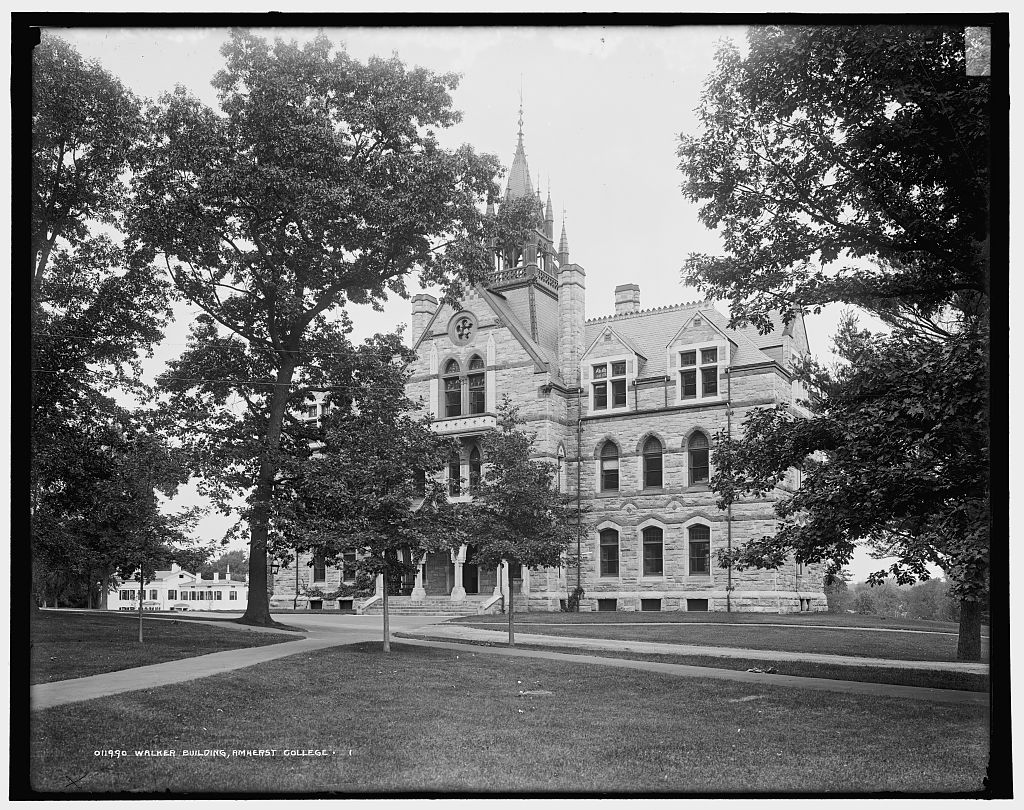
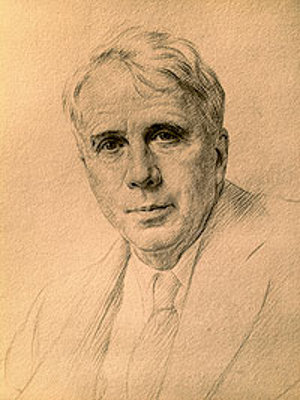
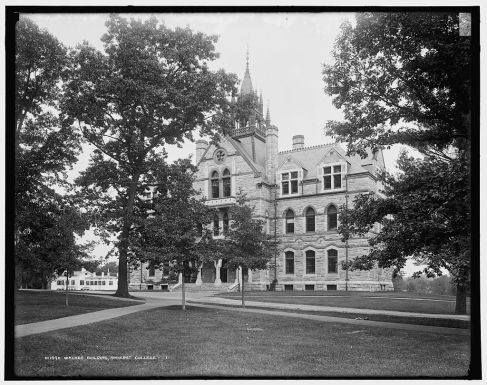
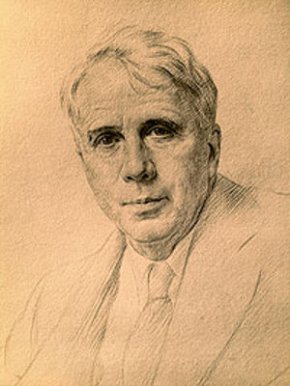
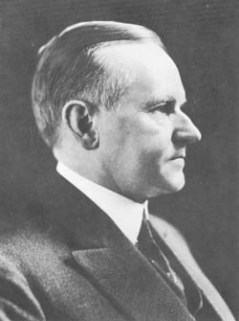
One of the most predictable acquaintances Coolidge encountered, however, was Robert Frost. As Joseph A. Conforti in his book, Imagining New England, examines the identity and mindset of the commonly caricatured “Yankee,” he features both the President and the poet. While, as Coolidge biographer Fuess observed, Coolidge was unique for combining so many — if not all — of the qualities of a “Yankee” in a single person, Frost could not be more different in upbringing and politics. But what did Frost think of Coolidge? There is often an assumed affinity of the two but, again, Frost was a Cleveland Democrat while Coolidge held loyally to the Republican Party all of his life. Frost, widely regarded as a New England rustic, was born and raised in the city, San Francisco to be exact. Coolidge, as we know, came from the rugged hills of Vermont and hailed from rural western Massachusetts, not the sophisticated social circles of Boston. Frost was largely ambivalent when it came to politics; Coolidge joked that his hobby was “running for office.” Frost would never finish college while Coolidge would not only graduate but give the witty “Grove Oration,” for his class. It was Amherst that would enable these lives to cross paths. Frost would come to the College on and off from 1916 through 1938 to teach English. Meanwhile, Coolidge rose in state and national affairs, serving as a trustee of his alma mater through his retirement from public life. They certainly knew each other and among the several interesting observations made by Conforti is this, quoting from Lawrance R. Thompson’s Frost: The Years of Triumph, 1915-1938,

“Frost admired Coolidge; he identified with his political and cultural conservatism, praised his ‘overthemountain nature,’ and respected his kindred descent from ‘a modest, frugal, and unpretentious line of Puritan farmers’…Frost’s political detachment and poetic rejection of social criticism provoked literary enemies who saw him as a product of the same stingy soil that gave birth to Coolidge.” Frost would be defended “against such critics” and his apologists would share the “Coolidge-like Yankee moral vision that emerges from much of his verse.” As Robert Coffin, of Yankee magazine fame, would write, “Frost likes his people in individual, not mass formation. He isn’t blaming their troubles on the capitalists or the environment, but on the way life is built and the way they are built…” Such an outlook would have found Coolidge in agreement.

As Coolidge would preside over the lively and energetic Twenties, Frost would become, in Conforti’s words, a “New England version of Will Rogers” personifying the folk wisdom and authenticity of American character. One reporter summarized the traveling poet this way, Frost’s temperament “was one of inexpressible gentleness, with humor and strength and whimsical sincerity.” It seems Coolidge and Frost were more alike than is apparent at first glance. But then this is America at work, bringing two very different individuals together around transcendent ideals, common principles of character and, tempered by realism, an abiding faith in her purpose.
        ImageImage