The Coolidges in Georgia, Winter 1928-29

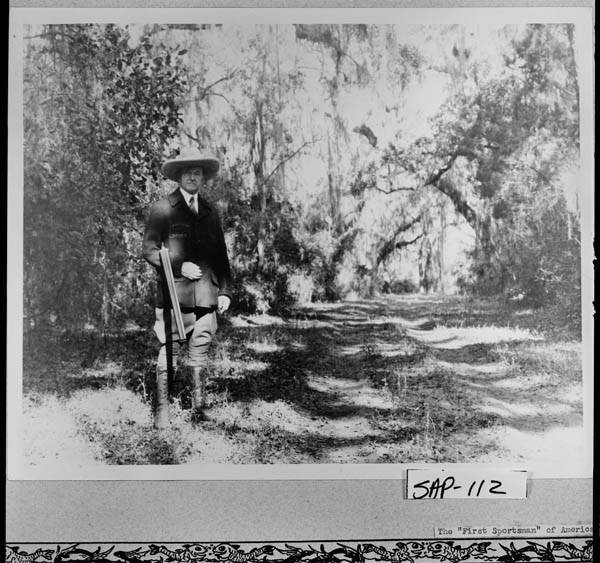
ImagePresident Coolidge, dubbed here “The ‘First Sportsman’ of America,” pausing before his quail hunt in the scrub of Sapelo Island, Georgia.

President and Mrs. Coolidge arrive at the train station in Brunswick, Georgia, before heading out to Sapelo Island.

President and Mrs. Coolidge arrive at the train station in Brunswick, Georgia, before heading out to Sapelo Island. Courtesy of the Georgia Archives.

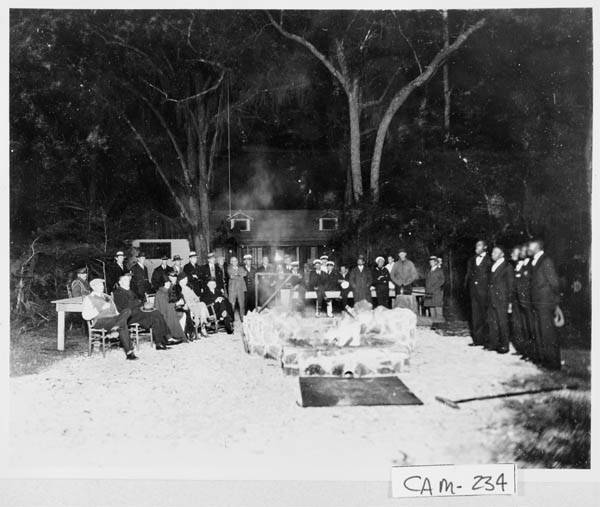
The Coolidges at Cabin Bluff enjoying an old-fashioned oyster roast around the fire. The President and Mrs. Coolidge are seated in the front row on the left (Grace is third from left, Calvin sits on the far right end).

The Coolidges at Cabin Bluff enjoying an old-fashioned oyster roast around the fire. The President and Mrs. Coolidge are seated in the front row on the left (Grace is third from left, Calvin sits on the far right end). Courtesy of the Georgia Archives.

President Coolidge at Cabin Bluff with the "spiritual" singers of Georgia Industrial College.

President Coolidge at Cabin Bluff with the “spiritual” singers of Georgia Industrial College. Courtesy of the Georgia Archives.

The Coolidges visit the Sugar House ruins belonging to John H. McIntosh. Notice the tabby oyster shells used commonly along the Virginia, Carolina, Georgia and Florida coasts as a building material. These were thought to be the old Spanish mission of Santa Maria, St Marys, Georgia.

The Coolidges visit the Sugar House ruins, St Marys, belonging to John H. McIntosh. Notice the tabby oyster shells used commonly along the Virginia, Carolina, Georgia and Florida coasts as a building material. These were thought to be the ruins of the old Spanish mission of Santa Maria. Courtesy of the Georgia Archives.

Crowds gathered to see the First Lady at a reception in her honor, St Marys dock.

Crowds gathered to see the First Lady at a reception in her honor, St Marys dock. Courtesy of the Georgia Archives.

President and Mrs. Coolidge welcomed by their hosts, Mr. and Mrs. Howard E. Coffin, at the Sea Island Yacht Club.

President and Mrs. Coolidge welcomed by their hosts, Mr. and Mrs. Howard E. Coffin, at the Sea Island Yacht Club. Courtesy of the Georgia Archives.

At Sea Island, December 1928, Coolidge planted "The Constitution Oak" on the grounds of The Cloister, the hotel established by the Coffins (pictured here beside the Coolidges).

At Sea Island, December 1928, Coolidge planted “The Constitution Oak” on the grounds of newly constructed Spanish Revival style hotel, The Cloister, designed by Addison Mizner and owned by Howard E. Coffin and his wife (pictured here beside Grace Coolidge). Courtesy of the Georgia Archives.

The Coolidges visiting the Monument to the Battle of Bloody Marsh, July 7, 1742, when the Spanish attacked Georgia held by the British, under General James Oglethorpe, whose Scottish Highlanders soundly defeated the Spaniards in what proved to be the first decisive engagement in the Western Hemisphere. General Oglethorpe redeemed his reputation after the defeat at St. Augustine two years before. It would set America further down the road on her course to independence.

The Coolidges visiting the Monument to the Battle of Bloody Marsh, July 7, 1742, when the Spanish attacked Georgia held by the British, under General James Oglethorpe, whose Scottish Highlanders soundly defeated the Spaniards in what proved to be the first decisive engagement in the Western Hemisphere. General Oglethorpe redeemed his reputation after the defeat at St. Augustine two years before. It would set America further down the road on her course to independence. Courtesy of the Georgia Archives.

President Coolidge watches the steer riding along the beaches of Sapelo Island, December 1928.

President Coolidge watches the steer riding along the beaches of Sapelo Island, December 1928. Courtesy of the Georgia Archives.

Coolidge and Mr. Coffin happen upon some sea turtles on the beach, Sapelo Island.

Coolidge and Mr. Coffin happen upon some sea turtles on the beach, Sapelo Island. Courtesy of the Georgia Archives.

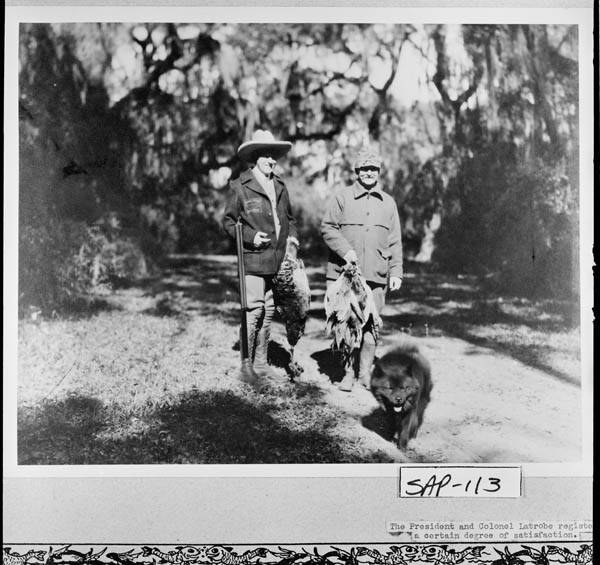
President Coolidge and Colonel Latrobe, unsuccessful at quail, do shoot a few pheasants during the hunt, Sapelo Island.

President Coolidge, unsuccessful at quail, and military aide Colonel Latrobe, proudly display the pheasants shot during their hunt, Sapelo Island. Courtesy of the Georgia Archives.

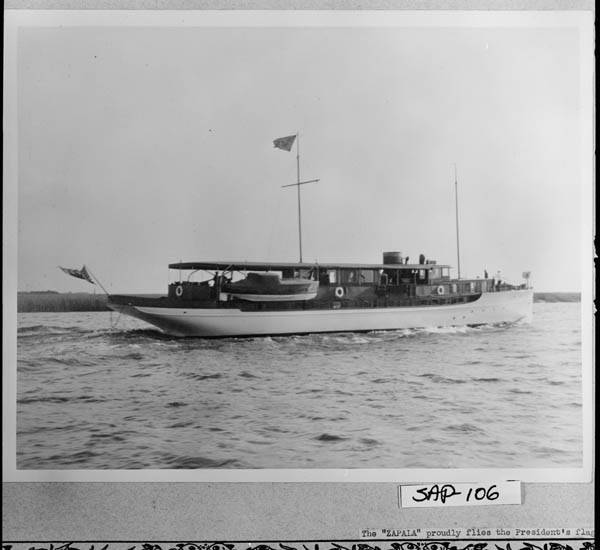
The motor yacht Zapala sails with the Presidential party aboard. Note the President's flag is raised.

The motor yacht Zapala sails with the Presidential party aboard. Note the President’s flag is raised. Courtesy of the Georgia Archives.

President Coolidge and another man, perhaps Secret Service, standing on the afterdeck of the Zapala.

President Coolidge and another man, perhaps Secret Service, standing on the afterdeck of the Zapala. Courtesy of Mystic Seaport and Connecticut History Online.

The Coolidges on the afterdeck of the Zapala, designed by A. E. Luders and built in Stamford, CT, in 1927.

The Coolidges on the afterdeck of the Zapala, the yacht designed by A. E. Luders and built in Stamford, CT, in 1927. Courtesy of Mystic Seaport and Connecticut History Online.

The Presidential hunting party disembarks from the Zapala, which would consider Georgia its home base for fourteen years, 1927-1941.

The Presidential hunting party disembarks from the Zapala, which would consider Georgia its home base for fourteen years, 1927-1941. Courtesy of the Georgia Archives.

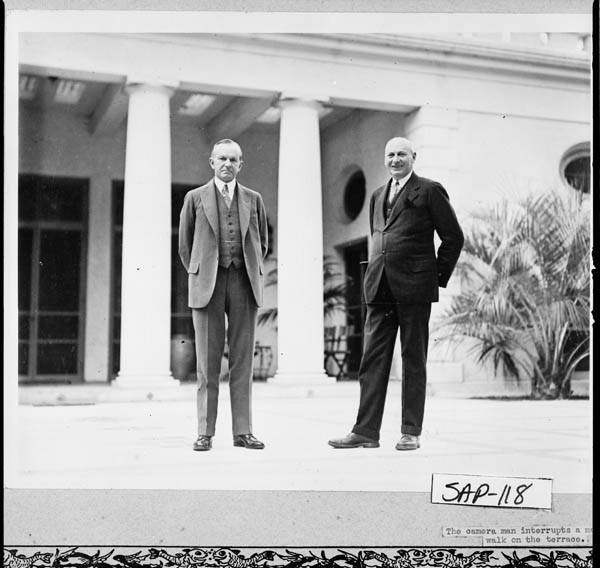
Calvin Coolidge and his friend and host, entrepreneur Howard E. Coffin, as they walk the terrace of "The Big House" built by Thomas Spalding, 1810, Sapelo Island.

Calvin Coolidge and his friend and host, entrepreneur Howard E. Coffin, as they walk the terrace of “The Big House” built by Thomas Spalding, 1810, Sapelo Island. Courtesy of the Georgia Archives.

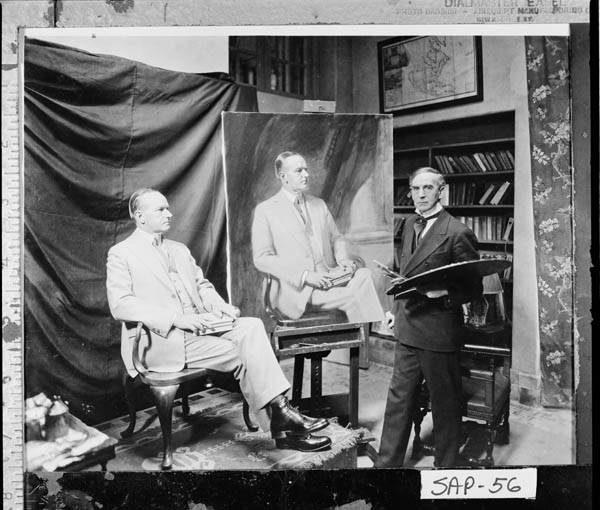
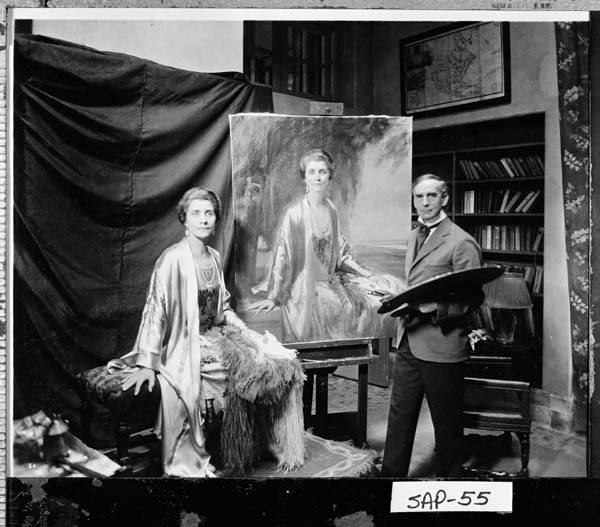
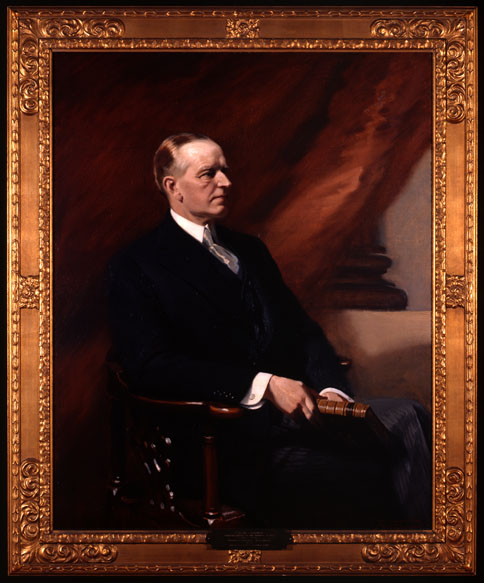
cc-with-painter-salisbury-and-portrait-on-sapelomrs-coolidge-with-painter-salisbury-and-portraitIt was also during their stay, as we have mentioned before, that the Coolidges both sat for British painter Frank O. Salisbury at “The Big House” on Sapelo Island. Salisbury would be commissioned again in 1934, following Mr. Coolidge’s death, to produce another portrait for the American Antiquarian Society. Mr. Salisbury, at that time, painted Coolidge in a dark suit with strikingly similar pose to the original work seen above six years earlier.

Calvin Coolidge, posthumous portrait by Frank O. Salisbury, 1934.

Calvin Coolidge, posthumous portrait by Frank O. Salisbury, 1934.

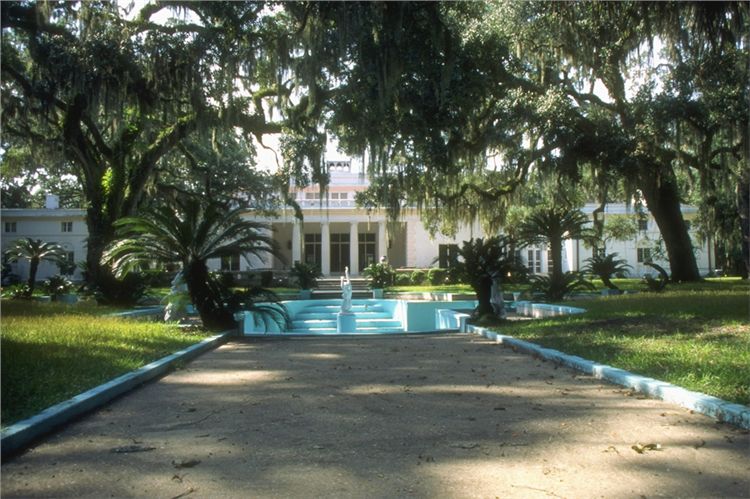
View to the front Terrace of "The Big House" (what is now called The Reynolds Mansion), where Coolidge and Coffin stood.

View to the front Terrace of “The Big House” (what is now called The Reynolds Mansion), where the Coolidges stayed eighty-five years ago.

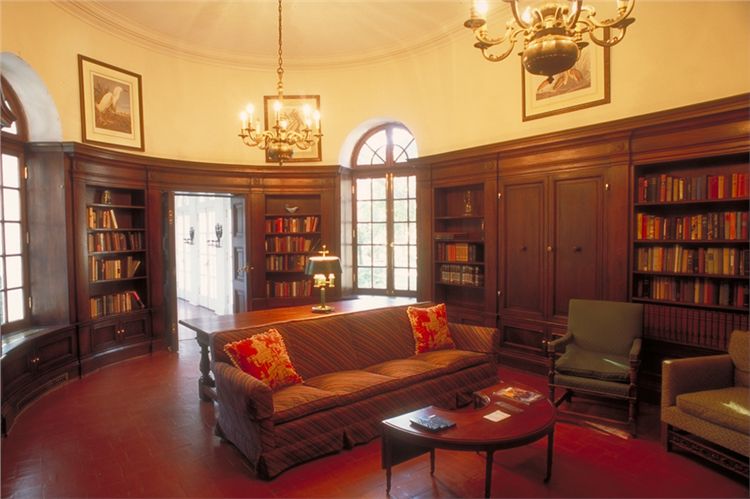
The library where President and Mrs. Coolidge had their portraits painted. The background for the First Lady's portrait is the picturesque Spanish moss and green lawns of this, as with so many, Southern mansions.

This is the library where President and Mrs. Coolidge had their portraits painted. The background for the First Lady’s portrait is the picturesque Spanish moss and green lawns of this, as with so many, Southern mansions.

On Aviation

President Coolidge with Secretary Everett Sanders at the International Civil Aeronautics Conference, December 12, 1928.

President Coolidge with Secretary Everett Sanders at the International Civil Aeronautics Conference, December 12, 1928.

Appearing on the opening day of the International Civil Aeronautics Conference on December 12, 1928, President Coolidge marked the first quarter of a century for aviation. So much had been accomplished that seemed absolutely unattainable, except in myth and fable, for all of human existence. That first 12 second flight of a heavier-than-air machine accomplished by Wilbur and Orville Wright on the beaches of Kitty Hawk, North Carolina, opened a world of what was now possible. It would never have happened and certainly never have flourished had not visionary men and women worked to achieve it, perfect it and preserve private ingenuity as the moving force of its future development.

Without President Coolidge’s decisive role in shaping air policy, a strong case could be made that there would have been no private or commercial aviation. It could have remained exclusively under the control of a military establishment. Certainly a civil aeronautics conference would not have occurred. It was through his well-timed deployment of the Morrow Board, his encouragement of the commercial and national defense potential of air technology along independent lines, and his superlative political skill in shepherding and signing the Air Commerce Act in May 1926 brought order out of the chaos in coordinating aviation while keeping the doors of opportunity open to private innovation (Komons, Bonfires to Beacons, p.88). As had been accomplished with the Radio Act of 1927, President Coolidge left a distinct imprint not only on the early development of modern communications but also on the success of air travel.

President Coolidge, speaking to the 441 aviators, inventors, and delegates present (including Orville Wright and Charles Lindbergh), began:

“Members of the Conference:

“This year will mark the first quarter century of the history of human flight. It has been a period of such great importance in scientific development that it seems fitting to celebrate it with appropriate form and ceremony. For that purpose this conference has been called, and to the consideration of the past record and future progress of the science of aeronautics, in behalf of the Government and people of the United States, I bid you welcome.

The first flight at Kitty Hawk by the Wright brothers, December 1903.

The first flight at Kitty Hawk by the Wright brothers, December 1903.

“Twenty-five years ago, at Kitty Hawk, North Carolina, occurred an event of tremendous significance. It was the first extended flight ever made by man in a power-driven heavier-than-air machine. How more appropriately could we celebrate this important anniversary than by gathering together to consider the strides made throughout the world in the science and practice of civil aeronautics since that day, and to discuss ways and means of further developing it for the benefit of mankind?

“Others, whose names will long be remembered, had done much to solve the problem, but it remained for the able, persistent, and modest brothers from Dayton to demonstrate completely the possibility of a machine raising itself by its own power and carrying a man in sustained flight.

“Human flight with wings, which had intrigued the imagination since the beginning of time, became a practical reality on the day that the airplane of Wilbur and Orville Wright rose from the windswept dunes of the Atlantic coast. The elder brother lives with us only in memory, but Orville Wright, who piloted that first plane, is still actively interested in that science. We are glad to have him as one of our delegates to this conference.

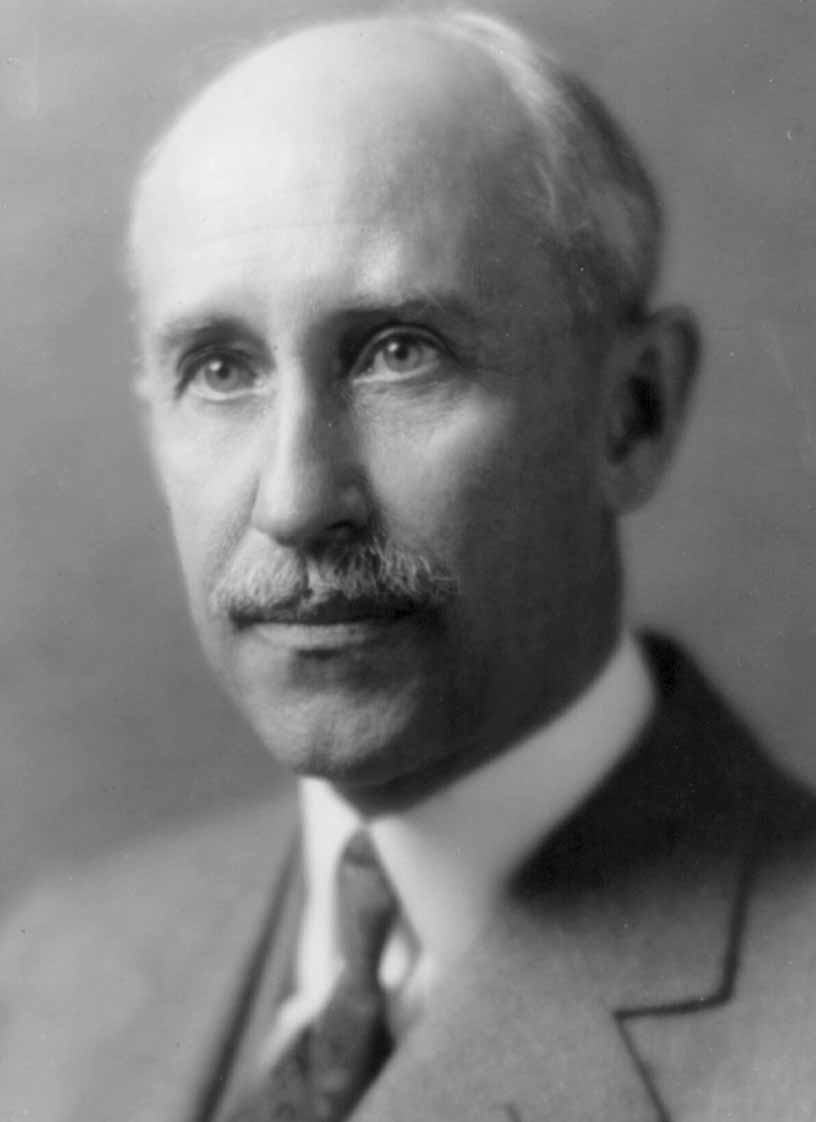
Orville Wright in 1928, at the time of the Conference.

Orville Wright in 1928, at the time of the Conference.

“No achievement of man in the progress of civilization has had a more rapid expansion…Even within our memory utter impossibility was expressed by saying: ‘Might as well try to fly’…

“With genius, indomitable perseverance, and a will to overcome obstacles, the Wrights, mindful of what had gone before, applied themselves to the solution of the problem. They experimented at Kitty Hawk for three seasons; and in the fourth, on December 17, 1903, success crowned their efforts…That first flight lasted only 12 seconds. Three more were made the same day. One of 59 seconds carried the plane a distance of 852 feet. It was wrecked by the wind and tests ended for the time. Further experiments were made in Dayton in 1904 and 1905. In the latter year a Wright plane traveled for 24 miles at the rate of 38 miles an hour. Three years later one was bought by the War Department, our Government being the first to utilize this new device.

“Other countries took up the idea and for a period rather outstripped us in flying…It is to the development of aeronautics as an aid to the peaceful pursuits of transportation, of commerce, and of trade that this conference is to direct its attention…In 1926 this Government officially recognized the importance of flying by establishing the post of Assistant Secretary for Aeronautics in each of the War, the Navy, and the Commerce Departments. Since then we have made remarkable progress. Then the value of the aeronautic industry in the United States was placed at less than $5,000,000. Today it is said to be in excess of $150,000,000. In 1925 the production of aircraft was valued at about $13,000,000; for 1928 the estimate is over $50,000,000…

“Regular flying in the United States, beginning with a short mail line, has increased until this year there are approximately 15,500 miles of airways…The daily mileage is estimated at 52,000 miles. We have three important national lines–New York to Montreal, Seattle to Vancouver, and Miami to Havana. Plans to extend the latter to the Isthmus and South America are under way…The airplane is used for fast day travel, with a transfer to a railroad for the night journey…

“The twentieth century will be known for the development of aeronautics and air transport. The airways of the world now have a greater mileage than the railways did in 1850, the twenty-fifth anniversary of the opening of the first railroad built by Stephenson…

“The country-wide tour of Lindbergh in the United States, following his wonderful and spectacular flight to Paris, did much to make Americans air-minded. A large amount of civil flying is now being done here, and the civilian-owned aircraft number over 6,000…

Charles Lindbergh receives the Harmon Trophy, the annual award for air aces, at the Conference. Beside him, to his left, stands Orville Wright.

Charles Lindbergh receives the Harmon Trophy, the annual award for air aces, at the Conference. Beside him, to his left, stands Orville Wright.

“Air transport means much to the United States, divided as it is in the West by lofty mountain ranges and deserts. In the early days it took six months to go from Missouri to the Pacific coast. An airplane traveled across the continent in less than 24 hours. We are stretching out our arms through the air to Canada and to our other friends and neighbors in the South.

“All nations are looking forward to the day of extensive, regular, and reasonably safe intercontinental and interoceanic transportation by airplane and airship. What the future holds out even the imagination may be inadequate to grasp. We may be sure, however, that the perfection and extension of air transport throughout the world will be of the utmost significance to civilization. While the primary aim of this industry is and will be commercial and economic and the prosperity of the world will be immeasurably advanced by it, indirectly, but no less surely, will the nations be drawn more closely together in bonds of amity and understanding.”

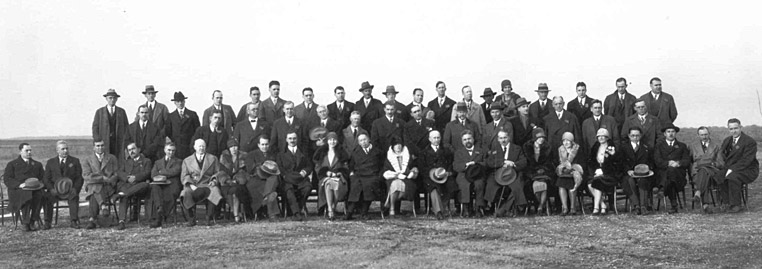
Delegates pose for a group photograph on December 15th, at Langley Memorial Aeronautical Laboratory. Orville Wright is seated in the front row to the right of the woman with the white fur collar.

Delegates pose for a group photograph on December 15th, at Langley Memorial Aeronautical Laboratory. Orville Wright is seated in the front row to the right of the woman with the white fur collar.

The delegates of the Conference made the journey on December 17, 1928, to the site where it all began, Kitty Hawk, North Carolina.

The delegates of the Conference made the journey on December 17, 1928, to the site where it all began, Kitty Hawk, North Carolina.

On “The Farmer and the Nation,” Part 3

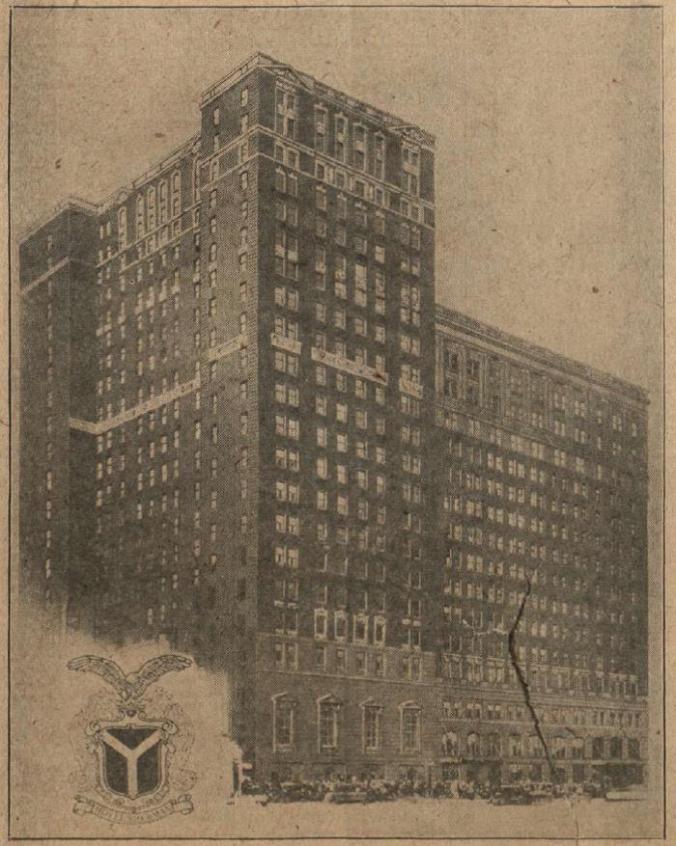
The Sherman Hotel in Chicago where President Coolidge delivered his address on the farmer and the nation, December 7, 1925.

The Sherman Hotel in Chicago where President Coolidge delivered his address on the farmer and the nation, December 7, 1925.

The American Farm Bureau Federation, meeting for its seventh convention in December 1925, had begun five years earlier to accomplish three objectives: (1) extending the terms of credit to allow farmers more time to market what they produce; (2) supporting a high protective tariff which guarded American markets from cheap imports; and (3) advancing a cooperative marketing method for individual farmers to manage ordinary surpluses.

After three years of legislative successes, the Federation chose new leadership in 1922, electing Oscar Bradfute, an Ohio rancher, who took the helm with a commitment to the cooperative approach against the price-fixing program advocated by tireless lobbyist George N. Peek and others. As President Bradfute introduced President Coolidge, he reminded the thousands overflowing the ballroom how important a statement on behalf of agriculture was being made. President Coolidge had traveled two thousand miles to reach the opening day of not merely a Midwestern farm meeting, but downtown Chicago, the headquarters of an organization at the center of all agricultural business. The audience, eager to hear what the President had come so far to say, would find themselves divided in two basic camps after his forty minute address. There were those who wanted immediate results through government price-fixing and those who were confident that America’s farmers, just as Coolidge had said, were best able to emerge on their own from depressed prices, debt and overproduction with the patience, independence and rugged determination that had defined the nation’s farms from the beginning.

The Coolidges are standing with Oscar Bradfute, to the President's left, in a picture taken in Chicago before Coolidge's address.

The Coolidges are standing with Oscar Bradfute, to the President’s left, in a picture taken in Chicago before Coolidge’s address.

Government-controlled price-fixing would only harness and undermine the farmer, not improve his circumstances. Changing tariff policy, which already provided immense help to agriculture, would likewise be a step backward not forward. If these would not work, what would, in President Coolidge’s estimation?

First, the President recognized the importance of turning capital loose so that farmers can obtain loans as participants of cooperatives. Cooperatives would cut out the middle men (distributors and marketers) standing between the farmer and the consumer, thereby liberating the transaction of goods with a lowered price and increased profit margin. Of course, distributors and advertisers played a role as well in the market but by freeing up capital and furnishing resources for “sound business advice,” farmers could better help themselves out of agriculture’s preventable difficulties. It was the reason why Coolidge had supported the Norbeck-Burtness bill in 1923 addressing crop and livestock diversification to help farmer’s avoid the cycle of overproduction, price decline and waste. It was also why Coolidge would support the Tincher bill in 1926 to supply $100 million in revolving loans to co-operatives. Connecting the producer with the consumer, supplying capital where it was most needed and efficiently used, did more to aid farmers than any government price-plan could yield.

Second, President Coolidge identified the important part co-operatives played in handling “accidental surpluses.” No real solution should be made into a crutch, to incentivize purposefully wasteful overproduction or subsidize reckless decision-making on the part of farmers. Only reducing production could solve excessive supplies of any given crop. No proposal could replace the initiative or judgment of the individual farmer. Co-operatives, handling roughly one-fifth of total agricultural produce annually, were there not to supplant the sense people were to exercise for themselves. The co-operative was there to help when weather bestowed higher yields than expected. The farmer was not to lean upon the co-operative as his permanent safety net, substituting its storage and resources for his own failure to sow, cultivate and reap wisely.

“To have agriculture worth anything, it must rest on an independent business basis. It can not at the same time be part private business and part Government business. I believe the Government ought to give it every assistance, but it ought to leave it as the support, the benefit, and the business of the people…Government ought not to undertake to control or direct, it should supplement and assist all efforts in this direction.” As Coolidge masterfully demonstrated throughout his Administration, the greatest help government can render starts by removing itself — the biggest obstruction to initiative and independence — from participation in the market. Coolidge was not the laissez-faire “purist” that New Deal revisionists later depicted him to be. He knew no market was absolutely free and that limited regulation was a Constitutional mechanism. But, he also understand that government power was wisely and very properly confined by the Founders so that problems found solutions from the people themselves, looking to one another, instead of Washington, for answers. Explaining the legislation he endorsed for agriculture, President Coolidge sided not with the “artificial support” of prices but with whatever rested firmly in “sound economic principles.” “The fundamental soundness” of the bill for co-operative marketing “rests on the principle that it is helping the farmer to help himself.”
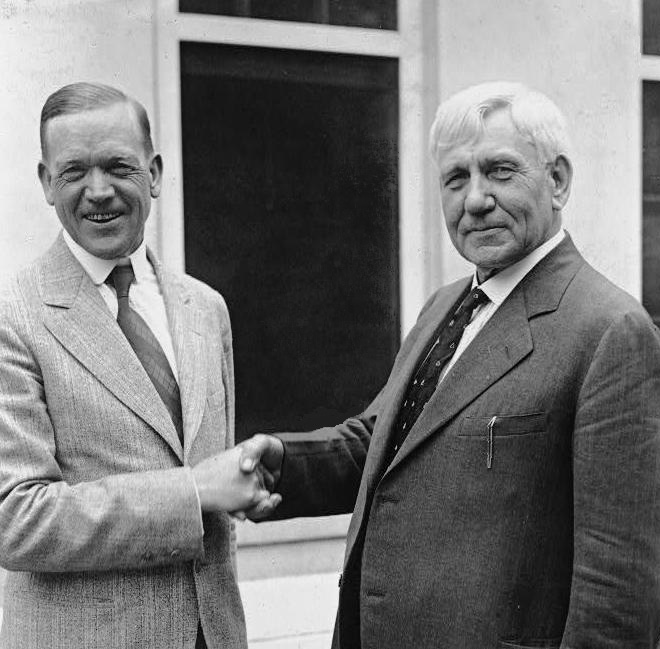
Charles L. McNary, of Oregon, and Gilbert N. Haugen, of Iowa, both Republicans, co-authored the bills bearing their names which advocated government mandating an "equalization fee," buying crops overproduced by American farmers to be resold at artificial prices on foreign markets.

Charles L. McNary, of Oregon, and Gilbert N. Haugen, of Iowa, both Republicans, co-authored the bills bearing their names which advocated government controls on agriculture, mandating an “equalization fee,” and buying crops overproduced by American farmers to be resold at artificial prices on foreign markets.

Maintaining this conviction did not come from a lack of sympathy for the difficulties the farmer faced. The exact opposite was true, especially for Coolidge. The responsibilities of leadership demanded something more than simply indulging the short-sighted and mistaken wishes of the electorate, however politically powerful the “Farm Bloc” proved to be. It was not leadership to follow the misled and uninformed. Agriculture needed to “consider the encouraging features of their situation” not deny them, perpetuating a perception of crisis. “Human nature is on their side,” the President reminded them. “We are all consumers of food.” As Coolidge recapped the rise and fall of prices since 1820, historical perspective made clear that farming continued to advance, even the setback of 1921 was temporary. Agriculture was going to see a return. It was not, as George N. Peek opined, an “us versus them” mentality where industry was concerned, like when he asked “[S]hall agriculture exist merely to feed the mouth of industry?” President Coolidge could not disagree more. The growth of industry meant the progress of agriculture because we all have to eat.
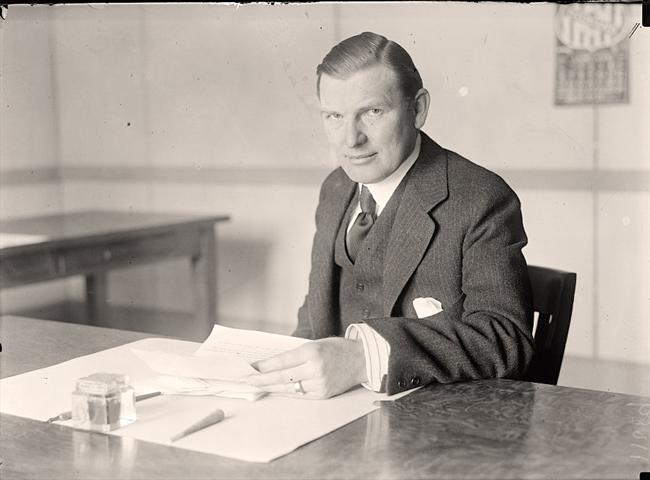
George N. Peek, President of Moline Plow Company and tireless lobbyist on behalf of government joining with corporations to fix agricultural prices. After Coolidge thwarted his efforts to make McNary-Haugen the law, Peek became a Democrat and eventually, a supporter of FDR's Agricultural Adjustment Act.

George N. Peek, President of Moline Plow Company and tireless lobbyist on behalf of government joining with corporations to fix agricultural prices. After Coolidge thwarted his efforts to make McNary-Haugen the law, Peek became a Democrat and, eventually, a supporter of FDR’s Agricultural Adjustment Act.

Our economy had not been built overnight. It was the result of incremental effort by every part of the Nation’s economy. As the other areas of economic endeavor prospered, what the farm produced would only increase exponentially to meet demand. At the head of it all would be the farms and ranches across America who would lead because everyone requires what they produce. After all, as the President reiterated, the farm is not only the source of food nor is it merely in the pursuit of material aims. “The ultimate result is…the making of people. Industry, thrift, and self-control are not sought because they create wealth, but because they create character. These are the prime product of the farm. We who have seen it, and lived it, we know.”

In that high and noble purpose, the farm reconnects and renews the Nation with both a “true relation to nature” and an individual’s importance to the Divine Plan at work in this world. The blessings afforded by the farm have included “the life of freedom and independence, of religious convictions and abiding character. In its past it has made and saved America and helped rescue the world.” With these astounding accomplishments, it was no exaggeration for Coolidge to see the time ahead for America as still brighter yet. In upholding these principles cultivated through life on the farm, the future “holds the supreme promise of human progress.”

As the President departed so hastily he forgot to grab his overcoat, the chilly reception to his principles would continue in a protracted battle long after he left the White House. Two days later, Southern delegates led by Alabama would unseat President Bradfute and elect Sam H. Thompson, an Illinois farmer who had taken part in much of the legislative fight to pass McNary-Haugen the previous year and wanted to expedite its passage into law now. Bradfute had upheld his promise to encourage co-operative marketing and resist government manipulation of prices, “equalization fees” and all the accessories for Federal control of agriculture. The President’s determined leadership, even when the pressure to surrender to the McNary-Haugen bill rose to deafening levels, Coolidge remained on course because he knew he was right and that the people would come to understand that. His second veto would be the last word on the matter until Hoover conceded with the creation of the Farm Board, superficial price-boosting and a revived “equalization fee.”
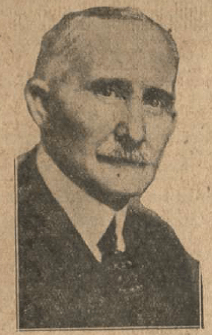
Newly elected President of the American Farm Bureau Federation, Sam H. Thompson, who would move to push McNary-Haugen all the way to President Coolidge's desk in 1927.

Newly elected President of the American Farm Bureau Federation, Sam H. Thompson, who would move to push McNary-Haugen all the way to President Coolidge’s desk in 1927.

For now, though, Coolidge fearlessly went into the arena, articulated the reasons why this popular trend toward government intervention in agriculture would fail, leaving the farmer worse under its provisions. Departing the room with his confident and unapologetic defense of rugged individualism and personal initiative still ringing in their ears, President Coolidge, a farmer, descended from a long line of farmers, walked from the Sherman Hotel a living confirmation that what he said was true: as long as agriculture maintains its independence from government’s attempts to “help.”
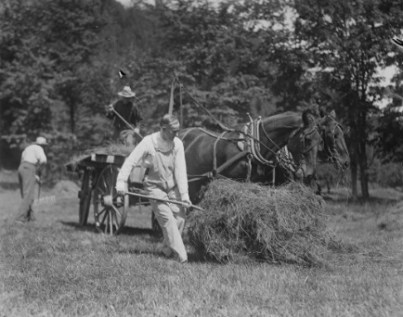
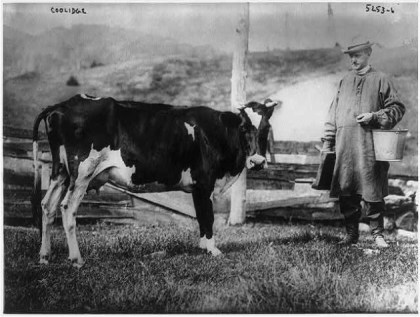
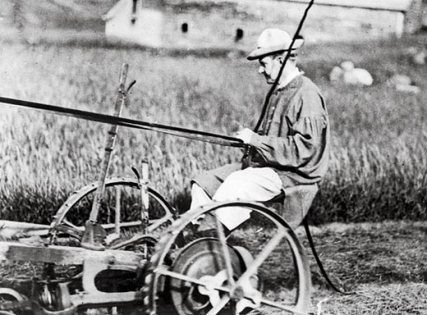
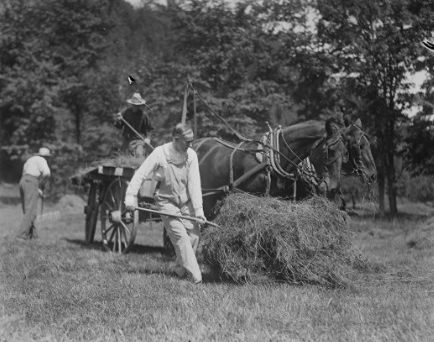
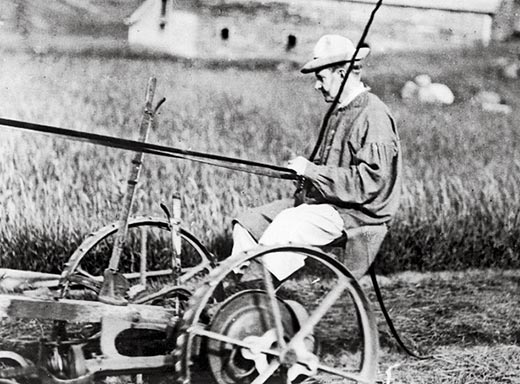
CC pitching haycalvin-coolidge-cow-e1359473649623DA-Vermont-Calvin-Coolidge-1920-family-farm-Vermont-9

Coolidge, Calvin. “The Farmer and the Nation,” December 7, 1925, cited in Foundations of the Republic. Honolulu: University Press of the Pacific, 2004.

Fite, Gilbert C. George N. Peek and the Fight for Farm Parity: A vivid story of the farmers’ campaign for agricultural equality and of the man who led it. Norman: University of Oklahoma Press, 1954.

Hansen, John Mark. Gaining Access: Congress and the Farm Lobby, 1919-1981. Chicago: University of Chicago, 1991.

Michigan Farm Bureau News, “Elect Sam Thompson President of American Farm Bureau,” http://archive.lib.msu.edu/DMC/MFN/1925/December%2018%201925.pdf.