On God’s Acre

arthur whitcomb

Arthur Whitcomb, Marine Corps bugler, played taps both for President Wilson’s funeral at the National Cathedral and for Calvin Coolidge, Jr., at Plymouth Notch, both in 1924.

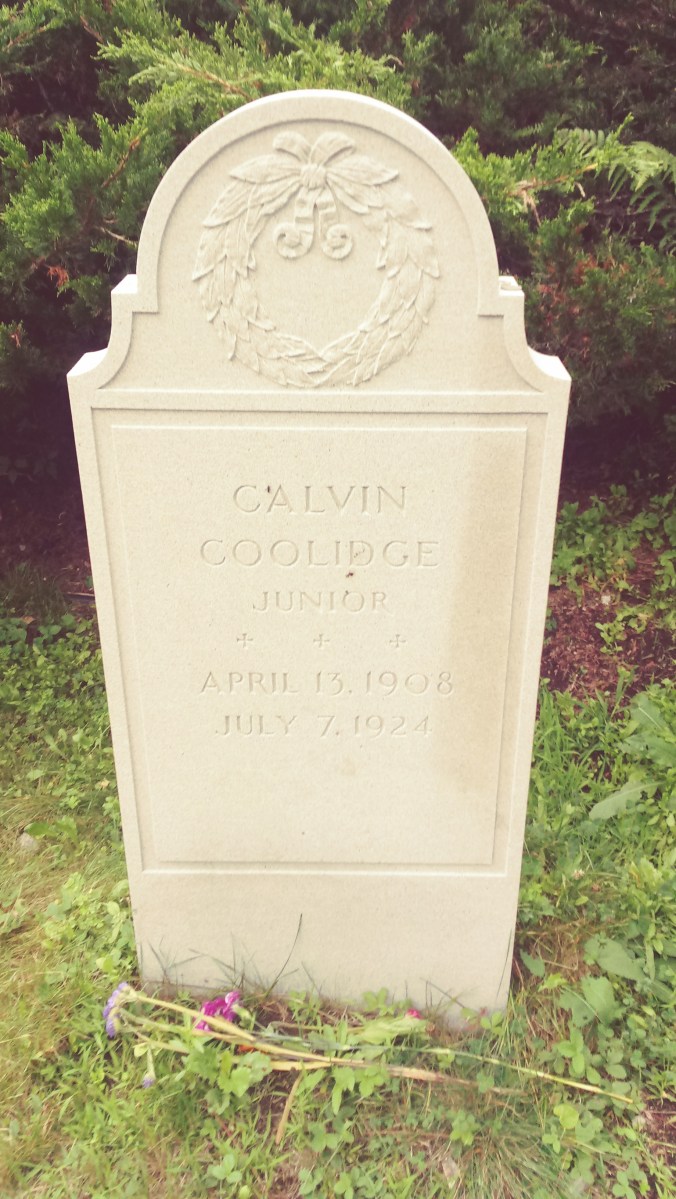
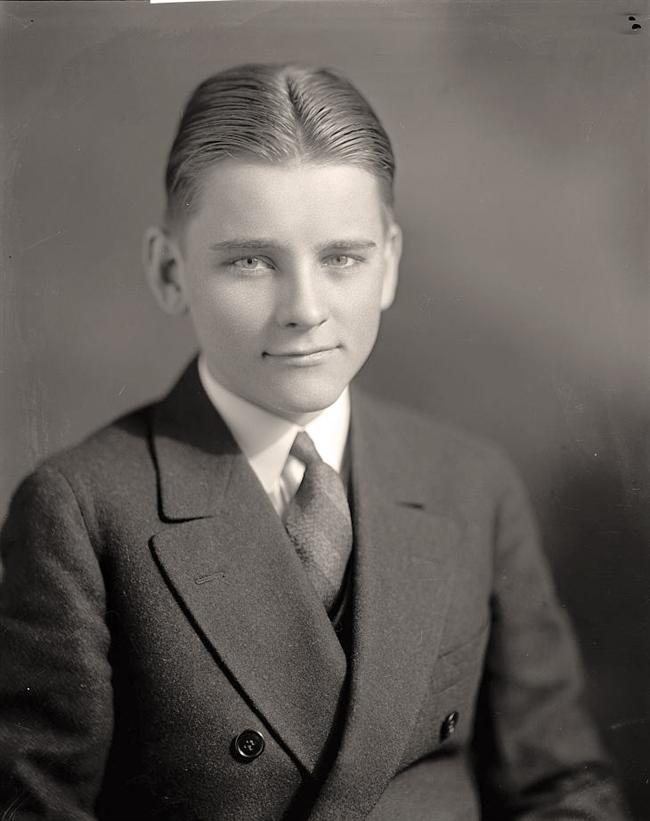
Calvin Coolidge Jr., who died on July 7, 1924, was laid to rest in the family plot beside the places already selected for his parents and among his ancestors at Plymouth Notch.

His mother, Grace Coolidge, wrote to a friend shortly afterward:

“It is a beautiful spot and it was lovely the day we left little Calvin there…Before our train got to Ludlow there had been a thunderstorm shower which laid the dust and made everything green. As we stood beside the grave the sun was shining, throwing long slanting shadows and the birds were singing their sleepy songs. Truly, it seemed to me God’s Acre. There was a prayer, a few passages of scripture and two hymns, and the Mercersburg hymn which I have seen Calvin sing with the other boys at school and I could seem to hear and see him there. ‘Taps’ never sounded as it did there, echoing and reechoing from mountain to mountain. I came away with a ‘peace which passeth understanding,’ comforted and full of courage…”
20180804_170844_Film4

The Mercersburg Hymn, arranged by F. H. Foster, Jr.

High tower above us her pillars,

In majesty crowning the hill;

She has faced the wild storm waves of years,

And bravely she faces them still.

__________________

Come, Mercersburg’s sons, and we’ll praise her;

The world will we tell of her fame,

Till down the long train of the ages,

Shall echo old Mercersburg’s name.

__________________

This world sweeping mightily onward,

Will whiten our heads with its years;

But ever we’ll meet Alma Mater,

With full hearts and loud swelling cheers.


Requiescat in pace, dear Calvin!
Coolidge-Calvin-Jr

Happy Dependence Day!


Blackberry1-300x232

Eighty-nine years ago Calvin Coolidge wrote these words:

“For 154 years July 4 has been called Independence Day. Since 1776 we have been politically an independent nation. But we do not need to emphasize our independence any more than we need to emphasize our selfishness. We are in no danger of failing to provide a very complete supply of both of them. Our greatness will not be in that direction, but in a more adequate recognition of our dependence. That is what the development of civilization seems to mean–division of labor, co-operation, mutual kindliness and helpfulness. On the economic, social and moral side of life we are all dependent. We do not produce enough calories to feed our population. We grow in grace through intercourse with our fellow men. We build our character largely by meeting our obligations to others. We all live in the same world. We are bound to a common destiny through a common brotherhood. The path to glory does not lie in a sordid individualism, a perverted independence, or a narrow nationalism. It lies toward the Golden Rule. The independence which the Fathers won by declaring their reliance on Providence and pledging their lives, their fortunes and their sacred honor, not to themselves but to each other, we cannot keep on any inferior commitment.”

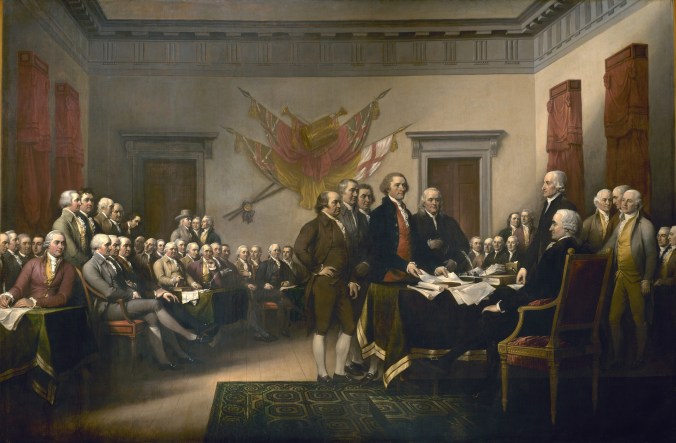
When it is acknowledged that the men who signed our Declaration of Independence, the soldiers in the field fighting to achieve it, and the mothers, daughters, wives and sisters behind them all, came not from one section or economic bracket but were labor and capital, rich and poor, North, South, East and West, all humbly making an appeal to ideals that bound each together on a shared destiny.

  • Nearly all participated actively in their colonial (then state) and local governments. None were the kind to complain about circumstances while doing nothing about it.
  • More than a dozen oversaw large farming and commercial enterprises, North and South.
  • Several were small-time farmers, often splitting their work between the land, their local militia, and their profession.
  • Four were physicians
  • Two were judges
  • Four were shipping captains or masters of merchant fleets
  • Two were surveyors
  • Two were ironmasters
  • One was a law professor
  • One a miller
  • One a cooper
  • One a cobbler
  • One a brewer
  • At least two were songwriters
  • A handful were Renaissance men, combining an extraordinary range of talents from inventor to printer to architect to musician.
  • Some struggled at every entrepreneurial endeavor; others were adept at finances and global investment.
  • Some fit better among frontier rustics while others were most at home in the refined drawing rooms of elaborate mansions.
  • Some would lose their lives and material goods in the course of events but none would sell sacred honor (Not even the long-suffering Richard Stockton would fail to see his fellow signers uphold their pledge and come to his aid and support).
  • Nine (including Charles Thomson) were the first arrivals in their families to step on America’s shores.

They all, to some degree, had roots in the old world but were forging something new from what had preexisted since ancient time. For inspiration, they drew upon principles that had emerged from places as dissimilar as the sands of the East are to the regal courts of London, Paris and Madrid.  They knew history well enough to understand no single people had exclusive claim to them. Humanity across the globe had left marks on what they were signing. They formed a heritage all could rejoice to cherish. These signers knew the risks but accepted them, knowing not even the wealthiest among them could escape the consequences of their actions. They were all in the same boat. As they expressed it,

“…We mutually pledge to each other our Lives, our Fortunes, and our sacred Honor.”

They knew the challenge but saw a day when a nation of very different qualities, each diverse forms of good and brought together around those shared ideals, would enjoy the full blessings of Providence side by side as free men and free women. This freedom was not a mere political condition alone but cultural and social, economic and spiritual, moral and mental. They were thinking of others not serving their own comfort or well-being. They knew the truth of the question: What does it profit a person to gain the whole world and lose his soul? They knew something greater than pocketbooks and dividends were at stake here. Rather, eternal questions and spiritual truths for millions not yet born hung in the balance. It could go horribly wrong if those fundamentals were forgotten and essentials cast aside. They needed each other and so as we commemorate this day, may we not forget that we likewise need one another, all doing our part, to live worthy of what they began.

Happy Dependence Day!

declaration-of-independence-62972_1920(1)