On MSNBC’s Math Problem

Miss Mabel Willebrandt and Congressman I. Foster 6-7-1924

Many of us never did enjoy mathematical word problems when we were younger (Like “If Joe is accelerating in a bus at 25 miles per hour heading west and Bernard is on a bike heading north at 5 miles an hour, who will get to Milwaukee first?” or “If Michael spends $500 million on political ads and the total U. S. population is 327 million, how many times does each American see one of those ads every hour?”), but we still learned somehow to comprehend basic division and multiplication. Some, unfortunately, still retain influence who not only think they know numbers in fresh, impressive ways but like sharing their profoundly wrong answers with the rest of the class. After all, what’s a billion or trillion these days? The only difference between $1.53 per American and the $327 trillion needed to make MSNBC’s math work is only a few more zeroes, right? Mere impersonal abstractions which only come in handy in political repartee. The clumsy attempt recently at MSNBC to score ideological points in the “rich people don’t care about the rest of us” column reminds “the rest of us” that this is why we need a lot more Calvin Coolidge. There was a guy who knew math. He loved numbers. Every election tally dutifully preserved in Coolidge’s Autobiography attests to his admiration for the score, the count, the total. For him budgets were exciting possibilities not for their dry tedium but because they save real people in real ways. He freely admitted, budgets were

A sort of obsession with me. I believe in budgets. I want other people to believe in them. I have had a small one to run my own home; and besides that, I am the head of the organization that makes the greatest of all budgets–that of the United States Government. Do you wonder, then, that at times I dream of balance sheets and sinking funds, and deficits, and tax rates, and all the rest?

“Yes,” Cal went on, “I regard a good budget as among the noblest monuments of virtue.” He was the last President to maintain a deficit-free budget every year of his tenure. One third of the national debt, including an enormous chunk of interest payments, actually went away under Coolidge, an accomplishment no President since has come close to replicating. He didn’t achieve it by enormous slices into one or two places either, but every little bit (even down to what sounds cute to us now: using pencils down to the end, exhausting erasers, recycling paperclips, and reusing file folders) added up to a mighty sum. The hydra of non-discretionary spending was in its infancy and there was no line item veto but Coolidge and his department heads hacked away what would be billions in materials that are today thrown down the waste bin without even batting an eye. He understood that behind the spreadsheets and statistics were living, breathing, working people. They were the ones who paid every time taxes came due and the biggest tax was and remains government spending. Every dollar spent came out of labor performed to produce it and left life all the poorer when it was wasted. He comprehended that it was effortless for Congress to appropriate millions, even billions to one thing after another — including, at times, the same billions to different ends. That kind of shell game approach to expenditures could go on and on but it was a downright betrayal of the trust reposed in public service and those who engaged in it were morally repugnant to him because they mortgaged the future against the present, bargaining on people’s working years and their very lives. More precisely, they gambled away the money both worked for already and yet to be worked for in exchange for votes. It perpetuated a system well-suited to attract and insulate the worst qualities in public office, those who got what they could get from others, including those who sent them there. It taught indifference in the electorate too, incentivizing the endless pursuit of current benefits of one nature or another, whatever the cost levied on children and grandchildren later.
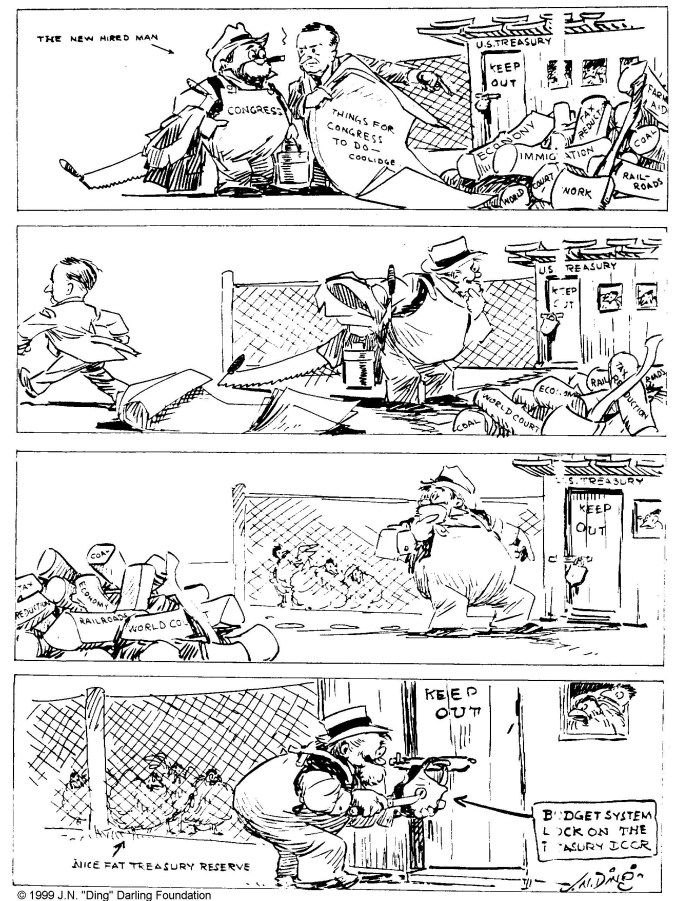
And_the_first_thing_he_tackled_was_the_lock_on_the_chicken_coop

Public service was not a game, Coolidge once said, nor were “governments…founded upon an association for public plunder but on the cooperation of men wherein each is seeking to do his duty.” Nor did he believe journalism was a game for the purpose of demonstrating who could deliver the cleverest ideological retort or political smackdown. Those who presume to report on politics seem to be in that game first and foremost. It is certainly not in the business of journalism. Meanwhile, real neglect in government slips right past them, seeking advantages over rendering selfless service that turn, just as Coolidge condemned, public office into a private profit scheme. Even as one of the most experienced office holders in Presidential history, Coolidge never ceased to be amazed at how complacent people are while permitting themselves

To be plundered by extravagant governmental expenditure under the pretense of taxing the rich to help the poor. The poor are not helped but hurt. Taxes have to be collected by the rich before they are paid. They are collected from all the people. A higher tax means real wages are lower. The cost of living is higher. The chance to work is less. Every home is burdened. Its value is decreased. The quality of the food, clothing and shelter of the children is reduced.

While most people suffer in silence, “those who demand appropriations inspire all the fear.” He knew that the very first second the very first dollar had to leave comfortable abstraction for existence in the real world, it required someone’s work to pay for it.
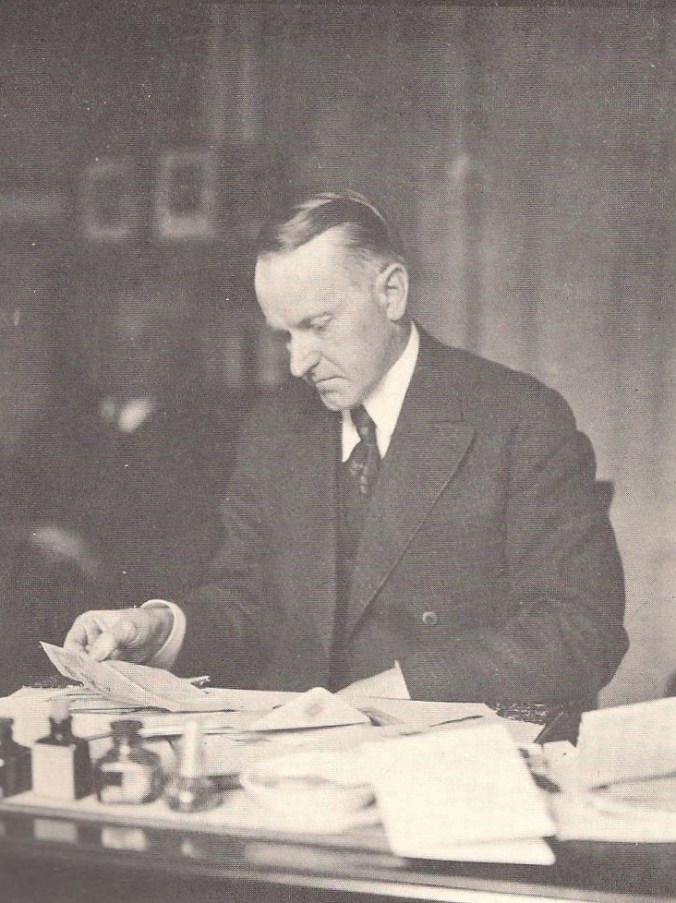
CC working at desk 001

Some argue that since the economic pie keeps getting bigger decade after decade and Chicken Little’s prophecy of doom has not occurred, we need not be too distressed about the debts and liabilities column. Reagan’s priority of tax cuts over debt and spending reductions seems to have been a satisfactory compromise. But is it? Economic growth is a great thing and the alternative is not malaise, touting the moral virtue of returning to the cave and the campfire. But how much larger would the pie be if we started earnestly addressing debt and devaluation? How much better and, dare we say, larger would the ingredients of the pie be if we were to take it seriously? The debt has only ever always gotten bigger since dropping Coolidge’s mathematical regimen and though we wring our hands over it from time to time, we have become, like the old frog being boiled by degrees, comfortable that it can keep moving in one direction with no dire consequences. Economic resilience will always cancel out the liabilities, outpace the spending, and stay ahead of the risks, we assure ourselves. In other words, we feel Reagan’s Compromise is the winning horse not Coolidge’s Obsession. Cal’s experience taught him that costs can be deferred for a time but they can never be dodged altogether. Nations can postpone it easier than individuals but no one can repeal the law of cause and effect. Like the chicken that attempts to roost higher than it can afford descends (with fewer feathers) to a place in the pecking order it can maintain, we will find the price for borrowing time doesn’t get cheaper. Even nature displays that everything costs something.

The “haste” which Coolidge showed in reducing the debt first then attending to tax cuts brought criticism. He stood by his actions, however, explaining in his daily column on February 18, 1931,

We still have a small body of thought that considers the national debt has been reduced too fast. It is claimed that the surplus should have been applied to a reduction of taxes. By the same reasoning it would be proven that taxes should be kept down and money borrowed to meet running expenses. It was great saving to the taxpayers to reduce the debt when the value of the dollar was low. It takes about twice as much cotton, corn, wheat, copper and other materials now to make the same payments as it did two or three years ago.

If it is argued that liquidation of the debt disturbed financial conditions one answer to that is that for every dollar the national debt was reduced state and local governments increased their debts over a dollar.

Besides these reasons any one who knows the enormous pressure on the Congress by organized minorities knows that if the revenues had not been used to reduce the debt they would have gone into additional expenditures rather than tax reduction. Great interest charges have been eliminated. Sound finance calls for payment of debt and makes the revenues of each year meet the expenditures.

Until the leadership comes along or until the chickens come home to roost that brings our lackadaisical attitude toward America’s math problem into an imperative, we’ll keep rearranging the deck chairs and taking on water. Until we resume asking, as Coolidge incessantly did, “How much will it cost and who will pay for it?” we cannot blame the people we vote for, we can only blame ourselves for electing them. Ultimately, it isn’t MSNBC’s problem or the misallocation of rich people’s money, it’s how comfortable we are living as if cost were no issue since someone else will always be there to foot the bill. That someone else is already poorer just trying to keep up. Consoling this silent sufferer with the Orwellian appeal that we are not actually taking from you — as we diminish your income and sap your purchasing power — but from that wonderfully convenient category “the rich,” will not end your misery, it will multiply it. But then, basic math like that seems to be a lost skill these days. I’ll take Coolidge’s math over MSNBC’s any day.
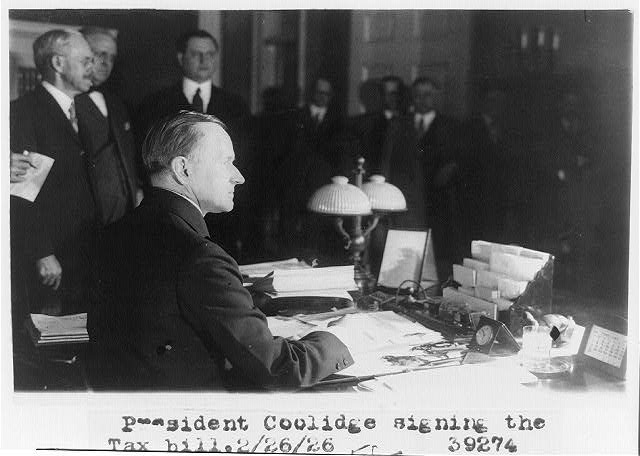

CC signs 1926 Tax Bill 2-2-6-26

A Look at Presidential Ages

Interest has been generated of late, with still a dominance of septuagenarians among Presidential candidates, in the history of age and the Office. We offer the following statistical walk back through not only Presidential ages but a glimpse into the often full fields of candidates through the years. A closer look never fails to give us perspective.

Of the 39 instances in which a “seasoned” candidate (either Presidential or Vice Presidential) has campaigned for office, it is fair to conclude that Ronald Reagan’s success made it “cool,” one of The Gipper’s unintended influences on politics and the Presidency.

_Old_ Candidates Club (67+)

Of the first 12 instances (candidates between 1808-1948), seven were Vice Presidential candidates or incumbents. One third party candidate for President, 85-year old Peter Cooper (of the Greenback Party), became the first “grand old man” to run for President, teamed with 62-year old Samuel Fenton Cary in 1876. Van Buren, at still a youthful 65, had been the first ex-President to run again, heading the Free Soil Party in 1848. Fillmore would be the second former President, not counted here because he remained a baby. comparatively, at 56. 71-year old William Eustis, was voted for in the fractured election of 1824, being given a courteous nod on the ballot but otherwise was not a serious contender in a race that had four younger possibilities (J. Q. Adams, Andrew Jackson, William Crawford, and Henry Clay, all in their fifties save the last who was forty-seven). The remaining two were, like Pete Cooper, Presidential candidates. The elections of 1840 and 1844, well after the collapse of the Federalist Party (which ran formally for the last time in 1816), were the first to see a major party run Presidential candidates older than Washington had been when he retired (age 65): William H. Harrison, who would go on to win in 1840 over the younger Van Buren, and Henry Clay, who would go on to lose in 1844 to the even younger Polk, both Harrison and Clay age 67.

_Old_ Candidates, 1980-present

Jackson had retired in 1837 just short of age 70, surpassing Monroe as the oldest to retire from the Presidency up to that point. Buchanan would be next, retiring at 69, followed by Truman at 67. Eisenhower, leaving office in 1961 at age 70, would mark the first occasion of a Presidential septuagenarian. Only Reagan would surpass that mark at 77, and no President after Bush Sr. has yet left younger than he, at 68 years.

Age Range at Retirement

Unless a Vice Presidential candidate (from George Clinton, who died in office in 1812 at age 73, 74-year old Allen G. Turman in 1888 or 80-year old Henry G. Davis, who failed to win election with 52- year old Alton Parker against 46-year old TR and 52-year old Charles Fairbanks in 1904), no one after 69-year old “Fighting Bob” LaFollette’s disparaging effort in 1924 attempted to run for President until Reagan at age 69 tried and won in 1980, an office that typically went to candidates in their fifties. Even there, one of the oldest tickets was in 1944, with 62-year old FDR and 60-year old Truman topped in 1948 with 64-year old Truman and 70-year Alben Barkley. One of the widest contrasts in both tickets may be 2008, when 71-year old John McCain and 44-year old Sarah Palin ran against 47-year old Barack Obama and 65-year old Joe Biden. Biden would join septuagenarian Vice Presidents with reelection in 2012. He is now the favored septuagenarian to carry the Democrat Party banner in 2020. Candidate Biden is on his way to surpassing his duration as a Senator with the time he has spent as part of a Presidential ticket. He has virtually surpassed Bob Dole in that regard. At the same time, the track record for older Vice Presidents is an established one, usually done to strengthen support behind the ticket or attract notoriety for a younger, relatively less known, less experienced name at the top. As sometimes becomes apparent, it can even reach counterproductive proportions if a certain candidate lacks the stamina to campaign energetically or some other quality. Poor Vice Presidents, they seem, at times strongly bound by the same force that operates between brides and bridesmaids. It is not exactly true that “Once a Vice President, never a President,” as eight separate occasions prove it can be done and, in the case of some, handled very well. But, back to the campaign trail. Naturally, reelection campaigns have far less trouble there and greater ease in coalescing around the incumbent, with only a few notable exceptions (the Adamses, Benjamin Harrison, Ford, Carter, and Bush Sr., to name a few). Those were due to other reasons devolving on the Presidents directly, not so much the Vice Presidential candidates who ran with them.

Candidate Age Disparities, 1796-2016

Note: The Democrats in 1840 marked the one time a national party declined to nominate a Vice Presidential candidate to run with incumbent Martin Van Buren. His ticket of one is thus not counted in the numbers above. He would go on to lose to the Whig ticket, “Tippecanoe and Tyler too.” It is interesting to note that while the win-lose ratio is virtually even, the difference for those campaigns which ran a younger Presidential candidate and their subsequent win or loss is pronounced.

It also sometimes reveals, like in the Gilded Age, what can happen when one major party’s leadership languishes outside the Presidency for long enough, its foremost names are all old men by the time opportunity appears. After Lincoln, no Democrat attained the White House until 1884, a drought of twenty-four years. After the failure of 37-year old George McClellan and 39-year old George Pendleton to overcome Lincoln in 1864, subsequent results seemed only to confirm the Democrats’ hopeless situation: the loss of 58-year old Horatio Seymour to 46-year old Grant in 1868, 61-year old Horace Greeley to 50-year old Grant in 1872, and 62-year old Sam Tilden to 54-year old Hayes in the dubious 1876 election. The record for the youngest Chief Executive has had its ups and downs too (and is not a “race” at all), with the current trend not likely to break TR’s all-time record of 42, unchallenged since 1901. JFK came closest in 1961 but the odds are against the lone Presidential candidate under seventy in 2020.

The Race to the Youngest

The passing of the old men of the Democrat party found 47-year old Cleveland gave them the winning combination they had long sought. Of course, Cleveland slightly messes with the statistics here since he had to go and win a second term non-consecutively, giving us actually an even count overall between Presidents above the average age and below it. There has been no uninterrupted trend to out-youth the “other side” between the major parties but there have been periods of ebb and flow when the trend went toward older, hopefully wiser, leadership and away from the youngsters then back again. Candidates are very often attempts to mirror each other and thus tap into a winning combination. The effort to contrast is no less pervasive but for all the work to look different, similarities abound. As the Jeffersonians annihilated the Federalists, paving the way for the 1824 realignment and the Jacksonians, Whigs sought to capitalize on what the Democrats were doing and vice versa. The Republicans and Democrats, at times, do the same. Jackson’s presence (in his own way following in Washington’s appeal) would keep kindled the lure for an old soldier to lead and thus the Whigs sought out Harrison, Taylor and Scott as the Republicans later would with Grant to Eisenhower. It would manifest in the aftermath of the War that, though ended in 1865, doesn’t show any signs of concluding, as Republicans sought to capitalize on Grant’s appeal, with that series of Union soldiers: Hayes, Garfield, Arthur, Harrison, and McKinley. The Democrats would fare less successfully with their own poorly timed and badly executed renditions: George McClellan and Winfield Scott Hancock. Still later, conscientious attorney John W. Davis would be nominated to out-Coolidge Coolidge, Wendell Willkie would be chosen to out-FDR FDR, and Adlai Stevenson II to out-Ike Ike. When does that ever work, when the real deal is on the ballot?

Question of the Ages_ Presidential Age Stats-1

Since 1980, only one presidential election cycle (2004) lacked a candidate (either President or Vice President) who was older than 67 years of age. The remaining nine, including 2020, now see a growing company of septuagenarians or those who will soon join them. Eighty-nine year old Mike Gravel has now entered the Harold Stassen League of “Never Quit Trying.” If God grants him four more years, we are confident Mr. Gravel will be back to break candidacy records into the 90s. Reagan broke his own record, of course, in 1984 and until 2016, no other septuagenarian proved successful at winning the White House. A candidate at 57 in 1968 and again in 1976, at age 65, Reagan seemed to find everything come together at age 69. We remember his joke in 1984 about Mondale’s youth and inexperience, all the more comical given that the Democrat opponent that year was, at age 56, on the upper range of the conventional spectrum for successful candidates. Reagan, once again, shattered that record. Moreover, given that average lifespans have lengthened since the beginning of the twentieth century, we could argue that the sixty-year olds of yesteryear were the septuagenarians of the current time.

All this simply adds up to what we already know instinctively, that no age range is, of itself, suspect. We have had plenty of reasons to doubt the boy Presidents as we have the grandfathers. Both, at times, have not been any more a safeguard to the errors of judgment, lack of character, or basic competence needed to lead well. Reagan demonstrated the septuagenarian could do just fine but he, like the youngsters among our Presidents, did not do everything he set out to do. Neither did FDR, who essentially grew up with the Presidency, nor Eisenhower who, like Truman, came to it as a grandfather. Likewise, the young men were not all perfect either. TR’s ego was often his own worst enemy and had he listened more than carried that big stick, he might not have blundered in the Brownsville Affair (not to mention the 1912 election). We will always rally to the defense of our favorite Presidents but perhaps this election cycle is a reminder of one who came in as one of those younger Chief Executives, one who was elected to national office one hundred years ago at the age of 48. He would defeat FDR that year for the Vice Presidency and orchestrate his remarkable political triumph in 1924 at age 51, winning later that year what usually is an impossible scenario: a three-way race for Vice Presidential successors. Only TR had done it and it would be TR who would join the ranks of unsuccessful attempts to make a comeback to the Presidency, following Van Buren, Fillmore, Hoover, Carter, and Bush Sr. TR never could stand being out of any gathering. Yet, it was the quietly industrious Coolidge who would succeed in ways his contemporaries in the Office did not. But, perhaps, most importantly, he encourages us continually to exercise care with the vote we possess. We are never, as his fan President Reagan put it, more than one generation away from freedom’s extinction. That is why studying Cal provides ample reward. He never fails to give us a lasting insight into what is the right or wise thing to do. After all, it was Coolidge who said, “Nothing is more dangerous to good government than great power in improper hands.” That remains, whatever the candidate’s age, credentials, or political affiliation, true for all times and all places.

CC-confident

Calvin Coolidge, 30th President of the United States (1923-1929)


On Washington’s Birthday


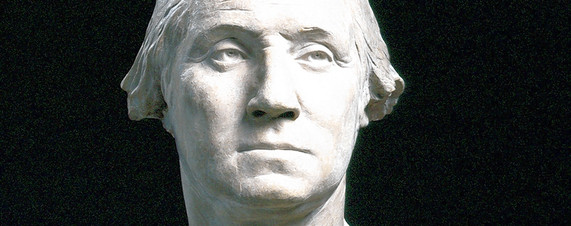
GWbust-Houdon

The Houdon bust of George Washington, based on precise measurements from life, recognized at the time as the best rendering of him as he was. The finished statue would be lauded by Washington’s close friend, Lafayette, with the words, “This is the man himself.”

The bicentennial of George Washington’s birth was long anticipated through the 1920s, as 1932 neared. President Coolidge had given acclaimed expression to the significance of the date as it approached, speaking before joint session of Congress on February 22, 1927. But the President, by that time in retirement, took occasion on the bicentennial itself to offer his reflections on the man who really was, as Coolidge put it, the first American. We must ask, what of anything resembling America’s best qualities would there be today without George Washington? There would have been no practical application of any of those ideals.

Published originally by newspapers of national circulation on February 21, Representative Bertrand Snell read Coolidge’s thoughts into the Congressional Record, where it can still be accessed today. What Coolidge wrote eighty-eight years ago speaks with timely clarity:


     The careful study of the life of George Washington has an intensely practical purpose. We want to know what he thought and what he did in order that we may be the better able to determine what we ought to think and do now at this difficult time. We shall find it providential that the course of our Nation was largely directed in our formative period by a man who was so human, so devoted in establishing a government of the people, and so experienced in private business that he was able to apply sound business sense to the promotion of the public welfare. 

     The celebration of the bicentennial of the birth of the first America which occurs on the 22nd of February of the present year, should, of course, include a proper estimate of him as a great statesman and a great soldier. It is in that character that we have come to think of him. He was both, and as such is entitled to all the praise that can be lavished upon him by the most eloquent. But that is not enough. It does not tell us of the real man nor give us any insight into how he became great. We shall fail in the most desirable comprehension of him unless we turn to the more practical examination of his growth and development and try to learn how to do things by finding out how he did them. 

     There are two kinds of biography which fall short of giving their readers the help which should be secured from an acquaintance with great men. Some of them endow their subjects with all virtue and all wisdom. Such characters appear removed from the reach of common people. They may admire and worship, but they do not feel any kinship. They gain only the impression of a superior being dwelling apart from his fellow men. It would seem almost sacrilege to attempt to imitate him or hope to be like him. Others, proceeding in an opposite direction, represent great men as devoid of most good qualities who have reached the positions they hold by being crafty and successful imposters. They are made to appear unworthy of credit or admiration and left to the inference that all greatness is a sham and a pretense. The logical conclusion is meant to be that there are no heroes and nothing is holy. Neither one of such portrayals is in accord with human nature or the truth. 

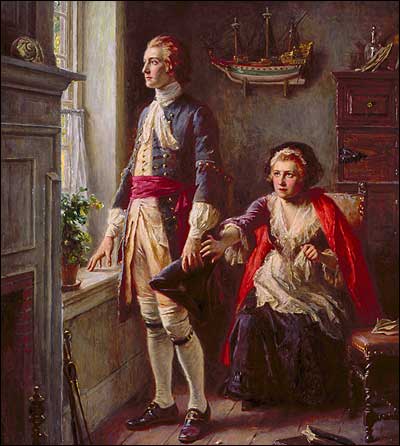
GW-JeanFerris1920

Call of the Sea, 1747, Jean Ferris’ 1920 rendering of fourteen or fifteen year old George Washington feeling the tug of a career on the ocean. His mother persuades him to stay. Photo credit: Vermont Historical Society.

     George Washington was well born. His father was a mature man nearing the forties and his mother was a young woman in the twenties. Neither of his parents had any place by reason of artificial rank or title, but they belonged to that great and strong aristocracy which ennobles itself by the power of its own achievements. They were both people of the world. Tradition has it that they first met in London, where the father was accustomed to go on his business as a successful Virginia planter. 

     It was a serious household into which this boy came. The young mother read the Bible and Matthew Hale’s Contemplations and Meditations. At a very early age her son appears to have been provided with a book of sermons. Of course, membership in the church and regular religious worship were the practice of the family. Faith was a reality in the Washington home. The Bible, the church, the sermons of pious men were all a source of inspiration for the practical affairs of everyday life. 

     While we do not know much of the details of the early education of Washington, we know enough to inform us on the development of his mind and character. In common with the times, his spelling was indifferent and his grammar insufficient. But he was proficient in writing and in figures. Form and numbers came naturally to him. In every sense he was a normal and fun-loving boy, but the loss of his father when he was but eleven perhaps increased his seriousness of mind. It was the practical application of what he was learning even in his early youth that stamped him as remarkable. The forms of business transactions, the precepts of correct deportment, as well as his arithmetic, which he pored over at school, were all instructions to him for the conduct of his daily life. In all things he became methodical and was always making plans for future action, whether it was the cultivation of his plantations or the freedom and government of his country. He educated himself to know how to plan and how to do — to be an executive. 

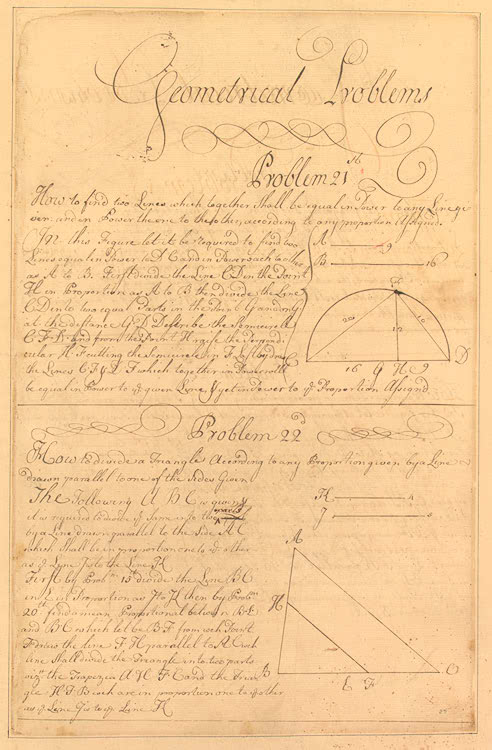
GW-copybook-excerpt

A page from young George Washington’s copybook. Photo credit: Library of Congress. 

     Although the Virginia of the first half of the eighteenth century has many of the aspects of a frontier, constant contact with Europe made it a home of many cultured people. The father of Washington when a boy spent twelve years in England. He sent the two elder brothers of George to Oxford. He might have followed had his father lived. As it was, he had the instruction of an English schoolmaster, and later of a Huguenot clergyman, who taught him the graces of polite society. His youthful copybooks show that he was trained and trained in these things until he became proficient. There was no accident and no miracle, but just hard work. 

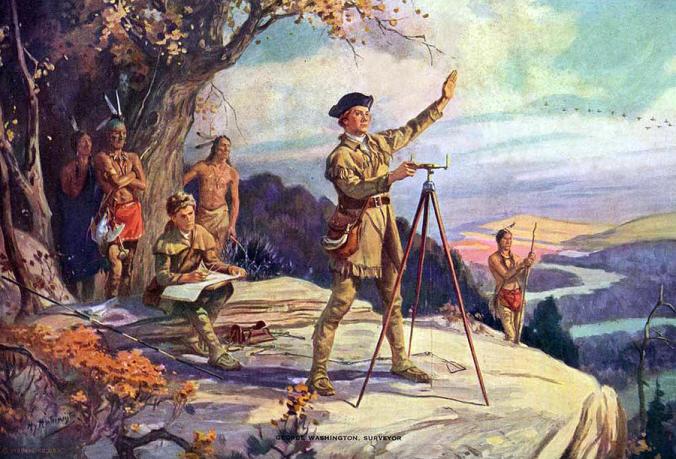
     The death of his father left him with the slender portion that customarily went to a younger son. All about him lay an uncharted wilderness. To bring land under order and law and advance his own fortunes he became a surveyor. His expeditions into distant woodlands in charge of a squad of men, where they must shelter and feed themselves for weeks at a time, the necessity for methodical accuracy involved in the undertaking, were the finest kind of preparation for his future campaigns. He learned how to estimate distance and location and see the military possibilities of wide reaches of country. 

     Likewise, Washington became a soldier by personal contact and painstaking study. After about the age of seventeen he lived much at Mount Vernon with his elder brother, Lawrence, who had been a captain of militia under Admiral Vernon in the Cartagena campaign and later a major and adjutant general of his district. He placed the young man under the instruction of old army officers who taught him fencing and the manual of arms. So proficient did the pupil become that before he was twenty he was appointed a major. 

george-washington-young-surveyor-everett

     The same kind of progress accounts for his political training. His father was a member of the Virginia House of Burgesses. His brother Lawrence held the same office. On the great estate below Mount Vernon lived Sir William Fairfax, collector of customs for the district, and president of the King’s council, so that in office he ranked next to the governor of the colony. A little below George Mason had a large plantation. This neighbor was a statesman of great ability and an earnest and consistent advocate of popular rights and local self-government. While these men were somewhat older than Washington, they were his constant companions. When he was but twenty-six he was himself elected to the House of Burgesses. He had to make a campaign to win his seat. His political career began at the bottom. For a number of years he was reelected, and had the opportunity at Williamsburg to take a prominent part in all the political action of the stirring period before the Revolution. No doubt he heard Patrick Henry make that speech which was interrupted with cries of ‘treason.’ During his time he was serving on committees, helping prepare documents and organize associations for the protection of the rights of the Colonies. In very early life Washington came to be a practical politician. 

     The same background appears in his business training. His father was an important business man, widely engaged in agriculture, mining iron ore, and at times took command of a sailing vessel. In those days there was little division of labor, and each estate was practically self-sustaining. Nearly everything that was necessary for food, clothing, and shelter was produced where used. Disposal of surplus made the planter his own merchant, exchanging his produce in England for what he could not raise at home. Successful operation on a broad scale of such enterprises required a man of affairs. That was the atmosphere of his early home. All through life his decisions were influenced by his great business experience. 

     When he was only twenty he found himself one of the executors and the residuary legatee of the will of his brother Lawrence. From that time on he had charge of all his father had left him, helping his mother care for her property, and had the management of the Mount Vernon estate of his deceased brother and ultimate ownership of it, besides his duties as major of militia and adjutant general of a district extending over a number of counties. The production of the soil, of the fisheries, of the mill, as well as the supplies for a great many servants and for a considerable force of militia, all passed through his hands. 

     In general culture Washington must have learned much from Thomas, Baron Fairfax, who came here in 1746 to have oversight of his vast estates which were managed by Sir William Fairfax. He was the holder of an ancient title of nobility, literary, an associate of Addison, a mature man of the world who lived and died a loyalist. He often employed the young surveyor and had him much in his company at his manor house and at his forest retreat. Washington had that rare faculty of being able to absorb what was best in the persons and things with which he came in contact and to disregard the rest. He applied himself to learning and applied his learning to living. He was a disciple of application. 

     Such was the preparation of George Washington, when, at the age of twenty-one, on the last day of October 1753, he set out to carry a letter from the Governor of Virginia to the French commander, warning him not to trespass on the country around the present city of Pittsburgh. The rest of his life belongs to history. 

     From this time on Washington was a leader in the great plan for the making of America. While New England wanted to be safe from attack from Canada, Virginia and her neighbors wanted to expand into the Ohio Valley. They saw it as a business venture. It was for that reason that Washington was sent to dislodge the French. That expedition started the Seven Years’ War, which finally brought all of North America, except the old Spanish possessions on the south and west, under British rule. The route to the western waterways was opened to the enterprise of settlement. 

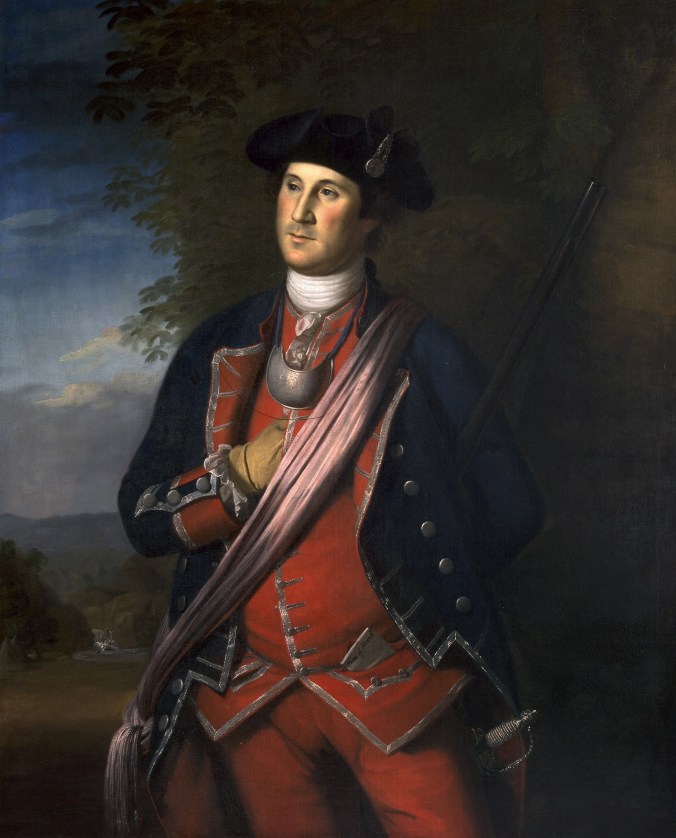
Washington_1772

Washington by Charles Wilson Peale (1772). Colonel Washington was 40 years of age. 

     Following the end of the war, in 1763, there was a dozen years of agitation concerning the taxation and commerce of the Colonies. As a man of business, responsible for much property, engaged in exports and imports, Washington grasped the full significance of events, and with a deliberation that made his decisions the final word of the people took the patriots’ side. While it is impossible to say that he thus early had a plan for his country that he finally put into operation, it is a fact that all of the plans of consequence thereafter adopted by the country to the end of his life were the result of his approval and support. 

     When he went to the Congress at Philadelphia he wore his uniform. He knew that the issues meant war and he knew that war meant independence or annihilation. It was his plan for independence, which was for long periods solely dependent on his resolution and military skill, that finally prevailed. 

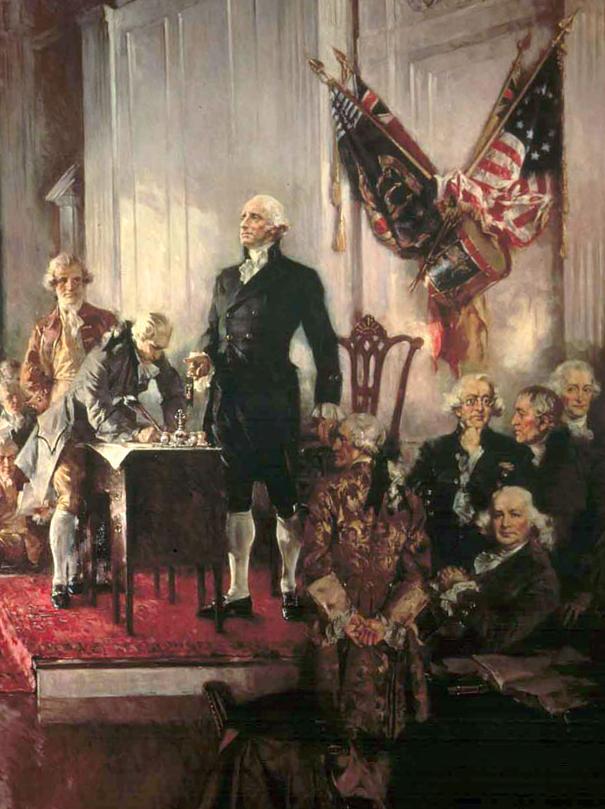
     When peace came, turning his attention to agriculture and commerce, he saw that the regions beyond the Alleghenies could only be held by economic ties dependent on transportation. He thought a canal up the Potomac was necessary. That meant the cooperation of several States. When a convention was called for this purpose it was found to be inadequate, and was dissolved, to be replaced by a national convention, called for the purpose of establishing a Federal Government. When it met, not only because he was the leading citizen but the leading nationalist, Washington was chosen to preside over it. The result was a proposal for the Constitution and the Union. As the war could not have been won without him, so the Constitution could not have been adopted without him. The Nation has since been governed in accordance with his plan. 

George_Washington_at_the_Philadelphia_Convention

Closer view of Washington, presiding officer of the gathering, from the famous Howard Chandler Christy 1940 Signing of the Constitution.

     It is one thing for a people to go through the form of adopting a constitution, but it is quite another to put it into successful and permanent operation. Our form of government was new to human experience. All the rest of the world thought it could not last. It was inevitable and absolutely necessary for Washington to be made the first President. Without his ability, his prestige, and his character, it is probable our Government might have broken up before it had a fair start. He made it a success because of his firm belief in the principle of government. He had had enough experience so that he knew the necessity of exercising all of the sovereign authority which the new Constitution provided. But his plan was for the exercise of the authority which the people themselves had created. His constant desire was to administer their Government. 

     Too little emphasis has been placed on his faith in a government of the people. When in the confusion and bankruptcy of the closing months of the Revolution, the Army started a movement to make him king, he promptly denounced it. He wanted a government of the people, but he wanted it to be a real government capable of governing. Law and order were his gospel. He sympathized with his soldiers and the people in their distress and sought to relieve them by legal means, but he would fight usurpation of a mob as readily as usurpation of a monarch. 

     When he took office, the most pressing requirements of the new Government and the people were financial. It was here that the sound business experience and the judgment of Washington were of supreme importance. He knew how to deal with questions of taxation, commerce, and credit. For working out the details he had Hamilton as his Secretary of the Treasury, but his were the final decisions. 

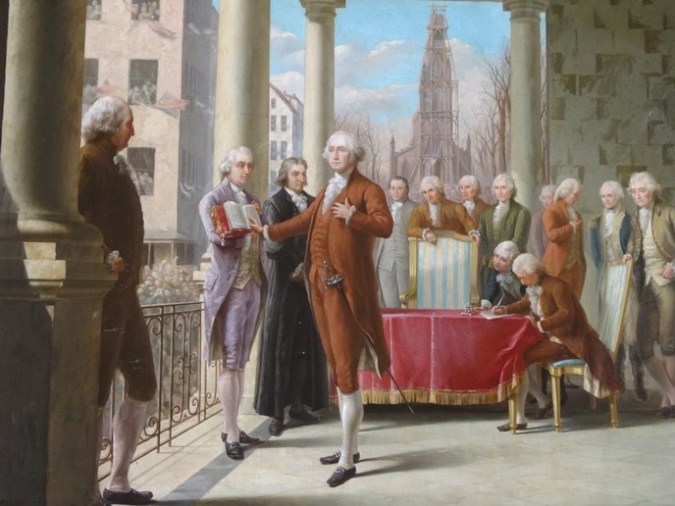
GW-oathNY

Washington depicted taking the Presidential oath of office, March 4, 1789, Federal Hall, New York. He was 57. Photo credit: National Park Service. 

     To provide funds, import duties, and internal-revenue taxes were levied. When some people in Pennsylvania resisted payment with force the Army was sent to execute the law. The debts of the States, contracted for national defense, were assumed. To facilitate the operations of the Treasury in collection and disbursing funds and maintaining credit operations a national bank was established. His policy was to strengthen the National Union sufficiently to make it a complete reality without encroaching on the States. He had seen enough of the futility of a government without authority when he commanded the Army. 

     His foreign policy was independence, peace, justice, and neutrality. Public clamor could not induce him to become involved in the French Revolution. He signed the treaty with England that was at first so unpopular and made a treaty with Spain, opening the Mississippi, because he knew both were beneficial to our commerce. 

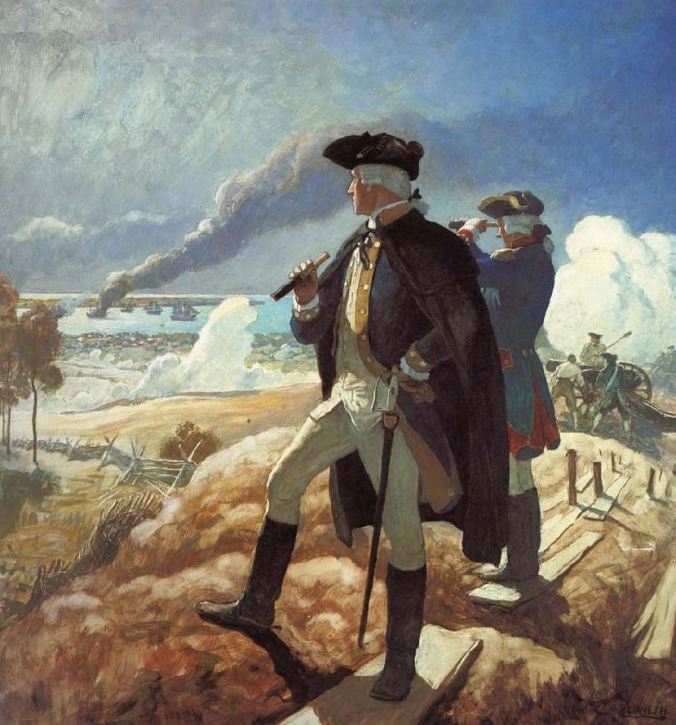
Wyeth Washington at Yorktown

Wyeth’s portrait of Washington

     Finally, he summed up his political creed in his Farewell Address. He believed in liberty and the Union unhampered by national jealousies. He urged respect for authority and obedience to law. Education, religion, and morality he considered necessary supports of free institutions. Careful maintenance of the public credit by a sparing use of it, impartial justice to all nations, permanent alliance with none, and adequate national defense were some of the important points in the wise plan for future action which he presented to his countrymen. 

     Washington had a deep understanding of human nature and a profound loyalty to the truth. He had the best political judgment and was the best soldier of his time. His permanent success as a statesman was due to his ability to apply business principles to political needs. Our country has never made a mistake when following his counsel. 

Happy Birthday, Mr. President! 

BelovedCountry-IB-GW

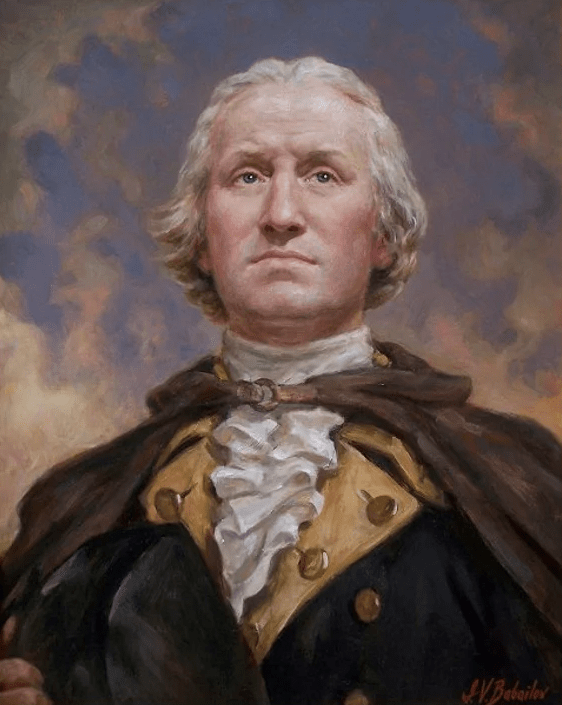
My Beloved Country — George Washington, based on the Houdon sculpture, oil portrait by Igor V. Babailov. Photo credit: Igor Babailov.Â