
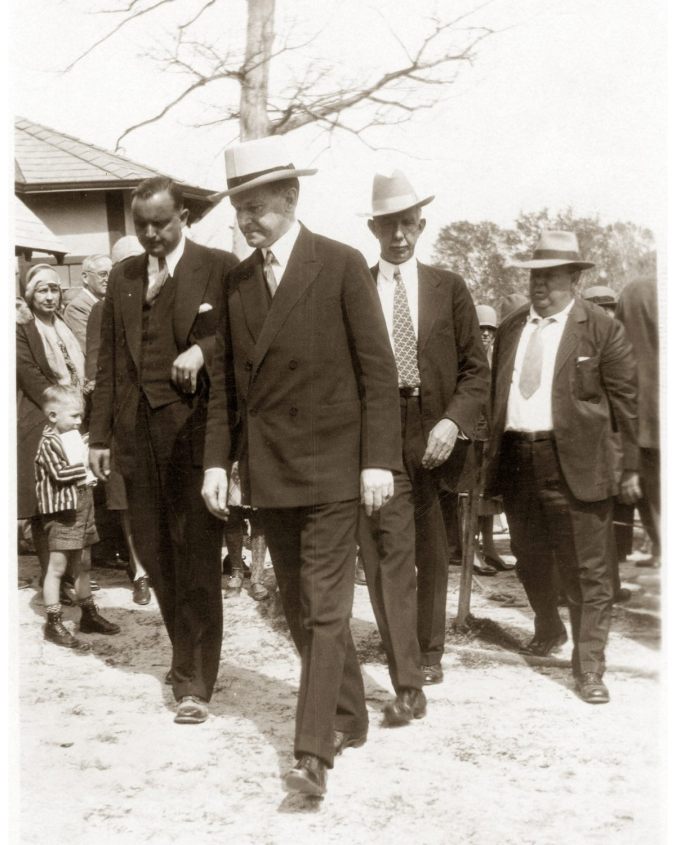
The Coolidges visiting the grave of their youngest son, 1928.
While there will always be abundant supplies of anxiety, countless reasons for concern and innumerable threats to life’s fragile thread, occasions like what has recently come home to us carry the reminder that life consists of more than the abundance of our possessions. We are forced to reckon face to face with realities that do not usually corral our attention with so much intensity. If neglected, they surface now and again upon our consciousness, but usually suffer our disregard in silence. Ultimately, we are all brought to behold eternity. The luxury of postponing that indefinitely has been increasingly taken away as what often distracted us cannot so easily be shoved aside and dismissed. We are discovering in our midst an imposing presence in perhaps an inescapable measure, that we live not by material forces but spiritual ones. Priorities, through no choice of our own, have been reshuffled and yet an opportunity rests before us. We can make good use of the time, as so many have encouraged us to do, whether it be through the high calling of selfless service (as Richard Shadyac with St. Jude Children’s Research Hospital has requested), the sharing of good news out there (taken up by John Krasinki’s SGN reports) or a return to the focus on God, who hears from heaven and heals (as Hulk Hogan has encouraged be done). It is all part of the same work, the work of the spirit. All are ministering to spiritual needs. Material forces alone will never equal them.
If there was one preeminent principle around which all else orbited in the actions and outlook of Calvin Coolidge throughout his life, it was that truth: the supreme power of the things of the spirit. He expressed it in nearly every public utterance with an incredible variety and range of expression. It remained never far from his thoughts. It was continually a clarion to strengthen our connection to things eternal, resisting every attempt that would weaken the redemptive and restorative might they hold. Success and affluence would deny and disparage them but against them, he knew, the gates of Hell will never prevail.
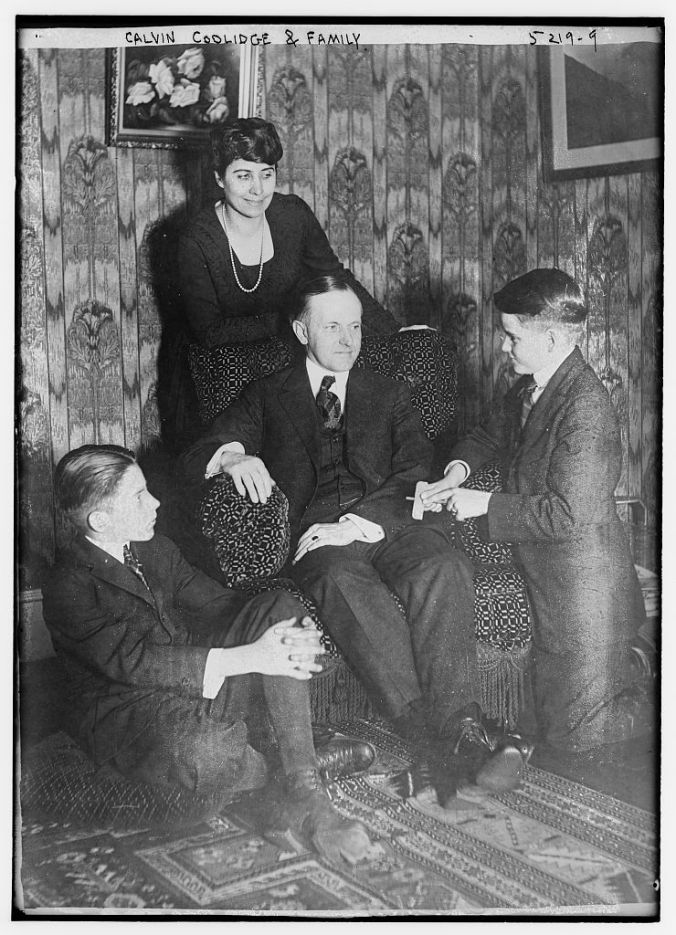
As he prepared this speech in the fall of 1928 for those about to gather in Washington for the General Convention of the Episcopal Church, he turned his thoughts not to any one group but to all who see mission work in its truest sense: a summons to prepare ourselves first and then go out in service wherever we are — especially here at home — with the talents we hold and the light meant to shine in each of us. The mission field, then, is not some remote post “out there” but right here in our midst…ever close at hand and within occasion to act, whoever we are and whatever we do for a living. If we would see deficiencies furnished, shortfalls supplied and gaps met, we are the ones to meet them starting right where we are. Whatever our job title, our training or our affiliation, we are missionaries. We do not need to be medical professionals or emergency responders to shine the light in the dark corners around us. It is not a job for “someone else” to perform while we sit back and complain about dysfunctional conditions and inept people. There is too much to do in our own backyards to warrant that.
Coolidge brings us back to that enduring lesson: We meet crisis and resolve problems not by expecting overwhelming material resources to meet every need we might anticipate. After all, as Coolidge said elsewhere, “Man has a spiritual nature” that can leave stomach well-fed, body well-clothed, and health well-cared for but still leave a life devoid of fulfillment, love or light. For those, nothing material will ever be enough. Only a deeper, and continually refilling, well of spiritual investment can keep them in ample stock for every situation, whether they are seen or unforeseeable.
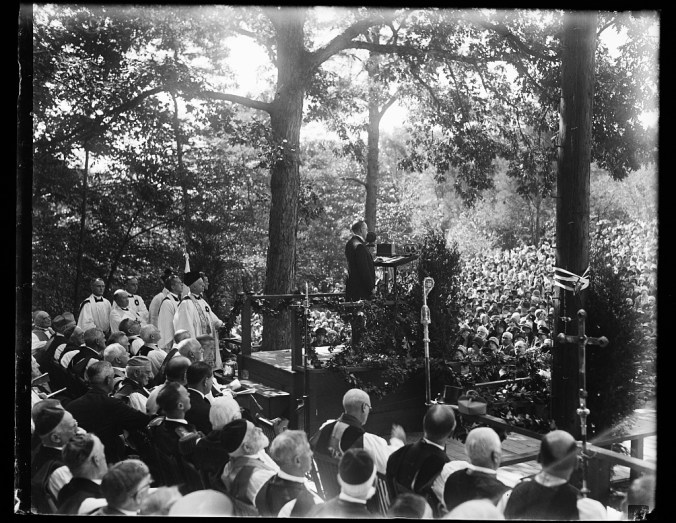
President Coolidge addressing those gathered before the Washington National Cathedral, October 10, 1928. Photo credit: Library of Congress.
Coolidge ascended the stairs to his place at the podium before Washington’s National Cathedral and spoke:
As we look over the world we see that there are almost whole continents in some areas still to be reached and large masses of people everywhere still to be given the advantages of modern civilization. While it is well for us to look abroad and carry to other people a knowledge of our faith, we should not forget that our success in that direction will be largely measured by what we do at home. The light which we shed for others will depend upon the intensity of the flame which we create for ourselves. The ability to help others to see comes from the clearness of our own vision. The greatest service that we can possibly perform for the world is to perfect our own moral progress. If we can do that, we need have no fear concerning the helpful influence we shall supply to others.
The most casual survey of our own country reveals the existence of conditions which require constantly increasing efforts for their redress. The problem of the training of the youth of the Nation is one that is now and will be forever recurring. In spite of our great school system, our secondary institution, our colleges,and our universities, many of our young people are still growing up with the most meager advantages of education. There are large settlements of people in our great centers of population still living under foreign conditions. Although they are dwellers within our borders, they have never yet really come into the United States. We have provided by our institutions for a genuine method of self-government, but there are many of our people who, through indifference or inability, are not receiving the full benefits of such a system. In the midst of a high productive capacity and constantly expanding material resources there are yet those who, through ignorance or misfortune, are not able to participate to the extent of their deserts in our economic progress. The forces of evil are constantly manifest and their opportunities for activity enlarge with the increasing complexities of our modern modes of life.
The officers of our governmental agencies are constantly alive to these problems and through legislation and administration are alert to meet their demands. But those who have given these subjects much thought are constantly reminded that an additional element is needed, if they are to meet with the desired success. The advancement of knowledge, the increase in science, the growth and distribution of wealth, the enactment of laws, while they may all be commendable or even necessary in themselves, do not alone met the problem of human existence or furnish a sufficient foundation for human progress. Man is more than all these. He requires the inspiration of a higher motive to meet the demands of a spiritual nature. They might furnish a partial explanation of an Alexander, a Caesar, or a Napoleon. They fail utterly to account for a Hampden or a Cromwell, a Washington or a Lincoln, or for the long list of sacrificing missionaries, saints, and martyrs who have devoted their lives to the higher cause of humanity. Organized government and organized society have done much and can do much.Their efforts will always be necessary, but without the inspiration of faith, without devotion to religion, they are inadequate to serve the needs of mankind. It is in that direction that we must look for the permanent sources of the ministrations of charity, the kindness of brotherly love, and the renunciation of consecrated lives.
Our country is thoroughly committed to a life of action. We expect our people to put forth great energy and great effort in perfecting the material structure of our national life, in enlarging our production, in increasing our commerce, in strengthening our agriculture, in improving our transportation, in organizing our finances. But all these things will never be done for their own sake. They are not an end in themselves. They are but a means to a nobler character and a higher life. Unless that motive is provided from some other source, these activities inevitably lead back to the conclusion that the end justifies the means and that might right. We are not seeking an increased material welfare that leads to materialism; we are seeking an increased devotion to duty that leads to spiritual life. Such an effort would be in vain, unless our Nation as a whole continued in its devotion to religion.
We can not remind ourselves too often that our right to be free, the support of our principles of justice, our obligations to each other in our domestic affairs, and our duty to humanity abroad, the confidence in each other necessary to support our social and economic relations, and finally the fabric of our Government itself, all rest on religion. Its importance can not be stressed too often or emphasized too much. If the bonds of our religious convictions become loosened, the guaranties which have been erected for the protection of life and liberty and all the vast body of rights that lie between are gone. The debt which this country owes to the men and women down through the ages who have been teaching and are teaching to-day the cause of righteousness is beyond all estimation. So long as the great body of our people continue to be inspired by their example, and to be faithful to their precepts, our institutions will remain secure and our civilization will continue in its increase of material and spiritual welfare.
 The Importance of the Obvious