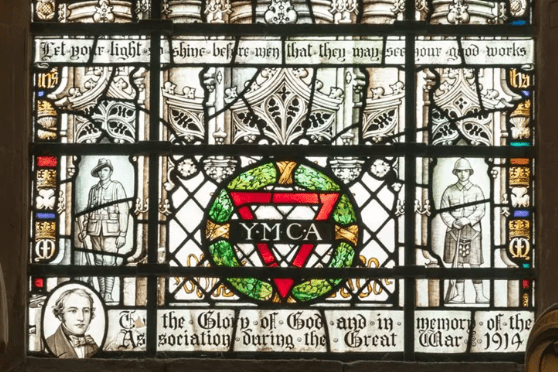
The lower left panels in Lady’s Chapel, Westminster Abbey, marking Sir George Williams’ work and the YMCA during World War I. Photo credit: Dean and Chapter of Westminster.
The greatest ventures the world has ever known begin with a small seed, often not involving enough people to even fill a small room. Yet, they become forces for good with the might to move mountain ranges. The settings so often portrayed in Charles Dickens’ novels — Industrial Revolution England — were places grappling with the questions of cultural, economic, and social upheaval. Nothing seemed less fixed, less permanent, less reliable than what industrialization was changing almost overnight in those days. It was one of those 150,000 young men, shoved from the farms into the quickly crowding city of London to work in the shops, factories and mills who met that displacement squarely. He did not merely opine the lost days of yore, he did something about it. He acted to supply what he saw being neglected through all the changes: the spiritual needs of young men. Apprenticed as a draper, twenty-two year old George Williams would bring together just under a dozen friends to form on June 6, 1844 the Young Men’s Christian Association, a haven from the deprivation of life on the streets and around Bible study, prayer, Christian discipleship and humanitarian service. Knighted by Queen Victoria in 1894, Sir George is laid to rest among the illustrious departed of Westminster Abbey, looking to the resurrection. A stained glass window dedicated to the work of the YMCA during World War I has stood there since 1921.

Captain Thomas Valentine Sullivan, the founder of the first Young Men’s Christian Association in America.
It was Boston sea captain Thomas Valentine Sullivan, following shipwreck in Antarctica, a near-fatal fall from a yardarm and a dramatic brush with pirates, who (inspired by George Williams’ example) began the first Young Men’s Christian Association with six others in America in 1851. He saw the same challenges in the shipping trades Williams had seen in inner city London for young men who needed Christ, whether aboard ship half-way across the world or along any of the docks, wharves and ports they worked.
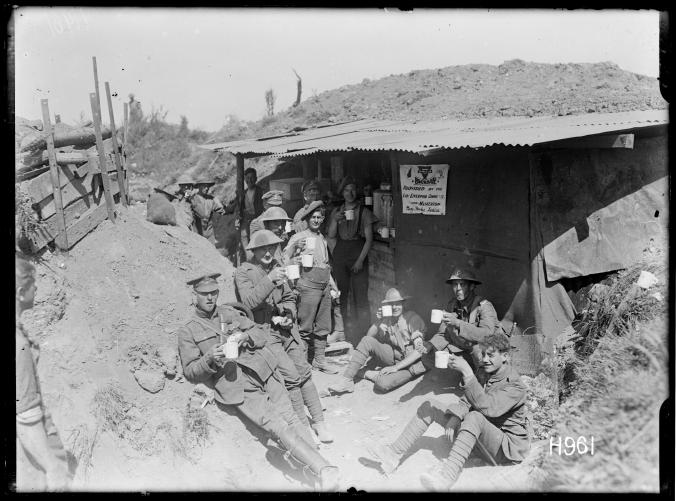
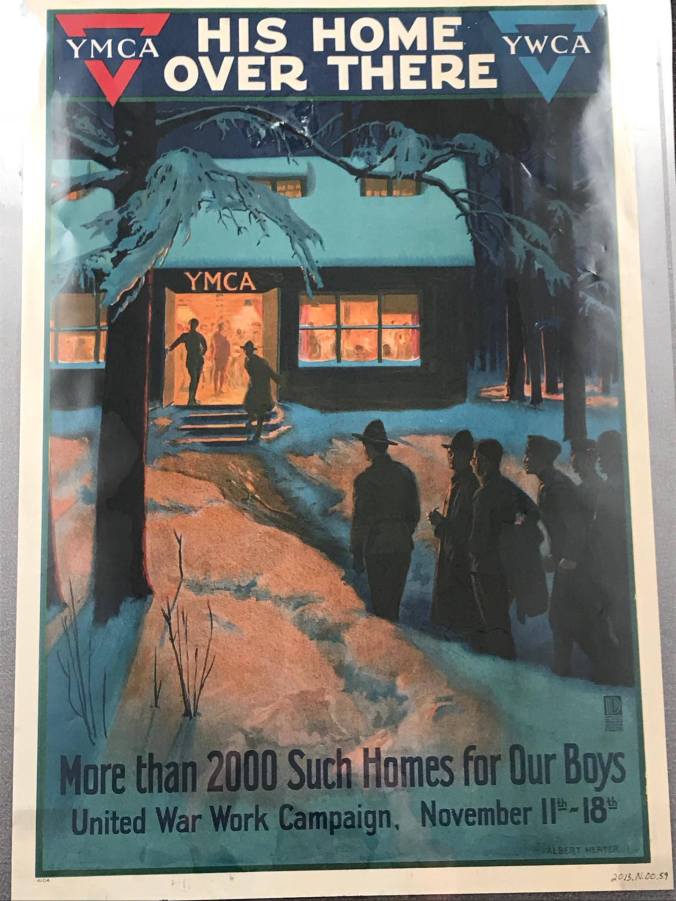
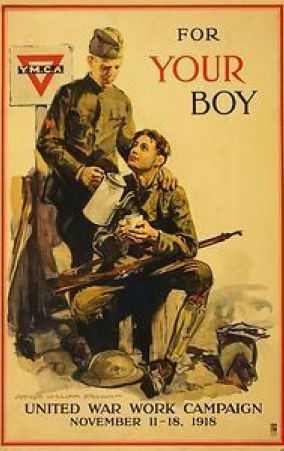
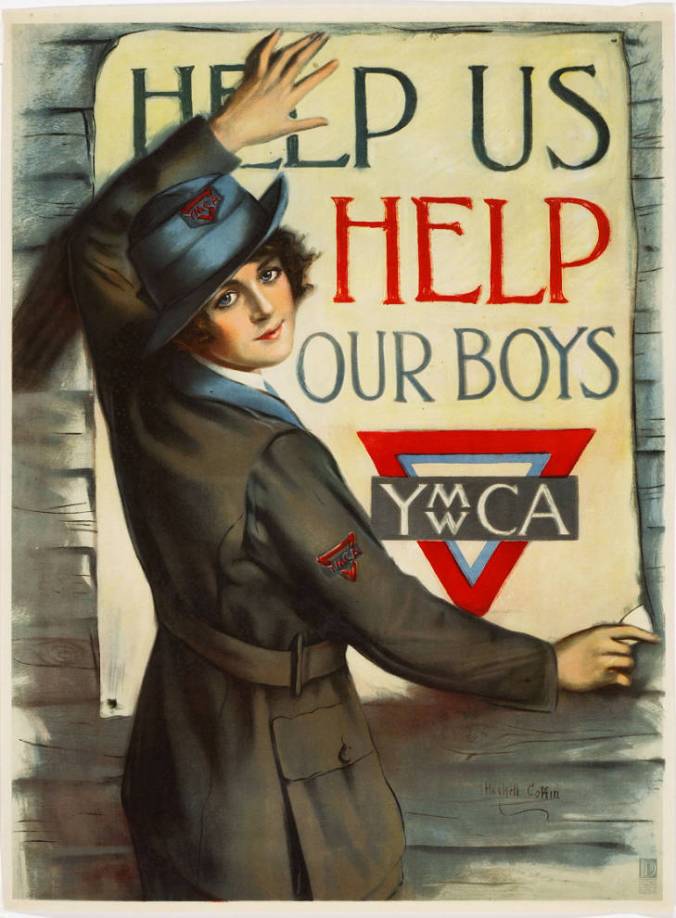
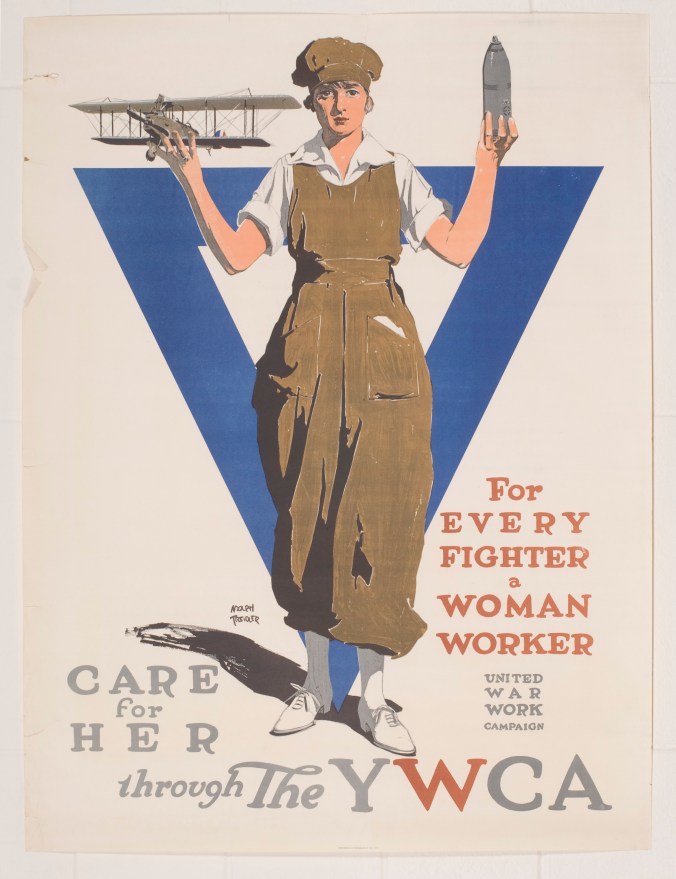
It was the need to minister to the whole person — never neglecting those vital requirements of the soul — that brought Captain Sullivan and Sir George to spark welfare work in its truest and most significant form. It was this mission through the Y. M. C. A. that went forth into the hospitals, camps and battlefields of the United States during the Civil War, itself the inspiration for Clara Barton to establish an American Red Cross. It was the army of volunteers under the Y. M. C. A. that labored across fields, forests and camps in World War I, accomplishing as General Pershing and former President Taft reported, “nine tenths of the welfare work among the American forces in Europe.” At the same time, went the work of the YMCA in Britain and on the continent. They were the USO of the Great War, supplying not only help to the wounded but relief and recreation to those deployed, comfort and counsel to the spirit. It was the Y. M. C. A. with other organizations who actually established the United Service Organizations (USO) that military members and their families have come to know so well. Before it all was the Young Men’s Christian Association.
As originally constituted and led, the Y. M. C. A. was more than merely a “fun place” to stay but a refuge for the soul, a haven for strengthening the spirit, an oasis for Christian mission work not abstractly “out there” but right where we are. The world in which Christians are to go is never that far away. Satan’s war to snatch young men’s souls from Christ has only intensified. The mission begun by Sir George Williams and Captain Thomas Sullivan is much more than an interesting footnote in the textbooks of history, it reveals the ongoing spiritual warfare unfolding every day inside us and all around us. At times it moves unseen by our mortal eyes only to remind us, perhaps at times like this, that the forces of evil and the mightier forces of good are nonetheless real.


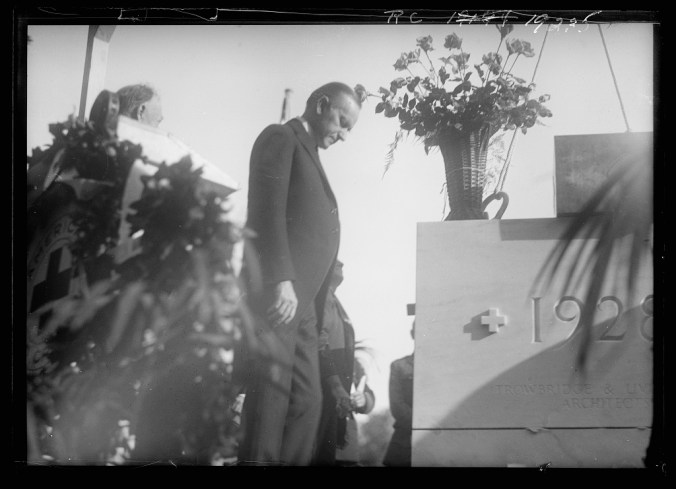
It was on the occasion of the Forty-Second International Convention of the Young Men’s Christian Association in 1925 that President Coolidge delivered this address in recognition of what God had wrought through the men and women of its membership. It had traveled a long road since those early days when Captain Sullivan and six others resolved to do more than passively allow circumstances to shape the future or let the world, itself lost without Christ, raise young men.
Coolidge began:
Mr. Chairman, Members of the Convention:
This gathering has brought together from nearly all the American States and Canadian Provinces the lay leaders of what has come to be a great world movement. It is a body representative of Young Men’s Christian Associations not only of large and small cities and of the town and the countryside, but also of those located in institutions of learning, centers of industry, at the convergence of railroad systems, in Army and Navy posts and stations, and among our colored population. Wherever there are young men, these associations recognize that there is a field for their activities.
This is one of the oldest international conventions that are held on this continent. For more than the allotted span of three score years and ten it has been in existence, forming one of the strongest bonds of common interest between the Provinces and the States. It illustrates in a most striking way that the influence of men banded together to do good tends to increase rather than to diminish. The lay forces of these two great North American powers, in their united efforts to preserve the faith and build up the character of youth, have only seen their power gradually extended until it reaches an innumerable host, but have also seen it contribute to a greater harmony of interests between two neighboring nations. Since 1851, when the first international associations included only the beginnings in Boston and Montreal, the movement has spread over the earth until now it includes 9,000 branches in more than 50 different countries, with an active membership of 2,000,000, not including other millions of older men who through their past contact have broadened their vision, raised their ideals, and strengthened their character. One of the greatest services which our country has rendered to humanity has been in providing almost entirely the initiative, leadership, and financial support which have carried the associations into nearly every corner of the globe.
It must be apparent that such a far-reaching success, running over so long a period of time, could not have been accomplished unless it was making an important contribution to society and was in harmony with the vital forces of progress. Institutions which are not useful decline and perish. It is only those which minister to the needs of their times which increase and multiply. Time tests out every appeal and proposal, but rejecting all others grants and adopts only those which contribute to the breadth and value of life. It could only be because it was recognized as performing a most notable service that this movement, lasting so long and spreading so far, could have reached its present state of strength and virility.
This movement has brought into existence and organized one of the greatest lay forces that the world has even seen. One of the chief characteristics of Christianity is that it is a militant and crusading faith. Those who have become partakers of its inspirations and its consolations, since it first began its early march over the hostile territory of the Roman Empire, have been constantly spreading its truths among all their associates. If that faith is to maintain its vitality that work must go on. It is not enough that there should be action in the pulpits – there must be reaction in the pews. It will not be sufficient to have exalted preaching by the clergy unless there is exalted living by the laity. Your Christian Associations represent a practical effort to organize and augment in every field the lay forces and to translate the truths of religion into the life of the people.
It is increasingly true that the hope of the future lies in the youth of the present. Probably no other lay force asserts so large an influence upon the young people as that which you represent. It stands as a direct challenge to materialism. It is a constant assertion that there is something more than the things that are seen. It seeks to overcome the tendency of an age of profusion which is so likely to develop into a condition of luxury and pleasure, selfishness and ease, destructive of the vitality and character of society. It is an effort to secure that development which only comes through action, and to strengthen the physical, intellectual, and moral life by an ever active campaign against disease, ignorance, poverty, and other evils. It seeks to create better understanding, to reveal young men to themselves, to show them their great powers, to direct them into unselfish ways, to give them more self-control, and broaden the whole scope of their lives. It is a most practical effort in the training of citizenship.
One of the important results of all these activities is the preparation of young men to be the future heads of the homes of the people. There are too many indications that the functions of parenthood are breaking down. Too many people are neglecting the real well-being of their children, shifting the responsibility for their actions, and turning over supervision of their discipline and conduct to the juvenile courts. It is stated on high authority that a very large proportion of the outcasts and criminals come from the ranks of those who lost the advantages of normal parental control in their youth. They are the refugees from broken homes who were denied the necessary benefits of parental love and direction. The home is the corner stone of the Nation, and any effective better-homes movement must begin with the training of the youth for those responsibilities, or we shall see the disposition to attempt in some way to turn over to the Government the responsibilities for the rearing of children constantly increased. What the youth of the country need is not more public control through Government action, but more home control through parental action.
These associations are an effort in that direction. Through the High-Y clubs they have reached the older boys in the high schools, and through the Employed Boys Brotherhoods they have performed important work in industrial centers. They have taken a strong hold in directing the moral and religious life in many of the State universities and the principal colleges of the country. They are intrenched along nearly all the great railway systems of the United States and Canada and are doing a most promising work among the merchant marine of our Atlantic and Pacific ports, as well as those of Europe and the Far East. Ever since the Spanish War they have maintained the principal welfare agency in the American Army and Navy. They have adapted themselves to the youth of all nationalities and races and become an indispensable factor in multitudes of great industrial establishments, ministering through the physical, intellectual, and the spiritual to the whole range of life of young men.
Special emphasis is being placed upon the need of training for citizenship. Not only by the general development of character, by encouraging industry and discouraging waste, are they strengthening the community and raising up leaders, but by informing the young respecting the teachings of the New Testament and of the Hebrew prophets they are providing them with a grasp on the principles which must underlie all enduring civilization. Through countless study circles and in open forums they are given opportunity to read and discuss the current economic, social, and political problems under the admonition that such training is not intended alone for personal betterment, but to prepare for a wiser discharge of public obligations. It is realized that every youth is a potential lawmaker, law interpreter, and law enforcer; that in the coming days their word, their action, and their franchise will inevitably exert some ruling influence over the lot of their fellow men.
In addition to the contribution which the associations are making to the strengthening of the home and the building up of citizenship, they are a source of great assistance to the church and its work. Through their contact with students in high schools and colleges they are an important factor in interesting some of the best qualified young men in the vocation of the Christian ministry. The missionary departments of the student associations have been instrumental in recruiting over 12,000 student volunteers to serve under the boards of North America in the foreign fields. These volunteers form a most practical part of missionary effort abroad. They are composed not only of evangelists, but they reach into the field that is treating disease through their physicians, they reach into the field that is remedying ignorance through their teachers and writers, and they also reach into the field that is seeking to improve agricultural and industrial methods through their scientific and vocational experts. They are demonstrating the practical value of enlightened civilization which rests on religion. They are carrying into the life of distant peoples a true interpretation of that which we consider best in America and Canada. Beside the standards which are oftentimes none too high of those who make foreign contacts solely for the purposes of gain, go this great multitude of those who, chosen for their unselfishness, have dedicated their lives to the service of others, in order that an accurate knowledge of the true standards of our people, our institutions, and our civilization may carry their better influences to the knowledge of all the world.
But while that which we send abroad is important, that which we keep at home is even more important. It would be difficult to find any leaders in the life of our present day who have not in one way or another come under the influence and the teaching of our countless associations. They speak not only from the pulpit but from the bench and the bar, from the pages of journalism and the halls of legislation, from industry and commerce and finance. These are all on a higher plane and exerting a more humanizing influence because of the results of this great work.
Perhaps one of the most significant results that is flowing from all these activities is the unifying influence which they are producing. We do not all need to be alike, but it is usually more helpful and certainly more comfortable to put the most emphasis on those characteristics which we have in common, rather than to dwell too much on divergences and dissimilarities. One leads to friendship and cooperation, while the other is likely to develop contention and animosity. Amid all the divergent influences that have been manifesting themselves among the different peoples of the earth in recent times, it is exceedingly reassuring to realize that there is a quiet and constructive effort on the part of a world-wide brotherhood of Christian youth for coordination and harmony. The same factor is at work in bringing together the different religious denominations. Because so many of their leaders have been accustomed to a common experience in their youth under the leadership of the associations, a sympathetic cord of increasing strength is bringing about a spiritual union of North America with the nearby countries of Latin America, Europe, and the lands of the eastern churches of Russia, the Balkans, and their neighboring States. When the people of different countries are finding so much on which they can agree, it is more and more unlikely that their governments will disagree.
The same influence is being cast over our domestic affairs. Employer and employee are being brought together in a common fellowship. Much is being done to diminish and disperse race antagonisms. It was the American association that established the interracial commissions, which it is generally agreed have been of great importance in the past few years in promoting better understanding and relations between the white people and the colored people. This example has been an inspiration to students of the problem of race relation in all parts of the world.
But it is impossible to do more than sketch in the briefest way some of the outstanding features of the work of this organization that plays such an important part in molding the character of youth in all parts of the world. It is a great instrument for domestic improvement and international progress. In addition to all the local outlays, the National Council alone has a budget of over $4,000,000 for the coming year. It is difficult to imagine a field where such an expenditure could be more beneficially made. The remarkable results which this organization accomplished in southeastern Europe in helping to restore the morale of those shattered peoples is well known to all students of that situation. The help that is likely to be given in China through the access which these associations have to the student bodies promises to be important, far-reaching, and beneficial. Wherever there is a religious work to be performed, this organization will be found doing more than its share and accomplishing most desirable results.
America has many reasons for pride and satisfaction in the spirit and character of its citizenship. It is gratifying to know that it has the resources with which to make these outlays and perform these services. We ought to be thankful in remembering that our own people do not need to receive this kind of assistance from any other people. We are able to look after our own. But that which rises above all other considerations is the fact that our people are imbued with a religious charity which makes them disposed to extend these benefits to those who are less fortunately circumstanced at home and abroad. There are those who constantly reprove our people and our Government for an alleged failure to assist other peoples. I do not know that anyone could ever say that we were doing enough, but it is my strong suspicion that those who are making the loudest complaints have never taken the trouble to ascertain what we have done and what we are doing. It is gratifying beyond measure to realize how the steady, courageous, generous hand of the real America continues to reach out to those in need. It stands as a conclusive answer to all censorious criticism. These works stamp America with a continuing effort working for moral regeneration.
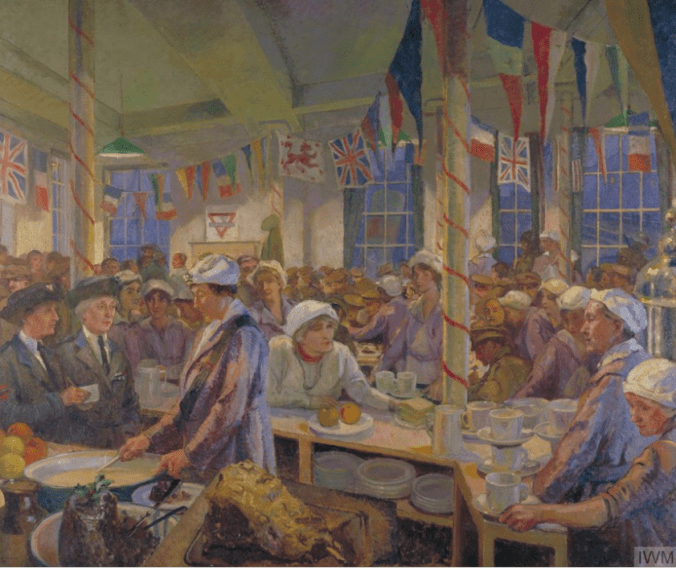
Christmas Day in the London Bridge YMCA Canteen, 1920 by Clare Atwood. Photo credit: Imperial War Museum.





 The Importance of the Obvious