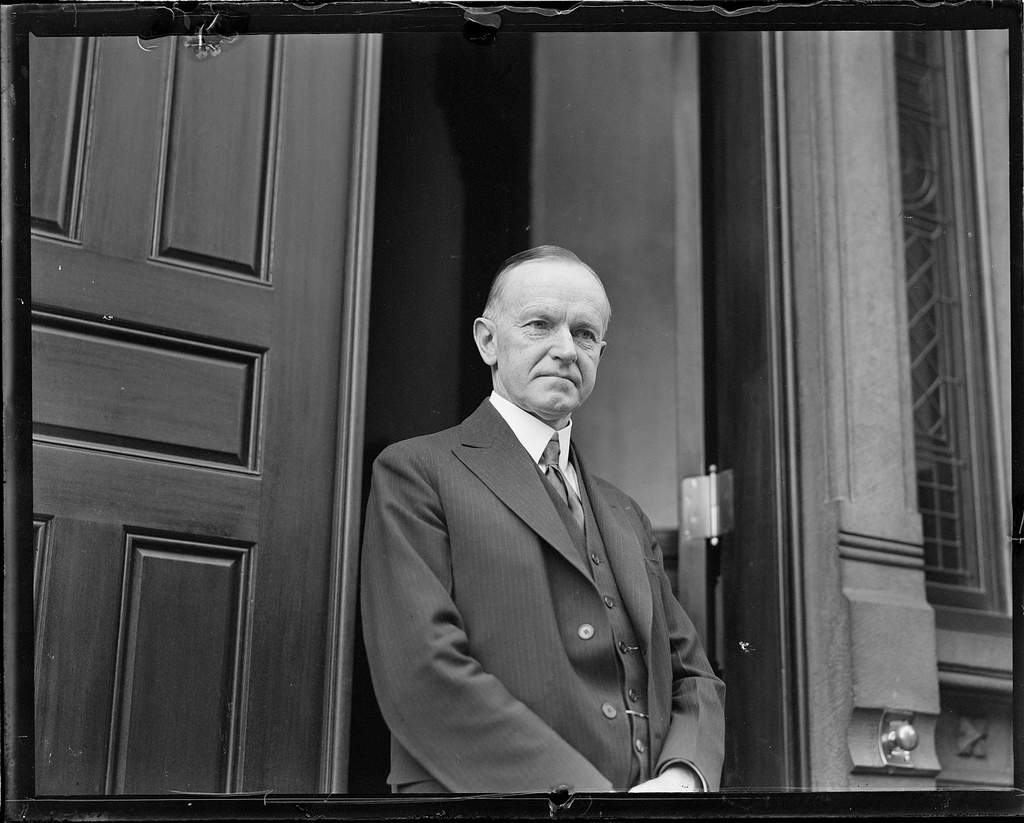
Addressing those gathered in his Northampton to observe Memorial Day, May 30, 1923, Vice President Coolidge delivered one of his most eloquent expositions of the day’s meaning and significance,
“Our country does not want war; it wants peace. It has not decreed this memorial season as an honor to war, with its terrible waste and attendant train of suffering and hardship which reaches onward into the years of peace. Yet war is not the worst of evils, and those days have been set apart to do honor to all those, now gone, who made the cause of America their supreme choice. Some fell with the word of Patrick Henry, ‘Give me liberty, or give me death,’ almost ringing in their ears. Some heard that word across the intervening generations and were still obedient to its call. It is to the spirit of those men, exhibited in all our wars, to the spirit that places the devotion to freedom and truth above the devotion to life, that the nation pays its ever-enduring mark of reverence and respect. It is not that principle that leads to conflict but to tranquility. It is not that principle which is the cause of war but the only foundation for an enduring peace. There can be no peace with the forces of evil. Peace comes only through the establishment of the supremacy of the forces of good. That way lies only through sacrifice. It was that the people of our country might live in a knowledge of the truth that these, our countrymen, are dead. ‘Greater love hath no man than this, that a man lay down his life for his friends.’
“This spirit is not dead, it is the most vital thing in America. It did not flow from any act of government. It is the spirit of the people themselves. It justifies faith in them and faith in their institutions…It is to that spirit again, with this returning year, we solemnly pledge the devotion of all that we have and are.”
Writing in recognition of this day eight years later, he would summarize the abiding import of this Day with these words, “No lapse or diminution should be permitted in the yearly devotion which the people pay to the memory of those who have served in our armed forces…The principle involved must not be obscured. The day is sacred to the memory of all the dead who wore our uniform, from the earliest Indian wars to the present hour. In honoring their memory we are not glorifying war. We are a peaceful nation…But we honor their memory that we may glorify citizenship. They were the antithesis of selfish individualism, merging freedom and even chance of life in the common welfare of country. In danger, choosing the course that really counts, they preserved their rights by discharging their duties. No nation can live which cannot command that kind of service. No people worthy of such service will fail to do it in reverence.”
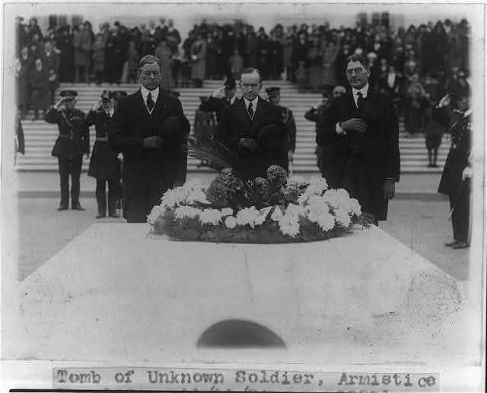
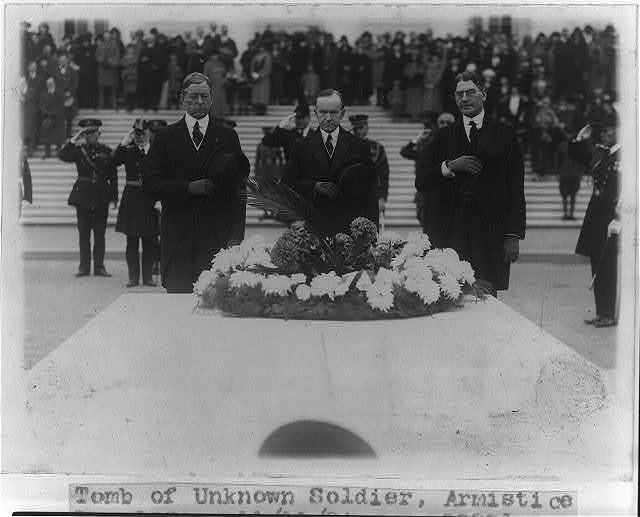
President Coolidge with Secretary of War, Dwight Davis (left), and Secretary of the Navy, Curtis Wilbur (right).

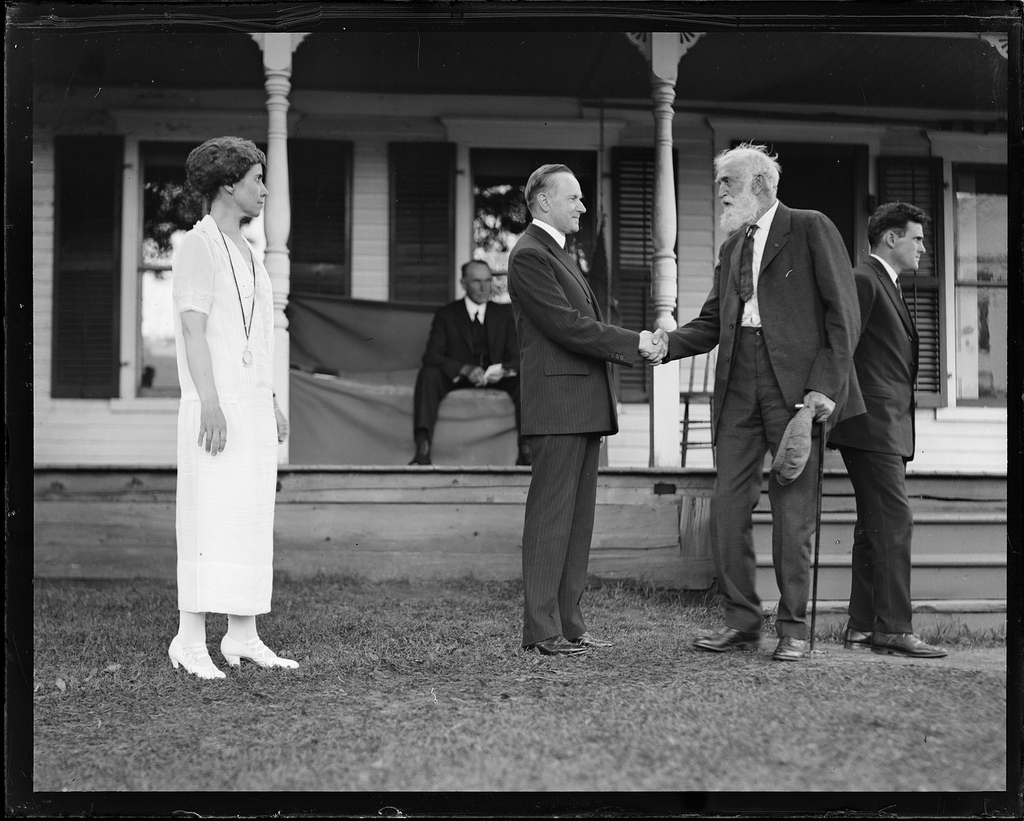
President and First Lady Coolidge meeting Civil War veterans, August 1924.


President Coolidge saluting the Unknown Soldier with Secretary of War, John Weeks; Assistant Secretary of Navy, Theodore Roosevelt, Jr., and Naval Aide to the President, Captain Wilson Brown, (1923?).








 The Importance of the Obvious