On Judges

The announcement by the Court’s majority yesterday in United States v. Windsor broadcasts a fundamental departure from the proper role of judges. As Justice Scalia forecasts in his dissent, this is a judicial majority which is willfully abandoning the limited authority granted in Article III of the Constitution. It is an attempt to grasp the power of deciding abstract issues, instead of cases, with nothing but the policy preferences of five individuals. It is only a matter of time before their casual reference to federalism disappears and the Court “drops the other shoe,” building on this precedent to dictate to all situations what “democratically adopted” laws meet with the Court’s approval. This is not mere judicial review of Congressional acts, like in the past. This is exercising an authority to determine outcomes based on nothing more than whether they accord with the political views and social sympathies of community activists wearing robes. The language of law merely covers this assumption of control.

The Court’s majority is so lost when it comes to what judges are supposed to be doing that those who do not agree with their predetermined conclusion are branded as hate-filled homophobes with a “bare…desire to harm,” “disparage,” “injure,” “demean,” “impose inequality” and a “stigma,” denying “equal dignity,” branding same-sex couples as “unworthy,” and to “humiliate” their children. Such absurd accusations have no place being uttered by the highest Court in the land. As Justice Scalia observes, it is the Court’s majority behaving in so prejudicial and demeaning a fashion with this kind of rhetorical venom masquerading as legal authority. So much for a judge’s duty to impartially and “blindly” apply the appropriate law to the facts of each case that comes before it.

The Court is exercising a power greater than mere legislators when the future of law depends upon what a majority feels like allowing Congress, the states, individuals and other “enemies of the human race” to pass in future. It is precisely why the Founders wisely separated the judiciary from the executive and legislative powers. Now the Court’s majority seeks to return to a time when absolute sovereigns determined what law is and when it applied…to subjects. To some, this decision is a victory for “equality,” but when results are chosen after removing Justice’s blindfold by judges who do not accept their role as impartial triers of facts, no one’s liberties are secure any longer. It is the basis for equality, an equality under law, that has lost.

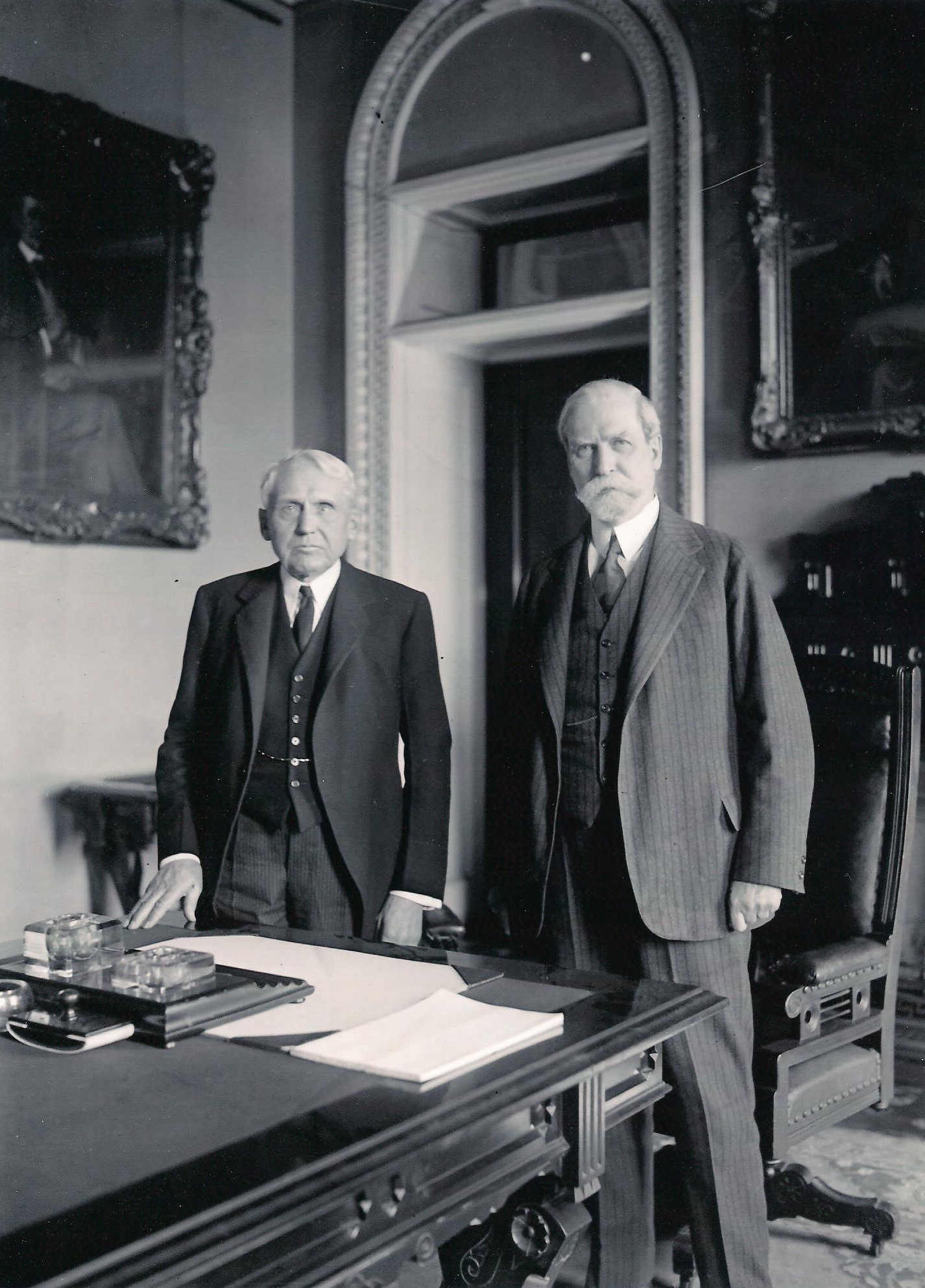
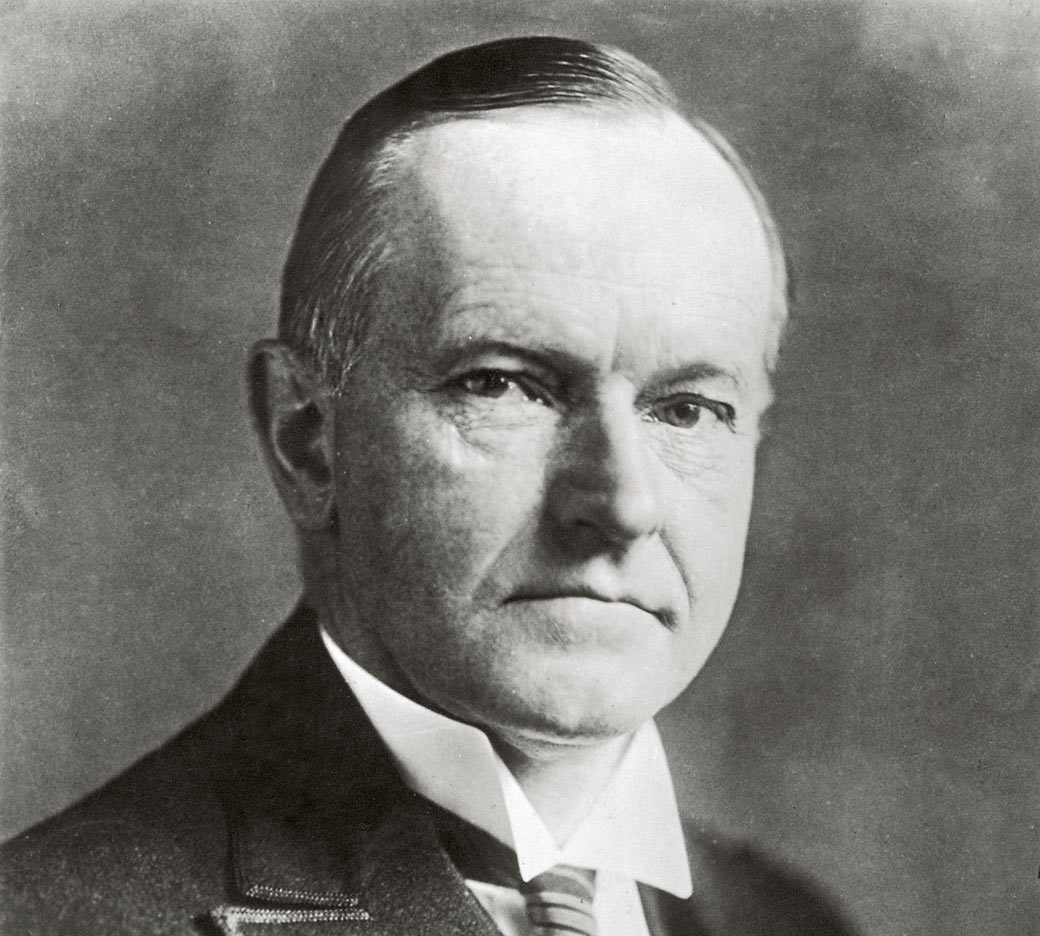
It is significant that a growing public opposition to the courts and a disrespect for the rule of law, not unlike now, was unfolding when Calvin Coolidge spoke these words in Boston, January 7, 1914, “Men do not make laws. They do but discover them. Laws must be justified by something more than the will of the majority. They rest on the eternal foundation of righteousness…Courts are established, not to determine the popularity of a cause, but to adjudicate and enforce rights. No litigant should be required to submit his case to the hazard and expense of a political campaign. No judge should be required to seek or receive political rewards…The electorate and judiciary cannot combine. A hearing means a hearing. When the trial of causes goes outside the court-room…constitutional government ends.”

Ten years later, he was observing the danger of using legal language to justify the assumption of power at the expense of liberty, “The Constitution of the United States has for its almost sole purpose the protection of the freedom of the people. We must combat every attempt to break down or to make it easy, under the pretended guise of legal procedure, to throw open the way to reaction or revolution. To adopt any other course is to put in jeopardy the sacred right to life, liberty, property, and the pursuit of happiness.”

He would reiterate the Constitution’s soundness into modern time, providing for stability as well as amendment. The course to amend, though deliberately long (to ensure the people consent to its changes), is ever open to those who seek improvements. It is not the place of the courts to amend it by judicial rule. “Our Constitution has raised certain barriers against too hasty change. I believe such provision is wise. I doubt if there has been any change that has ever really been desired by the people which they have not been able to secure. Stability of government is a very important asset. If amendment be made easy, both revolution and reaction, as well as orderly progress, also become easy. The nation has lost little, but has gained much, through the necessity of due deliberation. The pressing need of the present day is not to change our constitutional rights, but to observe our constitutional rights.

“A deliberate and determined effort is being made to break down the guarantees of our fundamental law…In this contest there is but one place for a real American to stand. That is on the side of ordered liberty under constitutional government…The time for Americans to range themselves firmly, squarely, and uncompromisingly behind American ideals is now…Those who want to continue to enjoy the high estate of American citizenship will resist all attempts to encroach upon their liberties by encroaching upon the power of the courts.”
Image

On Foreign Policy

Image

President Coolidge took nearly everyone by surprise when he mounted the podium on the floor of Congress, December 6, 1923, for his first major Presidential address, the first of six annual messages. The “silent” former Vice President enjoyed being underestimated, especially by the “experts,” and when an occasion presented to reveal their erroneous judgment, he took it. This “provincial” man set the tone for where he was going to lead in the future, bravely beginning with foreign policy. He explained the general principles before dealing in specifics,

“Our country has one cardinal principle to maintain in its foreign policy. It is an American principle. It must be an American policy. We attend to our own affairs, conserve our own strength, and protect the interests of our own citizens; but we recognize thoroughly our obligation to help others, reserving to the decision of our own judgment the time, the place, and the method. We realize the common bond of humanity. We know the inescapable law of service.

“Our country has definitely refused to adopt and ratify the covenant of the League of Nations. We have not felt warranted in assuming the responsibilities which its members have assumed. I am not proposing any change in this policy; neither is the Senate. The incident, so far as we are concerned, is closed. The League exists as a foreign agency. We hope it will be helpful. But the United States sees no reason to limit its own freedom and independence of action by joining it. We shall do well to recognize this basic fact in all national affairs and govern ourselves accordingly.”

The vision he explains here, a policy that protects American sovereignty while exercising the readiness to help in times of need, held consistently in each of the many foreign conflicts encountered during his five years and seven months in office. Through the violence erupting in Mexico, the issues of reparation payments in Europe, the involvement in a World Court, the “outlawry of war” movement and the restriction of Japanese immigration, Coolidge and his Secretaries of State, Charles Evans Hughes and Frank B. Kellogg, navigated safely through some very uncertain waters. As we know from more recent experience, “official” peacetime does not eradicate the explosive possibilities ever present in world affairs. Contrary to what many perceive to be an uneventful footnote in history, the peace experienced during the Coolidge administration was not merely accidental. The foreign policy articulated by President Coolidge could easily have succumbed to any one of a series of foreign conflicts during his time. Coolidge did not presume to be a brilliant diplomat. He was simply reaffirming President Washington’s admonition to avoid entangling ourselves by the promises we make to other nations, subjugating American lives and independence to foreign designs. His first loyalty was to America and its protection, in fidelity to his sacred oath. It is a sound policy in any era.

Image

On Agriculture

Born of hardy farming stock, Calvin Coolidge knew firsthand the costs and difficulties of such an investment. With the vote against passage of the Federal Agriculture Reform and Risk Management Act (H.R. 1947), roles have certainly reversed from the days when the President, not Congress, was acting to restrain federal spending as the best help government could render.

President Coolidge would veto both McNary-Haugen farm relief bills for their mechanisms to fix prices artificially, instead of letting the market decide value. The equalization fee of both pieces of legislation encouraged a special favor to one segment of the country — farmers — a device Coolidge never supported toward anyone, regardless of the form of their contributions to commerce. He held that constructive economy, not spending to compensate farmers for overproduction or veterans for their incalculable sacrifice, was for the benefit of all alike. Lobbyists, like George N. Peek who pressed Congress for “farm parity, as Gilbert C. Fite termed it, should not dissuade legislators from this commitment to represent the interests of all their constituents.

What was conspicuously missing in the legislation of McNary-Haugen, who were both Republicans (a fact that did not hold any weight with President Coolidge), was a recognition of what farmers can do for themselves. The haste for government to spare people (voters) from the consequences of certain choices was no less acute then as it is now. It was the President, in two powerfully written veto messages, who reminded the large and influential farm bloc of some obvious truths when it came to farmers. Farming has always and will ever be a supremely difficult task. No law can take all the risk or uncertainty out of working with the land.

Farmers can still help alleviate some of the difficulties they face by altering how they operate instead of running to Washington for help. For instance, farmers can diversify the crops they grow. By cultivating a variety of foods, the farmer is expanding the scope of yield without overproducing any one commodity. The farmer, as Coolidge would write in his daily column after the Presidency, best helps the soil — the center of the farmer’s world — and himself, when he expands into greater self-sufficiency in both crops and stock. Making an unpopular but glaringly simple observation, Coolidge saw the solution to overproduction (be it wheat, cotton or any other item on the market) was producing less in single-crop operations by broadening into different areas of agriculture.

In areas, particularly those in the West, creating discord between farmers, ranchers and consumers, co-operatives instead of government price-manipulation schemes could be an answer. Coolidge saw better results possible when farmers voluntarily collaborated, as used to be the case in rural communities, to form co-operatives that deploy their own efforts to improve efficiency, find markets for their produce and enable local problems to be resolved by the people directly involved. Government would not do any favors helping reward overproduction, prop-up higher export rates or rescue farmers from hard times. President Coolidge, through articulating reminders of the obvious, spelled out a way farmers can escape the many unintended consequences that follow when government gets involved. Many farmers wanted the assistance in spite of what it meant for the rest of the country. Coolidge knew he could point the way to self-reliance applied to the problems facing agriculture, but it would only succeed if farmer’s made it work for themselves.

It is thanks to the resolve and foresight of President Coolidge that farmers were spared the loss of their independence from Washington’s management, at least for the rest of his administration, while constructive economy continued for everyone. It is a reminder that we are much more capable of effecting solutions to our own problems than we may realize. At its heart, Coolidge’s reasons for vetoing these bills were grounded in a confidence that we, as free men and women, possess all the abilities we need to “work out our own salvation,” as he would put it. Therein lies greater potential for success than any of us imagine.

Image

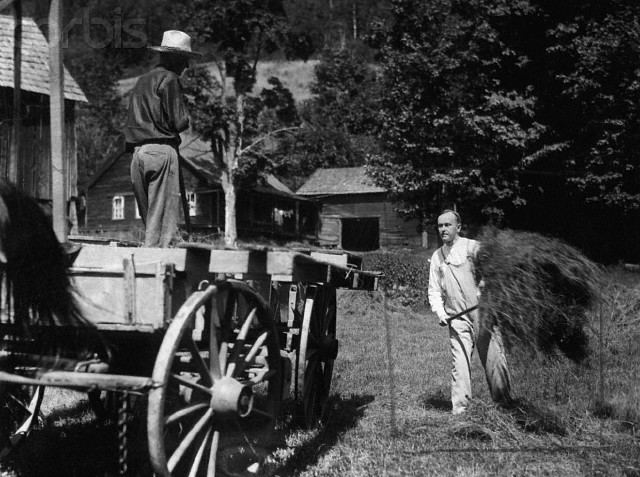
President Coolidge pitching hay on the Blanchard Farm in Pinney Hollow, up the road from Plymouth (Thanks to Corbis Images).