With 64 contributors and 16 period pieces, the manuscript is heading to the publisher this week. We are so thankful for all those who have worked so hard to offer essays that feature in our final work. We look forward to this anthology reaching readers in a new and thrilling way to showcase why Cal and Grace deserve much more acclaim than they have received, especially as we have come to the centennial of their inauguration to national leadership: August 1923-2023. We will keep you posted as the book hits shelves in the fall.
This is, fittingly, the 1,000th post of our blog. Thank you to every one of our readers who have been with us these past ten (or so) years. We appreciate every last one of you. We look forward to expanding ‘Coolidge Country’ into still greater fields as the years progress.
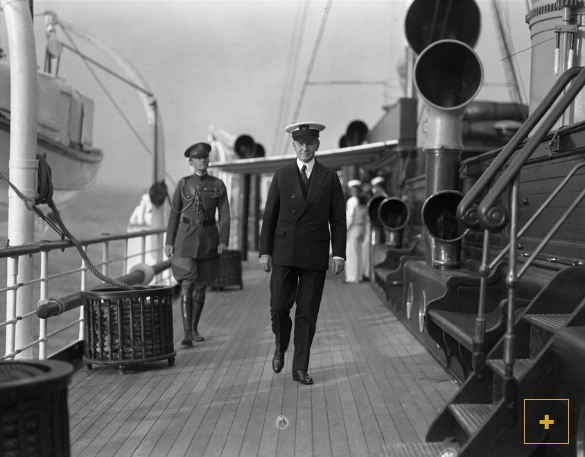
President Coolidge on the Mayflower. Photo credit: Historic New England.
“Where succession to the highest office in the land is by inheritance or appointment, no doubt there have been kings who have participated in the induction of their sons into their office, but in republics where the succession comes by an election I do not know of any other case in history where a father has administered to his son the qualifying oath of office which made him the chief magistrate of a nation. It seemed a simple and natural thing to do at the time, but I can now realize something of the dramatic force of the event.” (Calvin Coolidge, Autobiography)
“…It often has been remarked that when a particular crisis in human affairs has required a certain type of ability to meet it the right man has appeared. Whether this is because there are latent powers in all of us which give those who become charged with responsibility the ability to respond by rising above themselves, it is impossible to decide. Perhaps it is enough to know that when the world has a work to do some one appears who is able to do it.
“It seems as though President Harding was preeminently fitted to serve the country in the disturbed and distraught period following the war. He had experience and ability, courage and patience, combined with a generous toleration and cheerful optimism that inspired confidence. He had a natural gift of expression which he had developed into an art. He understood the people and the people understood him. In composing a situation, in pacifying men, he was a master. Those qualities which were so much needed in our country and in the world he brought to the presidential office…To deal with…problems President Harding summoned the Congress and kept it in session for nearly two years…Frequently he asserted that he desired his administration to be an era of good understanding…There was no room in his broad sympathy for any taint of sectionalism. But chiefly he was determined to use his great office to the full extent of the powers to prevent future wars. He was for good understanding among nations. His vision was broad. His statesmanship was inclusive. It would be difficult to find any peace time period of little over two years when so much that was beneficial was accomplished as during his administration.
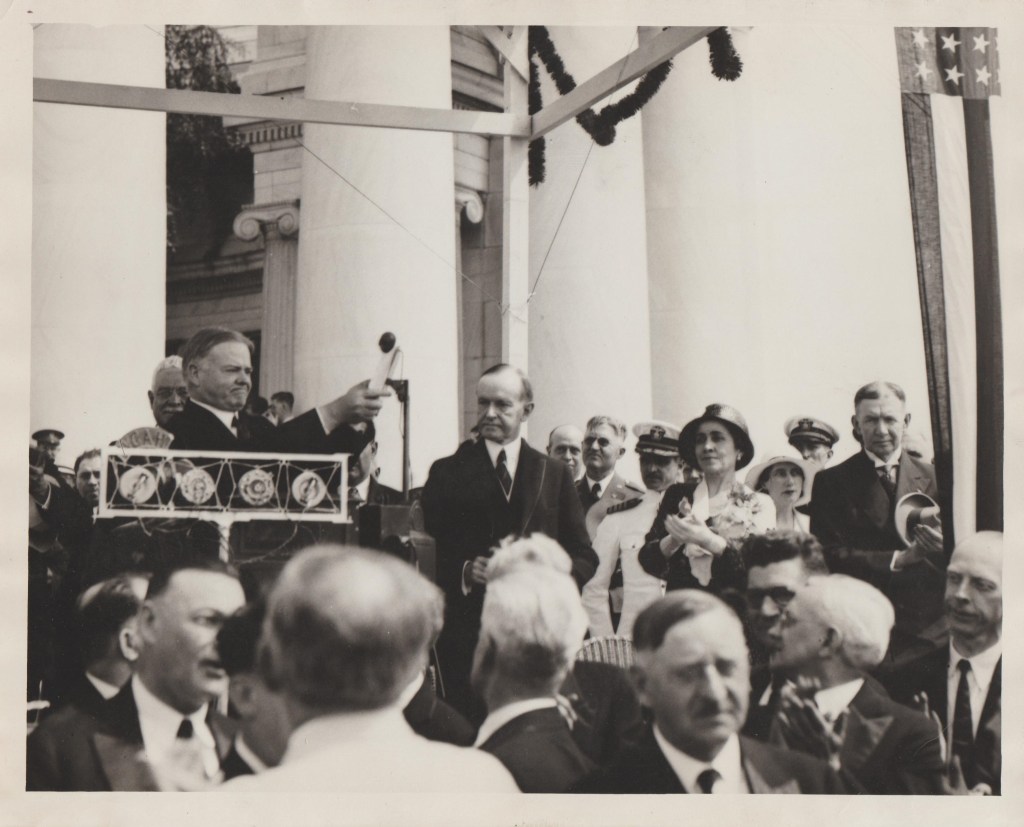
“Before he could see the full fruition of his policies fate brought him to a tragic end. As we can now realize the wisdom of the foundation which he laid we are consoled by the thought that for some reason we cannot fathom his work was done, his course was finished, he was gathered to his fathers, to rest in peace which he had desired so fervently to bestow upon all humanity.” (Calvin Coolidge, Acceptance of Harding Monument, June 16, 1931, Marion, Ohio)
Requiescat in pace, President Harding. Hail to the Chief, President Coolidge.
Looking up the stairs at the Homestead in Plymouth Notch, Vermont
“On the night of August 2, 1923, I was awakened by my father coming up the stairs calling my name. I noticed that his voice trembled. As the only times I had ever observed that were when death had visited our family, I knew that something of the gravest nature had occurred.
“His emotion was partly due to the knowledge that a man whom he had met and liked was gone, partly to the feeling that must possess all our citizens when the life of their President is taken from them.
“But he must have been moved also by the thought of the many sacrifices he had made to place me where I was, the twenty-five mile drives in storms and in zero weather over our mountain roads to carry me to the academy and all the tenderness and care he had lavished upon me in the thirty-eight years since the death of my mother in the hope that I might sometime rise to a position of importance, which he now saw realized.
“He had been the first to address me as President of the United States. It was the culmination of the lifelong desire of a father for the success of his son.
“He placed in my hands an official report and told me that President Harding had just passed away. My wife and I at once dressed.
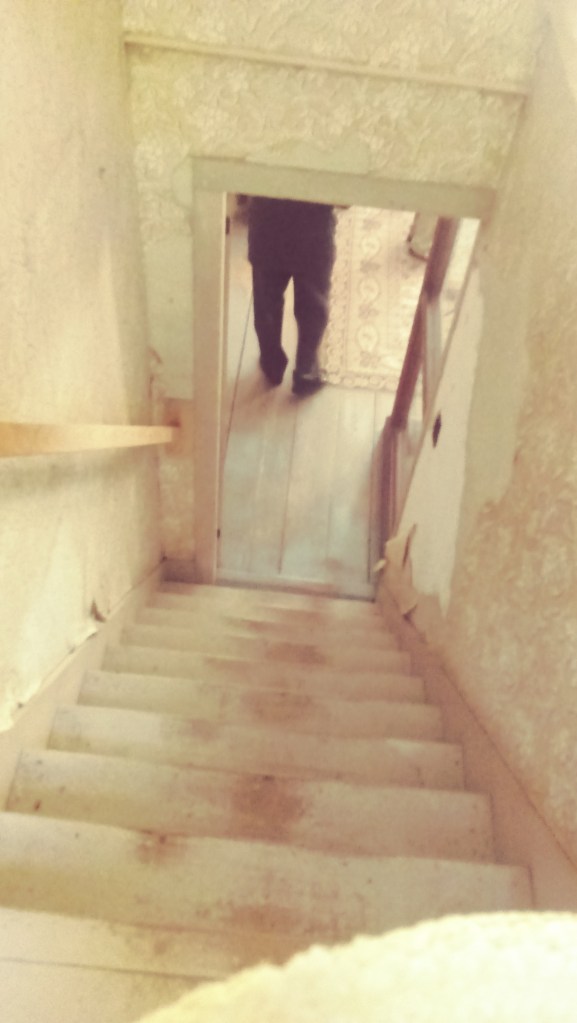
Looking down the stairs at the Homestead in Plymouth Notch, Vermont
“Before leaving the room I knelt down and, with the same prayer with which I have since approached the altar of the church, asked God to bless the American people and give me power to serve them.
“My first thought was to express my sympathy for those who had been bereaved and after that was done to attempt to reassure the country with the knowledge that I proposed no sweeping displacement of the men then in office and that there were to be no violent changes in the administration of affairs. As soon as I had dispatched a telegram to Mrs. Harding, I therefore issued a short public statement declaratory of that purpose.
“Meantime, I had been examining the Constitution to determine what might be necessary for qualifying by taking the oath of office. It is not clear that any additional oath is required beyond what is taken by the Vice-President when he is sworn into office. It is the same form as that taken by the President.
“Having found this form in the Constitution I had it set up on the typewriter and the oath was administered by my father in his capacity as a notary public, an office he had held for a great many years.
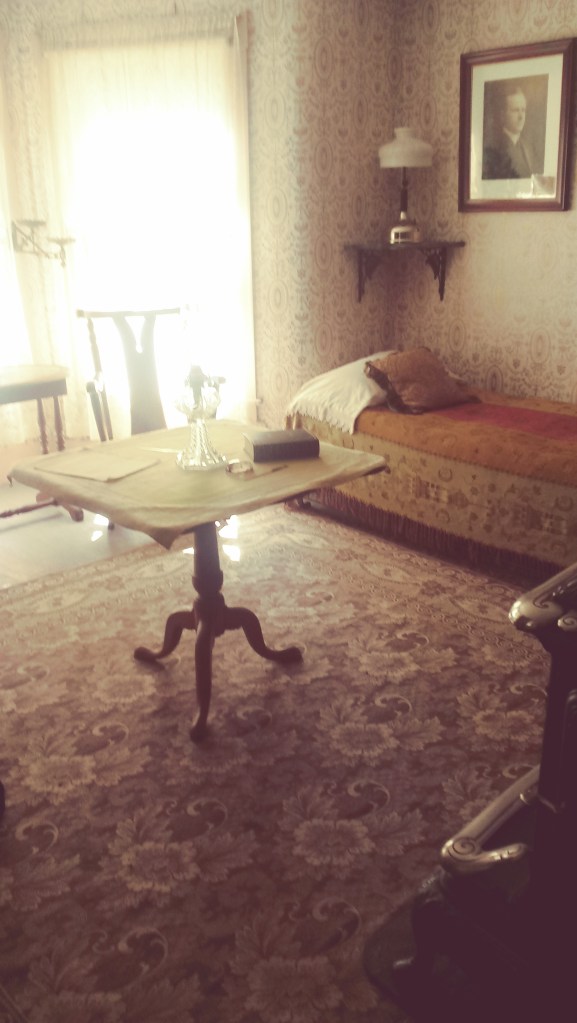
The sitting room in the sitting room of the Homestead, where the oath was administered at 2:47am on August 3, 1923.
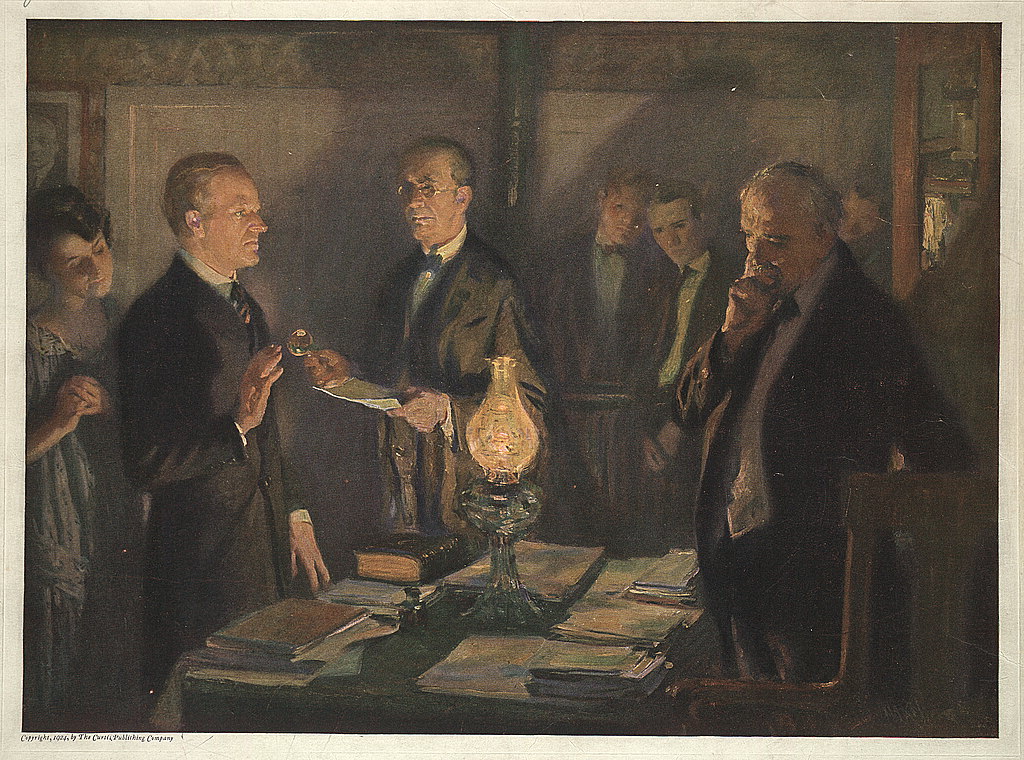
“The oath was taken in what we always called the sitting room by the light of the kerosene lamp, which was the most modern form of lighting that had then reached the neighborhood. The Bible which had belonged to my mother lay on the table at my hand. It was not officially used, as it is not the practice in Vermont or Massachusetts to use a Bible in connection with the administration of an oath.
“Besides my father and myself, there were present my wife, Senator Dale, who happened to be stopping a few miles away, my stenographer [Erwin C. Geisser], and my chauffeur [Joseph M. McInerney].
“The picture of this scene has been painted with historical accuracy by an artist named [Arthur J.] Keller, who went to Plymouth for that purpose. Although the likenesses are not good, everything in relation to the painting is correct.” (Calvin Coolidge, Autobiography)



 The Importance of the Obvious