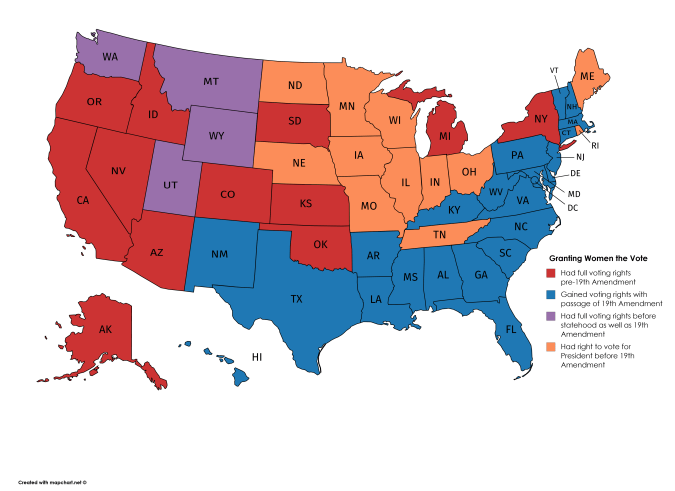
In the enthusiasm to commemorate the Nineteenth Amendment, the situation (as it stood at the state and territory levels in 1919) was not quite so backward and remiss as some might construe. Coolidge supported suffrage, certainly, as did much of the country as well as his political party (for that matter) but each state, choosing for itself, varied on the question, including Cal’s own Vermont and Massachusetts. Twenty-two states allowed no woman’s suffrage for any election but it is simplistic to say they did so because they were oppressed under the thumb of chauvinistic, domineering, paternalistic men. Each state had their reasons just as did each household. Many husbands and wives, for most of the country’s history, held to the belief that their interests coincided, a sentiment which no more made women anti-feminist than it made men women-haters in any generic sense of the term. The men would act with the burden that they were not merely making decisions for themselves but for the lovely, long suffering ladies who usually presided over management of the household anyway. To betray them would be courting disaster.
Maps broken down by state and territory relay a more complex picture than the all-too-often mistaken impression today of women cowering in fear of exercising rights against men holding them back in a pantry closet lest they get out and vote for city council or…gasp, President.
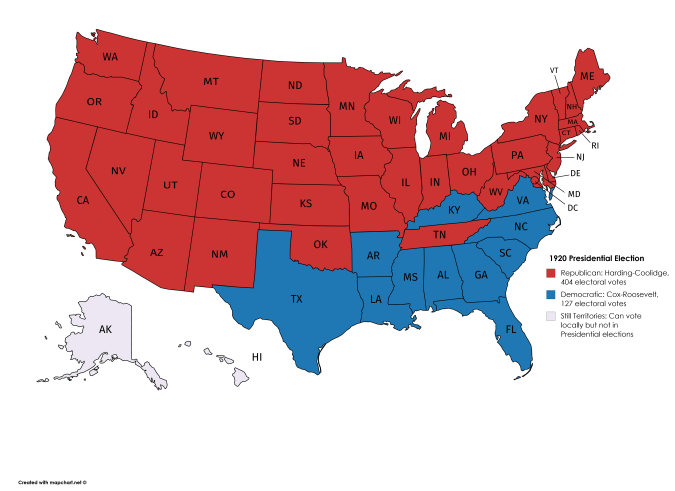
Consider two maps, the first shows the state and territory situation respecting women’s suffrage as the Nineteenth Amendment becomes part of the Constitution. Next, compare it with the first Presidential Election result after that Amendment’s ratification. It brought what some mistakenly claim is a disastrous regression in national politics, the Harding-Coolidge Era, a decade of supposed nativist isolationism and sowing of seeds that would reap Depression and War (both false), but at the same time the effort is made from the same sources to rejoice at women securing the vote. It cannot be both ways. We cannot celebrate the conditions and condemn the results. If depression and war come from those insidious 20s, they came from women votes as much, if not more, than those of the men. Either there were more substantial reasons behind that 1920 result than is countenanced or the Nineteenth Amendment saddled us with the first electoral failure of modernity. It cannot be both. Perhaps we should stop pitting male and female against each other and return to studying history as contemporaries saw their own times. With a little more humility, we could learn a great deal beyond what we think we know.
I. Suffrage laws, 1919
II. The Presidential Election, 1920


 The Importance of the Obvious