Jennifer Harville: On the Coolidge Legacy

From the great-granddaughter of Calvin and Grace Coolidge, we have an interview answering what is the legacy of our thirtieth President?

It is instructive that Mrs. Harville notes her interest in the history and legacy has certainly been life-long but that it is also something which has grown in importance to her as the mantle for its preservation and continuance came to her far sooner than anyone could have expected. Nevertheless, when it came, with it has come the power to carry it much like what her great-grandfather once said of the Presidency itself. Such can certainly be said of families all across our country, that when circumstances create a need for leadership, with it leaders are prepared to furnish what is needed, even when the person being prepared may not feel ready or equipped for the task.

So, what does Mrs. Harville say is the legacy of Calvin Coolidge?

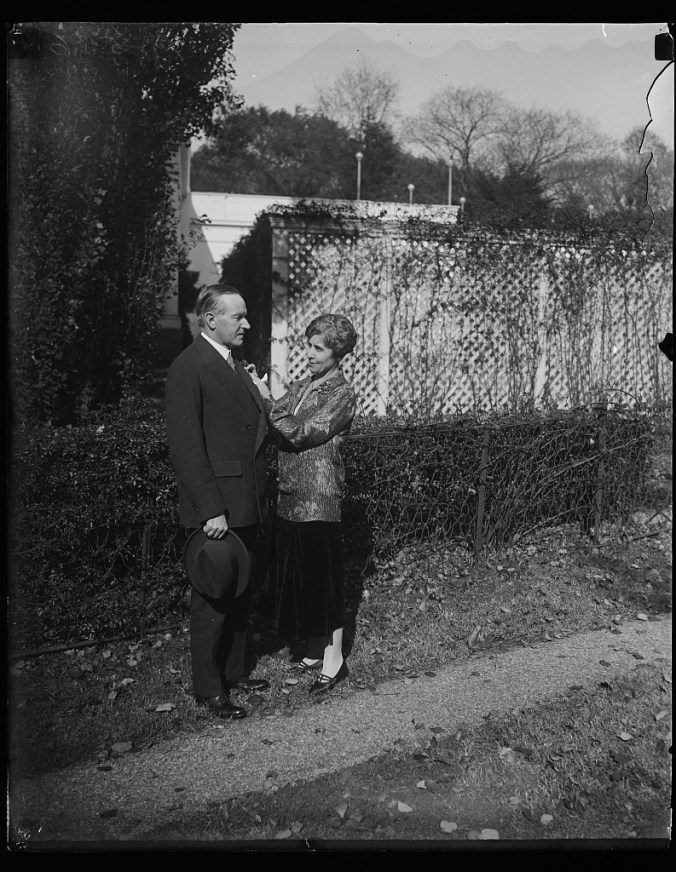
34252v Cal and Grace

The Coolidges stand outside the Executive Offices on the edge of the South Lawn. Photo credit: Library of Congress.

“I want people to know that he was a very decent, down-to-earth human being…that he was a very likable gentleman…that he was able to work with all sorts of people on both sides of the aisle, which I find very refreshing…[that] he was able to get votes from both parties at the time…[that] he was kind of like the boy next door…he was very likable!…did not seem very intimidating. He did have a very dry wit, a New England sense of humor. He was shy. He did not enjoy small talk very much but he did have his own opinion about things…”

Both Cal and Grace were supremely modest and what made them so likeable was their very natural absence of pretentiousness accompanied with a full heart for people. Some make the mistake of characterizing Grace alone this way but they fail to see that it was also in abundant supply in Calvin. Grace saw it in him immediately and they were much more alike than is commonly thought, perhaps even in ways neither could quantify themselves. They were simple folks and that simplicity was authentic, who they truly were.

When turning to the impressions of Plymouth Notch, the President’s birthplace, now preserved much as he would have recognized growing up but most especially during his administration in the 1920s, Mrs. Harville observes the key take-a-way: That anyone can rise to the highest leadership from the same simplest of beginnings. It should continue to be a place of inspiration for all who go there. It is there that who the Coolidges were and why they are worth knowing can be sensed in ways no other place comes close to capturing.

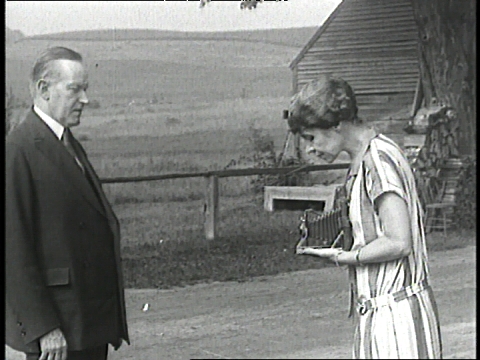
661518647-640x640

President Coolidge assumes pose for Grace as she prepares to take his picture while cameramen film them both at Plymouth Notch. Photo credit: Moving Image Research Collections, University of South Carolina.

On Columbus and Perspective, Part 2 of 2

James_Baldwin_Allan_Warren

James Baldwin beside a statue of William Shakespeare in the Albert Memorial, London. Photo by Allan Warren, 1968.

Author James Baldwin once said, “American history is longer, larger, more various, more beautiful, and more terrible than anything anyone has ever said about it” (‘A Talk to Teachers,’ Saturday Review, December 21, 1963). That same driving admiration for all history has to impart is what compelled Polybius in his masterful Histories (covering the Punic Wars between Rome and Carthage), showing that what is relayed must be truth if it is to retain value. But, as Polybius understood, truth does not preclude relaying the good and bad together, omitting neither if the student is to gain anything close to an accurate and honest perspective on history, with all its delightful interconnections.

Omission: A Greater Crime in History?

A crime of glaring omission has been committed when it comes to presenting Christopher Columbus in recent years. Both David Tucker over at the Ashbrook Center and Jarrett Stepman at The Daily Signal have addressed this misdeed upon historical honesty in articles marking yesterday’s recognition of the one Coolidge rightly dubbed “the greatest of all explorers.”
CColumbus

Charity: Measuring By the Same Standard We Expect for Ourselves

Christopher Columbus’ motivations and deeds merit Christian charity even now, more than five centuries later, not because he executed them flawlessly (for none have!) but because he appealed to better standards than the norm, the mean, the average prevailing all around him. “Might makes right” had distorted human relationships and their proper reverence for God, Columbus believed. The very concept of “might makes right” was anathema to him. He resolved to sow something better with God’s blessing. He sought new land not for its own sake but for the souls of the people he had faith were there (a faith few shared, since most believed the places Columbus would reach were uninhabited and un-navigable). Columbus not only thought about the people he would encounter as “souls” but as individuals worth knowing. He sought gold and silver not for their own sake but for the support of causes he regarded as sacred. If we meet his reverence with our contempt simply because we dismiss his particular religion, do we intend to enlighten those with whom we disagree through our disrespect for them? We often reach a very false conclusion when we assume the reverence others have for what is holy is nothing more than mere hypocrisy. We would do well to refrain from irreverent cynicism if we are going to be as broad-minded and liberal-hearted as we perceive ourselves to be. Columbus sought to apply standards fairly which meant meting out punishment even to his own if they should mistreat a native. It also meant holding natives to account (Carib targeting Arawak, for example) should they do the same to others. He insisted upon reasonable expectations, honoring the existing hierarchy of the chiefs over their own people not Spanish taskmasters as the hidalgos instituted in his absence. It was in his absence as an explorer, that they – as the Israelites did Moses – cast his standards aside to greedily enact the very things he abhorred.

Condemning ‘Undesirable’ History: Guilt Collective or Personal?

Rather than recognizing, as Coolidge would again later say, “guilt is personal,” Columbus is held not only to atone for crimes he punished among colonist and native alike but for effects none could completely and flawlessly control then or now: the actions of other individuals, including the transmission of deadly diseases, the far-flung results that remain colorblind to this day but which struck on both sides of the Atlantic when Europeans were still among the weakest, least advanced civilizations in the world.

the-price-of-freedom-speeches-and-addresses-calvin-coolidge-first-edition-signed-rare

Apples & Geodes: Seeking Good Wherever it Can Be Found

Coolidge, as usual, has a way of bringing the point home, clearly into focus. The discontent that defaces monuments, topples memorials, and creates disturbances at this or that “privilege” demonstrates that ideals still matter but without perspective and a mature sense of proportion, ideals become twisted and unfulfilling. It does no one any benefit and becomes equally as condescending to attribute one person’s success on the basis of color or gender when individuals of all backgrounds struggle, work hard, suffer, fail, succeed, and face the same decision about it all: to get about the task of living fully or surrender to the slow, steady despair of a victim of circumstances. Columbus had to work for his idea, nothing he achieved fell to him automatically, a fact the revitalized Klan grasped only too well as it was Columbus’ example which inspired those deemed most harmful to the Klan’s way of life: the immigrants and Catholics coming to America at the turn of last century. No praise could be allowed among Klan members for the foci of their hatred and malice. The same spirit works now. No good can be suffered in anyone marked an enemy. It is forgotten that even the King’s man, Hyde, could praise Cromwell, that Grant could honor Lee, or that Christ would ask forgiveness for His abusers as He hung from the cross. But then, such actions belong to the mature. Praise and redemption have no place among those blinded by their own hate-filled venom, a poison stored for the people with whom they disagree but one that slowly eats life from the bones of those who carry it.

By applying guilt collectively and using the proverbial bad apples to redefine the standard for all apples, thereby throwing out the preservation of any good fruit with so much as a spot or bruise, we create a world that only exists in minds incapable of dealing with either good or bad. Because bad apples exist, the good that also exists should be sought out and honored. Sometimes it resides within the very thing we have dismissed, like a geode concealed in an ugly and repulsive shell. As Cal notices, “We have had thieves and swindlers since the world began. But that is no reason for discarding a sound system. Guilt is personal. If a bookkeeper by accident or design falsifies his ledger we do not condemn the rules of arithmetic; we try to reform the bookkeeper.”

When all has been said, ideals should matter enough that we do not cast both violator and standard away. We could be depriving the one we condemn today to growth and betterment tomorrow. Tomorrow, that may even be us. The charity we show is vital to a healthy perspective on life and sound sense of proportion in all we do. History, and its importance to our futures, is no less immune to these forces. If we too hastily reject the blemish in someone we do not choose to better understand while we expect ample toleration for our failings and foibles, we fail them and we fail ourselves. When we deny that any good can exist (or be worth learning) where imperfections (as we deem them) reside – even very large ones – we will have the shock of our lives the day a mature perspective breaks through whatever is left of our prejudiced hearts, stunted minds, and calcified lives.
 

On Columbus and Perspective, Part 1 of 2

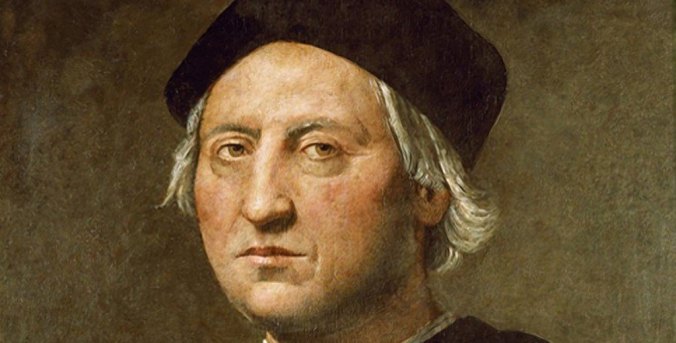
Portrait_of_a_Man,_Said_to_be_Christopher_Columbus

For too many history disintegrates into a quest for perfection. It becomes virtually an act of salvation to either canonize or demonize, foisting expectations on others we would miserably fail to approximate ourselves were the tables turned. In what has achieved new heights of absurdity in recent years, we effortlessly damn or redeem others for the splinter we perceive in them all the while blindly oblivious to the beam in our own eyes. Such an indictment has been unleashed on Christopher Columbus, the man who may not been the first to arrive from other continents to the Americas but whose actions and motivations opened doors for unprecedented good fruits, many of which we now enjoy in truly historic measure. His coming can hardly be chalked up to an event with no redeeming results at all, can it? Would we give everything we are away to return to 1491? After all, we don’t really live that way on other fronts: Grease spot in the driveway? Bulldoze the concrete. Muddy shoes? Throw them away. Smudged phone? Trash it. Dirty clothes? Burn them. Pet with a non-debilitating physical defect? Terminate it. Dinner burnt? Kill the cook. Of course not! We forbear, tolerate, cherish, understand. We are too often astonished at the supposedly novel realization that humanity, as individuals and as peoples, lack perfection. This is something we have not possessed for quite a long time now. This used to be thoroughly understood but that was also when history was not taught as a set of disconnected sub-sub disciplines unrelated to any other knowledge, especially philosophy, theology, and any of the sciences.

Perspective & Proportion

Perspective and sense of proportion are measures of maturity. The lack thereof are likewise indicators of immaturity, the childishness of inexperience and a gauge of the untaught. History classrooms, as James W. Loewen (in Lies My Teacher Told Me) points out, instead of imparting the wisdom of ages usually leaves the student less informed than when he or she entered. Literature has gone much the same direction. We comprehend less now than many generations could extemporaneously recount and yet we are more certain in our rigidly vengeful ignorance than they in their far broader insight. We are ready to cast every conceivable negative consequence (whether or not connected directly or logically) upon the historical targets of our discontent. Ultimately, this is born of a discontent with ourselves. Our childish rage, fueled as is often the case by Marx’s view of the world (himself one of history’s most inept prophets), incinerates everything to build a new world. It turns out the measure of that new world is a continually sliding and amorphous scale of values, the very product of minds devoid of perspective and proportion. Those do not come from humanity because, as history once taught, humanity is imperfect and sinful.

CC on neighbor farm

Tares & Wheat

The quest to find perfection in human ideals, to either canonize those we deem worthy or demonize those we lack the maturity to understand, will always fail. It will fail in no small part because the real world is not so neatly divisible as so many marbles can be sorted by color and size according to our tastes and preferences. The real world, as He once said, is both tares and wheat. One cannot be uprooted without also destroying the good we intend to keep. That task is left to the only perfect Judge capable of measuring both justly and graciously. Our feeble and immature attempts to assume that responsibility end only in torment not only for those who indulge in it but for their intended targets. It will destroy whatever good can be gleaned from the opportunities that routinely come our way, the people we meet who are different from ourselves, with motivations we may not instantly understand but with a little extra effort, we could. Under such a regime, there is no room for growth and improvement. One mistake earns eternal infamy. It does take effort to gain some perspective we have not seen and discernment to place what is new and different to us into its proper perspective, its wholesome degree of importance. If we would do that, instead of finding ourselves increasingly ossified by our discontent, we might discover the abundant possibilities for the best global improvement project there can be: ourselves. We would pursue what is good…and find it in the unlikeliest of places and people, even in those we first dismissed. Give it a try and then when each of us has exhausted the limits of our potential, we might have cause to find fault with someone else.

It was Calvin Coolidge who once said, “We shall be much more effective for good if we treat men not as they are but as they ought to be. If we judge ourselves only by our aspirations and every one else only by their conduct we shall reach a very false conclusion. When we have exhausted the possibilities of criticism on ourselves it will be time enough to apply it to others. The world needs high social standards and we should do our best to maintain them, but they should rest on the broad base of Christian charity.”

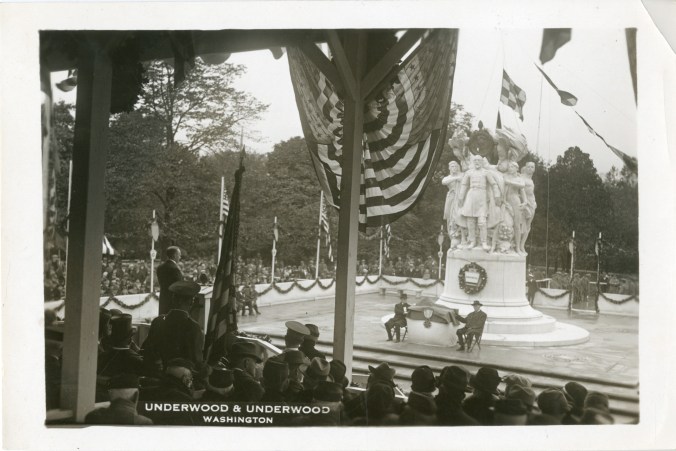
CC-MeadeMemorialStatue-1927

President Coolidge dedicating the Meade Memorial, 1927.