
The Confederate Memorial at Arlington
As we have featured before here, President Coolidge’s address at the Confederate Memorial inside Arlington National Cemetery on May 25, 1924, warrants a place in our solemn remembrance and patriotic celebrations today. Standing before the aged veterans who wore the gray, joined by their families, friends, and even some who wore the blue, Calvin Coolidge calls to mind that our history summons us to unity as Americans all. It is honor of principle and conviction, the duty we commonly share to one God and Father, that should bring us together again.
It is not history that divides us, it is the prideful self-righteousness and ignorant prejudices of the human heart that we seek to escape by denying and suppressing the past when we really seek to to lay our guilt at the feet of other generations. The sins of those who came before us are not ours to bear, anymore than it is their obligation to make us feel clean and justified. We have our own responsibility and until we have the maturity and honor to carry our own load, we will always fail to respect how history unites us. We will find that history should be honored because it keeps us humble and shows us the firm ground of goodness, rightness, and truth from the shifting sands of evil, injustice, and expediency.
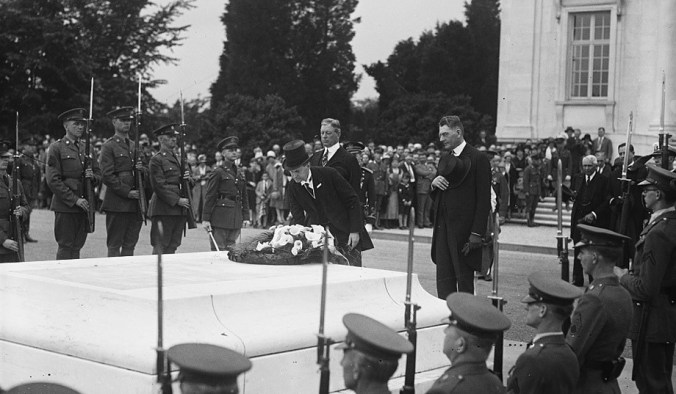
President Coolidge presents the wreath at the Tomb of the Unknown Soldier, 1927
Coolidge said,
“If I am correctly informed by history, it is fitting that the Sabbath should be your Memorial Day. This follows from the belief that except for the forces of Oliver Cromwell no army was ever more thoroughly religious than that which followed General Lee. Moreover, these ceremonies necessarily are expressive of a hope and a belief that rise above the things of this life. It was Lincoln who pointed out that both sides prayed to the same God. When that is the case, it is only a matter of time when each will seek a common end. We can now see clearly what that end is. It is the maintenance of our American form of government, of our American institutions, of our American ideals, beneath a common flag, under the blessings of Almighty God.
“It was for this purpose that our Nation was brought forth. Our whole course of history has been proceeding in that direction. Out of a common experience, made more enduring by a common sacrifice, we have reached a common conviction. On this day we pause in memory of those who made their sacrifice in one way. In a few days we shall pause again in memory of those who made their sacrifice in another way. They were all Americans, all contending for what they believed were their rights. On many a battlefield they sleep side by side. Here, in a place set aside for the resting place of those who have performed military duty, both make a final bivouac. But their country lives.
“The bitterness of conflict is passed. Time has softened it; discretion has changed it. Your country respects you for cherishing the memory of those who wore the gray. You respect others who cherish the memory of those who wore the blue. In that mutual respect may there be a firmer friendship, a stronger and more glorious Union.
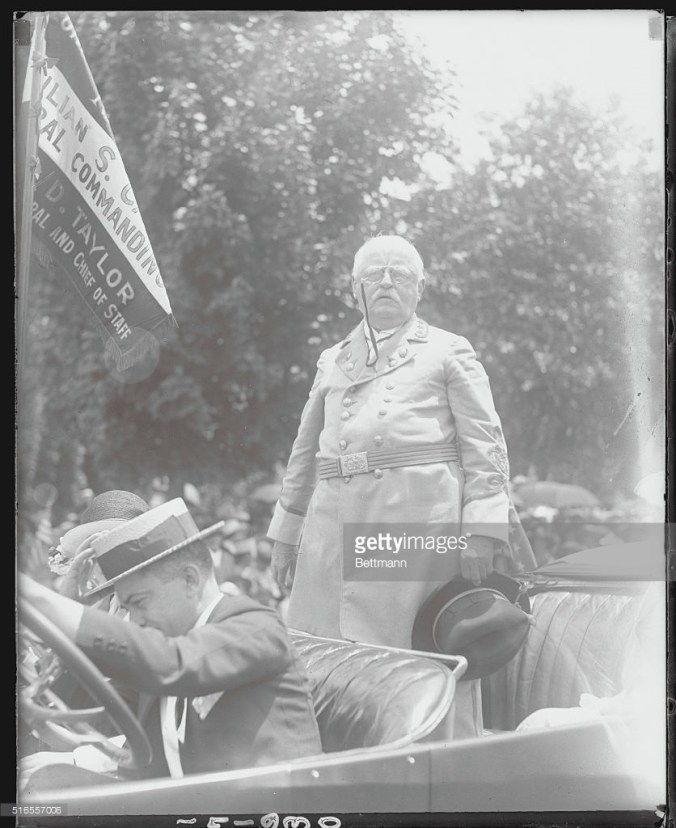
General J. S. Carr, 1923. Courtesy of Gettyimages.
“When I delivered the address dedicating the great monument to General Grant in the city of Washington, General Carr was present, with others of his comrades, and responded for the Confederacy with a most appropriate tribute. He has lately passed away, one of the last of a talented and gallant corps of officers. To the memory of him whom I had seen and heard and knew as the representative of that now silent throng, whom I did not know, I offer my tribute. We know that Providence would have it so. We see and we obey. A mightier force than ever followed Grant or Lee has leveled both their hosts, raised up an united Nation, and made us all partakers of a new glory. It is not for us to forget the past but to remember it, that we may profit by it. But it is gone; we cannot change it. We must put our emphasis on the present and put into effect the lessons the past has taught us. All about us sleep those of many different beliefs and many divergent actions. But America claims them all. He flag floats over them all. Her Government protects them all. They all rest in the same divine peace.”


 The Importance of the Obvious