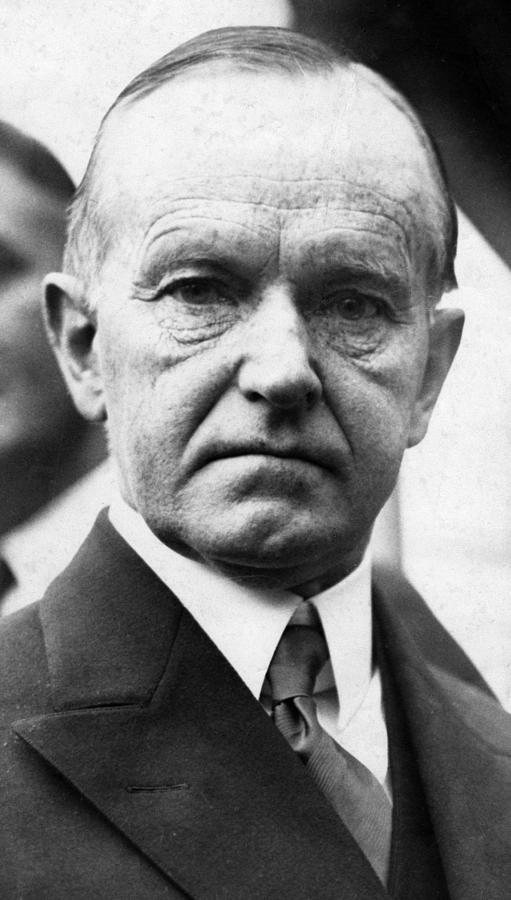
The Washington Post’s Richard Cohen, writing in the Columbia Daily Tribune out of Missouri this month, reminds us of whom began the now established tradition that former Presidents make a living from the Office. It was Gerald Ford, ever so briefly President after the resignation of Nixon, who started this ignominious employment of retired Presidents as high-dollar speakers. Even Jimmy Carter obtains generous speaking fees for every engagement secured through the American Program Bureau. It is the Clintons, of course, who have transformed this kind of post-Presidential legacy-building and marketing of the Office to a degree that rivals the GDPs of several small countries.
Who could even imagine Calvin Coolidge engaging in this kind of shameless self-aggrandizement at the expense of the Office? This is because he did not and deliberately refused to do so. He once told magazine editor James C. Derieux, “I’d like to go into some kind of business but I can’t do it with propriety. A man who has been President of the United States is not free–not for a time, anyway…Whatever influence I may have has come to me because of the position I have held, and to use that influence in a competitive field would be unfair. Some of the offers put before me never would have come if I had not been President. They are trying to hire a former President, not the individual, Calvin Coolidge. I can’t make that kind of use of the office…I can’t do anything that might take away from the Presidency any of the faith people have in it.”
He would not, as Ford would, engage in selling the Presidency by attaching his name to either an advertising campaign or marketing himself in causes that only came to him because of his “past life,” as Coolidge termed it to friend and Amherst classmate Charles A. Andrews. This refusal to market off of the Presidential prestige manifested itself in declining very lucrative offers from advertising agencies and business executives but also in precautions as simple as removing all tags and personal identifiers from clothing he wanted to sell, even sending his secretary, Herman Beatty, to another town lest the sale price be influenced by its association with a former President. He abhorred self-promotion and when he did finally take up the kind of “dignified employment…of service as others are” (to which he aspired in his Autobiography) he accepted the work out of a firm belief that the kind of labor it entailed was dignified, worthwhile, helpful, and of service to others.
His work for New York Life, which he insisted give him no special favors and no large salary, came from a conviction that sound insurance investments served regular people. He was even sued, ironically, for warning potential buyers against con artists and shysters in the industry. His work with the American Antiquarian Society, over which he was chosen to preside, came not with financial perks but with his belief that preserving the old documents and artifacts of our history remained an important and necessary service to future generations. His work as a writer, his most profitable venture, came not with a Scrooge-like disposition toward money but by presenting what he had to say in the most accessible and popular format, the printed word in magazines and newspapers, rather than at lush fundraising dinners and high society parties, he was striving to serve. While not loose with his money, he freely gave it to those in need unsolicited and unsought, to help those who struggled from time to time, especially as the Depression worsened. Even his more public work, the Transportation Committee and handling the bequest of the late Conrad Hubert, in distributing his estate, served others, not himself.
He had no Secret Service detail, no pension, no free medical care, no publicly-funded staff or Presidential Library. Not until Congress changed the law did that become the norm for Harry Truman and Herbert Hoover in 1958 and later for Dwight Eisenhower upon his retirement in 1961. The most compelling reason Cal did not do more than he did was because he had no patience for retaining the trappings of the Office he had once held to continue following him everywhere he went. He wished people understood that the “power” of the Presidency was no longer his, it had “shut off” when he left the White House. He welcomed retirement from the limelight and wanted to travel, to go and see places, to be a normal citizen again. In this, he did not succeed but he resolutely tried. In every way that a person can leave Washington behind he did, physically, mentally and spiritually. What a far cry from what the Office has now become in the eyes of too many, including, it seems, even some of our former Presidents.

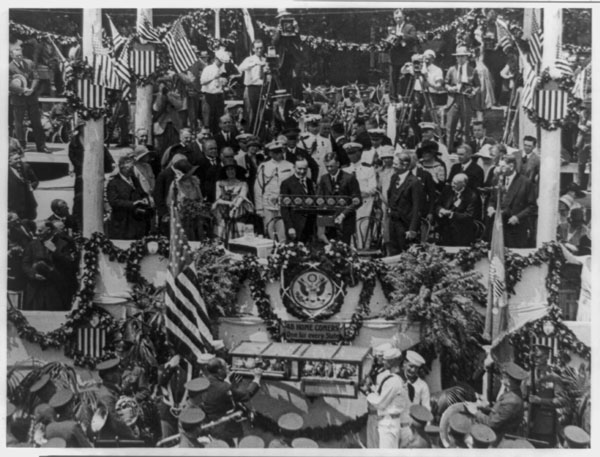 It matters not what era or generation we find ourselves, there is an irrepressible impulse to search for and take pride in exceptional deeds, heroic achievements and great examples of character, courage and competence. As Americans we especially prize the opportunity to honor noble men and women. It reminds us that good is still rewarded and it renews our faith. Such was the occasion eighty-seven years ago, when young Charles Lindbergh completed the first ever solo transatlantic flight, a 3,600 mile, 33 and a half-hour feat, from Roosevelt Field in New York to Le Bourge Field, outside Paris, on May 20-21, 1927.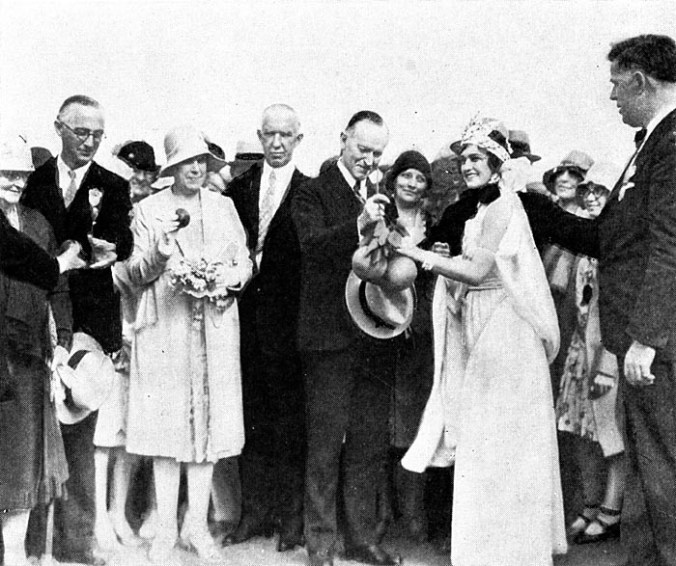
 The Importance of the Obvious