On Avoiding the Fiscal Shipwreck

The Coolidges at a military event that summer, 1928. Courtesy of the Library of Congress.

The Coolidges at a military event that summer, 1928. Courtesy of the Library of Congress.

When the Business Organization of the Government met for the fifteenth time on June 11, 1928, President Coolidge was less than nine months away from completing his term. He had close to five years at a task no other modern Chief Executive has come close to realizing: a Federal administration that spent an average $1 billion less than it took in each year; A balanced budget every year for six years by 1929, all the while reducing taxes four times, paying down nearly a third of the nation’s debt and passing a host of other legislative achievements from the Air Commerce Act, the Radio Act, the privatization of the Merchant Marine and the Flood Control bill among several more. There was much to be proud of given all that had happened and would continue to unfold in the next year. Coolidge would skillfully navigate both a Cruiser bill and what would become the Kellogg Treaty through both houses of Congress and leave the nation better than he found it in 1923. Coolidge, however, did not slacken his pace or ease off his pressure, as some Presidents do when nearing the end of their tenures. He hunkered down. There was still more to do.

He reminded the Cabinet heads, the department staff, and the bureau chiefs that they were not (and had not) been engaged in a work that served themselves, it was so conducted as to promote the welfare of all the people. This was so in good times just as much as in bad times. In boom or bust, there was an obligation that ran both ways: just as these officers were beholden to the people for their administration so the people were obliged to support their government “for its own sake.” That support in the paying of taxes and participation in the process did not hinge upon the merits of the officeholder any more than it loosed the constraints on government to squander the substance earned by the all the people.

Coolidge’s endeavor was managing the finances of the nation in such a way that the maximum benefit is “secured…to the people.” The hundreds gathered at Continental Hall that day were not rigging the system to benefit themselves or their friends. The results of their work were to accrue to those they served, the folks all across the country who had worked hard to provide for their own as well as sustain the proper functions of government. What was being done each year through these strict efforts to keep within our national means was being “felt in every home in the land. It has meant that the people not only have greater resources with which to provide themselves with food and clothing and shelter, but also for the enjoyment of what was but lately considered the luxuries of the rich. We call these results prosperity.” Lest the audience take this for granted, however, Coolidge reminded them of the attitude that forged it. “They have come because the people have been willing to do their duty. They have refrained from waste, they have shunned extravagance. They have paid their debts, they have improved their credit. If, out of all these efforts, the reward of prosperity has come, there is reason for national thanksgiving.”
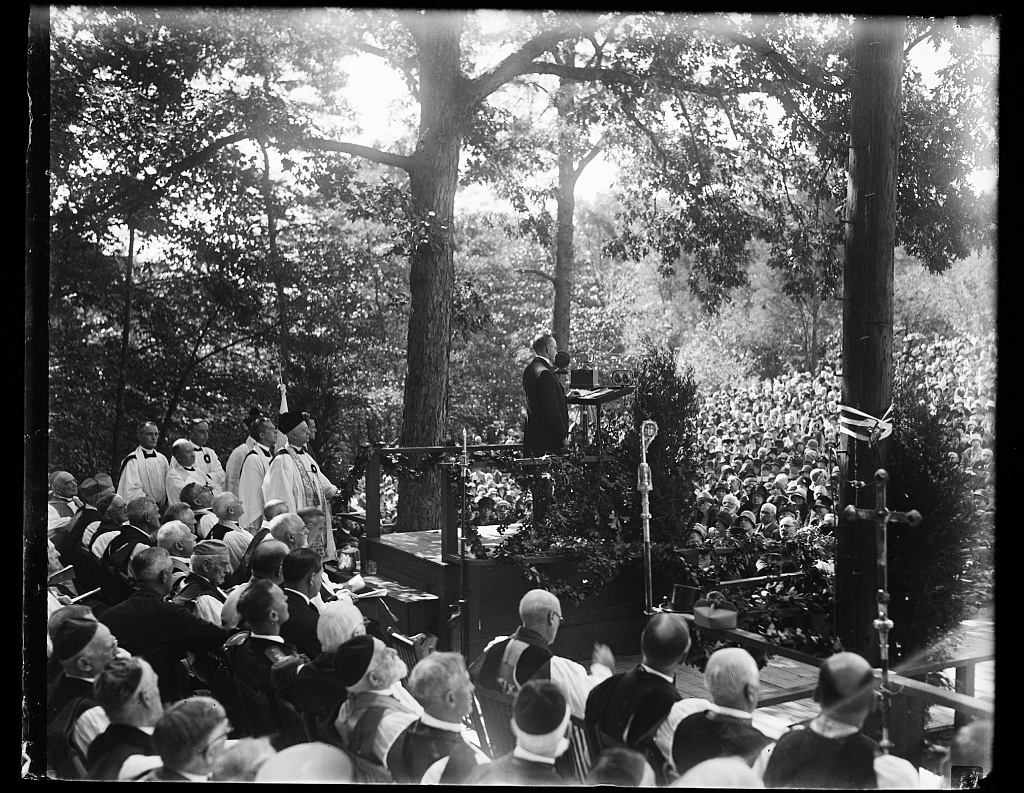
President Coolidge addressing a gathering outdoors, 1928

President Coolidge addressing a gathering outdoors, 1928. Courtesy of the Library of Congress.

Still, there were very real dangers, Coolidge warned. The Government could not take credit for the prosperity and begin to behave as if the administration of the nation’s finances was a game with a scoreboard to bolster friends or defeat political enemies. There was also the danger that affluence and prosperity would erode the “moral power of the people” by perverting success into something “to be worshiped,” using the rewards of success not to strengthen character or fortify the spiritual condition but for extravagant and disreputable purposes. “Prosperity is only an instrument to be used, not a deity to be worshiped.” In a very practical way, the President was reminding the nation not to lose its way in the advance toward material influence. He kept faith that the people were remembering that in the use of prosperity. He took the audience back to where conditions had been in 1921, the bleakness of depression, the suffering of wartime devastation, and the pessimism that pervaded the country. America was a different place in 1928. Everyone could see it but Coolidge saw the risks that success carried. It did not mean shut down the enterprise and creativity of the country and go back to some convoluted ideal of self-imposed subsistence or “morally superior” decline. It meant be careful with what you have and don’t lose sight of the importance of moral character and spiritual development. The trappings of technology do not substitute for the things that are unseen and eternal. Stuff does not make humanity better, only moral development can do that.

Cartoon by "Ding" Darling, "Putting it in faster at one end than we can bail it our at the other," The Des Moines Register, February 21, 1925. Courtesy of the University of Iowa.

Cartoon by “Ding” Darling, “Putting it in faster at one end than we can bail it our at the other,” Collier’s magazine, February 21, 1925. Courtesy of the University of Iowa.

There were other dangers, Coolidge noticed. While the national government had been commendably moving back in the right and responsible direction, the States and local governments were piling wasteful expenditures into the growth and expansion of their roles. It was equivalent to pouring water back into the boat which Washington had been bailing. It was undoing the gains for which Coolidge and his administration were working. To some degree costs were slowly rising but the spending habits of States and local authorities had gone far beyond that. While Washington had sliced $2 billion from its expenditures between 1921 and 1925, States, counties, and municipalities had ballooned costs by $3.5 billion. Coolidge identified another $500 million had been added in 1926 alone. “This steady increase…is a menace to prosperity. It can not be ignored. It can not longer continue without disaster. It will not correct itself.” This from the man so many mistakenly characterize as “laissez-faire” is revealing. The market would not simply take care of this. It had to be stopped.

The fallout eight months after his departure from public life vindicated Coolidge’s warning. That was not all, however. While his successor, Herbert Hoover, wrote many years later blaming Cal for saying nothing to avert the disaster of Stock Market speculation, he conveniently forgets the President’s next warning. “Another adverse tendency is for people to take their money and use it in speculation, which contributes nothing to the sum of our national wealth.” That, spoken as stock trading was about to skyrocket over the next fifteen months, fell on deaf ears. Blamed years later for the indiscretions of many other people, Coolidge did warn of the danger. Few, if any, were inclined to listen. He can hardly be held responsible for that. His statement later that year, based (ironically) on reports from the Commerce and Treasury Departments. He stated simply on January 6, 1928, that “I haven’t had any indications that the amount was large enough to cause particularly unfavorable comment” and on January 8th of 1929, that “I was advised this morning by the Department of Commerce that the last six months, according to their reports, was better than the first six months of the year 1928…So far as they can determine present conditions in business throughout the country are good and the prospect for the immediate future seems to be as good as usual” (Quint and Ferrell, The Talkative President pp.137-8, 143). These were hardly unqualified endorsements of the prosperity of the country as “absolutely sound” and stocks “cheap at current prices” that Hoover remembers Coolidge saying (The Memoirs of Herbert Hoover p.16). In fact, such statements were even more restrained than the speeches Hoover was giving at the time to reassure the country how prosperity stood on the verge of eradicating poverty and was just about as permanent as ever.

President Coolidge and GOP candidate Secretary Hoover at the White House, 1928. They were about as different in temperament and outlook as any one can be. Courtesy of the Library of Congress.

President Coolidge and GOP candidate Secretary Hoover at the White House, 1928. Though only two years younger than Coolidge, Hoover was about as different in temperament and outlook as any one could be from his predecessor. Courtesy of the Library of Congress.

Coolidge continues his warnings before the Business Organization. Conducting the business of the Federal Government necessitated looking beyond what was required in the present. They had to “look to the welfare of the future as well.” The estimates of the coming year did not guarantee another surplus. It suggested a deficit. This made it all the more imperative for everyone, working together for the same constructive economy, to ensure receipts were not swallowed by expenditures. This would be achieved not merely through a few expansive cuts done for effect. If a deficit was to be accomplished, it would happen through dozens of small savings achieved at every level that would total a large reduction in the end. Coolidge would prevail and the next year’s budget escaped deficit by a sizable amount. This remained to be seen, though, that summer of 1928. “The business of our Government is a real business and it must be conducted as such,” Coolidge reminded them. It impacted the lives of 120 million people and so everyone present that day had to do their part in holding course for the balance of the Budget. Coolidge spoke of the 1930 Budget soon to be laid before the Congress. Setting the cap at $3.7 billion, “the importance of continuing our pay-as-we-go policy…can not be overemphasized.” Preempting the submission of budget requests by the various departments, Coolidge underscored again that “no latitude” existed where law had not authorized it and where conditions did not warrant authorization. They had to work within the limits already set. The President knew they would do their duty.

This still did not preclude commending the expenditures that had increased each year for veterans, made possible by the very discipline they had and must continue exercising with the public money. Federal personnel compensation had been vastly improved, lifting out of its arbitrary and haphazard conditions in 1923 to properly compensating on the basis of merit and ability. The governing principle had never been to avoid all costs but to recognize what befits competence. Just as he was opposed to “overcompensation” he favored an “adequate compensation” that took care of people as valuable assets to good and efficient business. “What we are seeking is justice to the employee and justice to the tax-payer.” If the person on the pay roll was not able to earn high rates of salary – doing the level of work worthy of the pay – that person “should be replaced by those who are more competent.” Under Coolidge, justice to both the employee and the taxpayer would be met.

President Coolidge closed with a brief tribute to one of the great allies in their cause for disciplined budgeting, Representative Martin B. Madden, who had recently died. His chairmanship of the powerful House Committee on Appropriations had been invaluable to the restraint of Federal spending and the continuance throughout the Coolidge years of constructive economy. Though it may been seen as the first notice that the Coolidge Era was fast approaching its close, Cal reminded them that they still had General Lord, the Director of the Budget Bureau, a “great restraining influence upon us all” and the “originating agency of Government economy.” Ever humble, Cal did not take credit even then for what five years of intense work had wrought for the betterment of the country. He, characteristically, turned the meeting over to General Lord and sat down, consistent in the conviction that he was not “Mr. Indispensable” to the nation. Other leaders would rise to future challenges and faithfully serve for the good of all.
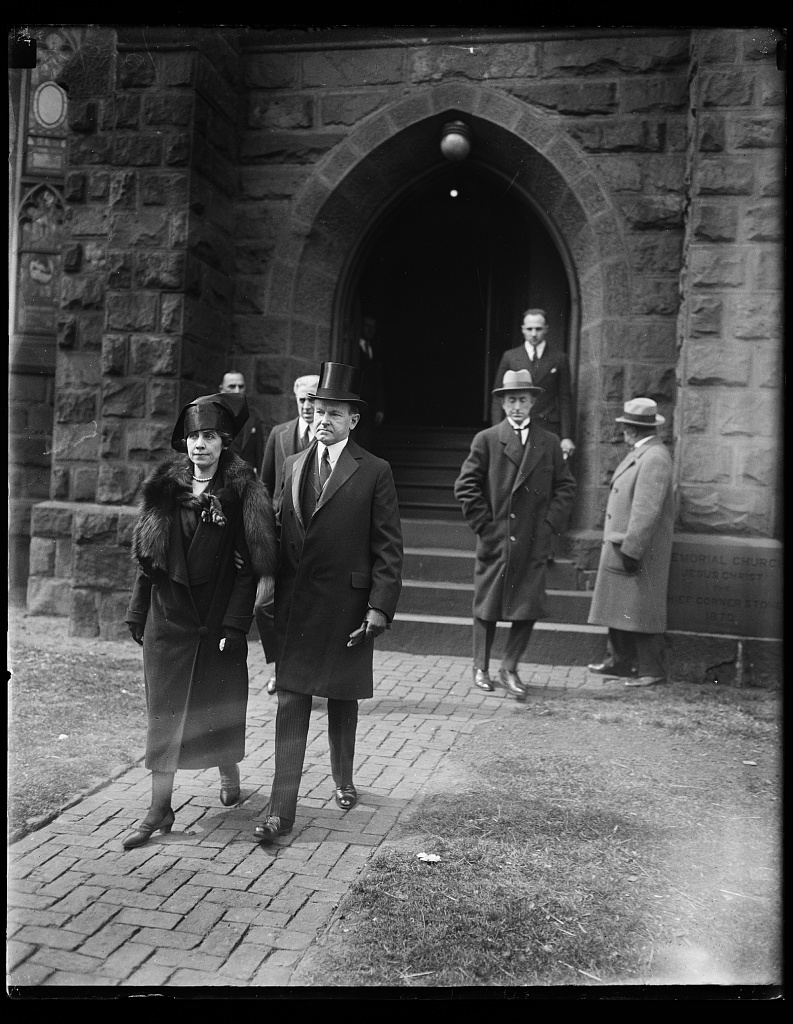
The Coolidges, 1928. Courtesy of the Library of Congress.
The Coolidges, 1928. Courtesy of the Library of Congress.
Bob Taft: The Political Heir of Calvin Coolidge?

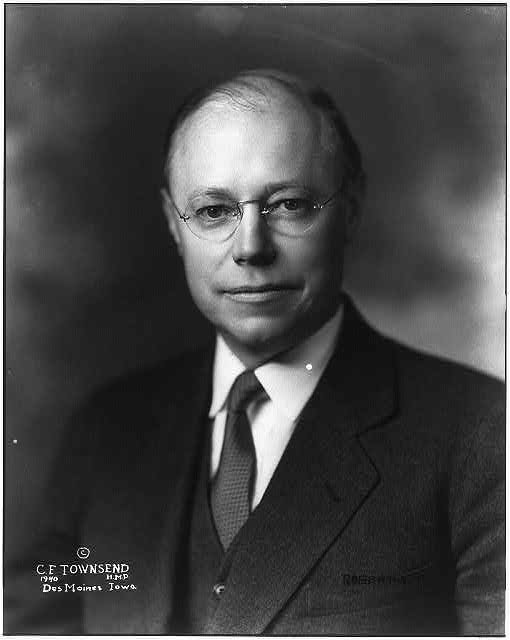
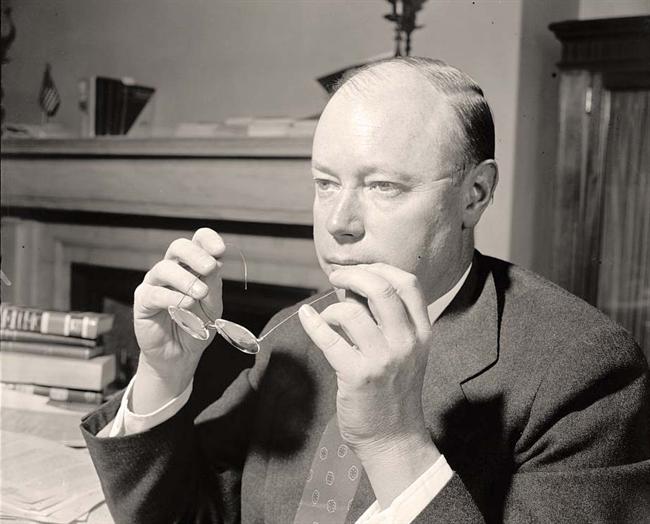
Senator Robert A. Taft

Senator Robert A. Taft

Once asked whether this author considered Senator Robert A. Taft to be the political/philosophical heir of Calvin Coolidge, I answered that Cal has no heir. He was unique and the idea that anyone could (or should) replicate Coolidge would be missing the mark, especially in his estimation. This doesn’t mean that his principles and qualities of character do not belong in public life again. They are gravely needed. Public questions are furnished by an array of leaders but each are raised for the needs of their generation. Nevertheless, Coolidge, as well as Taft, believed in proven and enduring principles — they were some of the few consistent ones to do so — and they also saw alike when it came to the strength of leadership at any given time. It does not rest on personality – the gravitas and popularity of a particular person – but on the precepts and principles of our Republic’s form of government. To them, the power of party or government administration was a dangerous weapon when one person became the indispensable savior or asset of the country.

This begins to reveal a powerful similarity between these two men that goes beyond the superficial. They shared a common mind and approach to public service. Both men led through war-time legislatures, striving to keep constitutional limits on their governments even in the midst of waging war, showing that our laws did not merely function in peacetime. Coolidge had extensive executive experience while Taft would lead legislative bodies but not direct executive ones. Both would lead following wartime upheaval, however, working to restore peacetime policies and scale back the militant agencies of Washington, whether it be the “alphabet soup” programs of the New Deal or Wilson’s “New Freedom” agenda. Both men rose to office at a time of national depression and stood against the tactics of those who would make wartime procedures permanent, consolidate bureaucracy and strip the individual of one’s rights and responsibilities. Both men saw rights and responsibilities as inseparably linked. One man’s freedom could not trample on the rights of others’ freedoms. Freedom would not remain free if one man’s freedoms were permitted to trample that of others, even when that meant expressing an unpopular thought or opinion.

Senator-Robert-Taft

A laissez-faire “free market” system was not absolute or even paramount to both men, who recognized a higher law of service that could not justly reorient a freedom to trade above other civil liberties. They showed no favors to the interests of their day, including the business libertarians of their time. They both insisted that something more than materialism, something transcending all the emphasis on a standard of living, was being overlooked and lost in the shuffle. It was not only ever economics to Coolidge or Taft. The simple morals and public virtue were of greater importance. These do not rely on affluence or prosperity for their validity and sustenance. Things did not make us better people. The development of character and the improvement of culture did. These are things government could not compensate for or supply. It remained where it always will to curb and correct: in the hands of the people. The emphasis on things was losing sight of what mattered far more, just as Coolidge had warned and Taft would reiterate.

Both believed in doing the day’s work and standing on what is right regardless of what votes were not “courted” or whose support did something for them. The right to join a union was just as important as the right to choose not to, coercive interests could not rightly compel an individual to do either. They both knew laws had limits. Law could no more reform human nature than a government bureau could competently handle only the job it was created to supervise. It was this unshakable sense of justice to all parties that lifted Coolidge and later Taft high in the estimation of even their political opponents. Yet, both men were unapologetic partisans, believing that the sovereignty of popular government is best represented in the party system. Both men constantly declared that principle, not expediency, had to drive the parties or else government by The People would break down. No other system would preserve freedom and order. A single-party state posed as much threat as a bureaucratic playground that took decision-making out of party principles and publicly pledged policies into an unaccountable and arbitrary rule by the few. Both men pointed back to self-government, the working out of one’s own salvation, rather than empowering some authority to take custody of it for you. They knew that government could not assume a part of the burden of the people or their business affairs without ultimately taking control of people and the market. Coolidge and Taft espoused a more profound and innovative progress – one grounded by the Founding – than that of the rigid, doctrinaire policymakers of the FDR and Truman administrations.

Both men held steadfastly to the practical and real. While others would ask them about some theoretical abstraction, they would kindly but simply dismiss it. They were not concerned with mere academic constructions or “what if” scenarios that sought to redesign society on paper, they were engaged and most concerned in the daily task of doing, working out public problems with principle and courage. That courage would manifest in two similar occasions. Coolidge would cast the tie-breaking vote that banned showing the racist film, “Birth of A Nation” in Boston. Taft would successfully oppose the admission to the Senate of a race-baiting Democrat, who had stolen the election by intimidating blacks in Mississippi. Neither man would tolerate or look the other way when racial prejudice sought acclaim. They shared an acute sense of justice that stood up for anti-lynching bills throughout their careers, not because it would curry favor but because it was justice that not even local government has authority to deprive (from emotional prejudice) any man of his life and liberty. Taft’s opposition to the Nuremberg Trials came not from any support for what the German high command had done but from his keen regard for true justice. He opposed the court’s barely concealed search to retroactively punish those who lost the war while absolving the Allies at the hands not of impartial law or due process but through a lynch mob. To Taft, victor’s justice was not justice at all. It was Versailles all over again.

Taft upheld the principle that segregation in schools was a clear denial of every man’s equality under the law yet, when it collided with his principle that education be left to the States, as Coolidge held before him (rather than imposed and directed from Washington), he held course and declared that for Federal authority to trump the States (however well-intentioned) would likewise be an unconstitutional grab of power. It had to change from the people upwards not down from Court ruling or legislative act. This was no popular stance even then but in light of the social and cultural turmoil of mandatory busing and other Great Society programs for community reorganization, Taft (and Coolidge) stand vindicated on the side of the regular folks whose lives are largely worse than before Washington got involved.

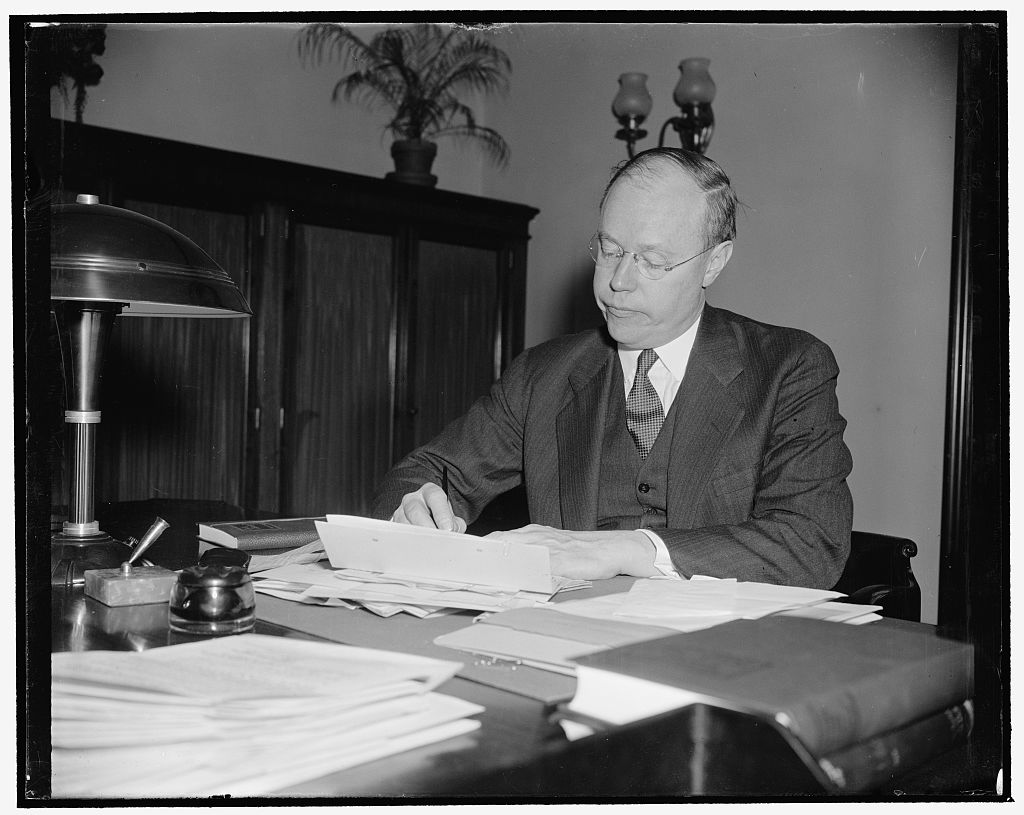
Senator Taft shortly after taking office in the Senate, 1939. He hit the ground running and took many by surprise with his thoroughly reasoned and original critiques of what had gone virtually unopposed for six years before he arrived. Courtesy of the Library of Congress.
Senator Taft shortly after taking office in the Senate, 1939. He hit the ground running and took many by surprise with his thoroughly reasoned and original critiques of what had gone virtually unopposed by anyone in Congress for six years before he arrived. Courtesy of the Library of Congress.
Both were masters of debate, adept at mustering facts and figures to bear on complex issues needing practical analysis. Both saw the limits of Federal power and spoke when it was time to speak. Neither possessed that “flash-in-the-pan” persona but both were steady, level-headed, genuine, and diligent. While Taft never saw the Presidency (as his father had) and seemed to be followed not by “Coolidge luck” but by a recurring battle against weak, “me too” liberal Republican candidates (from Landon to Willkie to Dewey to Eisenhower), Taft had the overwhelming support of those in the trenches, just as Cal did. It was the state and county committee members who wanted Taft. The same fight being waged now for the path to victory was argued then by Taft who insisted that contrast not concession, principle instead of pandering was the answer. No favors were done by accepting the premise that Democrat Big Government was acceptable, had popular support, and could not be overturned and so could only be better managed not opposed. Taft rejected this premise and from 1938 onward was the voice for principle in Congress.

He was the voice for common sense that had been missing for six years against what seemed to be an unstoppable barrage of activities attacking the foundations of the American system of government. Together with conservative Democrats he halted the advance of any more New Deal programs. FDR never got another domestic policy through after that. Had it not been for the onset of World War II, FDR’s utter failure would have no where to hide today. When the White House turned abroad to embrace an expansionist foreign policy, assuming Europe’s problems, Taft took up the warnings against confusing American interests with those of the Old World. His reasoning against U.S. intervention sounded provincial by some at the time but it overlooks that he was speaking for a majority of Americans opposed — for very good reasons — to fighting yet another European war. Time has affirmed Taft’s insistence that American interests be specifically explained and directly involved before the nation goes to war.

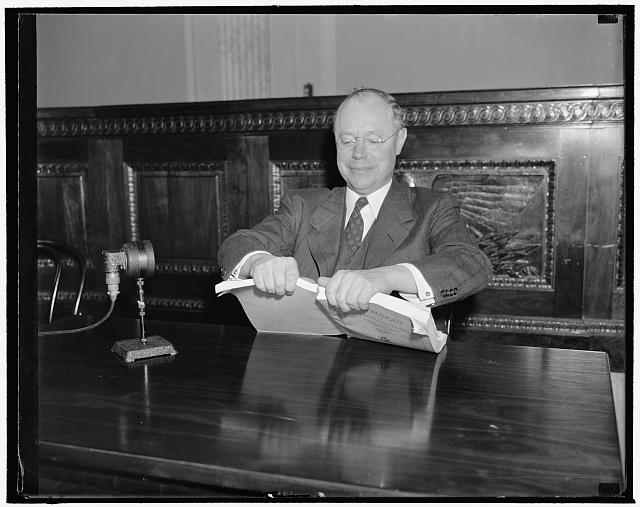
Senator Taft tearing apart the 1940 Budget.

Senator Taft tearing apart the 1940 Budget. He fought for balance against an ever-growing deficit each year of the FDR administration.

Taft would continue the fight after the War for liberty without special provisions for select groups, just as Cal had. He prevented the Universal Military Training measure that would have required military training for every young man in America, a wartime power to enforce conformity in peacetime reprehensible to liberty, Taft believed. It is unfortunate that death took Taft so soon, not unlike it did in Cal’s case. However, both men stand on either side of the expansive edifice of the New Deal ideology for which we are still paying culturally, morally, and politically. Together they condemn it, reveal its deep and fundamental flaws, and appeal (seemingly in the wilderness these days) to that true course of limited governance, constitutional freedom, and the rights and responsibilities of citizenship. They warn Republican leaders of the danger in diluting principled party resistance for a distinction without a difference. They exemplify a courage and integrity that make them statesmen for our time as well as their own not simply self-serving, opportunistic office holders. They stand their ground, joined by Democrats who see past the moment to the larger issues at stake, the bigger principles that would tear the country apart and drag it down into an arbitrary and despotic future if they failed to recognize there remains a clear and unmistakable limit, a Constitutional one, to what government can do.

So, was Bob Taft the political heir of Calvin Coolidge? He certainly came closer than anyone else did during the 30s, 40s, and 50s. We suggest two great books: 1. The Political Principles of Robert A. Taft by Russell Kirk and James McClellan (New Brunswick: Transaction Publishers, 2010; new edition of a 1967 classic) and 2. The Coolidge equivalent of the first book, Why Coolidge Matters: Leadership Lessons from America’s Most Underrated President by Charles C. Johnson (New York: Encounter Books, 2013). Read them and decide for yourself.

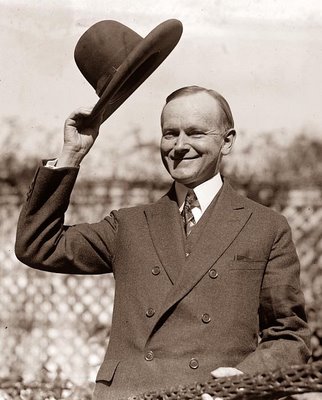
calvin-coolidge-smiling

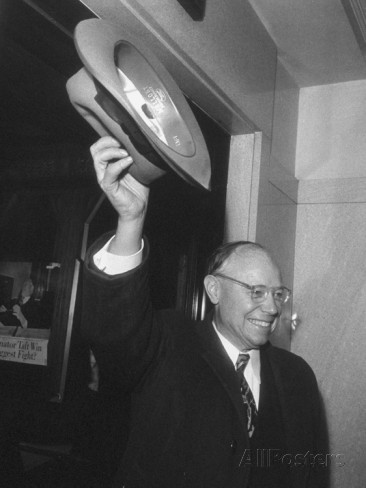
senator-from-ohio-robert-a-taft-smiling-and-waving-to-supporters-after-his-victory

On Father’s Day 2015

In an interview published six months after the death of Colonel John Coolidge, his son, President Calvin Coolidge, spoke of him in words that could very well describe many of our fathers:

“My father had qualities that were greater than any I possess. He was a man of untiring industry and great tenacity of purpose…He always stuck to the truth. It always seemed possible for him to form an unerring judgment of men and things. I can not recall that I ever knew of his doing a wrong thing. He would be classed as decidedly a man of character. I have no doubt he is representative of a great mass of Americans who are known only to their local neighbors; nevertheless, they are really great. It would be difficult to say that he had a happy life. He never seemed to be seeking happiness. He was a firm believer in hard work. Death visited the family often. But I have no doubt he took a satisfaction in accomplishment and always stood ready to meet any duty that came to him. He did not gear the end of life, but looked forward to it as a reunion with all he had loved and lost” (Your Son, Calvin Coolidge: A Selection of Letters from Calvin Coolidge to His Father. Montpelier: Vermont Historical Society, 1968, vii).

To all such good, kind, and faithful men we wish “Happy Father’s Day!”

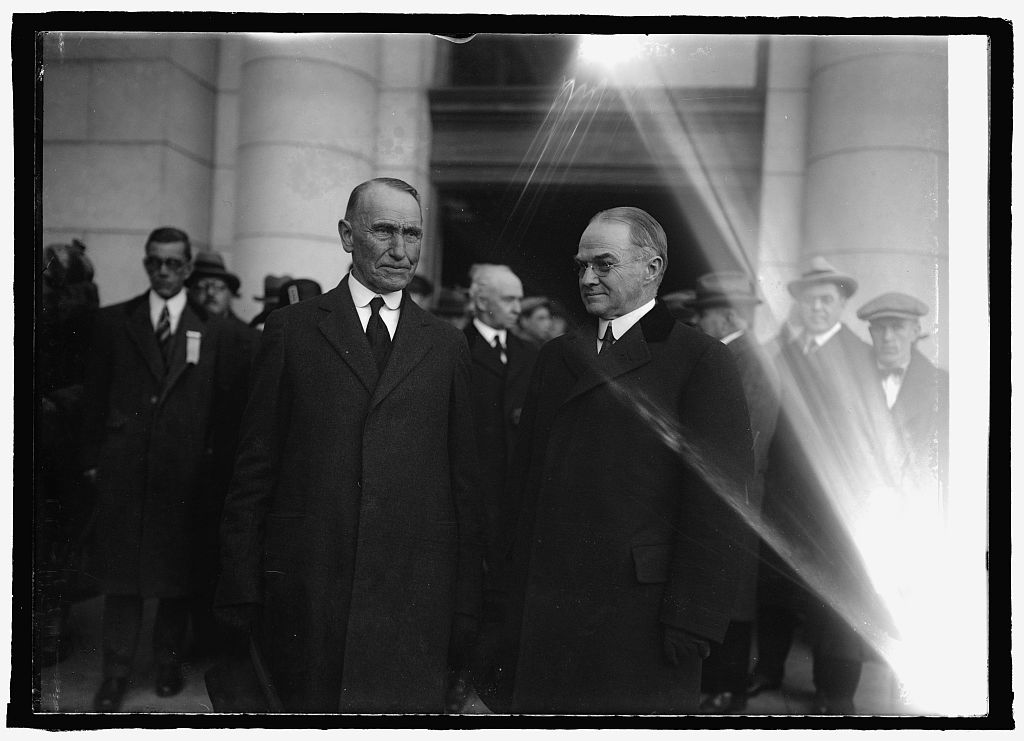
Colonel John Coolidge and Governor Billings of Vermont, March 3, 1925. Courtesy of the Library of Congress.
Colonel John Coolidge (left) and Governor Billings of Vermont, March 3, 1925. Courtesy of the Library of Congress.